
7 Texture Changes With Health Swaps That Catch Bakers Off Guard (and How to Handle Each One)
Health swaps in baking change texture in predictable ways. Learn how sugar substitutes, protein powder, purees, and fiber affect crumb — and how to fix each one.

Malik
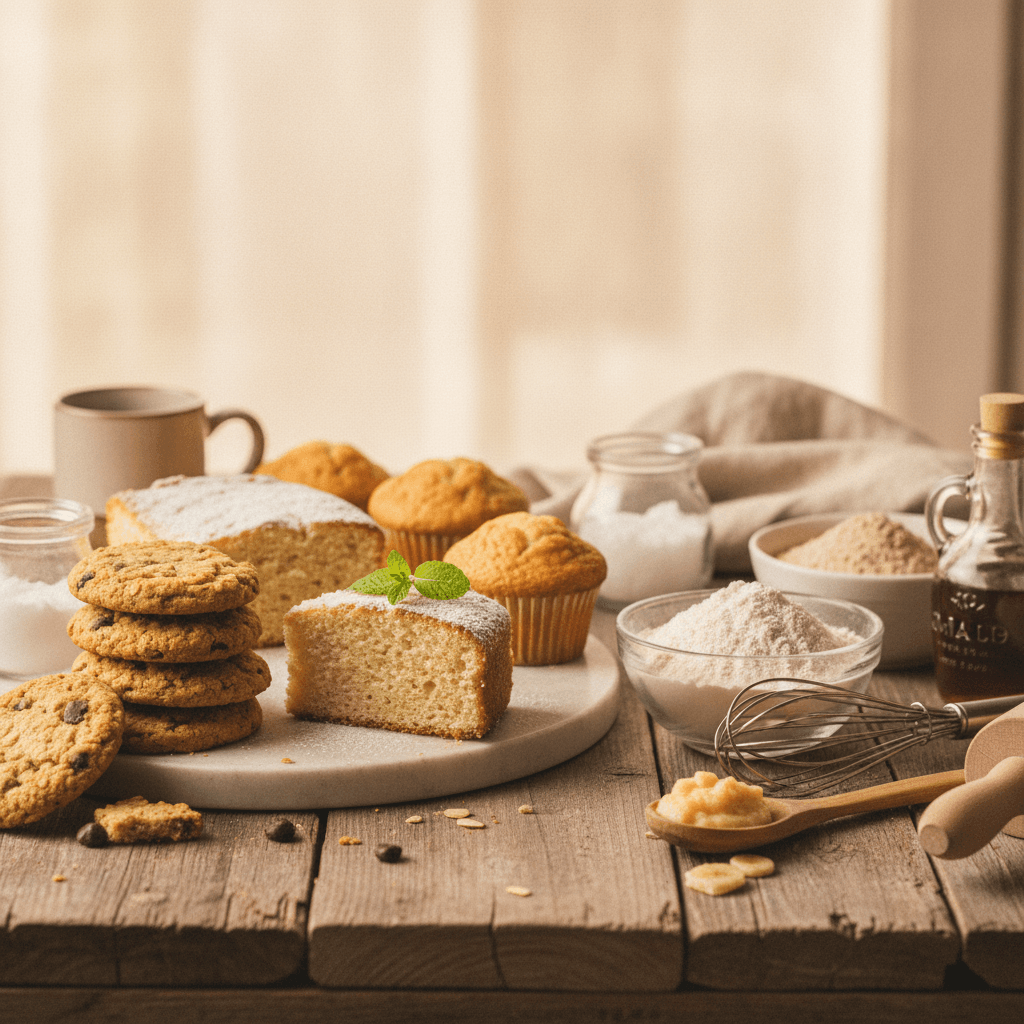
Swapping sugar for allulose, butter for pumpkin puree, or all-purpose flour for protein powder changes more than the nutrition label — it changes how your baked goods feel in your mouth. Here are seven specific texture shifts that happen with common health-focused substitutions, why they happen, and what actually helps.
Key takeaways
- Sugar substitutes affect moisture retention and browning differently — erythritol crystallizes on cooling, while allulose stays soft but browns faster.
- Protein powders absorb significantly more liquid than flour, which is the primary reason high-protein baked goods turn out dry and crumbly.
- Fat replacements like pumpkin puree and zucchini add water-based moisture, which creates a denser, more cake-like crumb instead of the tender richness fat provides.
- Fiber additions above roughly 15–20% of total flour weight tend to produce gummy or heavy textures that extra liquid alone cannot fix.
- Most texture problems from health swaps are predictable and can be managed — but only if you adjust for the specific property the original ingredient provided.
1. Sugar-free sweeteners that crystallize or refuse to brown
Sugar does far more than sweeten baked goods. It holds onto moisture, helps creaming with butter, feeds yeast, promotes Maillard browning, and creates a tender crumb by interfering with gluten development. When you swap it out, every one of those functions is affected. The role sugar plays in baking is worth understanding before you choose a replacement.
The texture change you notice depends on which sweetener you pick:
Erythritol dissolves during baking but recrystallizes as the product cools. Muffins or cookies made with pure erythritol often have a gritty, sandy surface after sitting for a few hours. That cooling crystallization is a well-known property of erythritol — it has low solubility compared to sugar. Grinding it into a powdered form before baking helps somewhat, but it does not fully prevent the issue. Erythritol and xylitol behave quite differently in this regard, with xylitol staying dissolved more reliably but carrying its own concerns (including toxicity to pets).
Allulose goes the opposite direction. It resists crystallization, which means baked goods stay soft — sometimes too soft. Cookies made with allulose tend to spread more and remain chewy rather than crisping up. Allulose also browns significantly faster than sugar because it participates readily in Maillard reactions at lower temperatures. An allulose shortbread, for example, may need a 25°F temperature reduction to avoid over-browning on the edges while the center stays underdone. That faster browning is one of the most common surprises. Allulose as a sugar substitute requires real adjustments to oven temperature and timing.
Monk fruit blends and stevia blends are typically bulked with erythritol, so they inherit the crystallization issue. The texture outcome depends almost entirely on the bulking agent, not the high-intensity sweetener itself. Check the first ingredient on the label — that is what determines your texture. For a deeper comparison, the guide to sugar alcohols in baking covers how each one behaves.
2. Protein powder that turns everything dry and crumbly
This is probably the single most common texture complaint with health-focused baking. Protein powders — whey, casein, pea, hemp — absorb far more liquid than all-purpose flour does. Whey protein concentrate can absorb roughly two to three times its weight in liquid, compared to flour which absorbs about 60% of its weight. That difference is enormous. If you replace even 25% of the flour with protein powder using the same liquid, the result is a dry, crumbly product that falls apart.
The type of protein matters too. Whey and casein behave differently — casein tends to create a denser, more rubbery texture, while whey can produce a drier, more cake-like crumb. Pea protein often adds a slight graininess. Hemp protein brings an earthy flavor and a coarser texture because of its fiber content.
The fix is not simply adding more liquid, though that helps. The real issue is that protein powder does not provide structure the way flour does. It lacks starch, which means it cannot gelatinize and set the crumb. Most bakers who get good results with protein powder keep it to about 20–30% of total dry weight and pair it with ingredients that add moisture and fat — things like Greek yogurt, mashed banana, or nut butter. Understanding why protein baked goods dry out is the first step toward preventing it.
For example, if a batch of high-protein muffins comes out like hockey pucks, a reasonable next step is to cut the protein to about one-quarter of the flour weight and add an extra egg plus 2 tablespoons of oil per batch.
3. Puree-based fat replacements that make things dense
Replacing butter or oil with pumpkin puree, applesauce, sweet potato puree, or mashed avocado is one of the most popular health swaps. The logic seems straightforward — less fat, fewer calories. But fat and puree do completely different things in a batter.
Fat coats flour proteins, which limits gluten development and creates tenderness. It also traps air during creaming, contributing to a lighter crumb. Purees are mostly water with some fiber and sugar. They add moisture, but it is water-based moisture, not the rich, coating moisture that fat provides. The result is a denser, more bread-like texture. Cookies lose their spread and snap. Cakes become heavier and can develop a slightly gummy center if the water content is not accounted for.
Pumpkin puree as an oil substitute works best in already-dense, moist baked goods like quick breads and muffins, where the texture shift is less noticeable. It struggles in delicate applications like layer cakes or crisp cookies. Zucchini as a fat substitute has the added complication of releasing water during baking, which can make the center soggy if you do not squeeze out excess moisture first.
A common mistake is replacing 100% of the fat. Most baking references suggest replacing no more than half the fat with puree for the best texture compromise. Going beyond that tends to produce something that is moist but heavy, without the tenderness that makes baked goods pleasant to eat.
4. Fiber additions that create gummy or heavy crumb
Adding fiber to baked goods — through bran, psyllium husk, inulin, or chicory root fiber — changes texture in ways that can be subtle at low amounts and dramatic at higher ones. Fiber absorbs water aggressively. Psyllium husk, for example, can absorb 10–15 times its weight in water and forms a gel. That gel-forming ability is useful in gluten-free baking for structure, but in conventional baking it can create a gummy, heavy interior.
Bran as a flour supplement adds insoluble fiber that physically cuts through gluten strands, weakening the crumb structure. Wheat bran, oat bran, and rice bran each behave differently — oat bran absorbs more moisture and creates a softer texture, while wheat bran stays coarser and produces a more crumbly result.
Inulin and chicory root fiber are soluble fibers that can partially replace sugar while adding fiber. They contribute some sweetness and bulk, but at higher amounts they produce a sticky, almost tacky crumb. There is also a well-known digestive tolerance threshold — many people experience bloating and gas with inulin or chicory root fiber above about 10–15 grams per serving, which limits how much you can realistically add.
The practical ceiling for most fiber additions is about 15–20% of total flour weight. Beyond that, texture problems become difficult to compensate for, even with extra liquid and fat. Adding fiber without ruining texture is genuinely possible, but it requires staying within those limits.
5. Alternative flours that change moisture and structure simultaneously
Swapping all-purpose flour for almond flour, coconut flour, chickpea flour, or another alternative changes both the moisture behavior and the structural framework of the bake. These are not one-to-one replacements, and the texture differences are significant.
Almond flour is high in fat and has no gluten, so it produces a moist, dense, almost macaroon-like crumb. It cannot provide the elastic structure that wheat flour does. Baked goods made entirely with almond flour tend to be fragile and crumbly when warm, then firm up as they cool.
Coconut flour is the opposite extreme — it absorbs roughly four times as much liquid as wheat flour. Using it without dramatically increasing eggs and liquid produces something dry enough to be inedible. Even with adjustments, the texture tends toward dense and springy rather than light and tender.
Chickpea flour and quinoa flour both add protein but come with strong flavors and different absorption rates. Chickpea flour works reasonably well at up to about 25–30% of total flour in savory applications, but its beany flavor and dense texture limit it in sweet baking. Quinoa flour has a bitter, earthy taste that is difficult to mask above small percentages.
| Alternative flour | Moisture behavior | Typical texture result | Practical limit as flour replacement |
|---|---|---|---|
| Almond flour | Adds fat-based moisture | Dense, moist, crumbly | Up to 50% in cookies/muffins |
| Coconut flour | Absorbs ~4x more liquid than wheat | Dense, springy, dry if unadjusted | Usually 20–25% of total flour |
| Chickpea flour | Moderate absorption, similar to wheat | Dense, slightly gummy, beany flavor | 25–30% in savory; less in sweet |
| Quinoa flour | Moderate absorption | Slightly gritty, earthy | 15–25% before flavor dominates |
| Lupin flour | High absorption, high protein | Dense, can be bitter | 15–20% of total flour |
Lupin flour deserves a mention here because it is gaining popularity in low-carb baking. It is extremely high in protein and fiber, which means it absorbs a lot of liquid and can produce a dense, slightly bitter result if overused. It also carries a significant allergen risk for anyone with peanut or legume allergies.
6. Dairy swaps that thin the batter or change browning
Replacing whole milk with skim milk, plant milk, or cottage cheese changes the fat content and protein content of your batter, and both of those affect texture.
Skim milk substitutes remove the fat that whole milk contributes. In most quick breads and muffins, this difference is small enough to go unnoticed. In enriched doughs, custards, or anything where milk fat contributes to richness, the result is a slightly drier, less tender crumb.
Plant milks vary widely. Oat milk tends to be the closest to dairy milk in baking behavior because it has some natural sugars and a slightly creamy consistency. Almond milk is thinner and lower in protein, which can produce a slightly less structured crumb. Coconut milk (the canned, full-fat version) adds richness but also a distinct coconut flavor.
Cottage cheese and Greek yogurt are increasingly popular as health swaps, adding protein and moisture simultaneously. Cottage cheese needs to be blended smooth before adding to batter — getting it truly smooth requires a good blender, not just a fork. When blended properly, cottage cheese adds a moist, almost custardy quality to baked goods. When left lumpy, it creates pockets of uneven texture.
Greek yogurt adds tang and density. Its acidity can react with baking soda to provide extra lift, which partially offsets the heaviness it adds. Both cottage cheese and Greek yogurt work best in muffins, pancakes, and quick breads rather than delicate pastries.
7. Oil-to-nut-butter swaps that change spread and chew
Replacing oil with nut butter is a popular swap for adding protein and healthy fats. But nut butters are not pure fat — they contain protein, fiber, and sometimes added sugar or salt. That protein content changes how the batter behaves.
Cookies made with almond butter or peanut butter instead of oil tend to spread less because the protein in the nut butter sets during baking, creating more structure. The chew is different too — denser and more fudgy rather than crisp or snappy. In brownies, this can be a welcome change. In sugar cookies, it produces something unrecognizable.
Tahini as a butter substitute behaves similarly but with a more liquid consistency than most nut butters, so it splits the difference between oil and nut butter in terms of spread. It also has a distinctive savory, slightly bitter flavor that works in some applications and clashes in others.
The practical advice: nut butters work best as partial oil or butter replacements (about half) in recipes that are already dense and forgiving — think brownies, banana bread, and oatmeal cookies. Trying to use them as a full replacement in light, airy baked goods produces a heavy, sometimes greasy result.
Why understanding the "why" matters more than memorizing ratios
Every health swap changes texture because it changes the balance of five fundamental things in baking: moisture, fat, protein, sugar, and starch. When you swap one ingredient for another, you are not just changing a single variable — you are shifting the entire balance.
A contrarian point worth making: many health-baking guides focus on finding the "perfect" one-to-one swap, but that approach misses the point. There is no perfect substitute for sugar that does everything sugar does. There is no fat replacement that provides the exact same tenderness as butter. The more productive approach is to understand which function you are losing and compensate for it specifically, rather than expecting any single ingredient to replicate the original.
For example, if you replace sugar with erythritol, you lose moisture retention and browning. You can add a tablespoon of honey or a small amount of molasses to restore some browning without adding much sugar back. If you replace oil with applesauce, you lose tenderness — adding an extra egg yolk can partially restore it. These targeted fixes produce better results than searching for the mythical drop-in replacement. The guide to choosing sugar alternatives is a good starting point for thinking through these tradeoffs systematically.
Frequently asked questions
Why do sugar-free baked goods taste dry even when the batter looks wet?
Sugar is hygroscopic, meaning it pulls moisture from the air and holds onto water in the crumb. Most sugar substitutes — especially erythritol and stevia blends — do not share this property. The batter may contain plenty of liquid, but without sugar's moisture-retention ability, that water evaporates during baking and the finished product dries out faster. Reducing sugar without artificial sweeteners covers methods that preserve more moisture.
Can you replace all the fat in a baking recipe with fruit puree?
Technically you can, but the texture will change dramatically. Fat provides tenderness by coating gluten strands and trapping air. Fruit purees like applesauce or pumpkin puree add water-based moisture instead, which produces a denser, heavier crumb. Most baking references recommend replacing no more than half the fat with puree for acceptable texture results.
How much protein powder can you add to a baking recipe before the texture suffers?
Most bakers get acceptable results replacing about 20–30% of the flour weight with protein powder. Beyond that, the high water absorption of protein powder makes the crumb increasingly dry and crumbly. Adding extra liquid, fat, or binding ingredients like eggs can extend this range somewhat, but there is a practical ceiling. Adding protein to baked goods without ruining texture covers seven methods for working within these limits.
Does coconut flour behave like almond flour in health-focused baking?
No — they behave almost oppositely. Almond flour is high in fat and adds moisture, producing a dense but moist crumb. Coconut flour absorbs roughly four times as much liquid as wheat flour, so it produces an extremely dry result unless you add significantly more eggs and liquid. They cannot be swapped for each other without major adjustments to the rest of the recipe.
Why do high-fiber baked goods sometimes have a gummy texture?
Soluble fibers like psyllium husk, inulin, and chicory root fiber form gels when they absorb water. In small amounts, this gel adds pleasant moisture and structure. In larger amounts — generally above 15–20% of total flour weight — the gel dominates the crumb, creating a sticky, gummy interior that does not bake through properly. Reducing the fiber percentage or switching to insoluble fiber sources like wheat bran can help, though insoluble fiber brings its own texture tradeoffs.

Written by
Co-founder, BakingSubs
Co-founder of BakingSubs, where he turns the science of ingredient substitutions into tested, reliable guidance for home bakers.
Related Posts

Bake with Confidence
See all
Confident Gluten-Free Baker Toolkit
The science-based system that replaces gluten's seven invisible jobs so your baking turns out soft, fluffy, and foolproof — every time.

Gluten-Free Recipe Vault
Instant access to our complete library of proven gluten-free recipes — no waiting, no guesswork, just results that work tonight.

Fix Your Gluten-Free Bread
Learn the 3-step formula to make bread rise and stay soft, discover why your loaves collapse, and get a tested sandwich bread recipe that actually works.