

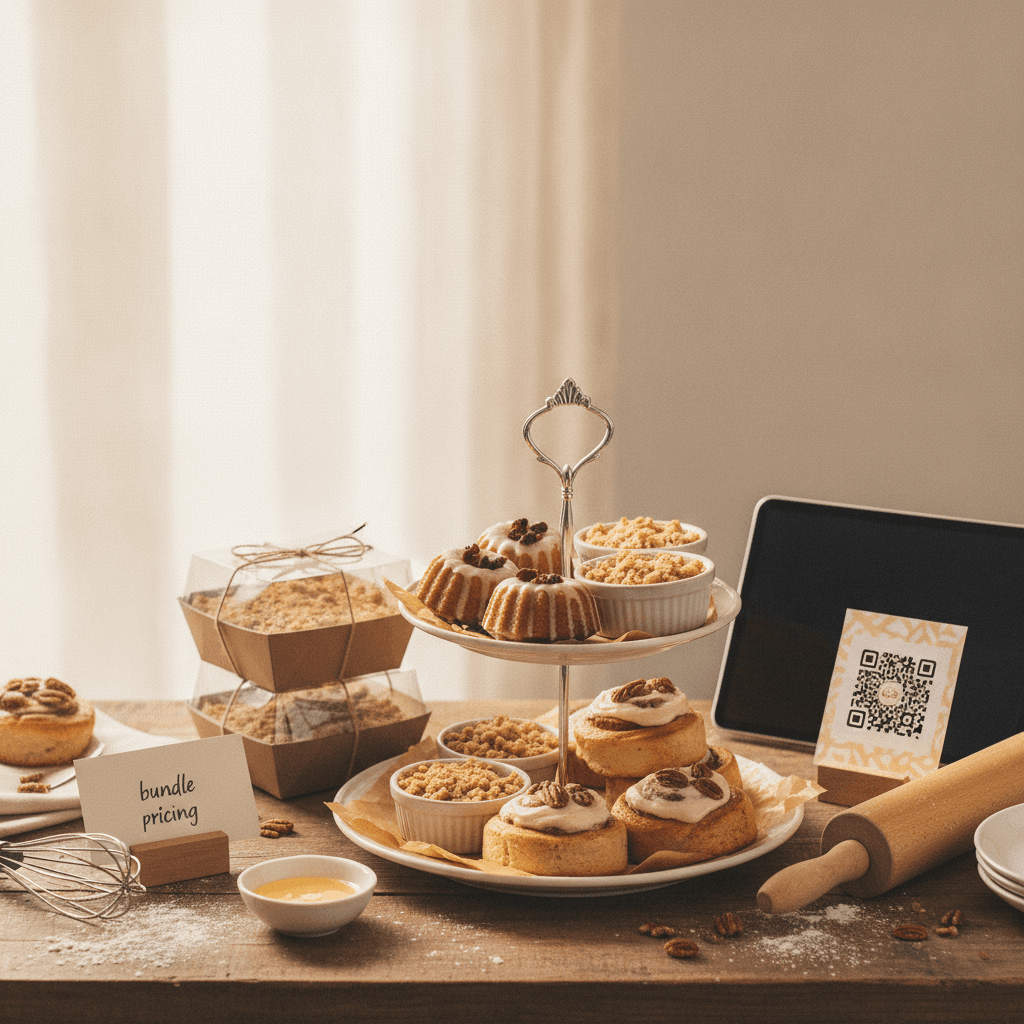
A good bake sale doesn't need a theme park's worth of ideas. It needs treats people already want, a setup that makes buying easy, and a couple of extras for people who weren't planning to spend money. Here are 23 ideas, grouped by what they solve, plus the food-safety rules that quietly shut down otherwise-great bake sales.
Key takeaways
- Shelf-stable, individually wrapped treats like cookies and bars are the only items many health departments allow at nonprofit bake sales — cream fillings and custard pies are commonly banned.
- Bundle pricing (3 cookies for $5 instead of $2 each) moves more product than pricing every item separately.
- A dedicated allergy-friendly or gluten-free table can charge a premium and keeps cross-contact concerns contained to one spot.
- Interactive formats — cakewalks, decorate-your-own kits, mystery grab bags — pull money from people who came just to look.
- A cashless QR payment option catches buyers with no cash, but it has to run through a business account, not a personal one.
- The best bake sale ideas match your crowd size and your venue's rules, not the fanciest treat you can bake.
How to choose the right bake sale ideas for your table
Start with three questions before you pick any idea on this list. How many people will walk past your table? A classroom hallway and a farmers market pull very different crowds. Match your treat count and price points to the crowd you're actually facing. What does your venue or health department allow? Schools, churches, and public health rules often ban cream fillings, custard, and anything needing refrigeration. Check the rules before you bake, not after. And what's your actual goal: raising money for a cause, or testing recipes and pricing before you launch a home bakery? A fundraiser goal favors familiar, fast-selling treats. A test-run goal favors a smaller menu you can watch closely.
One more thing worth saying plainly: the treat that photographs best is rarely the one that sells fastest. A three-tier naked cake looks great on a flyer. But most buyers want something they can eat in one or two bites, not a full slice to commit to. Chocolate chip cookies consistently outsell elaborate decorated cakes at the table. Familiar wins over fancy when people decide in ten seconds whether to stop.
Best-selling treats to bake for your table
- Classic chocolate chip cookie bundles. These are the reliable top seller at almost any bake sale because everyone already knows they like them, so there's no hesitation at the table. Sell them in bundles of three or a dozen instead of one at a time to move more per transaction.
- Fudgy brownie bars. Brownies skip the frosting and the refrigeration worries that come with cream-based toppings, which makes them simple to bake, cut, and wrap ahead. Cut them smaller than you think you should — a 1.5-inch square at $2 sells faster than a 3-inch square at $4.
- Mini loaf slices. Banana bread and zucchini bread slices give buyers who don't want something very sweet a reason to stop at your table too. Slice and wrap the loaf the morning of the sale so the cut edges don't dry out.
- No-bake rice krispie treats. These need no oven time on sale morning and no refrigeration while sitting on the table, which makes them easy to prep days ahead. Press them a little thinner than the box recipe suggests so they're easier to eat in two bites.
- Whoopie pie minis. A small cake sandwich with filling reads as more special than a plain cookie, which can support a slightly higher price. Use a shelf-stable buttercream or marshmallow filling, not cream cheese, so the pies hold up without refrigeration.
- Decorate-your-own cookie kits. Bagging a plain sugar cookie with a small tub of icing and sprinkles turns a $2 cookie into a $5 activity, especially for kids. Package the icing in a squeeze pouch so nothing leaks into the bag before pickup — see more packaging ideas for home bakers for low-cost options.
- A dedicated allergy-friendly or gluten-free section. Keeping these treats in one clearly labeled zone, baked and wrapped separately, reassures buyers who've been burned by cross-contact before and lets you charge a bit more for the extra care. Read up on gluten-free baking basics if this is your first time running one.
Table formats and themes that make people stop
- Dessert flight sampler. Arrange three or four mini bites — a cookie, a brownie corner, a cake pop — on a small tray for one set price. This works well for buyers who want to try a few things but don't want four whole items.
- Build-your-own hot cocoa or s'mores kit. Bag cocoa mix, mini marshmallows, and a few cookies together for a cold-weather or evening-event bake sale. These sell at a higher price point than a single baked item because they feel like a mini gift.
- A pet treat table. Dog-safe treats widen your table to people who skipped the dessert section because they're not hungry, and they're a natural fit for animal shelter or rescue fundraisers. If you want to test this as an ongoing side business, see our guide on selling dog treats from home.
- Pre-order VIP boxes. Let regulars reserve a box of popular items online or by text before the sale, with a pickup window at the start. This guarantees sales ahead of time and keeps your best sellers from running out before latecomers arrive.
- A "name your price" clearance table. Near the end of the sale, move whatever's left to a table where buyers pay what they want. People often pay more than you'd have charged once the best items are already gone and they don't want to miss out.
Pricing and payment ideas
- Bundle pricing instead of per-item pricing. Say your table sells 60 cookie bundles at $5 and 25 brownie bundles at $6 — that's $450 before costs, from 85 transactions instead of roughly 250 single-item sales at $2 each. Fewer transactions means a shorter line and less time spent making change. See our full bake sale pricing breakdown for a per-item price table.
- A cashless QR payment station. A printed QR code linked to a business payment profile lets buyers pay by phone when they don't have cash. Payments from a linked bank account or balance are typically free, but credit card payments through apps like Venmo carry roughly a 3% fee charged to the payer, so mention that if someone asks. Our point of sale system comparison covers card readers if you want a backup.
- Round-number pricing. Price everything at $1, $2, or $5 instead of $1.50 or $2.75 so you and your volunteers can make change fast without a calculator. A local bakery's price minus a dollar is a quick way to land on a fair number.
Activities and extras that boost turnout
- A cakewalk. Tape about 20 numbers in a circle for a medium-sized group, have people walk to music, and draw a number when it stops — the person standing there wins a donated cake. Asking families to donate one cake each keeps your own baking load light while still filling the prize table.
- A raffle basket alongside the bake sale. Pair your table with a donated gift basket raffle so people who've already bought treats have a second reason to stay and spend a little more. Keep the raffle entirely separate from food sales so you're not combining gambling rules with food rules.
- A flavor-vote poll before the sale. Post two or three flavor options on social media a few days ahead and let people vote on what you'll bake. This turns the bake sale into something people have already mentally committed to attending.
- A loyalty punch card. If you're running a bake sale table monthly or at every home game, a simple punch card rewarding a free item after five visits keeps the same buyers coming back instead of treating each sale as a one-off.
Logistics and promotion ideas
- A pre-order form with pickup time slots. A free online form lets people reserve items and pick a 15-minute pickup window, which spreads out your line and tells you exactly how much to bake. For a system that also handles payment, see our point of sale options.
- Partnering with an existing event instead of standing alone. Setting up at a sports game, school event, or farmers market puts you in front of people who are already out and in a buying mood, instead of hoping people show up just for you.
- A volunteer sign-up sheet with named shifts. Breaking the sale into two-hour shifts with specific names attached means nobody shows up assuming someone else has it covered. If you're also batch-baking for the sale, our batch baking guide covers the prep timeline.
- Clear allergen and "homemade" signage. Even where it's not required, a small sign naming common allergens and stating the food wasn't made in an inspected commercial kitchen builds trust and heads off awkward questions mid-sale.
What nonprofit bake sale rules actually require
Rules vary by state, county, and school district, so always check with your own health department first. Two published sets of guidelines show the kind of limits you're likely to run into.
| Rule | Illinois Department of Public Health | University of Minnesota Duluth EHSO |
|---|---|---|
| Allowed baked goods | Breads, cookies, cakes, and fruit pies made with one of 17 listed high-fructose fruits | Bars, cookies, cakes, and doughnuts only |
| Banned fillings/toppings | Pumpkin, sweet potato, custard, and cream fillings | Anything needing refrigeration; frosting added after baking (commercial frosting is fine) |
| Packaging | Items should be individually wrapped | Each item individually wrapped where it's prepared, carried in a covered container |
| Frequency limit | Not stated | One bake sale per organization per calendar quarter |
| Signage | Labeling recommended (name, ingredients, allergens) | Sign reading "Homemade/Not Inspected" required |
Frequently asked questions
What sells best at a bake sale?
Classic chocolate chip cookies, fudgy brownies, and mini loaf slices like banana bread sell the most consistently. They're familiar, and people can eat them in a few bites. Items that need a fork or careful handling, like cream pies, tend to sell slower. Some aren't even allowed — see our bake sale pricing and packaging guide for a full breakdown.
How much should I charge at a bake sale?
Most bake sale items run $1 to $3 each, or bundled at 3 for $5. Bundling moves more product than pricing every item one at a time. Check what a local bakery charges for something similar, then price at least a dollar less.
Can I sell homemade pies at a bake sale?
Fruit pies are usually fine, but many health departments ban custard, pumpkin, sweet potato, and cream pies at nonprofit bake sales because they need refrigeration. Illinois's public guidelines, for example, allow only high-fructose fruit pies and name 17 specific fruits as acceptable fillings.
How do I take payments at a bake sale without cash?
A printed QR code linked to a business payment profile on an app like Venmo or PayPal lets buyers pay from their phone. Keep cash as a backup, since not every buyer uses the same app. Confirm the account is set up for business payments, not personal transfers between friends.
How many baked goods do I need for a bake sale?
A common rule of thumb is to plan for two to three items per expected attendee, assuming roughly half will actually buy something. Our batch baking guide walks through a prep timeline for scaling that up without burning out the week before.
Sources

Written by
Co-founder, BakingSubs
Co-founder of BakingSubs, where he turns the science of ingredient substitutions into tested, reliable guidance for home bakers.
Related Posts
Bake with Confidence
See all
Confident Gluten-Free Baker Toolkit
The science-based system that replaces gluten's seven invisible jobs so your baking turns out soft, fluffy, and foolproof — every time.

Gluten-Free Recipe Vault
Instant access to our complete library of proven gluten-free recipes — no waiting, no guesswork, just results that work tonight.

Fix Your Gluten-Free Bread
Learn the 3-step formula to make bread rise and stay soft, discover why your loaves collapse, and get a tested sandwich bread recipe that actually works.