

Whether it's a school fundraiser, church event, or community fair, baking for a bake sale means juggling recipes, costs, packaging, and presentation all at once. This guide covers exactly how to price your baked goods so you actually cover costs, package them so they look irresistible, and make your table the one people line up for.
Key takeaways
- Price bake sale items by calculating your actual ingredient cost, then multiplying by 2-3x to cover your time, packaging, and a fair donation margin.
- Package individual portions in clear bags or boxes so buyers can see what they're getting — presentation drives impulse purchases.
- Offer a range of price points (from $1 cookies to $8 mini loaves) so every shopper finds something in their budget.
- Allergy-friendly items like gluten-free or dairy-free baked goods command premium prices and attract buyers other tables miss entirely.
- Vertical displays, clear signage with ingredient lists, and a cohesive color scheme make your table stand out in a crowded room.
- Batch-friendly recipes that hold well at room temperature are your best friend — skip anything that needs refrigeration.
How to price baked goods for a bake sale
Start by calculating your actual ingredient cost per item, then multiply by 2-3x for your final price. This covers ingredients, packaging, and leaves room for the fundraiser's cut. Most bake sale shoppers expect to pay a little more than grocery store prices because they know the money goes to a good cause.
Here's a simple way to think about it: if a batch of 24 cookies costs you $6 in ingredients and $2 in packaging, that's roughly $0.33 per cookie. Pricing them at $1 each or $3 for a bag of four gives you a healthy margin while still feeling like a deal to the buyer.
Bake sale pricing reference by item type
| Item | Typical ingredient cost per unit | Suggested bake sale price | Notes |
|---|---|---|---|
| Cookies (individually wrapped) | $0.25-$0.50 | $1-$2 each or 3 for $3 | Best sellers at every bake sale |
| Brownies or bars | $0.30-$0.60 | $2-$3 each | Cut into generous portions |
| Cupcakes | $0.50-$1.00 | $2-$4 each | Frosted cupcakes sell faster |
| Mini loaves (banana bread, pumpkin, etc.) | $1.50-$2.50 | $5-$8 each | Great for higher price points |
| Full-size cake or pie (whole) | $5-$10 | $15-$25 | Offer slices too at $2-$3 |
| Gluten-free or allergy-friendly items | $0.50-$1.50 | $2-$5 each | Premium pricing is expected and accepted |
If you're baking gluten-free items and want to keep your costs in check, making your own homemade gluten-free flour blend can save a surprising amount per batch compared to buying premixed bags.
One tip that works well: offer bundle pricing. A "family pack" of six assorted items for $10 moves a lot of product and makes people feel like they're getting a deal. It also helps you sell through items that might sit on their own.
Should you track costs if it's just a bake sale?
Absolutely. Even if you're donating your time, knowing your costs helps you price fairly and avoid losing money. If you find yourself baking for multiple events a year, a simple recipe costing spreadsheet makes this painless. You'll know exactly what each recipe costs and can price confidently every time.
How to package bake sale items so they actually sell
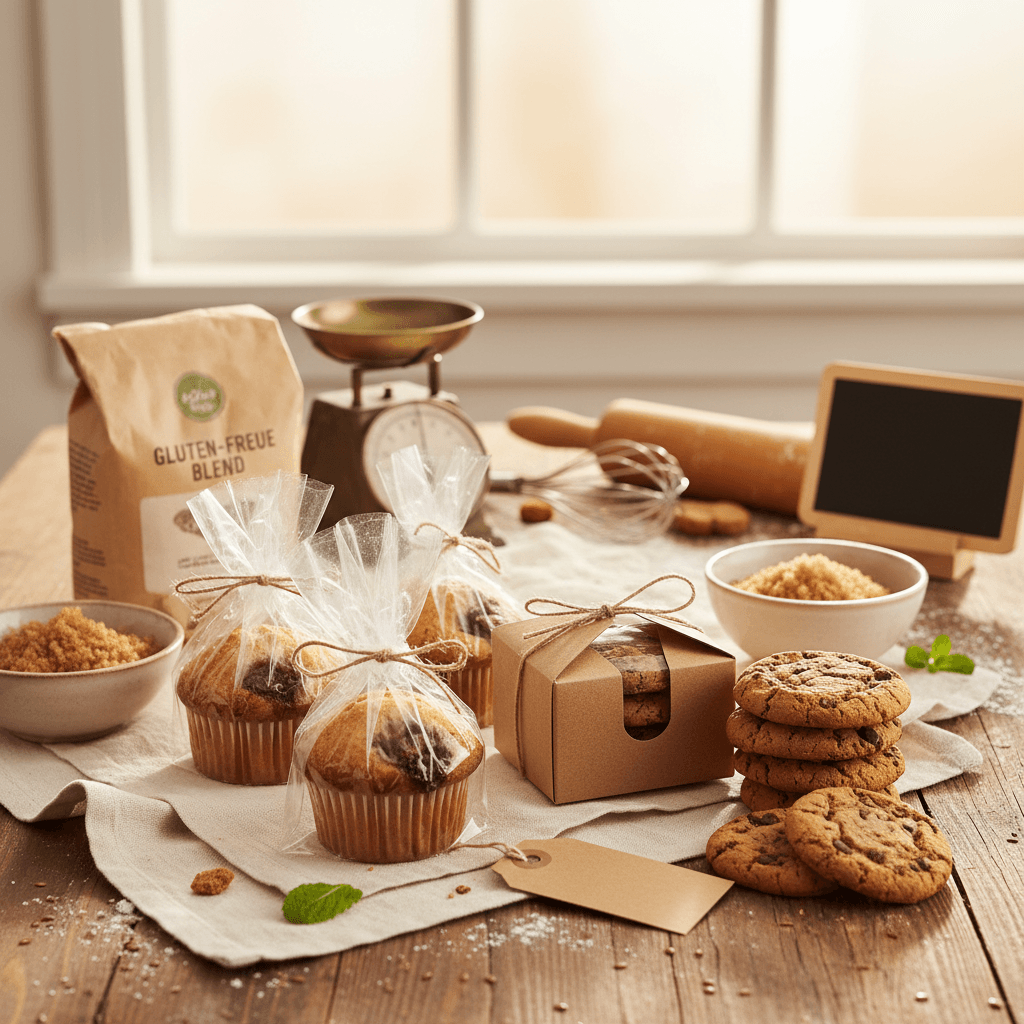
Clear packaging outsells opaque packaging almost every time because people buy with their eyes first. Use clear cellophane bags, small clear boxes, or even mason jars for layered treats. The goal is to let the baked good do the selling.
Here are packaging strategies that consistently work:
- Individual portions always. Nobody wants to handle a whole tray and figure out portions. Pre-portion everything so it's grab-and-go.
- Tie bags with ribbon or twine in a consistent color that matches your table setup. This small detail makes everything look intentional and professional.
- Add a simple label with the item name, key allergens (contains nuts, dairy-free, gluten-free), and the price. A small sticker or tag does the job.
- Use cupcake boxes with windows for frosted items so they don't get smashed but still look appealing.
- Stack items at different heights using cake stands, wooden crates, or even overturned boxes draped with cloth. Flat tables are boring tables.
If you're baking for people with dietary restrictions, this is where you can really stand out. Clearly labeled gluten-free items on a separate section of your table — ideally with a sign explaining they were baked in a dedicated environment — attract a loyal crowd that's used to walking past every other table.
If you're serious about leveling up your gluten-free baking skills for events like these, our Confident Gluten-Free Baker Toolkit walks you through flour blends, troubleshooting, and scaling recipes so you can bake with confidence every time.
Best bake sale items that hold well and sell fast
The best bake sale items are ones that taste great at room temperature, don't need refrigeration, and are easy to eat without utensils. Think portable, sturdy, and universally appealing.
Top sellers at bake sales
- Chocolate chip cookies — the undisputed champion. Make them slightly thick and chewy.
- Brownies — fudgy beats cakey for bake sales. Cut them into clean squares.
- Rice Krispie treats and similar no-bake bars — cheap to make, huge margins, kids love them.
- Banana bread or pumpkin bread mini loaves — feel like a premium item and command higher prices.
- Decorated sugar cookies — especially seasonal themes. They photograph well and people buy them as gifts.
- Cupcakes — frosted and sprinkled, they're eye candy for your table.
Items to avoid at bake sales
Skip anything with custard, whipped cream, cream cheese frosting that needs refrigeration, or delicate pastries that fall apart. Macarons look beautiful but crack easily during transport. Pies with fresh fruit toppings weep and look sad after an hour. Stick with sturdy, shelf-stable items.
How to make your bake sale table stand out
Your table display is everything. In a room full of paper plates covered in plastic wrap, the table that looks like a mini bakery shop wins all the attention. Here's how to make that happen without spending a fortune.
Visual display tips
- Choose a color scheme — two or three coordinating colors for your tablecloth, ribbon, and signage. This instantly looks more polished than random mismatched items.
- Use height variation. Cake stands, tiered trays, stacked wooden crates, or even upside-down boxes under a tablecloth create visual interest. Never lay everything flat.
- Make a big, clear sign with your table name or theme. "The Sweet Spot" or "Sarah's Kitchen" gives people something to remember.
- Take great photos beforehand and display a small framed photo or printed card showing the items being made. People connect with the story behind the food. If you want tips on this, our guide to baking food photography covers how to take scroll-stopping shots with just your phone.
Signage that sells
Every item needs a clear sign with the name, price, and any allergen info. Use a consistent style — handwritten chalkboard signs look charming, or printed cards on cardstock work well too. The key is readability. If someone has to squint, they'll walk past.
For allergy-friendly items, make the labeling bold and obvious. Something like "Gluten-Free Chocolate Brownies — made with almond flour, no wheat" tells the buyer exactly what they need to know. You can also note if items are dairy-free or nut-free.
How to offer allergy-friendly options at a bake sale
Offering gluten-free, dairy-free, or nut-free options at a bake sale is one of the easiest ways to stand out because almost nobody else does it. Parents of kids with allergies, people with celiac disease, and health-conscious shoppers are all looking for options and willing to pay a premium.
A few practical tips for pulling this off:
- Bake allergy-friendly items first, before any wheat flour is out, to avoid cross-contamination.
- Use separate utensils and packaging for allergen-free items.
- Label clearly with all ingredients — not just "gluten-free" but the specific flours and binders used.
- Keep allergy-friendly items on a separate section of your table with their own signage.
If you're new to gluten-free baking, our complete beginner's guide covers everything from choosing flours to avoiding common texture problems. And if you're looking for reliable mixes to speed things up, we've rounded up gluten-free baking mixes that deliver consistent results — perfect when you're baking in volume.
How to batch bake efficiently for a bake sale
The biggest mistake people make when baking for a bake sale is trying to make too many different items. Pick 3-4 recipes you can execute confidently, then make large batches of each. This is faster, cheaper, and gives you a cohesive-looking table.
Batch baking timeline
| Days before the sale | What to do |
|---|---|
| 5-7 days before | Shop for all ingredients and packaging. Confirm recipes and quantities. |
| 3-4 days before | Bake items that freeze well (cookies, brownies, quick breads). Cool completely, wrap tightly, and freeze. |
| 1-2 days before | Bake items that are best fresh (cupcakes, decorated cookies). Thaw frozen items in the fridge overnight. |
| Morning of | Frost cupcakes, package everything, prepare signage and display materials. Arrive early to set up your table. |
When you're baking multiple batches, weigh your ingredients rather than using cup measures. It's faster and more consistent, especially with gluten-free flours that can vary a lot by volume.
How much to bake for a bake sale
A good rule of thumb is to prepare 2-3 items per expected attendee, assuming about half will buy something. For a school event expecting 100 families, that means roughly 150-200 individual items from your table if you're one of several contributors.
If you're the only baker or one of just a few, scale up. It's better to sell out than to haul everything home. And if you do have leftovers, pre-plan who gets them — teachers' lounge, neighbors, your freezer for next time.
Frequently asked questions
How much should I charge for cookies at a bake sale?
Most bake sale cookies sell well at $1-$2 each, or in small bags of 3-4 for $3-$5. Price based on your ingredient cost (typically $0.25-$0.50 per cookie) and the size of the cookie. Decorated or specialty cookies like gluten-free options can be priced higher at $2-$3 each.
What are the best items to sell at a bake sale?
Chocolate chip cookies, brownies, cupcakes, and mini quick breads are consistently the top sellers at bake sales. They're easy to eat without utensils, hold well at room temperature, and appeal to almost everyone. Offering one or two allergy-friendly options also helps you stand out.
How do I package baked goods for a bake sale?
Use clear cellophane bags or small clear boxes so buyers can see the product. Individually portion everything for grab-and-go convenience. Add a label with the item name, price, and allergen information. Tie bags with coordinating ribbon for a polished look.
Can I sell gluten-free items at a bake sale?
Yes, and they're a great way to differentiate your table. Label them clearly with all ingredients, bake them separately from wheat-containing items to avoid cross-contamination, and display them on a separate section of your table. Many buyers are actively looking for gluten-free options and will pay a premium for them.
How far in advance can I bake for a bake sale?
Most cookies, brownies, and quick breads can be baked 3-4 days ahead and frozen. Thaw them the night before the sale. Cupcakes and decorated items are best made 1-2 days before. Avoid baking everything the night before — spreading the work across several days reduces stress and produces better results.

Written by
Co-founder, BakingSubs
Co-founder of BakingSubs, where he turns the science of ingredient substitutions into tested, reliable guidance for home bakers.
Related Posts
Gluten-Free Flour Weight Chart: Grams per Cup for 9 Major Brands (and Why the Spread Is Over 20%)
Best Low Carb Tortillas (2026): 6 Brands Compared by Net Carbs
Best Sugar-Free Cake Mix and Brownie Mix (2026): 14 Options Ranked by Net Carbs, Sweetener, and Price
Bake with Confidence
See all
Confident Gluten-Free Baker Toolkit
The science-based system that replaces gluten's seven invisible jobs so your baking turns out soft, fluffy, and foolproof — every time.

Gluten-Free Recipe Vault
Instant access to our complete library of proven gluten-free recipes — no waiting, no guesswork, just results that work tonight.

Fix Your Gluten-Free Bread
Learn the 3-step formula to make bread rise and stay soft, discover why your loaves collapse, and get a tested sandwich bread recipe that actually works.