

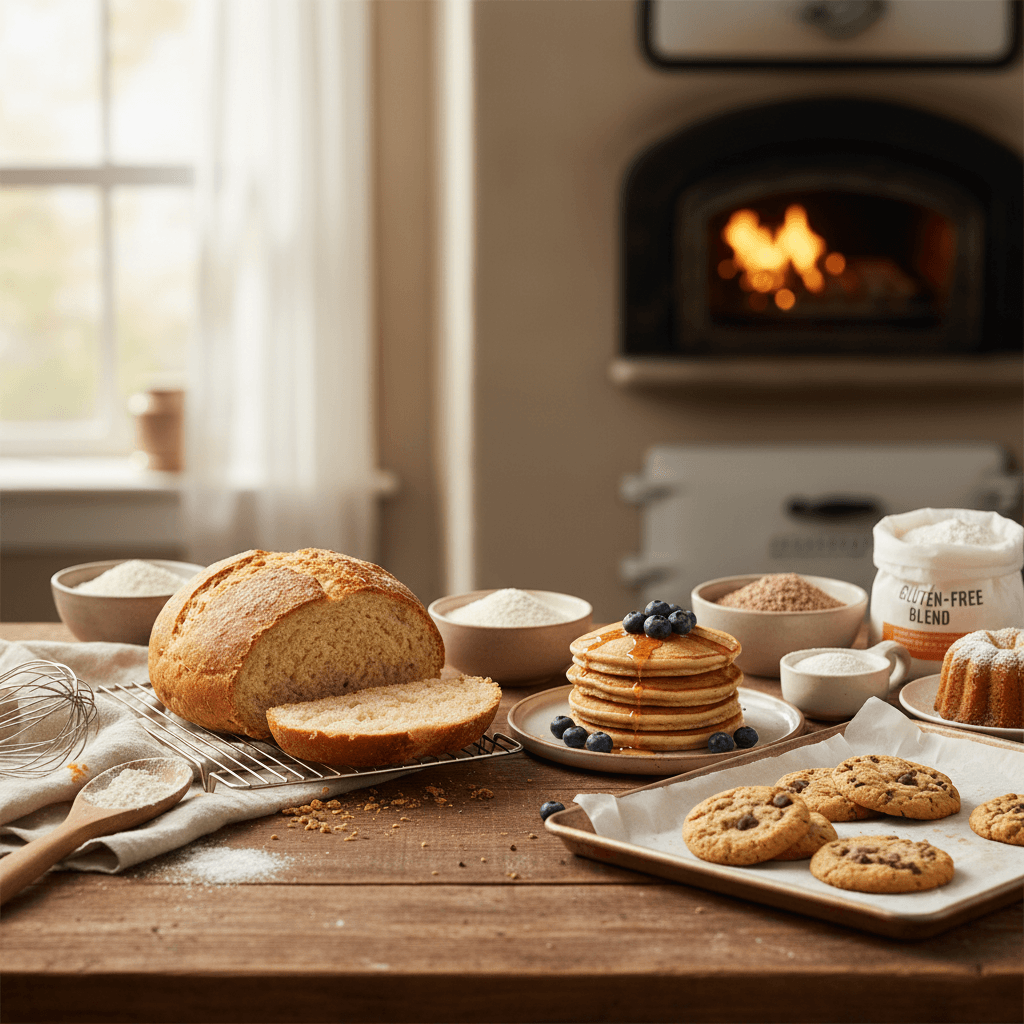
Finding the best gluten-free baking mixes means sorting through dozens of brands that all claim to taste "just like the real thing" — and most of them don't. We've compared the top mixes across every major baking category so you can skip the duds and stock your pantry with mixes that actually deliver.
Key takeaways
- King Arthur and Bob's Red Mill consistently produce the most reliable gluten-free baking mixes across multiple categories.
- The best mixes use a blend of rice flour, tapioca starch, and potato starch — not just one base flour.
- Dedicated gluten-free facilities matter: brands like King Arthur and Pamela's test every batch for gluten below 10 ppm.
- Cake and cookie mixes tend to perform better than bread mixes because they're less dependent on gluten for structure.
- Adding an extra egg or a tablespoon of oil to boxed mixes often closes the gap between "good enough" and genuinely great.
- Price per serving varies wildly — from under $0.50 to over $2.00 — and more expensive doesn't always mean better.
What makes a gluten-free baking mix actually good
A great gluten-free baking mix starts with a well-balanced flour blend, includes the right binders (usually xanthan gum or guar gum), and produces results that don't taste gritty, gummy, or cardboard-like. That's a higher bar than you might think.
We compared every mix on five criteria: flour blend, ingredient quality, gluten-free certification, ease of preparation, and value. We also looked at how likely each blend is to produce a gritty texture (the most common complaint with cheap mixes) or to stale quickly.
The flour blend is the foundation. Mixes built on a combination of brown rice flour, arrowroot or tapioca starch, and potato starch tend to perform best because each ingredient covers a different weakness. Single-flour mixes almost always fall short.
Best gluten-free cake mixes
King Arthur Gluten Free Yellow Cake Mix — best overall cake mix
This is our top pick if you want a cake that nobody will guess is gluten-free, with a tender, moist crumb that holds together well. It uses a blend of rice flour, tapioca starch, and potato starch with xanthan gum for binding.

King Arthur, Gluten-Free Yellow Cake Mix, Gluten-Free, Non-GMO Project Verified, Certified Kosher, Non-Dairy, 22 Oz
Check price on Amazon →The King Arthur Gluten Free Yellow Cake Mix makes a standard two-layer cake and works well with any frosting. Adding an extra egg yolk can give it an even richer crumb. It's produced in a dedicated gluten-free facility, which matters if you're baking for someone with celiac disease.
Bob's Red Mill Gluten Free Vanilla Cake Mix — best budget cake mix
If you want solid results without spending $8 per box, the Bob's Red Mill Gluten Free Vanilla Cake Mix is the way to go. The texture is slightly denser than King Arthur's, but the flavor is clean and genuinely vanilla-forward. It uses whole grain sorghum flour and rice flour as its base — a combination with a mild, slightly sweet flavor profile. If you're curious about sorghum as an ingredient, we did a deep dive in our sorghum flour brands comparison.
Pamela's Gluten Free Chocolate Cake Mix — best chocolate cake mix
Pamela's nails the chocolate category. The Pamela's Gluten Free Chocolate Cake Mix produces a deeply chocolatey, fudgy cake with a crumb that stays moist for days. It's one of the few mixes that shouldn't need extra fat or moisture — it's dialed in out of the box.
If you're shopping for the right pan to bake these in, our guide to the best springform pan for gluten-free cakes covers options that release cleanly every time.
If you're building confidence with gluten-free baking beyond mixes, our Confident Gluten-Free Baker Toolkit walks you through flour blends, ratios, and techniques so you can eventually create from-scratch recipes that rival any mix.
Best gluten-free bread mixes
Bread is the hardest category for gluten-free mixes because gluten is literally what gives bread its structure, chew, and rise. If you want to understand why, our post on what gluten does in baking breaks it all down. That said, a few mixes get remarkably close.
King Arthur Gluten Free Bread Mix — best overall bread mix
The King Arthur Gluten Free Bread Mix produces a loaf with a genuine bread-like crumb and a lightly crisp crust. It works in a loaf pan or a stand mixer with a paddle attachment. The key is following their instructions exactly — gluten-free bread dough is more like a thick batter than a traditional dough, and over-mixing or under-proofing will wreck the results.

King Arthur, Gluten-Free Bread and Pizza Mix, Gluten-Free, Non-GMO Project Verified, Certified Kosher, 18.25 Ounces
Check price on Amazon →This mix uses a blend of rice flour, tapioca starch, and potato starch with xanthan gum. The rise is respectable, and the loaf slices cleanly for sandwiches. Expect about 12 slices per loaf.
Simple Mills Artisan Bread Mix — best clean-ingredient bread mix
If you're avoiding rice flour, gums, or starches, the Simple Mills Artisan Bread Mix is worth trying. It's built on almond flour, arrowroot, and flax, which gives it a denser, nuttier profile. It won't fool anyone into thinking it's wheat bread, but it's genuinely enjoyable on its own terms — especially toasted.
The texture is closer to a quick bread than a yeasted loaf. If you want a lighter, airier result, the King Arthur mix above is the better choice. But for ingredient-conscious bakers, Simple Mills is hard to beat.
Bob's Red Mill Gluten Free Homemade Wonderful Bread Mix — best value bread mix
The name is a mouthful, but the Bob's Red Mill Wonderful Bread Mix has been a gluten-free staple for years. It makes a reliable sandwich loaf with a soft crumb. The flavor is neutral, which is actually a plus — it doesn't compete with whatever you're putting on it.
At around $5 per box, it's one of the most affordable options. If you experience poor rise, make sure your yeast is fresh and your water temperature is between 105-110 degrees F.
Best gluten-free cookie mixes
King Arthur Gluten Free Cookie Mix — best all-purpose cookie mix
The King Arthur Gluten Free Cookie Mix makes a classic sugar cookie that's crisp on the edges and slightly chewy in the center. It rolls and cuts well, which is unusual for gluten-free cookie dough — most tend to crack or crumble. If you're baking cut-out cookies for holidays, this is the one.

King Arthur Gluten-Free Cookie Mix, Non-GMO Project Verified, Certified Kosher, Non-Dairy, 16 Oz
Check price on Amazon →Enjoy Life Soft Baked Chocolate Chip Cookie Mix — best allergen-free cookie mix
For bakers dealing with multiple allergies (not just gluten), the Enjoy Life Chocolate Chip Cookie Mix is free from the top 14 allergens, including dairy, eggs, soy, and nuts. The cookies are soft, sweet, and genuinely chocolatey. They spread a bit more than traditional cookies, so we recommend chilling the dough for 20 minutes before baking. A good cookie sheet helps with even baking here.
Pamela's Gluten Free Chocolate Chunk Cookie Mix — best chocolate cookie mix
The Pamela's Chocolate Chunk Cookie Mix makes thick, bakery-style cookies with real chocolate chunks. The dough is easy to work with and the cookies hold their shape well. These are best slightly underbaked — pull them when the edges are set but the centers still look soft.
Best gluten-free pancake and waffle mixes
Birch Benders Gluten Free Pancake and Waffle Mix — best everyday pancake mix
The Birch Benders Gluten Free Pancake and Waffle Mix makes fluffy, golden pancakes that rival any diner stack. The batter comes together with just water, which makes weekday mornings much easier. It's built on a rice flour and tapioca starch base, and the flavor is clean with a hint of sweetness.
These also work well in a waffle maker — check our waffle maker guide if you're in the market for one that handles gluten-free batters without sticking.
King Arthur Gluten Free Pancake Mix — best fluffy pancake mix
If you want the fluffiest possible pancakes, the King Arthur Gluten Free Pancake Mix edges out the competition. It requires milk and eggs (or your preferred substitutes), which gives you a richer batter and more lift. The texture is remarkably close to traditional buttermilk pancakes.
Bob's Red Mill Gluten Free Pancake Mix — best budget pancake mix
The Bob's Red Mill Gluten Free Pancake Mix is a solid performer at a lower price point. The pancakes are slightly denser than King Arthur's but still tender and flavorful. It uses a blend of whole grain rice flour, potato starch, and tapioca flour. The large 24-ounce bag gives you about four batches, making it the best value per serving in this category.
How the top gluten-free baking mix brands compare
Here's a side-by-side look at the major brands across the categories that matter most.
| Brand | Best for | Dedicated GF facility | Common base flours | Price range per box | Allergen-friendly |
|---|---|---|---|---|---|
| King Arthur | Overall quality and reliability | Yes | Rice flour, tapioca starch, potato starch | $5-$8 | GF certified; contains eggs in some mixes |
| Bob's Red Mill | Value and availability | Yes (GF line) | Rice flour, sorghum flour, potato starch | $4-$6 | GF certified; varies by mix |
| Pamela's | Chocolate baked goods | Yes | Rice flour, tapioca starch, almond meal | $5-$7 | GF certified; contains tree nuts in some mixes |
| Simple Mills | Clean ingredients and grain-free | No (tested per batch) | Almond flour, arrowroot, flax | $6-$9 | Grain-free, paleo-friendly; contains tree nuts |
| Enjoy Life | Multiple food allergies | Yes | Rice flour, buckwheat flour | $5-$7 | Free from top 14 allergens |
| Birch Benders | Quick pancakes and waffles | No (tested per batch) | Rice flour, tapioca starch | $5-$7 | GF certified; some contain eggs |
When to use a mix vs. baking from scratch
Mixes are fantastic for convenience, consistency, and low-stakes baking — weeknight pancakes, birthday cakes when you're short on time, or when you're brand new to gluten-free baking and want reliable results while you learn. There's absolutely no shame in using a good mix.
That said, baking from scratch gives you total control over flavor, texture, and ingredients. It's also significantly cheaper per batch once you have a stocked pantry. If you're ready to make that jump, our homemade gluten-free flour blend recipe is a great starting point — it covers the exact ratios that work for cakes, cookies, and quick breads.
For many bakers, the best approach is both: keep a few trusted mixes on hand for busy days, and build your from-scratch skills over time.
Tips for getting better results from any gluten-free baking mix
Even the best mix can fall flat if you don't handle it right. Here are the adjustments that make the biggest difference:
- Weigh your ingredients. Gluten-free flours pack differently than wheat flour. A cup scooped from the bag can weigh 20-30% more than a cup spooned and leveled. Use a kitchen scale for consistent results every time.
- Don't overmix. Without gluten, there's no network to overdevelop — but overmixing can still knock air out of the batter and make things dense. Mix until just combined.
- Add an extra egg or yolk. This is the single most effective hack for boxed mixes. The extra protein and fat improve structure, moisture, and richness.
- Let batter rest for 5-10 minutes. Gluten-free starches need time to hydrate. A short rest before baking gives you better rise and a less gritty texture.
- Bake at the right temperature. Gluten-free baked goods often do better at slightly lower temperatures for slightly longer times. If the outside is browning before the center sets, drop the temperature by 25 degrees F and add a few minutes.
- Check for gummy centers. This is the most common issue with gluten-free bread and cake mixes. Use a thermometer — bread should hit 205-210 degrees F internally, and cakes should hit 200-205 degrees F.
Frequently asked questions
What is the best gluten-free baking mix brand overall?
King Arthur is the most consistently excellent gluten-free baking mix brand across all categories. Their mixes use well-balanced flour blends, are produced in a dedicated gluten-free facility, and deliver results that closely mimic conventional baked goods. Bob's Red Mill is a close second, especially if you're on a budget.
Are gluten-free baking mixes safe for people with celiac disease?
Most major brands — including King Arthur, Bob's Red Mill, Pamela's, and Enjoy Life — are certified gluten-free and test below 20 ppm (the FDA standard) or even below 10 ppm. Always check the label for third-party certification. Brands produced in dedicated gluten-free facilities carry the lowest risk of cross-contamination. If you're newly diagnosed, our guide for newly diagnosed celiacs covers how to set up a safe baking environment.
Can you make gluten-free baking mixes taste better?
Yes. Adding an extra egg yolk, a tablespoon of melted butter or oil, or a splash of vanilla extract significantly improves flavor and texture. Letting the batter rest for 5-10 minutes before baking also helps the starches hydrate, reducing grittiness and improving rise.
Is it cheaper to bake gluten-free from scratch or use mixes?
Baking from scratch is almost always cheaper per batch once you have a stocked pantry of gluten-free flours and starches. A homemade flour blend costs roughly $0.30-$0.50 per cup, while the equivalent amount from a boxed mix can cost $1.00-$2.00 or more. However, mixes save time and reduce the risk of failed batches, especially for beginners. Our gluten-free baking for beginners guide can help you decide when you're ready to make the switch.
Do gluten-free baking mixes work for vegan baking?
Some do. Enjoy Life mixes are free from eggs and dairy, making them naturally vegan. For other mixes that call for eggs, you can substitute with aquafaba, flax eggs, or commercial egg replacers. Mixes that call for milk can use any plant-based milk. Check our vegan egg substitutes guide for specific ratios and tips.

Written by
Co-founder, BakingSubs
Co-founder of BakingSubs, where he turns the science of ingredient substitutions into tested, reliable guidance for home bakers.
Related Posts
Bake with Confidence
See all
Confident Gluten-Free Baker Toolkit
The science-based system that replaces gluten's seven invisible jobs so your baking turns out soft, fluffy, and foolproof — every time.

Gluten-Free Recipe Vault
Instant access to our complete library of proven gluten-free recipes — no waiting, no guesswork, just results that work tonight.

Fix Your Gluten-Free Bread
Learn the 3-step formula to make bread rise and stay soft, discover why your loaves collapse, and get a tested sandwich bread recipe that actually works.