

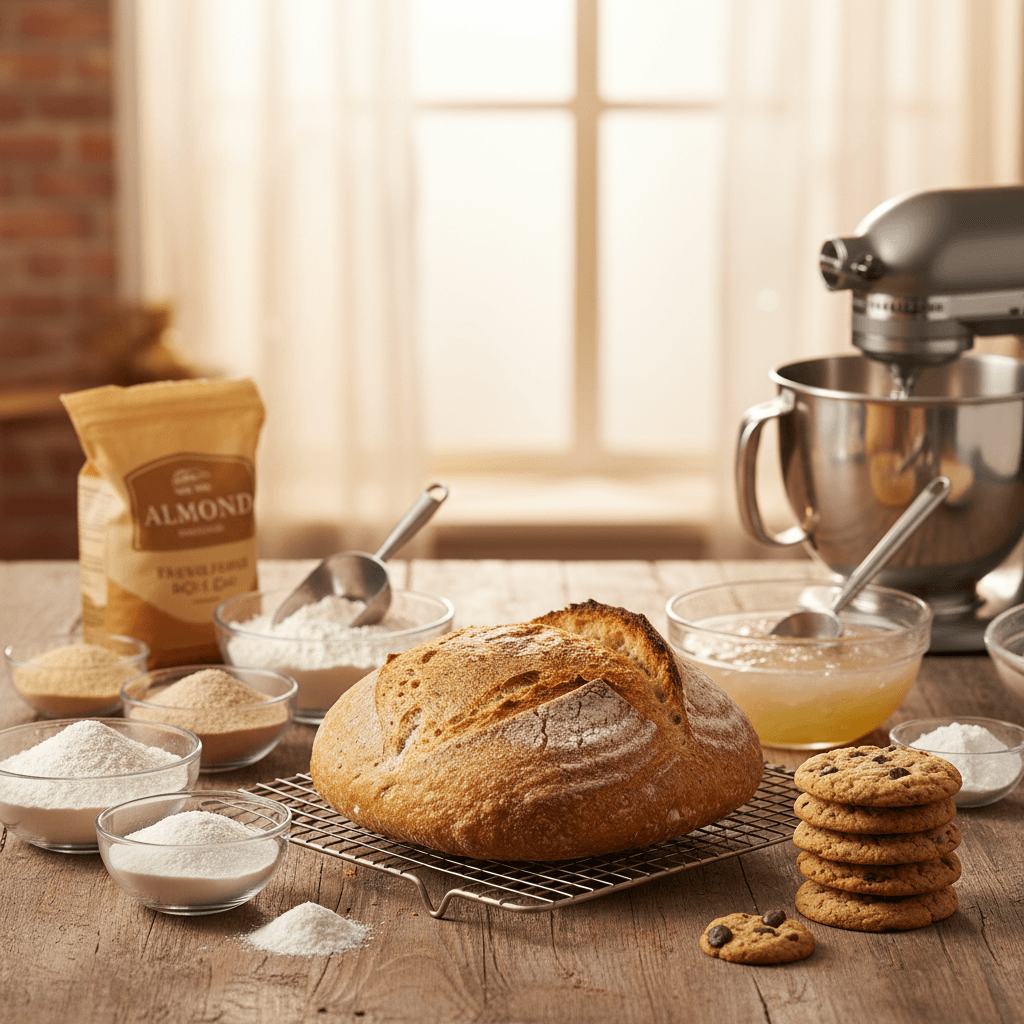
If you've been dumping expensive gluten-free flour into recipes only to pull out dense, crumbly, or gummy disasters, you're not alone — and it's not your fault. Most gluten-free recipes skip the science that actually matters. This guide covers everything you need to know to start baking gluten-free with confidence, from understanding why your bakes fail to building a pantry that sets you up for success.
Key takeaways
- Gluten performs 7 critical jobs in baking — structure, elasticity, gas retention, moisture retention, texture/chew, binding, and flexibility — and each one must be replaced intentionally.
- Simply swapping wheat flour for a gluten-free flour blend without addressing these 7 functions is the number one reason gluten-free bakes fail.
- A reliable all-purpose gluten-free flour blend uses 60% superfine rice flour, 20% potato starch, and 20% tapioca starch.
- Different baked goods need different binders: psyllium husk gel is the gold standard for bread, xanthan gum works best for cookies and cakes, and eggs or aquafaba provide lift.
- Weighing ingredients with a kitchen scale instead of using cups eliminates the biggest source of inconsistency in gluten-free baking.
- Cross-contamination matters — even trace gluten can cause problems for people with celiac disease, so dedicated tools and careful sourcing are essential.
Why gluten-free baking fails (and it's not the flour)
The biggest misconception in gluten-free baking is that you just need to "swap the flour." That advice has probably cost home bakers millions of dollars in wasted ingredients. Here's why it doesn't work: gluten isn't just one thing. It's a protein network that performs seven distinct jobs every time you bake with wheat flour.
We call this the Gluten Replacement Protocol, and understanding it is the single most important shift you can make as a gluten-free baker. Those seven jobs are:
- Structure — Gluten forms the scaffolding that holds baked goods together.
- Elasticity — It lets dough stretch without tearing.
- Gas retention — Gluten traps the CO2 from leaveners so your bread rises.
- Moisture retention — It holds water, keeping bakes from drying out.
- Texture and chew — That satisfying bite in a good loaf of bread? That's gluten.
- Binding — Gluten holds ingredients together so your cookies don't crumble into sand.
- Flexibility — It keeps baked goods from becoming rigid and brittle.
When you remove wheat flour, you remove all seven functions at once. If you only add back one or two (say, a binder like xanthan gum), you'll still get a subpar result. The key is replacing each function deliberately. Our gluten-free learning hub walks through each of these in detail, and it's the foundation everything else in this guide builds on.
How to build your gluten-free flour blend
A good gluten-free flour blend isn't just one flour — it's a combination of flours and starches that work together to approximate what wheat flour does on its own. Here's the all-purpose blend we recommend for beginners:
| Ingredient | Percentage | Role |
|---|---|---|
| Superfine rice flour | 60% | Provides the primary structure and bulk |
| Potato starch | 20% | Adds moisture retention and tenderness |
| Tapioca starch | 20% | Contributes chew, flexibility, and browning |
This all-purpose blend handles most everyday baking — muffins, pancakes, quick breads, and simple cakes. The word "superfine" matters here: regular rice flour will give you a gritty texture that nobody enjoys.
For more specialized baking, different ratios work better. We also have a Cake/Cookie blend optimized for tender, delicate crumbs and a Bread/Roll blend designed for the chew and structure that yeast breads demand. These are available inside the Confident Gluten-Free Baker Toolkit, which gives you the exact formulas, ratios, and troubleshooting guides so you stop guessing and start getting consistent results.
The binders that actually replace gluten's jobs
Your flour blend handles structure and bulk, but you still need binders and gels to replace gluten's elasticity, gas retention, and binding functions. Not all binders are interchangeable — the right one depends on what you're making.
Psyllium husk gel for bread
Psyllium husk gel is the gold standard for gluten-free bread baking. When mixed with water, psyllium forms a viscous gel that mimics gluten's ability to trap gas, stretch, and retain moisture. This is why the best gluten-free bread recipes call for it. Without psyllium (or a similar gel), your bread dough can't hold the CO2 produced by yeast, and you end up with a dense brick instead of an airy loaf. Mix whole psyllium husks with water at a 1:5 ratio (by weight) and let it gel for a few minutes before adding to your dough.
Xanthan gum for cookies and cakes
Xanthan gum is the go-to binder for cookies, cakes, and most non-bread baking. It provides binding and a small amount of elasticity without the heavy gel structure that bread needs. A little goes a long way — typically 1/2 teaspoon per cup of gluten-free flour for cookies and 1 teaspoon per cup for cakes. Too much xanthan gum creates a gummy, slimy texture, which is one of the most common gummy center problems beginners encounter.
Eggs and aquafaba for lift
Eggs do heavy lifting in gluten-free baking — they provide structure, binding, moisture, and leavening all at once. Many gluten-free recipes call for an extra egg compared to their wheat-based counterparts, and that's intentional. If you're baking vegan, aquafaba (the liquid from canned chickpeas) is a surprisingly effective substitute for egg whites. It whips into stiff peaks and provides the lift that gluten-free batters desperately need.
Essential gluten-free pantry for beginners
Starting out, you don't need every specialty flour on the market. Here's a focused pantry list that covers the vast majority of beginner recipes:
| Category | Ingredients to stock | Why you need them |
|---|---|---|
| Base flours | Superfine white rice flour, brown rice flour | Primary structure in most blends |
| Starches | Potato starch, tapioca starch, arrowroot powder | Tenderness, moisture, chew |
| Binders | Xanthan gum, psyllium husk, eggs | Replace gluten's binding and elasticity |
| Leaveners | Baking powder, baking soda, active dry yeast | Lift and rise |
| Specialty flours (optional) | Almond flour, buckwheat flour | Flavor, nutrition, and texture variety |
You can look up substitution details for any of these at BakingSubs.com/ingredients — it's the fastest way to figure out what to swap and how much to use.
Techniques that make or break gluten-free baking
Having the right ingredients is only half the equation. Gluten-free batters and doughs behave differently from wheat-based ones, and a few technique adjustments make a massive difference.
Weigh everything
A kitchen scale is non-negotiable for consistent gluten-free baking. Gluten-free flours and starches vary wildly in density — a cup of rice flour can weigh anywhere from 120g to 180g depending on how you scoop it. That kind of variation can swing a recipe from perfect to inedible. A reliable food scale is the single best investment you can make.
Don't overmix (but don't undermix either)
With wheat baking, you worry about developing too much gluten. In gluten-free baking, there's no gluten to overdevelop — but overmixing can still incorporate too much air into fragile batters, causing them to rise fast and then collapse. Mix until ingredients are just combined and hydrated. For bread doughs, a longer mix (3-5 minutes) actually helps psyllium husk distribute evenly and hydrate fully.
Let batters rest
Gluten-free flours absorb liquid more slowly than wheat flour. Letting your batter rest for 15-30 minutes before baking gives starches time to hydrate, which improves texture and reduces grittiness. This is especially important for rice flour-based blends.
Bake at the right temperature
Gluten-free baked goods often benefit from slightly lower temperatures and longer bake times. Without gluten's structure to hold things together during rapid rising, a gentler bake gives starches and proteins time to set before the outside over-browns. If your bakes are dry and crumbly on the outside but underdone inside, try dropping your oven temperature by 25 degrees F and adding 5-10 minutes.
Common gluten-free baking mistakes and how to fix them
We've seen the same mistakes trip up beginners over and over. Here are the biggest ones and what to do about them:
Using a 1:1 swap without adjustments
Commercial "1:1" gluten-free flour blends are convenient, but they're not magic. They usually include xanthan gum, which helps with binding, but they don't address moisture retention, gas retention, or elasticity. You'll still need to adjust liquid amounts (usually adding 10-20% more liquid) and may need additional eggs or binders depending on the recipe.
Skipping the acid
A small amount of acid — like apple cider vinegar or lemon juice — does two things in gluten-free baking. It strengthens protein bonds in eggs, giving you better structure. And it reacts with baking soda for extra lift. One tablespoon of vinegar per batch is a simple addition that noticeably improves rise.
Not addressing staling
Gluten-free baked goods go stale faster than wheat-based ones because they lack gluten's moisture-holding network. Adding a tablespoon of honey, a bit of extra oil, or even a small amount of applesauce helps retain moisture. Store baked goods in airtight containers, and freeze anything you won't eat within a day or two. Our guide on preventing quick staling covers this in depth.
Preventing cross-contamination
If you're baking gluten-free for someone with celiac disease, cross-contamination is a safety issue, not just a preference. Even 20 parts per million of gluten can trigger a reaction. Here's what that means in practice:
- Use dedicated cutting boards, baking sheets, and wooden spoons — porous materials can harbor gluten.
- Buy certified gluten-free oats, flours, and starches. "Naturally gluten-free" doesn't mean free from cross-contact during manufacturing.
- Clean your stand mixer, countertops, and oven thoroughly if you also bake with wheat flour in the same kitchen.
- Store gluten-free flours in sealed, labeled containers away from wheat products.
Your first three recipes to try
Don't start with sourdough bread. Seriously. Start with recipes that are naturally forgiving and build your confidence:
- Banana muffins — The moisture from bananas and eggs does a lot of the heavy lifting. Use your all-purpose blend, one egg, xanthan gum, and you'll get a result that rivals wheat-based muffins.
- Drop cookies — Cookies are more forgiving than cakes because they don't need to hold a tall structure. Almond flour-based cookies are a great starting point because the fat in almonds adds moisture and binding naturally.
- Simple sandwich bread — Once you're comfortable with muffins and cookies, try a basic psyllium-based bread recipe. It will teach you how gluten-free bread doughs behave (more like thick batters than traditional dough) and how psyllium gel transforms the texture.
Each of these recipes uses different binder strategies, so by the time you've made all three, you'll have hands-on experience with the core techniques that matter most.
Frequently asked questions
What is the best gluten-free flour for beginners?
A blend of 60% superfine rice flour, 20% potato starch, and 20% tapioca starch is the best starting point for beginners. This all-purpose blend works for muffins, quick breads, pancakes, and simple cakes. Avoid using any single gluten-free flour on its own — no single flour can replace all seven functions that gluten performs. You can find detailed substitution info for each flour at BakingSubs.com/ingredients.
Do I need xanthan gum for gluten-free baking?
For most cookies and cakes, yes — xanthan gum is the most effective binder for replacing gluten's binding and flexibility in these recipes. Use about 1/2 teaspoon per cup of flour for cookies and 1 teaspoon per cup for cakes. For bread, psyllium husk gel is a better choice because it also provides the gas retention and elasticity that bread needs to rise properly.
Why is my gluten-free bread so dense?
Dense gluten-free bread almost always comes down to insufficient gas retention. Without gluten (or a substitute like psyllium husk gel), your dough can't trap the CO2 that yeast produces, so the bread stays flat and heavy. Make sure you're using psyllium husk gel, that your yeast is fresh, and that you're giving the dough enough time to rise. Check our poor rise troubleshooting guide for a full walkthrough.
Can I just use a 1:1 gluten-free flour blend in any recipe?
You can, but expect mixed results. Commercial 1:1 blends address structure and some binding, but they don't fully replace gluten's gas retention, elasticity, or moisture retention. For simple recipes like pancakes or muffins, a 1:1 blend works reasonably well. For bread, pastry, or anything that relies heavily on gluten's network, you'll get much better results by understanding the Gluten Replacement Protocol and adjusting your recipe accordingly.
How do I prevent my gluten-free baked goods from going stale so fast?
Gluten-free bakes stale faster because they lack gluten's moisture-holding network. Add a tablespoon of honey or oil to help retain moisture, store baked goods in airtight containers at room temperature, and freeze anything you won't eat within 1-2 days. Wrapping individual portions before freezing preserves texture best. Our quick staling guide has more detailed strategies.
Start baking with confidence
Gluten-free baking doesn't have to mean settling for crumbly, tasteless results. Once you understand that gluten performs seven jobs and each one needs to be replaced intentionally, everything clicks. The failures start making sense, and more importantly, you know exactly how to fix them.
If you want the complete system — all the flour blend formulas (All-Purpose, Cake/Cookie, and Bread/Roll), the Gluten Replacement Protocol cheat sheet, troubleshooting guides, and step-by-step instructions — the Confident Gluten-Free Baker Toolkit puts it all in one place. It's built for home bakers who are tired of wasting expensive ingredients and ready to get consistent, delicious results every time.

Written by
Co-founder, BakingSubs
Co-founder of BakingSubs, where he turns the science of ingredient substitutions into tested, reliable guidance for home bakers.
Related Posts
7 Common Healthy Baking Mistakes That Ruin Texture (and How to Fix Each One)
7 Texture Changes With Health Swaps That Catch Bakers Off Guard (and How to Handle Each One)
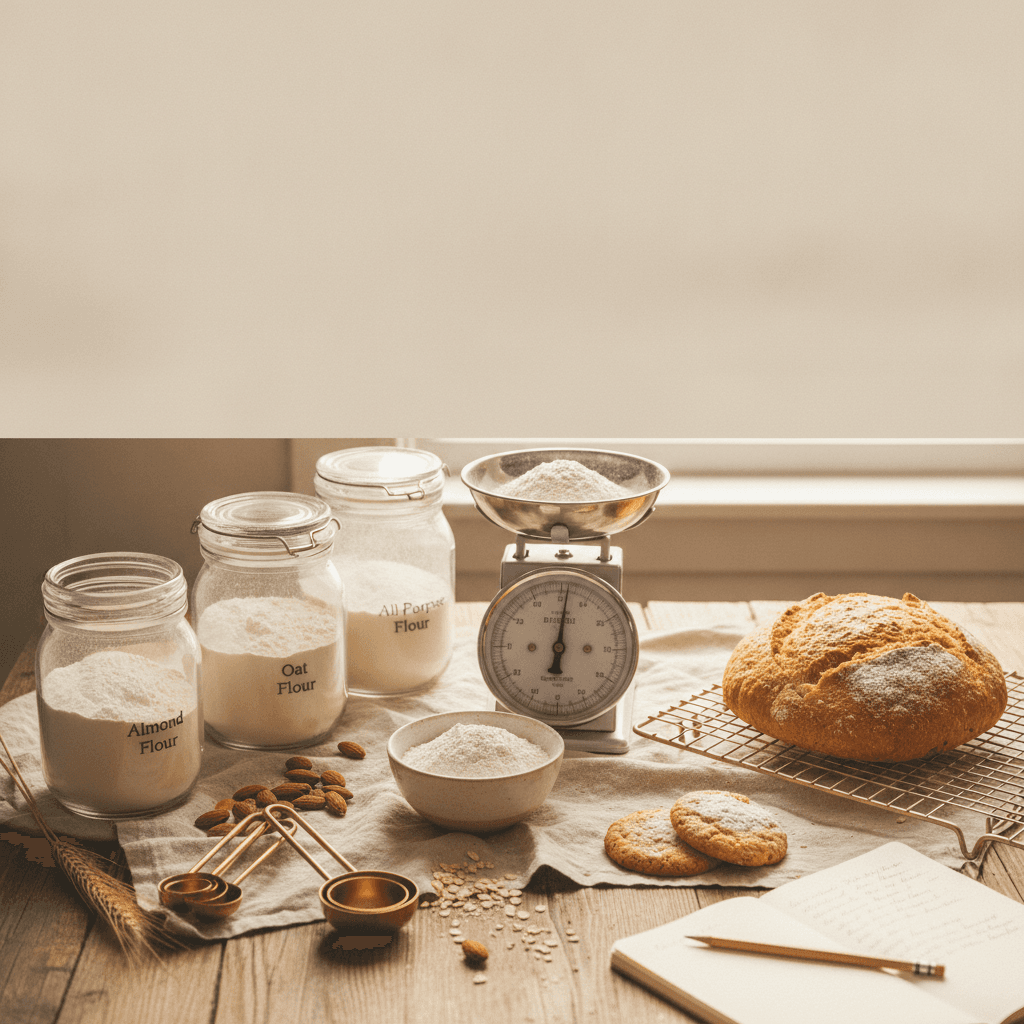
Gluten-Free Flour Weight Chart: Grams per Cup for 9 Major Brands (and Why the Spread Is Over 20%)
Bake with Confidence
See all
Confident Gluten-Free Baker Toolkit
The science-based system that replaces gluten's seven invisible jobs so your baking turns out soft, fluffy, and foolproof — every time.

Gluten-Free Recipe Vault
Instant access to our complete library of proven gluten-free recipes — no waiting, no guesswork, just results that work tonight.

Fix Your Gluten-Free Bread
Learn the 3-step formula to make bread rise and stay soft, discover why your loaves collapse, and get a tested sandwich bread recipe that actually works.