
How to Manage Rush Orders as a Home Baker (Without Wrecking Your Week or Your Margins)
Learn how to manage rush orders as a home baker with real pricing examples, a decision framework for when to say yes, and the rush fee structure that protects your margins.

Malik
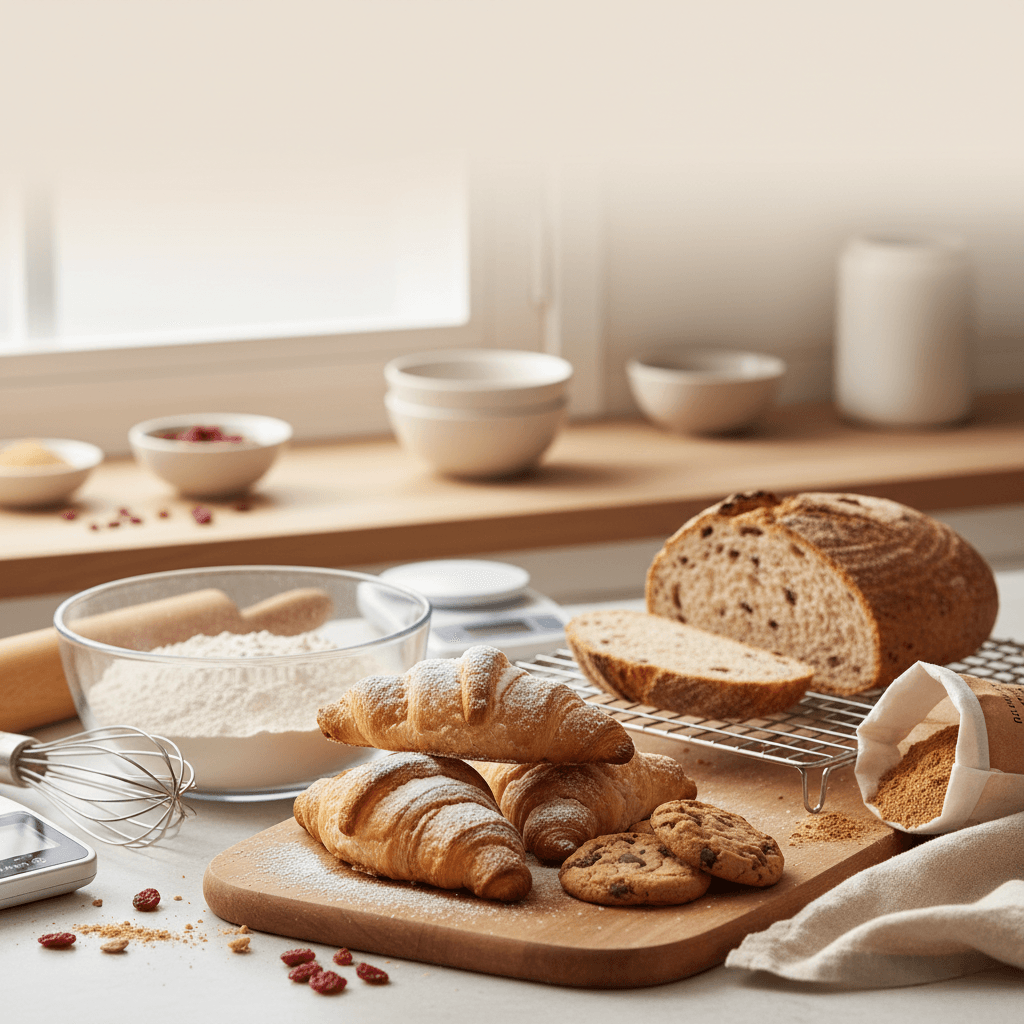
Rush orders will either become your most profitable revenue stream or the thing that burns you out by month six. The difference comes down to whether you have a system or you're just saying yes to everything. Here's the framework I use and what I've seen work for home bakers pulling $2,000–$8,000 a month.
Key takeaways
- A rush fee of 25–50% on top of your standard price is the industry norm for home bakers — anything less and you're subsidizing someone else's poor planning with your sleep.
- Not every rush order is worth taking. The decision depends on your current production load, the margin on the order, and whether the customer is a repeat buyer or a one-time panic order.
- Having 2–3 "rush-ready" items that you can produce in under 4 hours dramatically increases the number of rush orders you can say yes to profitably.
- A written rush order policy — posted on your order form, website, or social media — eliminates 80% of the awkward pricing conversations.
- Tracking which rush orders you accept and decline (and the revenue from each) tells you within 90 days whether rush work is actually worth your time.
Why you need a rush order policy before you need one
Most home bakers create their rush policy after a bad experience — they stayed up until 2 AM finishing a cake for $65 that should have been $110, and they swore they'd never do it again. Then the next text comes in and they do it again.
The fix isn't willpower. It's a policy you've written down and shared publicly. When a customer texts "I need 4 dozen cookies by tomorrow, can you do it?" you don't have to make a decision in the moment. You send them your rush pricing and let the price do the filtering.
Rachel, a cookie baker in Austin, told me she lost $340 in a single month by taking three rush orders at her standard rate. She was so focused on not losing the customer that she forgot to account for the overtime, the ingredient run to the store at 9 PM (where everything costs more), and the two regular orders she had to push back. Once she posted a rush fee schedule on her Instagram highlights, her rush requests actually went up — and the people who reached out were willing to pay.
How to set your rush fee (with real numbers)
Your rush fee needs to cover three things: the opportunity cost of rearranging your schedule, the inefficiency of unplanned production, and the stress tax on your energy. Here's what that looks like in practice.
| Lead time | Rush fee (% of standard price) | Example: $48 standard order |
|---|---|---|
| 48–72 hours (your normal lead time) | 0% | $48 |
| 24–48 hours | 25% | $60 |
| Under 24 hours | 50% | $72 |
| Same day | 75–100% | $84–$96 |
These are starting points. If you're already booked solid for the week, your rush fee should be higher because you're displacing planned work or adding hours you didn't budget for. If you have open capacity, a 25% bump on a 36-hour turnaround might be all you need.
One contrarian point: I think flat rush fees are better than percentage-based ones for most home bakers. A $15 rush fee on a $30 order of brownies is a 50% markup. A $15 rush fee on a $150 custom cake is only 10%, which doesn't come close to covering the chaos. Instead, consider a tiered flat fee based on order complexity:
- Simple items (brownies, quick breads, drop cookies): $15–$20 rush fee
- Medium complexity (decorated cookies, cupcakes with custom toppers): $25–$40 rush fee
- High complexity (custom cakes, tiered cakes, large catering orders): $50–$100 rush fee
If you're still figuring out your base prices, get that locked in first. Your rush fee is meaningless if your standard pricing is already too low. We've got a detailed breakdown in our cookie pricing guide and our custom cake pricing framework that will help.
The decision framework: when to say yes (and when to say no)
Not every rush order deserves a yes, even with the rush fee. I use a quick 4-question filter before I commit to anything outside my normal production schedule.
1. Do I have the physical capacity?
This is about oven time and counter space, not motivation. If you're running a single home oven and you already have 6 dozen cookies and a 3-layer cake scheduled for tomorrow, adding 4 dozen cupcakes isn't just stressful — it's physically impossible without cutting something. I tracked my oven throughput for two weeks and found I max out at about 14 batches per day with a standard 25-minute bake time and 10-minute cooldown between sheets. That's my hard ceiling. Know yours.
2. Will this displace a confirmed order?
If saying yes to the rush means pushing back a customer who ordered two weeks ago, you're trading a loyal customer's goodwill for a one-time premium. That math almost never works. The exception: if the displaced customer is flexible and you can move them by a day without friction, it can work. But ask them first.
3. Is the margin worth it after rush costs?
Rush orders have hidden costs. You might need to make a separate grocery run ($8–$15 in gas and time), you might waste ingredients because you're working faster and less precisely, and you'll likely use more energy (literal and electrical). A $72 rush order that costs you $38 in ingredients and $12 in extra supplies nets you $22 for what might be 4 hours of unplanned work. That's $5.50 an hour. Say no.
If you find yourself regularly underpricing, our post on how to stop undercharging walks through the full cost calculation.
4. Is this customer worth the investment?
A repeat customer who orders $200+ a month and just got caught off guard? That's a relationship worth protecting. A stranger from Facebook who wants a $35 cake by tomorrow and is already negotiating the rush fee? That's a red flag. Prioritize the relationships that have long-term value.
And sometimes the right answer is just no. We have a whole guide on how to say no to orders that lose you money — it's one of the most important skills in running a sustainable bakery.
Build a "rush-ready" menu to say yes more often
The bakers who profit most from rush orders aren't the ones who can make anything on short notice. They're the ones who've narrowed down 2–4 items they can produce quickly, reliably, and profitably without a full production plan.
My rush-ready criteria:
- Ingredients I always have on hand. No special-order items, no seasonal produce, nothing I'd need to run to a specialty store for.
- Total production time under 4 hours from pulling ingredients to packaging. This includes cooling time.
- High margin items. My rush-ready brownies cost $6.40 per batch in ingredients and sell for $28 per dozen with a $15 rush fee. That's a $36.60 margin for about 90 minutes of work.
- Forgiving recipes. Rush conditions mean you're moving fast. A recipe that falls apart if your butter is 2 degrees too warm isn't rush-ready.
Good rush-ready candidates: bar cookies, brownies, quick breads (banana bread, lemon loaf), simple frosted cupcakes, scones, and muffins. Bad rush-ready candidates: macarons, custom decorated sugar cookies, anything with fondant, tiered cakes, or laminated dough.
If you want to get your production workflow tighter overall, our batch baking efficiency guide covers how to structure your kitchen time so you're not reinventing the wheel every session.
How to communicate your rush policy so customers respect it
A policy nobody sees is a policy nobody follows. Here's where to put it:
- Your order form. If you use Google Forms, Jotform, or any intake system, add a line: "Orders placed with less than 72 hours notice are subject to a rush fee of $15–$100 depending on item complexity." Make it a required checkbox.
- Your social media bio or highlights. A pinned story or highlight labeled "Rush Orders" with your fee schedule saves you from repeating yourself in every DM.
- Your Google Business Profile. If you have one (and you should), add rush order info to your business description.
- Your auto-reply. If you use automated responses when an inquiry comes in, include: "Need it in less than 3 days? Rush fees apply — see our pricing below."
The exact wording matters less than the consistency. When every touchpoint mentions the rush fee, customers stop being surprised by it.
The script for when they push back on the fee
It happens. Here's what works:
"I totally understand — I wish I could offer the same pricing on short notice! The rush fee covers the schedule rearranging and extra sourcing I need to do to make sure your order gets the same quality as my planned orders. If the timing doesn't work, I'd love to book you for next week at my standard rate."
That's it. No apologizing, no negotiating, no justifying. If they walk, they were never going to be a profitable customer anyway. For more on handling these conversations, check out our guide on setting boundaries with bakery customers.
Track your rush orders or you're guessing
I kept a simple spreadsheet for 3 months tracking every rush inquiry. Here's what the data showed:
- I received an average of 6 rush requests per month
- I accepted 4 of those on average
- Average rush fee collected: $27
- Total rush revenue over 3 months: $324 in fees alone, on top of $1,480 in base order revenue
- 2 of the 6 monthly requests came from repeat customers — the other 4 were new contacts
- Of the new contacts, only 1 in 4 converted to a repeat customer
That data told me two things: rush orders from existing customers are almost always worth taking, and rush orders from strangers are only worth it if the margin clears $20/hour for my time. Without tracking, I would have kept saying yes to everything and burning out. If you're feeling that creep already, our post on home baker burnout is worth reading before it gets worse.
When rush orders become a business model (and when they shouldn't)
Some bakers lean into rush work intentionally. They keep their schedule partially open, maintain a stocked pantry, and market themselves as the baker who can deliver on short notice. This works if:
- You're in a market where last-minute events are common (college towns, corporate-heavy areas)
- Your rush-ready menu has margins above 65%
- You genuinely enjoy the pace and don't find it stressful
Tara, a home baker in Nashville, built her entire business around 24-hour turnaround orders. She keeps her menu to 8 items, all rush-ready, and charges a flat $20 rush fee on everything. Her average order is $58 with the fee, and she does about 15 orders a week. That's $870/week — roughly $3,480/month — working about 30 hours. She told me the key was deciding upfront that she wasn't a custom cake baker. She's a fast, reliable, limited-menu baker, and her customers love the predictability.
But this model doesn't work for everyone. If your niche is wedding cakes or custom decorated cookies, rush orders are the exception, not the rule. Your business model should be built around advance bookings with rush as a bonus revenue stream, not the foundation.
The minimum order rule that saves your sanity
Here's something most rush order advice skips: set a minimum order amount for rush work. A $15 rush fee on a $12 order of 6 muffins feels absurd to the customer, and honestly, it's not worth your time either.
My minimum for rush orders is $45 before the rush fee. Below that, the fixed costs of production (preheating the oven, washing equipment, packaging) eat too much of the margin. This one rule eliminated about 30% of my rush inquiries — and every single one of those was an order that would have lost me money or broken even at best.
If a customer wants a small rush order, I offer two options: bundle up to meet the minimum, or place a standard order for next week. Most choose one or the other, and nobody's offended.
Seasonal rush management: the holidays are different
Everything above applies year-round, but November and December need their own rules. During peak season, I stop accepting rush orders entirely after a specific cutoff — usually December 15. The reason is simple: my production calendar is already at 100% capacity, and a single rush order can cascade into delays on 3–4 other orders.
Instead, I build rush pricing into my holiday pricing from the start. All holiday orders placed after December 1 automatically get a 20% late-booking surcharge. This isn't technically a "rush fee" — it's a capacity premium. But it accomplishes the same thing: it compensates me for working in a compressed timeline and discourages last-minute orders from people who had two months to plan.
Frequently asked questions
How much should a home baker charge for rush orders?
Most home bakers charge 25–50% above their standard price for orders placed with less than 48 hours notice, and 75–100% for same-day orders. A flat fee approach — $15 to $100 depending on item complexity — often works better than a percentage, especially when your standard order sizes vary widely. The rush fee should cover your extra time, unplanned ingredient sourcing, and the stress of rearranging your schedule.
Should I always accept rush orders as a home baker?
No. A rush order is only worth accepting if you have the physical oven and counter capacity, it won't displace a confirmed order from an existing customer, and the margin after rush costs clears at least $15–$20 per hour of your time. If any of those conditions aren't met, declining the order protects both your business and your sanity. Having a clear policy makes saying no much easier — check out our guide on when to stop taking every order.
How do I tell a customer about my rush fee without losing them?
Post your rush policy publicly — on your order form, social media, and anywhere customers find you — so it's never a surprise. When a customer asks for a rush order, respond with something like: "I can absolutely do that! Orders under 72 hours include a rush fee of [amount] to cover the schedule changes. Want me to send you a quote?" Most customers who genuinely need the item will pay without pushback.
What baked goods are best for rush orders?
Items that require fewer than 4 hours total production time, use pantry-staple ingredients, and have forgiving recipes. Brownies, bar cookies, quick breads, muffins, scones, and simple frosted cupcakes are strong candidates. Avoid offering rush pricing on macarons, decorated sugar cookies, tiered cakes, or anything requiring fondant — the quality risk is too high under time pressure.
Can I build a home bakery business around rush orders?
Yes, but only if you keep a limited, rush-optimized menu with margins above 65%, maintain a well-stocked pantry at all times, and genuinely enjoy the pace. Bakers in markets with frequent last-minute events — corporate offices, college towns — tend to do best with this model. It's not the right fit if your niche is custom or highly decorated work that requires long lead times.

Written by
Co-founder, BakingSubs
Co-founder of BakingSubs, where he turns the science of ingredient substitutions into tested, reliable guidance for home bakers.
Related Posts
Bakery Recipe Cost Sheet: How to Cost a Recipe in 6 Steps (With a Table You Can Copy)

Home Bakery Order Form Template: A Copy-Paste Layout That Cuts Mistakes by Half
Cottage Food Label Requirements and Template: What Every State Demands (With a Copy-Paste Layout)
Bake with Confidence
See all
Confident Gluten-Free Baker Toolkit
The science-based system that replaces gluten's seven invisible jobs so your baking turns out soft, fluffy, and foolproof — every time.

Gluten-Free Recipe Vault
Instant access to our complete library of proven gluten-free recipes — no waiting, no guesswork, just results that work tonight.

Fix Your Gluten-Free Bread
Learn the 3-step formula to make bread rise and stay soft, discover why your loaves collapse, and get a tested sandwich bread recipe that actually works.