
How much to charge for custom decorated cookies: a pricing framework for home bakers who want to actually get paid
Learn how much to charge for custom decorated cookies with real pricing examples, a cost formula, and complexity tiers used by working home bakers.

Malik
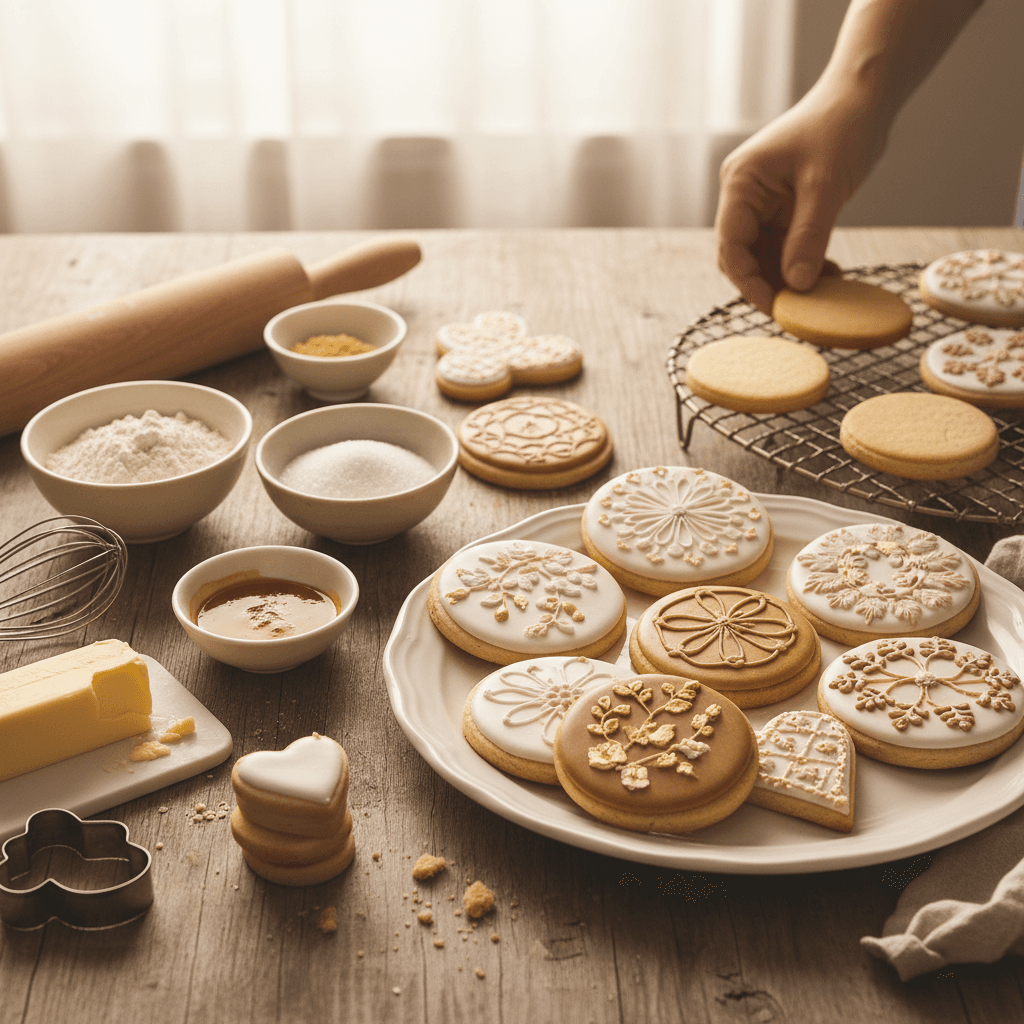
Pricing custom decorated cookies is the single most agonizing decision home bakers face, and most of us get it wrong for months (or years) before correcting course. Here's a complete framework for setting prices that cover your costs, pay you fairly, and don't scare off customers.
Key takeaways
- Most experienced home bakers charge between $4 and $12 per cookie depending on size, complexity, and market, with $6 to $8 being the most common range for medium-complexity royal icing designs.
- Your price per cookie must account for ingredients, packaging, labor (including design time), and overhead — not just butter and flour.
- Charging per cookie works for simple sets, but charging per dozen with complexity tiers is more profitable and easier to communicate for larger orders.
- The biggest pricing mistake isn't charging too much — it's failing to account for unpaid labor like consultations, design mockups, and delivery time.
- Your local market matters, but it shouldn't set your floor. If competitors are undercharging, that's their problem, not your business model.
- Raising prices is inevitable and necessary — the bakers who survive year two are the ones who raise prices strategically instead of absorbing rising costs.
What most home bakers actually charge for decorated cookies
The going rate for custom decorated sugar cookies from a home bakery ranges from $3 to $15 per cookie, but that range is so wide it's almost useless without context. Here's what actually drives the number.
| Complexity level | Description | Typical price per cookie | Price per dozen |
|---|---|---|---|
| Simple | One color, minimal detail, basic shapes (hearts, circles, letters) | $3 – $5 | $36 – $60 |
| Medium | 2-3 colors, some detail work, custom shapes, basic flooding | $5 – $8 | $60 – $96 |
| Detailed | Multiple colors, fine line work, hand-painted elements, character designs | $8 – $12 | $96 – $144 |
| Highly intricate | 3D elements, extensive hand-painting, gold leaf, elaborate multi-step designs | $12 – $18+ | $144 – $216+ |
These numbers reflect what working home bakers across the US report charging in 2024-2025. If you're in a higher cost-of-living area (major metro, coastal city), push toward the top of each range. If you're in a rural or lower-cost market, you might land in the middle — but don't automatically default to the bottom.
The real cost of a custom decorated cookie
Before you set a price, you need to know what each cookie actually costs you to produce. Most underpricing happens because bakers only count ingredients and forget everything else.
Ingredient cost per cookie
A standard 3-4 inch royal icing decorated sugar cookie costs roughly $0.50 to $1.25 in ingredients depending on your recipe, butter prices in your area, and how much royal icing each design requires. Track this by costing out a full batch and dividing by yield — don't guess.
Packaging and presentation
Individual cellophane bags, ribbon, stickers, tags, and boxes add up fast. Budget $0.50 to $1.50 per cookie for packaging, more if you're using custom branded materials or gift boxing full sets.
Labor — the number most bakers leave out
This is where pricing falls apart. A batch of 24 medium-complexity decorated cookies typically takes 4 to 6 hours of total labor when you include mixing, rolling, cutting, baking, cooling, outlining, flooding, drying time management, detail work, and packaging. That doesn't count the consultation, design planning, or delivery.
If you want to pay yourself $25/hour (a reasonable starting point for skilled work), and a batch of 24 takes 5 hours, that's $125 in labor alone — or about $5.20 per cookie just for your time. Add ingredients and packaging and you're already at $6.50 to $8 per cookie before overhead.
Overhead you're probably not tracking
Electricity, water, kitchen supplies (parchment, food coloring, tips, bags), equipment wear, business insurance, cottage food license fees, and the phone or computer you use to manage orders. A common approach is to add 15-20% on top of your direct costs to cover overhead.
If you've been undercharging for your baked goods, this cost breakdown is usually where the lightbulb goes on.
A pricing formula that actually works for decorated cookies
Here's the framework we recommend. It's not the only way, but it forces you to account for everything that matters.
Price per cookie = (ingredient cost + packaging cost) + (hourly rate x hours per cookie) + overhead markup
Let's run the math on a real example:
- Ingredient cost per cookie: $0.85
- Packaging cost per cookie: $0.75
- Labor: $25/hour, 12 minutes per cookie (medium complexity) = $5.00
- Subtotal: $6.60
- Overhead markup (20%): $1.32
- Price per cookie: $7.92 — round to $8.00
That $8 cookie is not overpriced. It's the minimum you need to charge to pay yourself a modest hourly rate and not lose money. Many bakers should be charging more.
If you're just getting started with your home bakery and want a structured approach to building a business that actually pays you, check out the free Home Bakery Pro masterclass. It walks through getting consistent orders and building a sustainable operation — the kind of foundation that makes pricing decisions much easier.
Per cookie vs. per dozen vs. per set: which pricing model to use
The right pricing model depends on how you sell and what your customers typically order.
| Pricing model | Best for | Pros | Cons |
|---|---|---|---|
| Per cookie | Mixed-complexity orders, small quantities | Precise, easy to adjust per design | Can feel expensive to customers when they multiply |
| Per dozen | Larger orders, party favors, events | Sounds more affordable, encourages bigger orders | Harder to price mixed-complexity sets fairly |
| Per set/collection | Themed gift boxes, curated assortments | Highest perceived value, best margins | Requires strong branding and presentation |
Many successful cookie bakers use a hybrid: they quote per dozen with complexity tiers for event orders, and per cookie or per set for smaller custom requests. The key is having a system, not making it up every time someone DMs you.
How to handle the variables that change your price
Cookie pricing is legitimately an "it depends" answer, but here are the specific variables and how to handle each one.
Size matters more than you think
A 2-inch mini cookie uses less dough and icing but takes almost as long to decorate as a 3.5-inch cookie. Many bakers set a minimum price per cookie regardless of size (say, $5) and only adjust upward for larger cookies. Don't discount minis — the labor per cookie barely drops.
Quantity discounts: proceed with caution
Offering a small discount on large orders (100+ cookies) can make sense because your per-cookie labor drops slightly with repetitive designs. But keep the discount modest — 10% maximum. You're still doing the work. If an order is so large it crowds out other business, that's a reason to charge more, not less.
Rush orders deserve a premium
Any order with less than one week's notice should carry a rush fee of 25-50%. This isn't punitive — it compensates you for rearranging your schedule, sourcing supplies on short notice, and the stress of a compressed timeline. State this policy upfront so it's never a surprise.
Design time and consultations
If a customer wants a custom design that requires you to create mockups, research characters, or go through multiple revision rounds, that's labor. Some bakers build this into their per-cookie price. Others charge a flat design fee ($15-$30) for custom work that goes beyond choosing from existing designs. Either approach works — just don't do it for free.
Learning to say no to orders that lose you money is one of the hardest but most important skills you'll develop.
What to do when customers say your cookies are too expensive
This will happen. Here's how to handle it without panicking or caving.
First, recognize that price objections are normal and don't mean your prices are wrong. Grocery store cookies are $5 for a box of 12. You're not competing with grocery stores. You're offering custom, handmade, made-to-order art that happens to be edible.
Strategies that actually work
- Show the value: Post process videos and behind-the-scenes content that shows the hours of work in each cookie. Customers who see the process rarely complain about price.
- Offer a simpler option: Instead of lowering your price, offer a lower-complexity design at a lower tier. "I can do a simpler version of that design for $5 per cookie instead of $8 — want me to show you what that looks like?"
- Set minimums: A minimum order of $48 (one dozen simple) or $60 (one dozen medium) filters out customers who want two cookies for $3 each.
- Don't apologize for your prices: State them clearly, confidently, and without justification. "My decorated cookies start at $6 each for simple designs and go up from there based on complexity."
The customers who balk at $8 per cookie were never going to be your best customers anyway. The ones who order 3 dozen for their daughter's birthday without blinking are. Focus on finding more of the second group through strategies like building a referral program or landing corporate orders that value quality over price.
How to present your pricing so customers actually buy
How you communicate your prices matters almost as much as the prices themselves.
Use a pricing guide or menu
Create a simple PDF or highlight on your social media that shows your tiers with example photos. This saves you from quoting every single inquiry individually and sets expectations before the conversation starts.
Quote per dozen, not per cookie, for larger orders
"$84 per dozen" sounds more reasonable than "$7 each" even though it's the same math. Psychology matters. For gift sets, quote the set price: "This 6-cookie birthday set is $54" rather than listing the per-cookie breakdown.
Always include what's included
When you quote, specify: custom design, individually wrapped, food-safe packaging, and any extras. Customers are more willing to pay premium prices when they can see what they're getting beyond just cookies.
Strong product photography does a lot of the heavy lifting here. If your cookies look stunning in photos, the price feels justified before you say a word.
When and how to raise your cookie prices
If you've been baking for more than six months and haven't raised your prices, you're almost certainly undercharging. Ingredient costs rise, your skills improve, and your time becomes more valuable as demand grows.
A few signals it's time to raise prices:
- You're booked solid weeks in advance (demand exceeds supply — classic sign you're underpriced)
- You dread taking orders because the pay doesn't feel worth the effort
- Your ingredient costs have gone up but your prices haven't
- You've improved significantly in skill and speed since you last set prices
Raise prices for new customers immediately and give existing customers 2-4 weeks' notice. Most won't leave. The ones who do were costing you money anyway. We have a full guide on raising your home bakery prices without losing customers if you want the step-by-step approach.
Sample pricing sheet for custom decorated cookies
Here's a sample pricing structure you can adapt to your market and skill level:
| Item | Price | Notes |
|---|---|---|
| Simple decorated cookies (1-2 colors) | $5 each / $54 per dozen | Basic shapes, minimal detail |
| Medium decorated cookies (2-3 colors) | $7 each / $78 per dozen | Custom shapes, flooding, some detail |
| Detailed decorated cookies | $10 each / $108 per dozen | Fine detail, hand-painting, characters |
| Mini cookies (2 inch) | $4 each / $42 per dozen | Great for favors, minimum 2 dozen |
| Custom design fee | $20 – $30 | For designs requiring mockups or research |
| Rush fee (under 7 days) | +25% to 50% | Applied to total order |
| Delivery (local) | $10 – $25 | Based on distance |
Adjust these numbers based on your cost analysis. If your ingredient and overhead costs are higher, your prices should be higher. If you're faster than average at decorating, your per-cookie labor cost drops and you keep more profit — but don't lower the price just because you got faster. That efficiency is your reward.
The mindset shift that changes everything
The bakers who build sustainable home bakery businesses all arrive at the same realization: you're not selling cookies. You're selling a custom, handmade product that requires real skill, real time, and real artistry. Price accordingly.
If you're still in the early stages of building your business and figuring out what to charge, make sure you're not making the common first-year mistakes that keep most home bakers stuck and underpaid.
Frequently asked questions
How much should I charge for a dozen custom decorated sugar cookies?
Most home bakers charge between $54 and $144 per dozen for custom decorated sugar cookies, depending on complexity. A dozen medium-complexity cookies (2-3 colors, custom shapes, royal icing flooding) typically falls in the $60 to $96 range. Always base your price on your actual costs plus a fair hourly rate, not on what other bakers in your area charge.
Is $5 per cookie too cheap for decorated cookies?
For anything beyond the simplest one-color designs, $5 per cookie is likely too cheap. Once you account for ingredients ($0.75-$1.25), packaging ($0.50-$1.50), overhead, and labor at even $20/hour, most medium-complexity cookies cost $6-$8 to produce. At $5, you're either not paying yourself or you're losing money. Run the actual numbers using the formula above before settling on $5.
How do I price cookies when I don't know how long they'll take?
Time yourself on your next batch. Bake a dozen, decorate them, package them, and track every minute including cleanup. Most bakers are shocked to find medium-complexity cookies take 10-15 minutes each just for decorating, not counting baking, cooling, and packaging time. Once you have real data, plug it into the pricing formula. After a few orders, you'll have reliable time estimates for each complexity tier.
Should I charge for delivery of custom cookie orders?
Yes. Delivery costs you time and gas, and it takes you away from baking. Charge a flat delivery fee based on distance ($10-$25 is standard for local delivery) or set a free delivery threshold for large orders (for example, free delivery on orders over $150). Always offer pickup as the default option. If you don't charge for delivery, build the cost into your cookie prices so you're not absorbing it.
How do I compete with home bakers who charge $3 per cookie?
You don't compete with them — you differentiate from them. Bakers charging $3 per cookie are either not accounting for their true costs or are treating baking as a hobby rather than a business. They'll either raise prices or burn out. Focus on quality, presentation, customer experience, and marketing to customers who value handmade work. Building a strong home bakery brand attracts customers who buy on value, not price.

Written by
Co-founder, BakingSubs
Co-founder of BakingSubs, where he turns the science of ingredient substitutions into tested, reliable guidance for home bakers.
Related Posts
How to Sell Cookies From Home: Legality, Pricing, and Your First 3 Sales Channels

Christmas Cookie Box Pre-Orders: Week-by-Week Planning Calendar for Home Bakeries (2026)
Bakery Recipe Cost Sheet: How to Cost a Recipe in 6 Steps (With a Table You Can Copy)
Bake with Confidence
See all
Confident Gluten-Free Baker Toolkit
The science-based system that replaces gluten's seven invisible jobs so your baking turns out soft, fluffy, and foolproof — every time.

Gluten-Free Recipe Vault
Instant access to our complete library of proven gluten-free recipes — no waiting, no guesswork, just results that work tonight.

Fix Your Gluten-Free Bread
Learn the 3-step formula to make bread rise and stay soft, discover why your loaves collapse, and get a tested sandwich bread recipe that actually works.