
How to Price Baked Goods for Farmers Markets (Without Leaving $200 on the Table Every Weekend)
Learn how to price baked goods for farmers markets with real dollar examples, a cost framework covering booth fees and waste, and product mix strategies that maximize revenue per hour.

Malik
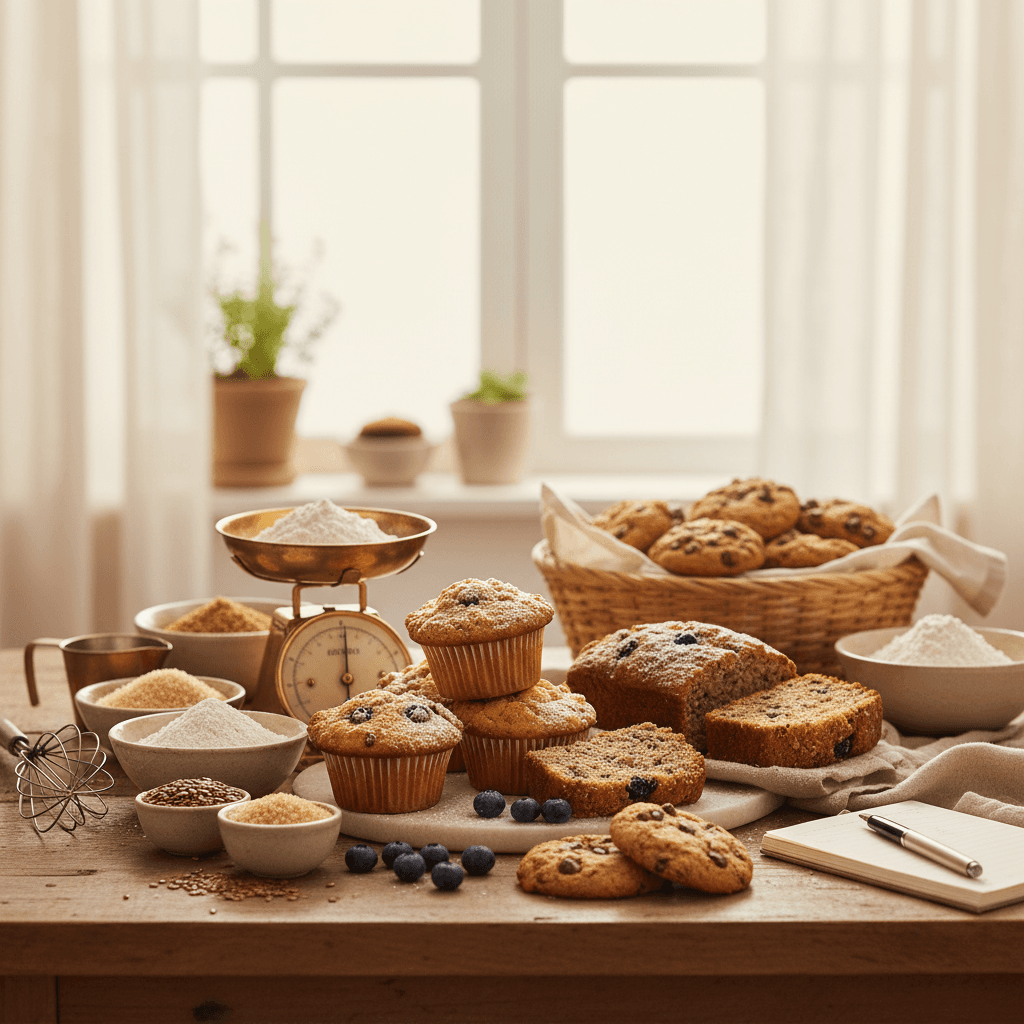
Most home bakers lose $100–$300 every market weekend because they price based on what feels reasonable instead of what the numbers demand. Here's the framework I use after tracking 47 market weekends across two states — and the specific pricing decisions that turned a $180 Saturday into a $640 one.
Key takeaways
- Your farmers market prices need to be 15–30% higher than custom order prices because market-day costs (booth fee, travel, waste, display time) eat margin fast.
- The ingredient cost multiplier most bakers use (3x) is too low for markets — aim for 4x to 5x on most items, higher on small-format goods like cookies and bars.
- A $6 item outsells a $5 item at most markets because shoppers at farmers markets are not bargain-hunting — they're buying an experience.
- Your product mix matters more than any single price. A table with nothing under $4 and at least two items over $15 will outperform a table of $3–$7 items every time.
- Track revenue per hour, not just total sales. If you baked for 14 hours and sold $280, you made $20/hour before costs — and that's probably closer to $11/hour net.
Why farmers market pricing is different from custom order pricing
Farmers market pricing carries costs that custom orders don't. You're paying a booth fee ($25–$75 per market in most areas, sometimes $125+ in high-traffic urban markets), buying packaging that looks good on a table, absorbing unsold inventory, and spending 5–8 hours on market day itself between setup, selling, and teardown. Those costs have to live inside your prices or you're volunteering, not running a business.
The other difference is psychological. Custom order customers compare your price to a bakery. Farmers market shoppers compare your price to the artisan cheese vendor two booths over. They expect to pay more. They want to. A hand-lettered sign that says "$7 — Lemon Blueberry Scones, made this morning" doesn't trigger sticker shock the way a $7 price on an order form might.
If you're already pricing custom orders, the framework in our cookie pricing guide is a good foundation — but you'll need to layer market-specific costs on top.
The real cost of a farmers market weekend (most bakers miss half of this)
Before you price a single muffin, you need to know what it actually costs you to show up. Here's a real cost breakdown from Rachel, a home baker in central Ohio who does two markets per week:
| Cost category | Per market | Notes |
|---|---|---|
| Booth fee | $35 | Seasonal rate, paid monthly |
| Gas / mileage | $18 | 22-mile round trip at IRS rate |
| Packaging (bags, boxes, labels) | $22 | Branded kraft bags + stickers |
| Display supplies (amortized) | $8 | Tablecloth, crates, signage over 30 markets |
| Unsold product (waste) | $31 | Average 12% of baked inventory |
| Market day time (6 hrs at $25/hr target) | $150 | Setup, selling, teardown, drive |
| Total market overhead | $264 | Before a single ingredient is purchased |
Rachel's ingredient cost for a typical market load is around $110. So her total cost floor is $374. If she sells $400 worth of product, she made $26 for the day. That's $4.33 per hour. She needs to sell $550+ to hit her $25/hour labor target, and $640+ to have actual profit after self-employment tax.
This is why the "just triple your ingredient cost" advice fails at markets. It doesn't account for the $264 in overhead that exists whether you sell one scone or one hundred.
A pricing framework that actually works for market sellers
Here's the formula I recommend, and it's the one that finally made my own market weekends profitable:
Price per item = (ingredient cost + packaging cost per unit) x multiplier + (market overhead share per item)
The multiplier covers your labor for baking. The overhead share covers everything else. Here's how to calculate both.
Step 1: calculate your per-item ingredient and packaging cost
Weigh and cost every ingredient. Not estimates — actual weights. A batch of 24 brownies using $14.80 in ingredients costs $0.62 per brownie. Add the packaging: if you're wrapping each in cellophane with a label, that's about $0.18 per unit. Total per-unit cost: $0.80.
Step 2: apply a labor multiplier
For farmers markets, I use these multipliers based on item complexity:
| Item type | Multiplier | Why |
|---|---|---|
| Simple bars, brownies, quick breads | 4x | Low labor per unit, high batch size |
| Cookies (drop, slice-and-bake) | 4.5x | Moderate labor, portioning time |
| Decorated cookies, scones, muffins | 5x | More hands-on shaping and finishing |
| Pies, layer cakes, specialty loaves | 5–6x | High labor, lower batch yield |
So that $0.80 brownie at 4x = $3.20. But we're not done.
Step 3: add the overhead share
Take your total market overhead (Rachel's was $264) and divide it by the number of units you expect to sell. If Rachel brings 120 items and expects to sell about 105 of them (88% sell-through), her overhead share per item is $264 / 105 = $2.51.
Now that brownie is $3.20 + $2.51 = $5.71. Round up to $6.00. That's the real price. Not $3.50, which is what most new market bakers would charge.
If $6 for a brownie makes you flinch, read our piece on why bakers undercharge and how to fix it. The short version: your discomfort with the price is not the customer's discomfort with the price.
What to charge for specific items at farmers markets
These are real price ranges I've seen work across markets in the Midwest, Southeast, and Pacific Northwest. Urban coastal markets can run 20–40% higher.
| Item | Typical market price | Notes |
|---|---|---|
| Cookies (standard size, 3") | $3.00–$4.50 each | Or 3 for $10 bundle |
| Brownies / bars | $5.00–$7.00 each | Cut large — perceived value matters |
| Muffins | $4.50–$6.00 each | Jumbo size only; standard muffins look small on a market table |
| Scones | $5.00–$7.00 each | Premium flavors (lavender lemon, brown butter pecan) command the high end |
| Quick bread loaf (banana, zucchini) | $10.00–$14.00 | Full-size loaf; mini loaves $6–$8 |
| Pie (9") | $22.00–$32.00 | Fruit pies higher in summer; $28 is a strong sweet spot |
| Layer cake (6") | $28.00–$40.00 | Sell whole, not sliced — sliced cakes look picked over |
| Cinnamon rolls (large) | $6.00–$8.00 each | Best seller at most markets; bake more than you think you need |
Marcus, a home baker in Nashville, told me he resisted charging $7 for his cinnamon rolls for months. He was at $4.50. When he raised to $7, he sold the same number — 35 per market — and made an extra $87.50 every Saturday. That's $4,550 more per year from one price change on one item.
If you're also doing custom cake orders, our custom cake pricing framework covers the labor calculation in more detail.
The product mix strategy that maximizes revenue per customer
Pricing individual items correctly is only half the game. The other half is what you bring to the table — literally.
Here's the product mix I recommend for a market table:
- 2–3 "grab" items under $7. These are your cookies, brownies, individual pastries. They get people to stop, pull out their wallet, and engage.
- 2–3 "anchor" items at $10–$18. Quick bread loaves, cookie boxes (6-pack for $16), bar assortments. These are your volume drivers.
- 1–2 "premium" items at $22+. Whole pies, small layer cakes, specialty bread loaves. Not everyone buys these, but the people who do raise your average transaction significantly.
I tracked my average transaction across 12 markets. When my highest-priced item was $8, my average transaction was $9.40. When I added a $28 pie and a $16 cookie box, my average transaction jumped to $14.70 — a 56% increase with the same foot traffic.
The premium items also make everything else look more affordable. A $6 scone next to a $30 cake feels like a deal. A $6 scone as the most expensive thing on your table feels steep. This is called price anchoring, and it works every single time.
Bundling: the easiest way to increase your average sale by 30%
Bundles work at farmers markets because they solve a decision problem. A customer staring at 8 different items gets overwhelmed. A sign that says "Baker's Box: 6 assorted cookies + 2 brownies — $22" gives them an easy yes.
Rules for effective bundles:
- Price the bundle at 10–15% less than buying items individually. Not more. You want the bundle to feel like a deal without actually discounting much.
- Keep bundles at round numbers: $10, $15, $20, $25. Market shoppers carry cash and round numbers reduce friction.
- Pre-package bundles before market day. Customers are far more likely to buy a bundle they can see and grab than one they have to assemble.
Tina, a baker in Portland, Oregon, introduced a "Sunday Brunch Box" — 4 scones, 4 muffins, packaged in a kraft box with a window — for $28. Her ingredient cost was $6.40. She sells 8–12 of them every Sunday market. That single product generates $224–$336 in revenue per market at a 77% gross margin.
When to raise your prices (and how to do it at a market)
Raise your prices when any of these are true:
- You're selling out before the market closes. If you're sold out by 11 AM at a market that runs until 1 PM, your prices are too low. Period.
- Your sell-through rate is above 95%. Some waste is healthy — it means you brought enough. But if nothing comes home, you left money on the table.
- Ingredient costs went up. Butter jumped from $3.49 to $5.29/lb in many areas over the past two years. If you didn't raise prices, you took a pay cut.
- You haven't raised prices in 6+ months. Costs creep. Your prices should creep with them.
At a market, raising prices is simpler than with custom orders because there's no price history for individual customers to reference. You just change your signs. No announcement needed. No awkward conversation. Our guide on raising home bakery prices without losing customers covers the psychology in more detail, but at a market, the mechanics are dead simple.
The "it depends" variables that change everything
I'd be lying if I said these prices work everywhere. They don't. Here are the variables that shift your pricing up or down:
Market demographics. A Saturday market in a wealthy suburb will support $7 scones easily. A Wednesday evening market in a rural town might cap at $4.50. Spend one market day walking the other booths and noting prices before you commit to a full season.
Competition density. If there are three other bakers at your market, you need differentiation more than you need price adjustments. Unique flavors, beautiful packaging, and a strong brand story matter more than being $0.50 cheaper. Check out our post on building a brand that gets repeat orders for specifics.
Season. Summer markets have more foot traffic and more impulse buyers. Winter markets have fewer but more intentional shoppers who spend more per visit. Adjust your product mix seasonally — lighter items in summer, comfort bakes (pies, cinnamon rolls, hearty breads) in fall and winter. Our seasonal pricing guide goes deeper on this.
Your state's cottage food law. Some states cap annual revenue at $25,000 or $50,000. If you're approaching the cap, you might actually want to raise prices and reduce volume rather than bake more. Higher prices, fewer items, same revenue, less work.
Tracking what matters: revenue per hour, not total sales
Total sales is a vanity metric. Revenue per hour is the number that tells you whether the market is worth your time.
Here's how to calculate it:
Revenue per hour = (Total sales - ingredient cost - market overhead) / total hours invested
Total hours includes baking time, prep time, packaging time, drive time, setup, selling, teardown, and cleanup when you get home. Be honest. Most bakers undercount by 3–4 hours.
A real example: You sold $520 at Saturday's market. Ingredient cost was $95. Market overhead (booth, gas, packaging, waste) was $120. Total hours from first alarm to last dish washed: 16 hours.
Revenue per hour = ($520 - $95 - $120) / 16 = $19.06/hour
Is that good? It depends on your target. But it's real, and it's the number that tells you whether to keep doing this market, raise prices, change your product mix, or spend that Saturday on landing a corporate account instead.
If your revenue per hour is under $15, something needs to change. If it's consistently under $10, that market is costing you money when you factor in self-employment tax and equipment wear.
Three contrarian opinions from 47 market weekends
1. Samples are usually a waste of product. Most market advice says to give out free samples. I stopped after tracking it for 8 markets. Samples cost me $12–$18 per market in product and increased sales by maybe $10–$15. The people who sample rarely buy — they're grazing, not shopping. The exception: if you're launching a new product and need feedback, samples are useful for exactly one market day.
2. Don't price in $0.50 increments. Use whole dollar amounts only. $6, not $5.50. $4, not $3.75. Market transactions are fast and often cash-based. Fumbling with quarters slows your line and makes your prices look uncertain. Every item I rounded up to the next dollar sold at the same rate.
3. Your cheapest item should be $3, not $1. I see bakers selling individual cookies for $1.50 or $2. At those prices, you need to sell 250+ units to have a decent market day. That's an absurd amount of baking, packaging, and transaction time. Set a $3 floor and make the item worth $3 — a large cookie, a thick-cut bar, a generously sized muffin. Volume is the enemy of a one-person operation.
Frequently asked questions
How much should I charge for cookies at a farmers market?
Standard 3-inch cookies should be priced at $3.00–$4.50 each at most farmers markets, or offered in bundles like 3 for $10. Decorated or specialty cookies (stuffed cookies, large format) can go to $5–$6 each. If your ingredient cost per cookie is $0.45, a $3.50 price gives you a 7.8x multiplier, which is appropriate given the market overhead you're absorbing. See our full cookie pricing breakdown for the detailed math.
Is it worth selling baked goods at a farmers market?
It depends on your revenue per hour. If you can consistently net $20+/hour after all costs (ingredients, booth fee, gas, packaging, waste, and your time), it's worth it. Markets also build a local customer base that feeds your custom order pipeline. But if your net is under $10/hour after 4–6 markets, the math doesn't work and you should redirect that time to higher-margin channels like corporate orders or email marketing for direct orders.
How do I know if my farmers market prices are too low?
Three signs: you sell out more than 90 minutes before the market closes, your sell-through rate is consistently above 95%, or your revenue per hour (after all costs) is below $15. Any one of those means you should raise prices by at least 15–20% and track the impact over 3 market days before adjusting again.
Should I offer discounts at the end of a farmers market?
Generally no. End-of-day discounts train customers to show up late and wait for deals, which destroys your full-price sales over time. If you have leftover product, donate it, freeze it for next week's samples, or repurpose it into a different product (bread pudding from leftover scones, cake pops from leftover cake). The one exception: perishable items on the last market of the season that you genuinely cannot use.
How many items should I bring to a farmers market?
Plan for 15–20% more than you expect to sell. If your target is 100 units sold, bring 115–120. This gives your table visual abundance (empty tables repel buyers) while keeping waste manageable. Track your sell-through rate weekly and adjust production up or down by 10% until you're consistently hitting 82–90% sell-through — that's the sweet spot between lost sales and wasted product.

Written by
Co-founder, BakingSubs
Co-founder of BakingSubs, where he turns the science of ingredient substitutions into tested, reliable guidance for home bakers.
Related Posts
Bakery Recipe Cost Sheet: How to Cost a Recipe in 6 Steps (With a Table You Can Copy)
Home Bakery Order Form Template: A Copy-Paste Layout That Cuts Mistakes by Half
Cottage Food Label Requirements and Template: What Every State Demands (With a Copy-Paste Layout)
Bake with Confidence
See all
Confident Gluten-Free Baker Toolkit
The science-based system that replaces gluten's seven invisible jobs so your baking turns out soft, fluffy, and foolproof — every time.

Gluten-Free Recipe Vault
Instant access to our complete library of proven gluten-free recipes — no waiting, no guesswork, just results that work tonight.

Fix Your Gluten-Free Bread
Learn the 3-step formula to make bread rise and stay soft, discover why your loaves collapse, and get a tested sandwich bread recipe that actually works.