
How to land corporate orders for your home bakery (and turn them into steady monthly revenue)
Learn exactly how to land corporate orders for your home bakery with sample drop-off scripts, pricing templates, and a 7-day action plan to get your first client.

Malik
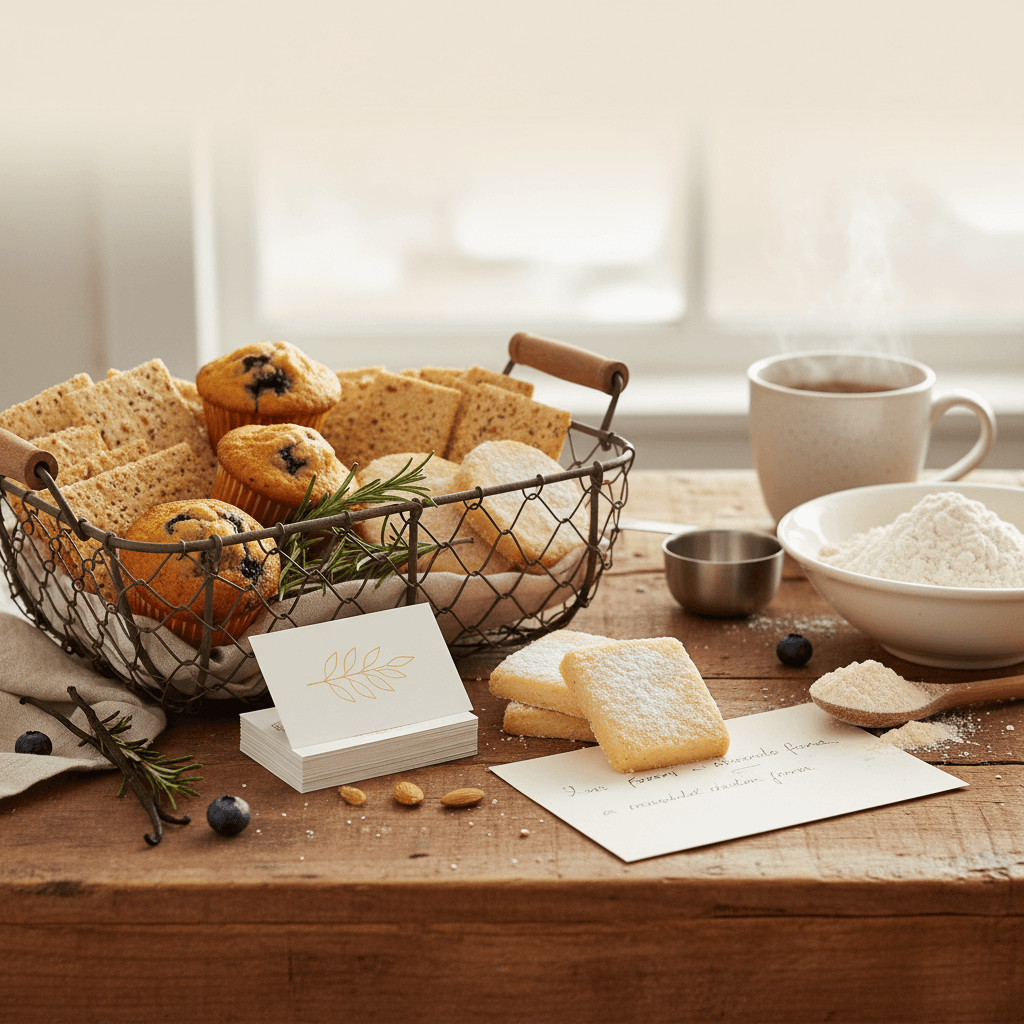
Corporate orders are one of the most underrated revenue channels for home bakers. A single office relationship can generate $200-$800 per month in recurring orders with almost zero marketing effort after the first conversation. Here's exactly how to find, pitch, and close corporate clients in your area.
Key takeaways
- Corporate orders from local offices typically range from $150-$800/month per account, with most home bakers able to manage 3-5 active corporate clients alongside their regular orders.
- The decision-maker is almost always an office manager, executive assistant, or HR coordinator, not the CEO or business owner.
- Your first corporate order usually comes within 7-14 days of outreach if you lead with a free sample drop-off rather than a cold pitch.
- Standing weekly or biweekly orders (like Monday morning pastry boxes) are more profitable than one-off catering because they eliminate the feast-or-famine cycle.
- Corporate clients care about reliability and ease of ordering far more than they care about price, making this channel ideal for bakers who refuse to undercharge.
- You do not need a commercial kitchen or special licensing beyond your existing cottage food permit in most states, though you should verify your local regulations.
Why corporate orders are the highest-value channel most home bakers ignore
Most home bakers chase individual customers one order at a time. Corporate orders flip that model. Instead of convincing 20 different people to order a dozen cookies each, you convince one office manager to place a standing weekly order. That single relationship can replace 15-20 individual customer orders per month.
Here's what makes corporate orders different from every other channel:
| Factor | Individual customers | Corporate clients |
|---|---|---|
| Average order value | $25-$60 | $75-$250 |
| Order frequency | Once every 1-3 months | Weekly or biweekly |
| Decision time | Days to weeks | Often same week after tasting |
| Price sensitivity | High | Low (it's a business expense) |
| Monthly revenue per relationship | $25-$60 | $200-$800 |
| Marketing effort after first sale | Ongoing | Nearly zero |
The math is straightforward. Three corporate clients ordering $200/week each gives you $2,400/month in predictable revenue. That's the kind of consistency that lets you fill your schedule every week without constantly hustling for new customers.
If you've been struggling with the revenue roller coaster, corporate orders are the antidote. And if you're not sure whether your current pricing actually supports this kind of volume, run your numbers through the home bakery pricing calculator before you start reaching out. You need to know your per-unit costs cold before quoting a corporate client.
Who to target: the exact types of businesses that order regularly
Not every office is a good fit. You're looking for businesses that already spend money on food for their team and would rather support a local baker than order grocery store trays. Here are the specific types to target:
Small to midsize professional offices (10-75 employees)
Law firms, accounting firms, insurance agencies, real estate brokerages, tech startups, marketing agencies. These offices frequently have weekly team meetings, client meetings, and employee appreciation events that all need food. They're big enough to have a budget but small enough that one person makes the decision.
Medical and dental offices
Doctor's offices, dental practices, chiropractic offices, and veterinary clinics regularly order treats for staff and sometimes for patients. They also host pharmaceutical rep lunches where baked goods are welcome. These offices tend to be loyal once you're in.
Banks and credit unions
Local branches often have customer appreciation events, employee birthdays, and holiday gatherings. They're community-oriented and love supporting local businesses.
Car dealerships and service businesses
Dealerships keep food in their customer waiting areas and host events. Service businesses like salons, spas, and gyms with front desks often want treats for clients and staff.
The common thread: you want businesses with 10 or more employees, a front desk or office manager, and a culture that values team morale. Skip businesses with fewer than 8 people (the orders will be too small) and giant corporations (too much red tape).
How to find the decision-maker at each business
This is where most bakers get stuck. They email a generic info@ address or try to pitch the business owner directly. Neither works well. The person who orders food for the office is almost always one of these people:
- Office manager - This is your primary target. They handle day-to-day operations and have a discretionary budget for exactly this kind of thing.
- Executive assistant - At larger offices, the EA to the managing partner or CEO handles catering and event planning.
- HR coordinator - In companies with 30+ employees, HR often manages employee appreciation, birthday celebrations, and team events.
- Front desk/receptionist - Even if they're not the decision-maker, they know who is and can get your samples in front of the right person.
How to find them: Google the business name and look at their team page. Check LinkedIn for people with these titles at local companies. Or simply call the front desk and say: "Hi, I'm a local baker and I'd love to drop off some samples for your team. Who handles ordering food for the office?" That's it. The receptionist will give you a name almost every time.
The sample drop-off strategy that actually converts
Cold emails and phone pitches have terrible conversion rates for food businesses. The strategy that works is a sample drop-off with a follow-up system. Here's the exact process:
Step 1: prepare a sample box
Put together a small, professional-looking box with 6-12 pieces of your best work. Choose items that are easy to eat at a desk (no messy frosting, nothing that needs a plate and fork). Good options include cookies, scones, muffins, brownies, or mini loaves. If you specialize in gluten-free or allergen-friendly baking, include a small card noting that. For tips on scaling up sample batches efficiently, check out our guide on batch baking for big orders.
Include a simple one-page menu/price sheet and your business card. Your menu should list 5-8 items with prices for office-sized quantities (per dozen, per box of 12, etc.).
Step 2: the drop-off script
Call ahead or walk in. Here's the exact script:
"Hi, my name is [Your Name] and I run [Your Bakery Name], a local home bakery here in [Town]. I put together a complimentary sample box for your team. I work with a few offices in the area for weekly pastry deliveries and meeting catering, and I'd love for you all to try my stuff. Is [Office Manager's Name] available, or can I leave this with you?"
If the office manager is there, hand it to them directly and add:
"No pressure at all. If your team enjoys them and you'd ever like to set up a regular order or have an event coming up, my info and menu are in the box. I deliver on [days you deliver]."
Step 3: the follow-up
This is where the sale actually happens. Two days after the drop-off, send this email:
Subject: Hope your team enjoyed the treats!
Hi [Name],
I dropped off a sample box for your team on [day]. I hope everyone enjoyed them! I wanted to follow up and see if there's anything I can help with. A lot of the offices I work with do a standing weekly order, like a Monday morning pastry box or treats for Friday meetings. I can customize the selection each week so your team never gets bored.
If you have any events coming up or want to try a weekly delivery, I'd love to chat. I can work within most budgets and I handle everything, you just tell me the day and I show up with fresh-baked goods.
Thanks so much,
[Your Name]
[Your Bakery Name]
[Phone Number]
If you don't hear back in 4-5 days, follow up one more time with a short note: "Just bumping this up in case it got buried. Happy to answer any questions!"
Expect a conversion rate of about 1 in 4 to 1 in 5 sample drop-offs turning into a paying client. That means if you drop off 8-10 sample boxes over two weeks, you should land 2-3 corporate accounts.
How to structure and price corporate orders for maximum profit
Corporate clients want simplicity. Don't hand them a 40-item menu. Instead, offer 2-3 packages that make ordering brainless:
| Package | What's included | Suggested price range | Serves |
|---|---|---|---|
| Weekly pastry box | Assorted muffins, scones, or cookies (baker's choice) | $45-$85 | 8-15 people |
| Meeting platter | 2-3 varieties of baked goods, nicely arranged | $65-$120 | 12-20 people |
| Monthly celebration box | Cupcakes, cake, or decorated cookies for birthdays/milestones | $50-$100 | 10-25 people |
A few pricing principles for corporate work:
- Price per person, not per item. Frame it as "$5-$7 per person" rather than "$3.50 per muffin." Businesses think in per-person budgets.
- Don't discount for volume. Your time, ingredients, and delivery costs are real. If anything, corporate orders should be priced at or above your retail prices because you're providing a convenience service.
- Build delivery into the price. Don't list delivery as a separate line item. Bake it into your per-person cost so the total feels simple.
- Offer "baker's choice" options. This gives you flexibility to use what's seasonal, what you already have, and what's most efficient to batch. Clients love the surprise element.
If you haven't dialed in your pricing yet, this is non-negotiable before approaching corporate clients. Use the home bakery pricing calculator to make sure every package covers your costs, your time, and a real profit margin.
Handling the most common objections
You will hear these. Here's exactly what to say:
"We already use a catering company"
"That makes total sense for big events. What I offer is a little different. I'm a local baker, so everything is made from scratch and delivered fresh the morning of. A lot of offices use me for their weekly team treats and keep their caterer for the big stuff. Would you be open to trying one delivery and seeing how your team likes it?"
"We don't have the budget for that"
"Totally understand. My weekly pastry boxes start at around $45, which works out to about $4-5 per person. Most offices find it's actually less than what they spend on a coffee shop run. If budget is tight, I can do a biweekly delivery instead of weekly."
"We have employees with allergies/dietary restrictions"
"I actually specialize in that. I can accommodate gluten-free, nut-free, dairy-free, and vegan needs. I'll just need a heads up on what restrictions your team has and I'll make sure every delivery works for everyone."
This objection is actually your biggest opportunity. If you bake gluten-free or allergen-friendly, corporate clients will love you because most caterers can't reliably handle dietary restrictions. For more on finding customers who specifically need allergen-friendly baking, see our post on channels that bring orders without social media.
"Can you send me more information?"
"Absolutely. I'll email you my menu and pricing today. Would it also be helpful if I dropped off a sample box so your team can taste everything before you decide?"
Always pivot to the sample. Information alone doesn't close. Tasting does.
Turning one-time orders into standing weekly accounts
The real money in corporate orders isn't the first delivery. It's the standing weekly or biweekly order that runs for months or years. Here's how to convert a first order into a recurring one:
After the first delivery, follow up the next day: "How did the team like everything? I'd love to set you up on a regular schedule if you're interested. Most of my office clients do a weekly delivery on the same day each week. I handle everything, you don't even have to think about it."
Make reordering effortless. Offer a simple text or email system: "Just text me 'same as usual' by Wednesday and I'll have it there Friday morning." The lower the friction, the more likely they are to keep ordering.
Rotate your offerings. Don't deliver the same thing every week. Surprise them with seasonal flavors, new recipes, and occasional extras. This keeps the team excited and gives the office manager something to look forward to, which makes them less likely to cancel.
Send a monthly invoice. Corporate clients prefer to pay monthly, not per delivery. Invoice at the end of each month for all deliveries. This makes it feel like a subscription rather than a series of individual purchases, which is psychologically stickier.
Building this kind of consistent weekly order system is what separates home bakers who earn pocket money from those who build real income.
If you want to learn more about building a home bakery that generates steady revenue without burning you out, check out the free Home Bakery Pro masterclass. It covers how to get consistent orders and build a sustainable business, which is exactly the foundation you need before scaling corporate accounts.
Your 7-day action plan to land your first corporate client
Here's exactly what to do this week:
Day 1: build your target list
Open Google Maps and search for offices within a 15-minute drive of your home. Write down 15-20 businesses that fit the criteria above (10+ employees, professional office, front desk). Note the business name, address, and phone number.
Day 2: find the decision-makers
Call each business and ask who handles ordering food for the office. Get a name. Check LinkedIn if you want to put a face to the name. Narrow your list to the 10 most promising targets.
Day 3: prepare your materials
Create a simple one-page menu with your 3 corporate packages, prices, and contact info. Print 10 copies. Also print or order business cards if you don't have them.
Day 4: bake your samples
Batch bake enough for 4-5 sample boxes. Choose your most impressive, desk-friendly items. Package them neatly. A simple bakery box with tissue paper and a sticker with your business name is all you need.
Day 5: drop off samples (round 1)
Visit 4-5 offices. Use the drop-off script above. Be friendly, brief, and low-pressure. Leave the sample box, menu, and business card.
Day 6: drop off samples (round 2)
Visit the remaining 4-5 offices. Same process.
Day 7: follow up
Send follow-up emails to all offices you visited on Day 5. Use the email template above. Schedule follow-ups for Day 6 offices to go out in two days.
Realistic expectation: from 8-10 sample drop-offs, you should get 2-3 responses within the first week, and convert 1-2 into paying clients within two weeks. Your first standing weekly order often starts within 10-14 days of the initial drop-off.
Realistic numbers: what to expect in months 1-3
| Metric | Month 1 | Month 2 | Month 3 |
|---|---|---|---|
| Sample drop-offs | 8-10 | 5-8 (new targets) | 3-5 (new targets) |
| Active corporate clients | 1-2 | 2-4 | 3-5 |
| Monthly revenue from corporate | $200-$500 | $500-$1,200 | $800-$2,000 |
| Hours per week (baking + delivery) | 3-5 | 5-8 | 6-10 |
By month 3, most bakers find that corporate orders alone are covering a significant chunk of their monthly revenue goal, and the best part is these orders keep coming without any ongoing marketing effort. If you're also working on fixing the foundation gaps in your overall business, corporate accounts become the stable base that everything else builds on.
Frequently asked questions
Do I need a commercial kitchen to take corporate orders?
In most states, corporate orders fall under the same cottage food laws that cover your regular home bakery sales. You're selling directly to the end consumer (the office), not going through a retailer. However, some states have annual revenue caps or restrictions on where you can deliver, so check your state's cottage food regulations before you start. If you're close to your state's revenue cap, corporate orders might be the push you need to consider a commercial kitchen.
How many corporate clients can a home baker realistically handle?
Most home bakers can comfortably manage 3-5 active corporate accounts alongside their regular customer orders. Beyond that, you'll likely need to batch your corporate baking into one or two dedicated days per week. The key is grouping deliveries geographically and choosing items that batch well, like cookies, muffins, and scones.
What if a corporate client wants to pay net 30 or net 60?
For small offices, push for payment on delivery or weekly invoicing. For larger companies with formal purchasing departments, net 30 is standard and usually fine since the amounts are predictable and the companies are stable. Avoid net 60 if you can. If a company insists on net 60, price your goods 10-15% higher to account for the cash flow delay. Always get payment terms in writing before the first delivery.
What baked goods work best for corporate orders?
Items that are individually portioned, don't need refrigeration, and can sit on a break room counter for a few hours. Cookies, muffins, scones, brownies, banana bread slices, and biscotti are all excellent. Avoid anything with perishable frosting, custard fillings, or items that need to be eaten immediately. The easier your goods are to grab and eat at a desk, the more popular they'll be.
How do I handle corporate orders during holidays when offices are closed?
Expect a dip during major holidays (Thanksgiving week, Christmas through New Year's, July 4th week). But holidays also create opportunity: pitch holiday gift boxes that offices can give to clients or employees. Many corporate clients will spend more on a single holiday order than they do in an entire month of weekly deliveries. Proactively send a holiday menu 3-4 weeks before major holidays to capture this spending.

Written by
Co-founder, BakingSubs
Co-founder of BakingSubs, where he turns the science of ingredient substitutions into tested, reliable guidance for home bakers.
Related Posts

Bake with Confidence
See all
Confident Gluten-Free Baker Toolkit
The science-based system that replaces gluten's seven invisible jobs so your baking turns out soft, fluffy, and foolproof — every time.

Gluten-Free Recipe Vault
Instant access to our complete library of proven gluten-free recipes — no waiting, no guesswork, just results that work tonight.

Fix Your Gluten-Free Bread
Learn the 3-step formula to make bread rise and stay soft, discover why your loaves collapse, and get a tested sandwich bread recipe that actually works.