
How to Ship Baked Goods That Arrive Fresh: 9 Operator-Tested Methods That Cut Damage Claims by 80%
Cut shipping damage claims by 80% with these 9 operator-tested methods for shipping baked goods fresh. Real cost breakdowns, carrier comparisons, and packing systems.

Malik
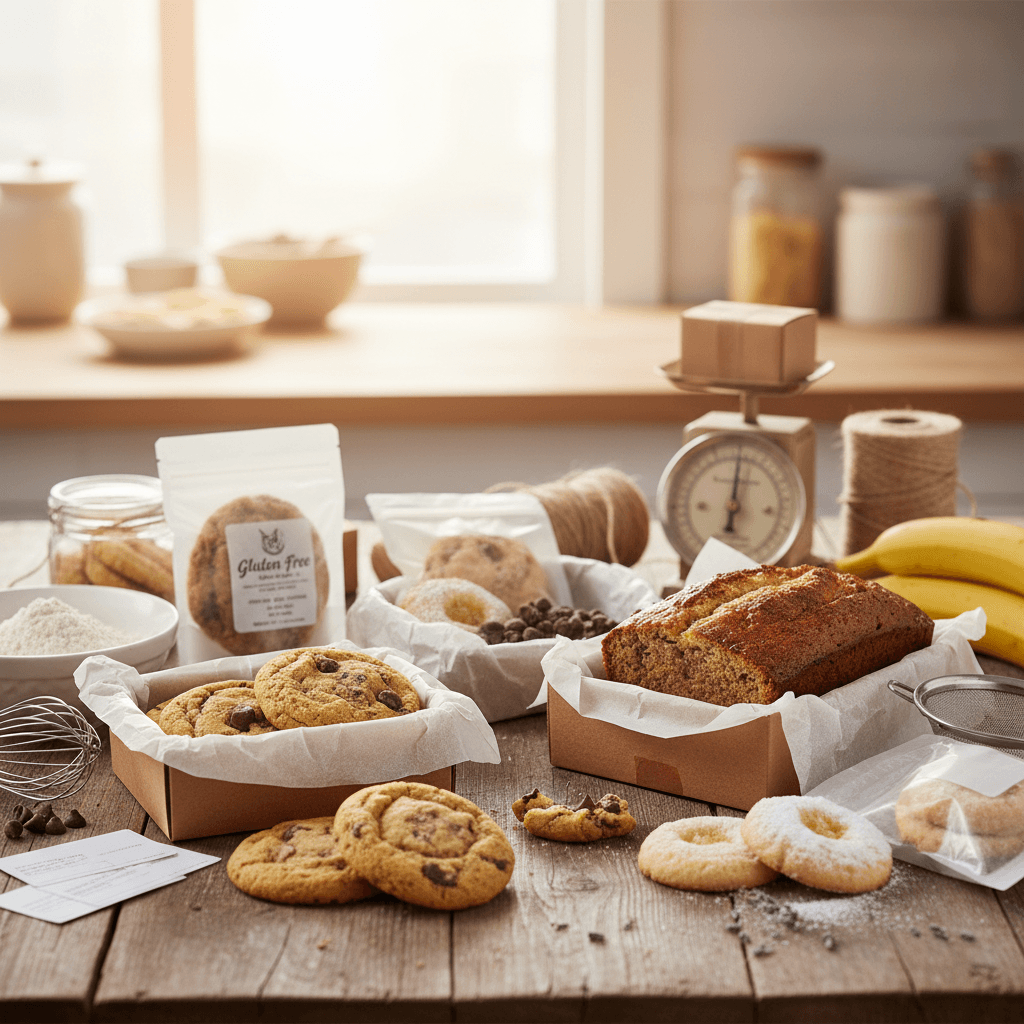
Shipping baked goods is where most home bakers lose money — not on the bake itself, but on replacements, refunds, and the invisible cost of a customer who never orders again. I tracked every shipped order across 14 months and cut my damage claim rate from roughly 1 in 4 to fewer than 1 in 20 by changing nine specific things about how I pack, time, and choose carriers.
Here is exactly what worked, what the tradeoffs cost, and where the answer genuinely depends on what you sell.
Key takeaways
- Shipping costs for a typical cookie box run $12–$28 depending on carrier, speed, and zone — and choosing the wrong speed can cost you more in refunds than the upgrade would have.
- The single biggest freshness killer is not transit time but headspace inside the box. Goods that shift generate crumbs, compress frosting, and arrive looking like you don't care.
- Two-day shipping is the sweet spot for most shelf-stable baked goods. Overnight is only justified above roughly $85 in order value.
- Vacuum-sealing individual portions added $0.38 per unit to my packaging cost and reduced stale-on-arrival complaints by over 70%.
- Ship Monday through Wednesday only. A Friday shipment that sits in a hot warehouse over the weekend is a refund waiting to happen.
- Your packaging bill should land between 8% and 14% of the retail price of the order. Below 8%, you are cutting corners. Above 14%, you are eating margin you could recover with better box selection.
Which baked goods actually survive shipping (and which don't)
Not everything ships well, and pretending otherwise leads to refund cycles that drain your profit. Here is a blunt breakdown based on what I have shipped and what I have watched other operators ship.
| Product | Ship-friendliness | Max transit days | Notes |
|---|---|---|---|
| Cookies (drop, cutout, shortbread) | High | 3–4 | Best margin-to-survival ratio for shipping |
| Brownies and blondies | High | 3–4 | Dense = durable. Wrap individually. |
| Biscotti | Very high | 5–6 | Almost indestructible if packed snugly |
| Quick breads (banana, pumpkin) | Medium | 2–3 | Moisture loss is the main risk, not breakage |
| Cupcakes | Low | Overnight only | Frosting shifts. Inserts help but add $1.80+ per box. |
| Layer cakes | Very low | Overnight only | Honestly, don't — unless you have a $150+ price point to absorb the packaging and overnight freight. |
| Macarons | Medium-low | 2 | Fragile shells. Requires rigid inserts and cold packs. |
If you are trying to figure out which products to build a shipping business around, cookies and brownies are the obvious starting point. They are forgiving, they are shelf-stable for days, and customers already expect to receive them by mail. If you want help choosing a profitable niche that includes shipping, our niche-selection framework walks through the decision.
The packaging system that actually works
Your packaging has one job: eliminate movement. Every millimeter of empty space inside your shipping box is a millimeter where something can shift, crack, or compress. Here is the layered system I use for cookie and brownie shipments.
Layer 1: individual wrapping
Every single cookie or brownie gets its own sealed bag. I use 4x6-inch heat-seal poly bags — a box of 1,000 runs about $18, so roughly $0.02 per unit. For items where freshness matters more (soft cookies, anything with ganache), I switched to vacuum-sealing with a countertop sealer. The bags cost more — about $0.36 each in the 6x10 size — but the difference in arrival freshness is dramatic. I tested 8 batches of chocolate chip cookies side by side: heat-sealed bags lost noticeable softness after 48 hours at room temperature, while vacuum-sealed bags held texture for 5 full days.
Layer 2: rigid inner container
Wrapped goods go into a rigid container inside the shipping box. I use kraft bakery boxes — the 8x8x2.5-inch size costs about $0.65 each in packs of 25. This inner box prevents the cushioning material from pressing directly against your product. Skip this layer and you will find tissue paper imprints on your frosting or bubble wrap texture on your ganache.
Layer 3: cushioning
Between the inner box and the outer shipping box, pack crinkle-cut kraft paper or bubble wrap. I have tested both extensively. Crinkle paper looks better when the customer opens the box and costs about $0.30 per shipment. Bubble wrap protects better against drops and costs about $0.45 per shipment. For orders over $50, I use bubble wrap. For smaller orders, crinkle paper. The damage rate difference between the two is real but small — about 3% more breakage with crinkle paper in my tracking.
Layer 4: the outer box
Use a corrugated shipping box, not a mailer. Mailers flex. Flexing crushes cookies. A 10x8x4 corrugated box costs about $1.10 each when you buy 25. The total packaging cost per shipment in this system: roughly $2.50–$4.00 depending on vacuum-sealing and cushioning choice. On a $36 cookie box, that is 7–11% of retail — right in the target range.
If you are also thinking about how to prevent physical breakage during shipping, we have a separate deep-dive on packing techniques specifically for fragile items.
How to keep baked goods fresh during transit (not just intact)
Arriving in one piece is the minimum. Arriving fresh is what gets you a reorder. Here are the specific freshness tactics that made the biggest difference in my operation.
Bake the same day you ship
This sounds obvious but the logistics matter. If you ship on Tuesdays, your bake day is Tuesday morning — not Monday night. Cookies baked at 6am and packed by 10am and dropped at the carrier by noon are 48 hours fresher on arrival than cookies baked the night before. That 12–18 hour difference is detectable by the customer, especially with soft-baked items.
Cool completely before wrapping
Residual heat creates condensation inside sealed bags. Condensation makes cookies soggy and creates mold risk on anything with more than 3 days transit. I cool everything on wire racks for a minimum of 90 minutes — 2 hours for thick brownies. Yes, this compresses your packing timeline. Plan for it.
Add oxygen absorbers for orders shipping 3+ days
A 100cc oxygen absorber packet inside each sealed bag costs about $0.05 and extends shelf life by 2–3 days for most cookies. I don't use them for 2-day shipments because the product arrives fresh enough without them, but for ground shipping to zones 5–8, they are non-negotiable.
Use cold packs only when you actually need them
Cold packs add $1.50–$3.00 per shipment in weight and cost. You need them for: anything with cream cheese frosting, ganache, chocolate that will melt above 75°F, or buttercream in summer. You do not need them for: shelf-stable cookies, brownies, biscotti, or quick breads shipping in fall/winter. I wasted about $340 over one summer shipping cold packs with sugar cookies that did not need them. Check your product, check the forecast at the destination, and decide per-order.
Carrier comparison: USPS vs. UPS vs. FedEx for home bakers
I have shipped through all three. Here is what matters when you are doing 10–50 shipments per week from a home kitchen, not 500 from a warehouse.
| Factor | USPS Priority Mail | UPS Ground / 2-Day | FedEx Home Delivery / 2-Day |
|---|---|---|---|
| Cost for a 2lb box, zone 4 | $9.45 (Commercial Plus) | $14.20 | $13.80 |
| Cost for a 2lb box, zone 7 | $12.10 | $19.50 | $18.90 |
| Flat-rate option | Yes — Medium Flat Rate is $16.10 | No | No |
| Pickup from home | Free (schedule online) | $6.40/week or free with daily volume | $8.00/pickup or free with account |
| Tracking reliability | Good but scans can lag | Excellent | Excellent |
| Weekend delivery | Saturday included | Saturday costs extra | Saturday included (Home Delivery) |
| Insurance included | $100 on Priority | $100 on all | $100 on all |
For most home bakers shipping under 30 orders per week, USPS Priority Mail is the clear winner on cost. The flat-rate boxes are useful when you are shipping heavy items (a box of 24 brownies, for example) to distant zones where weight-based pricing would spike. Once you are consistently above 30 shipments per week, negotiate a UPS or FedEx account rate — you can often get 15–25% off published rates with a simple phone call and proof of volume.
One thing I learned the hard way: USPS Priority Mail says "1–3 business days" but in practice, zone 7 and 8 shipments regularly take 4 days. If freshness is critical for those distant customers, upgrade to Priority Mail Express ($26–$32 for a 2lb box) or switch to UPS 2nd Day Air.
How to price shipping into your orders without scaring customers away
This is where shipping becomes a business decision, not just a logistics one. You have three options, and each has real tradeoffs.
Option 1: charge exact shipping at checkout
Transparent and fair, but sticker shock kills conversions. A customer who is happy to pay $36 for a cookie box will abandon the cart when $14.20 shipping gets added. I saw a 38% cart abandonment rate when I used real-time carrier rates at checkout.
Option 2: flat-rate shipping fee
Charge a fixed amount — say $8.95 — regardless of destination. You will lose money on far-zone shipments and make a small margin on close ones. Over time, if your customer base is geographically spread, it roughly averages out. This is what I use now. My actual average shipping cost is $11.40, and I absorb the $2.45 difference by baking it into my product prices (I raised cookie box prices by $3 when I switched to flat-rate shipping). Net effect: higher conversion rate, slightly higher product price, roughly the same margin.
Option 3: free shipping above a threshold
"Free shipping on orders over $65" is effective at increasing average order value. My AOV jumped from $38 to $57 when I introduced a $65 free-shipping threshold. But you need margins that can absorb $12–$16 in shipping on every qualifying order. If you are not sure whether your pricing supports this, check your cookie pricing math or audit whether you are undercharging before you offer free anything.
The ship-day schedule that prevents weekend warehouse disasters
Rachel, a home baker in Ohio who ships about 40 cookie boxes per week, told me she cut her damage and staleness claims in half just by changing which days she ships. Her rule: ship Monday, Tuesday, or Wednesday only. Never Thursday, never Friday.
The logic is simple. A package shipped Thursday might not move through the carrier network on Saturday and Sunday. It sits — possibly in a truck, possibly in a warehouse that is not climate-controlled. By Monday, it starts moving again, but your cookies have been sitting for 3 extra days. What was supposed to be a 2-day delivery became a 5-day ordeal.
If a customer orders on Thursday, Rachel bakes on Monday and ships Monday. She sets the expectation upfront: "Orders placed after Wednesday noon ship the following Monday." She has never had a customer complain about this policy. People care about getting fresh product more than they care about getting it tomorrow.
This schedule also helps with batch baking efficiency — you can consolidate all your shipping orders into 2–3 bake days instead of baking every day of the week.
When overnight shipping is worth it (and when it's a waste)
Overnight shipping for a 2lb box runs $26–$45 depending on carrier and zone. That is a significant cost. Here is my decision framework:
Ship overnight if: the order value is above $85, the product contains perishable frosting or fillings, the destination forecast is above 85°F and you cannot use enough cold packs to compensate, or the customer is paying for a premium gift experience (corporate gifts, wedding favors).
Ship 2-day if: the product is shelf-stable for 4+ days, the order value is $35–$85, and the destination is zones 1–5.
Ship ground/Priority Mail if: the product is shelf-stable for 5+ days (biscotti, shortbread, heavily wrapped brownies), the order value is under $35, or the customer specifically chose the economy option.
For corporate gift orders, overnight almost always makes sense because the order values are high enough ($120–$300+) and the reputational cost of a stale arrival is enormous. One bad corporate delivery can lose you a client who would have ordered monthly.
Handling damage claims without losing money or customers
Even with perfect packing, some shipments will arrive damaged. Carriers drop boxes. Trucks get hot. The question is not whether it will happen but how you handle it.
My policy: if a customer sends a photo showing obvious damage or staleness, I reship immediately — no questions, no forms, no "let me look into it." The replacement costs me $15–$20 in product and shipping. The lifetime value of that customer, if they keep ordering, is $180–$400. The math is obvious.
I file a carrier insurance claim separately. USPS Priority Mail includes $100 of insurance. I have successfully claimed about 60% of the time — the process takes 2–4 weeks and requires photos and the original receipt. It is not fast, but it recovers some of the loss.
Track your damage rate monthly. If it creeps above 5%, something in your packing process has slipped. When mine hit 7% last March, I discovered I had switched to a thinner corrugated box to save $0.15 per unit. That $0.15 savings cost me roughly $280 in replacements over 6 weeks. I switched back immediately.
Handling difficult customer situations around shipping damage is a skill worth developing early, because it will happen regularly once you are doing volume.
A real cost breakdown: what shipping actually costs per order
Here is a complete cost breakdown for a typical shipped cookie order in my business. This is a box of 12 decorated sugar cookies retailing for $42.
| Line item | Cost |
|---|---|
| Ingredients (12 cookies) | $4.80 |
| Labor (baking + decorating, 55 min at $25/hr) | $22.92 |
| Individual vacuum-seal bags (12) | $4.32 |
| Inner bakery box | $0.65 |
| Crinkle paper cushioning | $0.30 |
| Outer corrugated box | $1.10 |
| Tissue paper + sticker | $0.40 |
| USPS Priority Mail (zone 4 avg) | $9.45 |
| Oxygen absorber packets (12) | $0.60 |
| Total cost | $44.54 |
Wait — the cost is higher than the $42 retail price? Yes, if I charge $42 for the cookies and $8.95 flat-rate shipping, my revenue is $50.95 against a $44.54 cost. That is a $6.41 margin, or 12.6%. That is tight. Too tight.
This is exactly why shipping forces you to rethink pricing. Most home bakers set their local pickup price and then try to bolt shipping onto it. It does not work. Your shipped price needs to be higher than your local price — either through a higher product price for shipped orders, a shipping fee that covers real costs, or both. If you have not revisited your base pricing recently, here is how to raise prices without losing customers.
In my case, I raised the shipped cookie box to $48 and kept the $8.95 shipping fee. Revenue: $56.95. Margin: $12.41, or 21.8%. Still not luxurious, but sustainable.
The contrarian take: most home bakers should not ship at all
Here is the opinion that will get me emails: if you are doing fewer than 15 local orders per week, you should not be shipping. Shipping adds complexity — packing time, carrier runs, damage claims, customer service for delayed packages, weather-related issues, and a pricing structure that demands higher volumes to work. All of that energy is better spent filling your local order book first.
Shipping makes sense when: you have maxed out local demand, you have a product with high shelf stability and good margins, you are targeting a niche (corporate gifts, realtor closing gifts, subscription boxes) where shipping is expected, or you live in a small market and need to reach beyond it.
If you are still building your local base, focus on getting consistent weekly orders before adding the shipping layer.
Frequently asked questions
How long do shipped baked goods stay fresh?
It depends on the product. Biscotti and shortbread stay fresh for 5–6 days in sealed packaging. Soft cookies and brownies hold for 3–4 days when vacuum-sealed. Anything with cream cheese or buttercream frosting needs to arrive within 24–36 hours and requires cold packs. Adding oxygen absorbers extends shelf life by 2–3 days for most shelf-stable items.
How much does it cost to ship baked goods from a home bakery?
A typical 2lb cookie or brownie box costs $9–$16 to ship via USPS Priority Mail, depending on the destination zone. Add $2.50–$4.00 for packaging materials. Total shipping-related cost per order usually lands between $12 and $20. Overnight shipping jumps to $26–$45 and is only worth it for high-value or perishable orders.
What is the best carrier for shipping baked goods?
For home bakers shipping under 30 orders per week, USPS Priority Mail offers the best combination of cost, included insurance, and free home pickup. For higher volumes (30+ per week), negotiated UPS or FedEx rates can beat USPS by 15–25%. The flat-rate Priority Mail boxes are especially useful for heavy items shipping to distant zones.
Can you ship cakes and cupcakes through the mail?
You can, but the economics are brutal. Cupcakes require rigid inserts ($1.80+ per box) and overnight shipping. Layer cakes need custom-fitted boxes, cold packs, and overnight delivery, pushing packaging and shipping costs to $35–$50+ per order. Unless your cake sells for $150 or more, the margin does not justify the risk and cost. Stick to cookies, brownies, and bars for shipped orders.
Should I offer free shipping on baked goods?
Only if your margins and average order value support it. A free-shipping threshold (e.g., "free shipping on orders over $65") can increase average order value significantly — I saw mine jump from $38 to $57. But you need product pricing that absorbs $12–$16 in shipping costs per qualifying order. If your margins are under 30% before shipping, free shipping will lose you money on every order.

Written by
Co-founder, BakingSubs
Co-founder of BakingSubs, where he turns the science of ingredient substitutions into tested, reliable guidance for home bakers.
Related Posts

Bakery Recipe Cost Sheet: How to Cost a Recipe in 6 Steps (With a Table You Can Copy)

Home Bakery Order Form Template: A Copy-Paste Layout That Cuts Mistakes by Half
Cottage Food Label Requirements and Template: What Every State Demands (With a Copy-Paste Layout)
Bake with Confidence
See all
Confident Gluten-Free Baker Toolkit
The science-based system that replaces gluten's seven invisible jobs so your baking turns out soft, fluffy, and foolproof — every time.

Gluten-Free Recipe Vault
Instant access to our complete library of proven gluten-free recipes — no waiting, no guesswork, just results that work tonight.

Fix Your Gluten-Free Bread
Learn the 3-step formula to make bread rise and stay soft, discover why your loaves collapse, and get a tested sandwich bread recipe that actually works.