

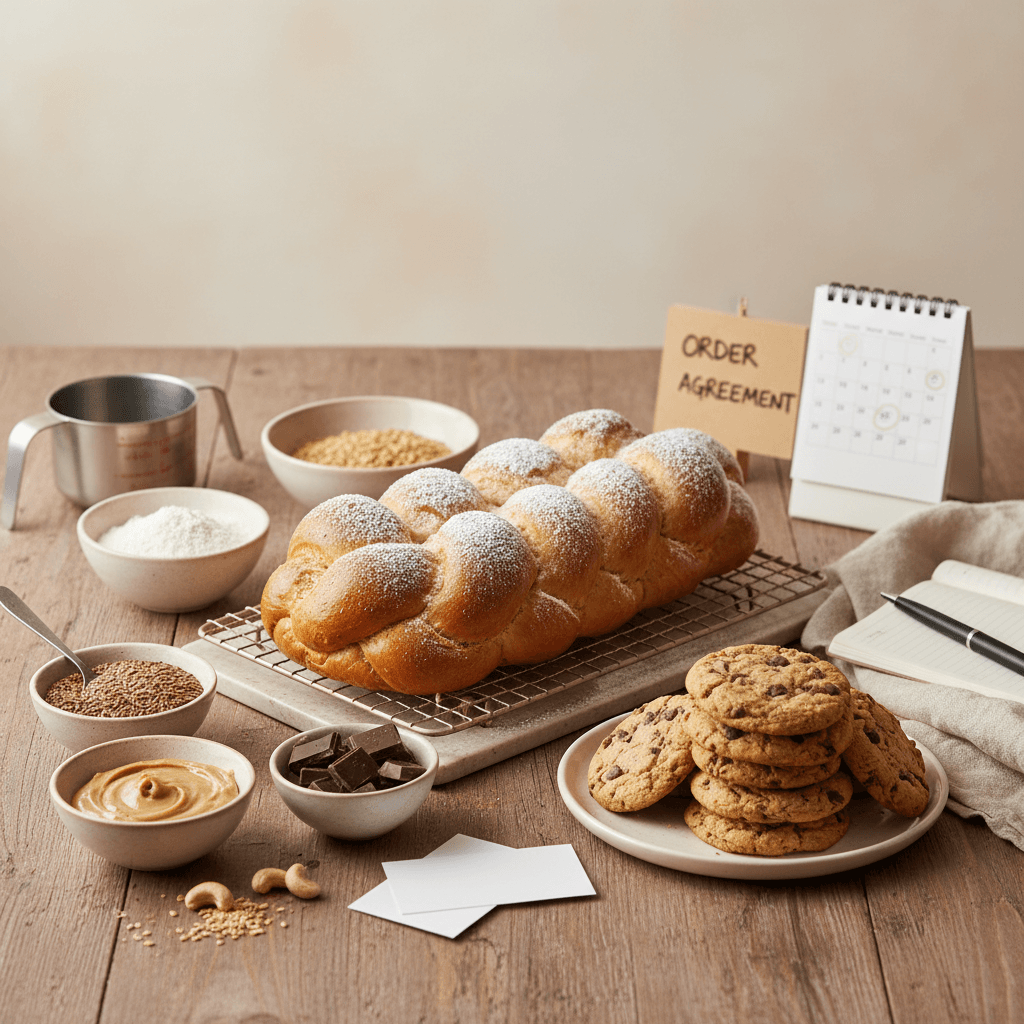
Difficult customers are one of the fastest ways to burn out as a home baker. If you're already dealing with last-minute changes, price pushback, or people who ghost after you've bought ingredients, this post is for you. We're going to walk through the real reasons these situations keep happening and the systems that make them stop.
Key takeaways
- Most "difficult" customer situations are actually a boundary problem, not a people problem. Clear policies prevent 80% of conflicts before they start.
- A written order agreement protects you from scope creep, last-minute cancellations, and payment disputes.
- Raising your prices doesn't drive away good customers — it filters out the ones who were never going to respect your time.
- How you respond to complaints determines whether you keep a customer or lose them and their entire social circle.
- You don't have to say yes to every order. Turning down bad-fit customers is a business skill, not a failure.
- Systems remove emotion from transactions, which means fewer awkward conversations and less resentment on your end.
Why you keep attracting difficult customers
The hard truth is that most difficult customer interactions aren't random bad luck — they're the predictable result of missing systems. When you don't have clear policies around ordering, payment, and communication, you're essentially inviting people to make up their own rules. And they will.
Think about the last time a customer asked for a major change the day before pickup, or tried to negotiate your price after you'd already agreed on an order. In most cases, there was no written policy that said they couldn't. We tend to blame the customer, but the real issue is that we never set the expectation in the first place.
This isn't about being rigid or unfriendly. It's about building a business that protects your energy so you can keep doing what you love. If you're still figuring out the operational side of your home bakery, our home bakery business checklist covers the full picture of what you need in place.
The five most common difficult customer types (and what's really going on)
Not all difficult customers are the same, and understanding the pattern helps you respond effectively instead of reactively. Here are the five types you'll encounter most often.
The price negotiator
This person loves your baking but always pushes back on cost. "Can you do it for less?" or "My friend makes cakes for $20." What's really going on: they don't understand the value of what you're making, or they're simply not your target customer. The fix isn't to justify your pricing in a long paragraph — it's to state your price confidently and let them decide. If you haven't nailed down your numbers yet, our recipe costing spreadsheet guide will help you know exactly what to charge and why.
The last-minute changer
They confirmed vanilla with buttercream two weeks ago, and now — 36 hours before pickup — they want chocolate ganache with a completely different design. This person isn't trying to be difficult; they just don't realize how much work goes into pivoting. A clear change policy with a cutoff date eliminates this entirely.
The ghoster
They place an order, you buy ingredients, and then they vanish. No response to texts, no pickup, no payment. This is the most financially damaging type, and it's 100% preventable with a non-refundable deposit system.
The scope creeper
"Oh, and can you add a few extra cupcakes? And maybe some cake pops for the kids?" What starts as a simple order slowly doubles in size — without any discussion of additional cost. This happens when your order form doesn't clearly define what's included.
The chronic complainer
Nothing is ever quite right. The frosting shade was slightly off, the cake was "a little dry" (it wasn't), or the box got a tiny dent during their own transport. Some of these are legitimate concerns. Others are attempts to get a discount or free product. Knowing the difference is a skill you'll develop, and having a complaint policy helps you handle both.
Build an order agreement that does the hard work for you
An order agreement is the single most important tool for preventing difficult customer situations. This isn't a fancy contract — it's a simple, written document that spells out what both parties are agreeing to. Here's what yours should include:
| Section | What to include | Why it matters |
|---|---|---|
| Order details | Exact items, flavors, sizes, decorations, quantity | Prevents "I thought it came with..." disputes |
| Pricing | Itemized cost, delivery fee if applicable, total | No room for price negotiation after agreement |
| Deposit | Amount due upfront (typically 50%), non-refundable policy | Protects you from ghosters and cancellations |
| Payment terms | When remaining balance is due, accepted methods | Eliminates awkward payment conversations at pickup |
| Change policy | Deadline for changes (usually 5-7 days before), fees for late changes | Stops last-minute pivots |
| Cancellation policy | Deposit forfeiture, timeline for cancellations | Covers your ingredient and time costs |
| Pickup/delivery | Date, time, location, who's responsible after handoff | Protects you from transport damage complaints |
Send this before you start any work. Have the customer confirm in writing — even a simple "I agree" text or email reply works. If someone balks at signing a basic order agreement, that tells you everything you need to know about how the rest of the transaction will go.
If you take custom cake orders, our guide to managing custom cake orders walks through the full system from inquiry to delivery.
If you're looking to level up your entire home bakery operation, check out the free Home Bakery Pro masterclass. It's a free masterclass on getting consistent orders and building a sustainable home bakery — exactly the kind of foundation that makes difficult customer situations rare instead of routine.
How to handle price pushback without caving
The best response to "Can you do it cheaper?" is a calm, confident no — followed by silence. You don't need to justify, explain your ingredient costs, or list how many hours you'll spend. Your price is your price.
Here's a script that works in almost every situation: "I appreciate you reaching out! My pricing reflects the quality of ingredients I use and the time involved. I understand it might not be in everyone's budget, and that's totally okay. If you'd like to move forward, I'd love to make something special for you."
Notice what this does: it's warm, it doesn't apologize, and it puts the decision back on them. Most price negotiators will either accept or move on. Either outcome is a win for you.
If you find yourself constantly attracting price-sensitive customers, the issue might be your marketing rather than your pricing. Customers who find you through the lowest-price filter on social media will always push back. Customers who find you through word of mouth, beautiful food photography, and a clear brand story almost never do. Our food photography tips for home bakers can help you attract the right audience.
What to do when a customer complains about your product
First, take a breath. A complaint feels personal when you've poured hours into something, but your response in the next few minutes will determine whether this person becomes a loyal repeat customer or a negative review.
Here's the framework we recommend:
- Listen fully. Don't interrupt, don't get defensive. Let them finish explaining what went wrong.
- Acknowledge their experience. "I'm sorry that wasn't what you expected" is not an admission of fault — it's empathy.
- Ask for specifics. Request a photo if relevant. Sometimes the complaint evaporates when they have to articulate it concretely.
- Decide on a resolution. If the complaint is legitimate (wrong flavor, undercooked, damaged), offer a replacement or partial refund. If it's subjective or unreasonable, hold your boundary kindly.
- Document everything. Keep a record of what happened, what you offered, and the outcome. This protects you if the situation escalates.
One important mindset shift: not every complaint requires a refund. Sometimes a sincere apology and an explanation is enough. And sometimes a customer is simply trying to get free product. You're allowed to recognize the difference and act accordingly.
When and how to fire a customer
This is the part nobody talks about, but it might be the most important section in this entire post. You are allowed to stop working with someone. You don't need a dramatic reason. If a customer consistently disrespects your time, boundaries, or policies, they're costing you more than they're paying.
Here's how to do it gracefully:
"Thank you so much for thinking of me for this order. Unfortunately, I'm not able to take it on right now. I hope you find a great baker for your event!"
That's it. You don't owe an explanation. You don't need to say "I'm fully booked" (though that works too). The key is to be brief, kind, and final. Don't leave the door open for negotiation.
Firing bad-fit customers creates space for the ones who value your work, pay on time, and refer their friends. Those are the customers who build a sustainable business. Speaking of which, our guide to building repeat customers covers how to nurture those relationships once you find them.
Set communication boundaries before resentment builds
If customers are texting you at 10 PM on a Saturday or sending 47 messages about fondant colors, the problem isn't them — it's the absence of communication boundaries. Here's what to put in place:
- Set business hours. Include them in your social media bio, your order confirmation, and your voicemail. Respond only during those hours, even if you see the message earlier.
- Use a dedicated business phone number or app. Separating personal and business communication is one of the fastest ways to reduce stress.
- Limit revision rounds. For custom orders, specify how many rounds of design discussion are included. After that, charge a consultation fee.
- Create a FAQ document. If you answer the same five questions every week, put them in a document or highlight reel and send it to new inquiries before the conversation even starts.
These boundaries aren't walls — they're guardrails that keep the relationship professional and pleasant for both sides.
The mindset shift that changes everything
Here's what we want you to sit with: you are not running a charity. You are not obligated to make everyone happy at your own expense. Every time you say yes to an unreasonable request, you're saying no to your own well-being, your family's time, and the customers who actually deserve your energy.
The home bakers who thrive long-term aren't the ones who never encounter difficult customers. They're the ones who built systems that prevent most problems and have the confidence to handle the rest without spiraling. That confidence comes from knowing your numbers, having clear policies, and genuinely believing that your work has value.
If you're selling at events and dealing with in-person customer challenges, our guides on selling at craft fairs and running pop-up shops cover how to handle pricing conversations and customer interactions face-to-face.
Frequently asked questions
How do I tell a customer their order is too complicated for my home bakery?
Be honest and direct. You can say something like, "That design is beyond what I'm able to offer right now, but I'd love to suggest something similar that I can execute beautifully." Most customers appreciate honesty over a baker who overcommits and underdelivers. If the order involves custom cakes, our custom cake order guide has more scripts for these conversations.
Should I require a deposit for home bakery orders?
Yes, always. A non-refundable deposit of 50% is standard in the home baking industry. It covers your ingredient costs and time if the customer cancels or ghosts. Collect the deposit before you buy a single ingredient or block out time on your calendar.
What do I do if a customer leaves a bad review for my home bakery?
Respond publicly, calmly, and briefly. Acknowledge their experience, state what you offered as a resolution, and invite them to contact you directly. Never argue in public. A professional response to a negative review often impresses future customers more than the review itself hurts you.
How do I stop customers from negotiating my home bakery prices?
Post your prices clearly before customers inquire. Include them on your social media, order form, and website. When someone still asks for a discount, respond warmly but firmly that your prices reflect your ingredients and time. Don't apologize or over-explain. If you're unsure whether your prices are right, use a recipe costing spreadsheet to confirm your numbers.
Is it okay to refuse an order from a difficult customer?
Absolutely. You have every right to decline an order for any reason. A simple "I'm not able to take this on" is sufficient. Protecting your time and mental health is not unprofessional — it's essential for running a sustainable home bakery business.

Written by
Co-founder, BakingSubs
Co-founder of BakingSubs, where he turns the science of ingredient substitutions into tested, reliable guidance for home bakers.
Related Posts

Bakery Recipe Cost Sheet: How to Cost a Recipe in 6 Steps (With a Table You Can Copy)

Home Bakery Order Form Template: A Copy-Paste Layout That Cuts Mistakes by Half
Cottage Food Label Requirements and Template: What Every State Demands (With a Copy-Paste Layout)
Bake with Confidence
See all
Confident Gluten-Free Baker Toolkit
The science-based system that replaces gluten's seven invisible jobs so your baking turns out soft, fluffy, and foolproof — every time.

Gluten-Free Recipe Vault
Instant access to our complete library of proven gluten-free recipes — no waiting, no guesswork, just results that work tonight.

Fix Your Gluten-Free Bread
Learn the 3-step formula to make bread rise and stay soft, discover why your loaves collapse, and get a tested sandwich bread recipe that actually works.