

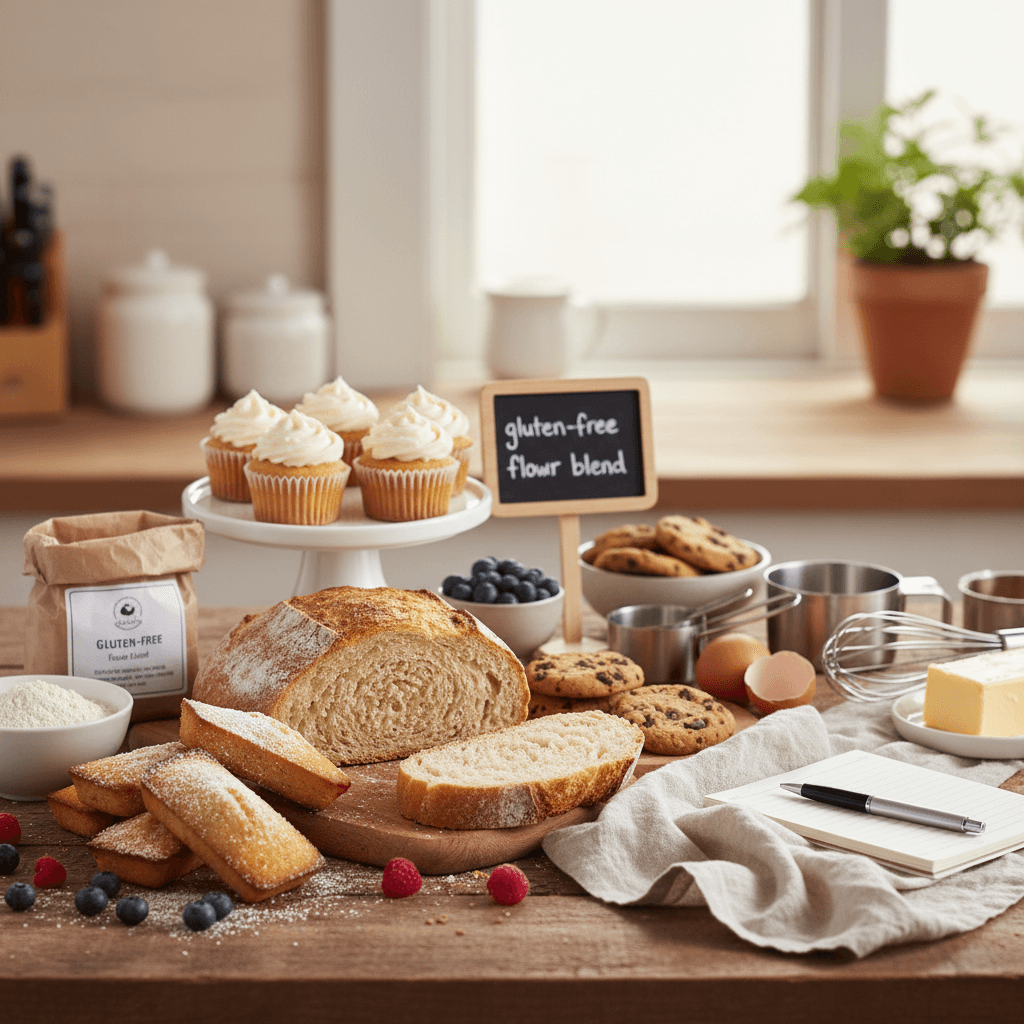
Pop up shops are one of the fastest ways to build a local following, test new products, and generate real revenue from your home bakery — without committing to a permanent retail space. This guide walks you through every step, from choosing a venue to counting your cash at the end of the day.
Key takeaways
- A well-planned pop up shop can generate $500 to $2,000+ in a single day, depending on your location, menu, and pricing strategy.
- Your total startup cost for a first pop up typically runs $150 to $400, covering permits, table fees, packaging, and signage.
- Limiting your menu to 4-6 items maximizes production efficiency and reduces waste — the most successful home bakery pop ups keep it focused.
- Choosing the right venue matters more than the right product — foot traffic and audience alignment are everything.
- Pre-selling through social media before your pop up can guarantee 30-50% of your revenue before you even set up your table.
- Every pop up is a marketing event, not just a sales event — collecting emails and social followers is as valuable as the revenue itself.
What is a home bakery pop up shop?
A pop up shop is a temporary retail event where you sell baked goods directly to customers at a specific location and time. Unlike farmers markets, which run on a recurring weekly schedule, pop ups are one-time or occasional events — often hosted at coffee shops, breweries, retail stores, community centers, or even your own front yard.
For home bakers, pop ups are especially powerful because they let you sell in person without the ongoing commitment of a market booth or storefront lease. You control the date, the menu, and the scale. Many home bakers use pop ups to supplement their regular custom order business or to test whether a product line has enough demand to justify ongoing production.
How to choose the right venue for your pop up
The venue you choose will determine at least half of your success. A great product in the wrong location will sit on the table all day. Here are the most common venue types and what to expect from each:
| Venue type | Typical table fee | Foot traffic | Best for |
|---|---|---|---|
| Coffee shop or cafe | $0-50 or revenue split (10-20%) | Medium-high | Cookies, pastries, bread |
| Brewery or taproom | $0-50 | High (evenings/weekends) | Cookies, brownies, savory items |
| Retail store or boutique | $25-75 | Medium | Decorated cookies, gift boxes |
| Community event or festival | $50-200 | Very high | High-volume items, grab-and-go |
| Your own home (yard sale style) | $0 | Low-medium | Building a neighborhood following |
When evaluating a venue, ask yourself three questions: Does the existing audience overlap with my ideal customer? Is the foot traffic high enough to justify my production time? And does the fee structure leave me with enough margin to actually profit?
The best partnerships are often with small businesses that benefit from the extra foot traffic you bring. A coffee shop that doesn't sell baked goods is a natural fit. A brewery that only serves drinks on weekends is perfect. Approach them with a clear pitch: you'll bring product, promote the event to your audience, and they get increased traffic and a cut or flat fee.
If you need help finding and reaching local customers for your pop up, our guide on how to find gluten-free customers locally has 12 tactics that work for any home bakery, not just gluten-free ones.
How to build a pop up menu that sells
The biggest mistake new pop up vendors make is offering too many items. A menu of 15 different products means you're spread thin on production, you need more packaging supplies, and customers spend too long deciding — which slows down your line and costs you sales.
Aim for 4-6 items. Here's a framework that works well:
- 1-2 signature items — your best sellers, the things people already know you for
- 1 crowd-pleaser — something universally appealing like chocolate chip cookies or brownies
- 1 unique or seasonal item — something that creates curiosity and gets people to stop at your table
- 1 premium item — a higher-priced gift box, sampler, or specialty loaf that lifts your average transaction
Price everything in round numbers or just below ($3, $5, $8, $12). Avoid prices that require making lots of change. If you're unsure about pricing, our complete guide to pricing baked goods for a home bakery walks through exact formulas with real numbers.
If you're running a gluten-free home bakery, pop ups are a chance to let people taste before they commit to custom orders. Sampling is one of the most effective sales tools you have — budget for it. Plan to give away about 5-10% of your inventory as small samples.
If you want to go deeper on building a profitable, consistent home bakery, our free Home Bakery Pro masterclass covers how to get consistent orders and build a sustainable business from your kitchen. It's worth watching before your first pop up.
What permits and legal requirements apply to pop up shops
Pop up shops fall under the same cottage food laws and home bakery regulations that govern your regular sales — but with a few extra considerations. Before you commit to a venue, confirm these items:
- Cottage food or home bakery license — Make sure your state or county permits direct-to-consumer sales at temporary events. Most do, but some restrict sales to your home only. Check our cottage food laws guide for state-by-state details.
- Temporary event permits — Some municipalities require a separate temporary food vendor permit for pop ups, even if you already have a cottage food license. Call your local health department to ask.
- Venue insurance requirements — Many venues will ask if you carry liability insurance. Even if they don't require it, home bakery insurance is worth having when you're selling in person to the public.
- Labeling requirements — Most states require cottage food products to include ingredient lists, allergen warnings, your name and address, and a "made in a home kitchen" disclaimer. Have your labels printed and ready.
Don't skip this step. Getting shut down at an event — or worse, facing a fine — is not the kind of publicity you want.
How much does it cost to set up a home bakery pop up shop
Your first pop up doesn't need to be expensive. Here's a realistic budget breakdown for a first-time pop up vendor:
| Expense | Estimated cost | Notes |
|---|---|---|
| Table/booth fee | $0-200 | Varies widely by venue |
| Tablecloth and display risers | $20-50 | One-time purchase, reuse at every event |
| Signage (banner + price signs) | $30-80 | A vinyl banner lasts for years |
| Packaging (bags, boxes, labels) | $40-80 | Budget per-unit into your pricing |
| Ingredient costs | $50-150 | Depends on menu and volume |
| Card reader / POS | $0-50 | Square or similar — free reader, per-transaction fee |
| Permits (if required) | $0-75 | Varies by jurisdiction |
Total for a first pop up: roughly $150 to $400. Many of these costs (signage, display, card reader) are one-time investments you'll reuse. For packaging specifically, our guide to home bakery packaging ideas and supplies has budget-friendly options that still look professional.
How to set up your pop up table for maximum sales
Your table setup is your storefront. You have about 3 seconds to catch someone's eye as they walk past. Here's what matters most:
- Height variation — Use risers, cake stands, or stacked crates to create levels. A flat table with everything at the same height looks like a garage sale.
- A clear banner or sign — Your bakery name should be visible from 15-20 feet away. Include what you sell ("Handmade Gluten-Free Baked Goods" or "Artisan Cookies and Bread").
- Price signs on every item — Customers who can't see prices won't ask. They'll just walk away. Make prices visible and clear.
- Samples at the front — Put a small tray of bite-sized samples at the front edge of your table. This is the single most effective way to convert foot traffic into sales.
- Business cards or a QR code — Link to your website, Instagram, or order page. Every person who walks away without buying is still a potential future customer if you capture their contact info.
Professional-looking labels and branding make a bigger difference than you'd expect. People judge baked goods by the packaging first and the taste second — at least until they've tried your product.
How to promote your pop up before the event
The biggest revenue lever at a pop up isn't your product — it's your promotion. Home bakers who actively promote their pop ups for 1-2 weeks beforehand consistently outsell those who just show up and hope for foot traffic.
Here's a promotion timeline that works:
Two weeks before
- Announce the date, time, and location on Instagram, Facebook, and any other platforms you use
- Tag the venue in every post so their audience sees it too
- Create a simple event page on Facebook if the venue doesn't already have one
One week before
- Share your menu with photos and prices
- Open pre-orders for pickup at the event — this guarantees revenue and helps you plan production quantities
- Ask the venue to share your posts with their audience
Day before and day of
- Post behind-the-scenes content of your baking and packing process
- Share a countdown or reminder story
- Post a "we're here" photo when you're set up, with the location tagged
Pre-orders are a game-changer. If you can sell 30-50% of your inventory before the event, you've already covered your costs and reduced your risk of leftover product. For a deeper dive on building your audience, check out our guide on how to get customers for a home bakery.
How much can you make at a home bakery pop up shop
Revenue varies widely, but here are realistic ranges based on what we've seen from home bakers at different stages:
| Scenario | Revenue range | Key factors |
|---|---|---|
| First pop up, small venue | $200-500 | Limited audience, still learning setup and flow |
| Established baker, good venue | $500-1,200 | Existing social following, pre-orders, repeat customers |
| High-traffic event or festival | $1,000-2,500+ | Large crowds, efficient menu, fast service |
Your profit margin depends on your pricing and ingredient costs. Most home bakers should target a 65-75% gross margin on pop up items, which means if you sell $800 worth of product, your ingredient and packaging costs should be $200-280, leaving $520-600 in gross profit before the table fee and other overhead.
Track everything. After each pop up, record your total revenue, total costs (ingredients, packaging, fee, gas), hours spent baking and at the event, and what sold out versus what you brought home. This data is gold for planning your next event. If you don't have a system for tracking finances yet, our roundup of accounting software for cottage food businesses can help you get organized.
Common mistakes to avoid at your first pop up
We've seen home bakers make these mistakes over and over. Save yourself the headache:
- Overproducing — It's better to sell out early than to bring home half your inventory. Start conservative and scale up at your next event.
- Not accepting cards — Cash-only vendors lose 30-40% of potential sales. Get a mobile card reader. A simple POS system with a free card reader is all you need.
- No email or social capture — If someone buys from you and you never hear from them again, you've lost a repeat customer. Have a sign-up sheet or QR code for your email list.
- Pricing too low — Pop up customers expect to pay a premium for handmade, artisan products. Don't undercut yourself. If your cookies cost $1.20 to make, selling them for $2 is leaving money on the table. Price them at $3.50-4.50 each or offer bundles.
- Forgetting change — Bring at least $50-75 in small bills and coins, even if most people pay by card.
- No follow-up plan — The day after your pop up, post a thank-you on social media, email your new subscribers, and start promoting your next event or your regular order process.
How to turn a pop up into repeat business
The real value of a pop up isn't the revenue from that single day — it's the customers you gain for the long term. Here's how to maximize the long-tail value:
- Collect emails at every event. A simple sign-up sheet with "Get first access to our next pop up + exclusive flavors" is enough incentive for most people.
- Include an order card in every bag. A small card with your website, Instagram handle, and how to place custom orders turns a one-time buyer into a regular customer.
- Announce your next event before you leave. If you know your next pop up date, tell people at checkout. "We'll be at [location] on [date]" plants the seed for a return visit.
- Follow up within 48 hours. Send a short email or post thanking everyone who came, sharing what sold out, and teasing what's coming next.
Many successful home bakers use pop ups as the top of their sales funnel: pop up visitors become social followers, social followers become custom order customers, and custom order customers become recurring weekly or monthly buyers. If you want to take that even further, a subscription box model can turn pop up fans into predictable monthly revenue.
Frequently asked questions
Do I need a permit to do a pop up shop from my home bakery?
In most states, pop up sales fall under your existing cottage food or home bakery license, but some jurisdictions require an additional temporary food vendor permit. Check with your local health department before committing to a venue. Our home bakery license requirements by state guide is a good starting point.
How much inventory should I bring to my first pop up?
Plan for 50-80 units total across all items for a small to mid-size venue. It's better to sell out in 3 hours than to have leftover product. Track what sells and adjust for your next event. If you're pre-selling 30-50% of your inventory, you can plan production more precisely.
What is the best way to accept payments at a pop up shop?
Use a mobile card reader like Square, which has no monthly fees and charges a flat per-transaction rate. Always accept both card and cash. Having a point of sale system also helps you track sales data so you know exactly what sold and when.
How far in advance should I start promoting a pop up?
Start promoting at least two weeks before the event. Post your menu and prices one week out, open pre-orders at the same time, and do a final push the day before and morning of. Tagging the venue in every post helps you reach their audience too.
Can I do a pop up shop at my own house?
Many cottage food laws allow direct-to-consumer sales from your home, which can include a front-yard or porch pop up. Check your local regulations and any HOA rules. Home pop ups work best when you already have a neighborhood following or an active social media audience that will drive traffic to your address.

Written by
Co-founder, BakingSubs
Co-founder of BakingSubs, where he turns the science of ingredient substitutions into tested, reliable guidance for home bakers.
Related Posts
Bakery Recipe Cost Sheet: How to Cost a Recipe in 6 Steps (With a Table You Can Copy)
Home Bakery Order Form Template: A Copy-Paste Layout That Cuts Mistakes by Half
Cottage Food Label Requirements and Template: What Every State Demands (With a Copy-Paste Layout)
Bake with Confidence
See all
Confident Gluten-Free Baker Toolkit
The science-based system that replaces gluten's seven invisible jobs so your baking turns out soft, fluffy, and foolproof — every time.

Gluten-Free Recipe Vault
Instant access to our complete library of proven gluten-free recipes — no waiting, no guesswork, just results that work tonight.

Fix Your Gluten-Free Bread
Learn the 3-step formula to make bread rise and stay soft, discover why your loaves collapse, and get a tested sandwich bread recipe that actually works.