
Home bakery packaging ideas and supplies: how to make your baked goods look professional on any budget
Home bakery packaging ideas and supplies for every budget. Find the best boxes, labels, bags, and branding tips to make your baked goods look professional.

Malik
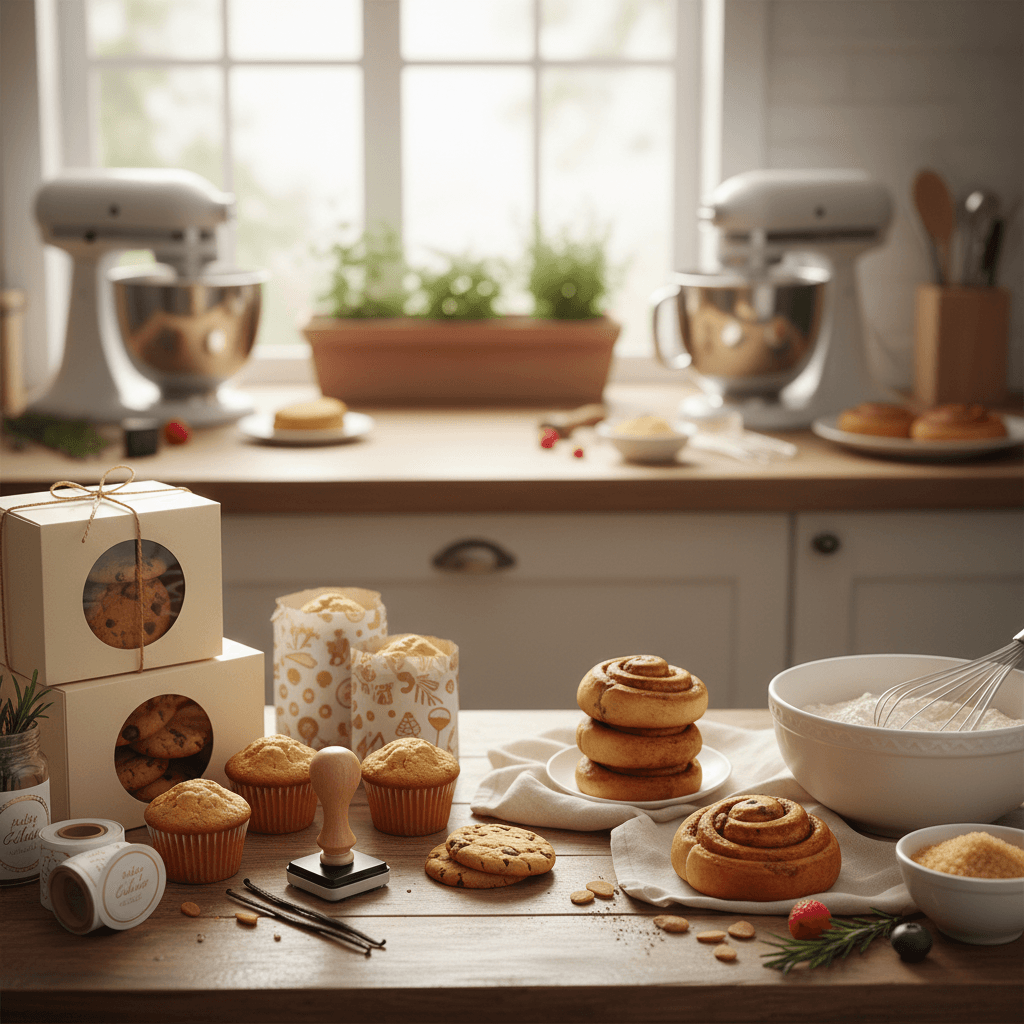
The right packaging can be the difference between a customer who orders once and one who reorders every week and tells all their friends. Here's everything you need to know about home bakery packaging — from budget-friendly basics to premium options that justify higher prices.
Key takeaways
- Professional-looking packaging doesn't have to be expensive — you can start with solid basics for under $50 in supplies.
- Food-safe packaging is non-negotiable. Not all cute containers from craft stores meet food contact requirements.
- Custom stickers and labels are the single highest-impact upgrade for making your home bakery look established and trustworthy.
- Packaging should protect your product first, look good second. A crushed cookie in a pretty box is still a crushed cookie.
- If you sell gluten-free baked goods, your packaging needs to clearly communicate that — it's a major selling point in an underserved market.
- Buying packaging in bulk from restaurant supply companies is almost always cheaper than Amazon or craft stores for high-volume items.
Why packaging matters more than most home bakers think
Your packaging is the first physical impression a customer gets of your business. Before they taste a single bite, they're judging your professionalism, your attention to detail, and whether your prices feel justified — all based on how you hand them their order. Great packaging also protects your baked goods during transport, extends shelf life, and gives customers something worth photographing and sharing.
If you're selling gluten-free products, packaging is even more critical. Your customers need to trust that what they're getting is safe. Clear labeling, sealed containers, and professional presentation all build that trust. And since gluten-free baking is still underserved in most local markets, standing out with polished packaging helps you command the premium prices that loyal gluten-free customers are happy to pay.
Essential packaging supplies every home bakery needs
Before you get into custom boxes and branded tissue paper, you need the basics. These are the workhorses that protect your products and keep them fresh.
Boxes and containers
The type of container you need depends entirely on what you bake. Here's a quick reference:
| Product type | Best packaging option | Approximate cost |
|---|---|---|
| Cookies (individual or sets) | Clear cellophane bags or windowed bakery boxes | $0.10–$0.50 each |
| Cupcakes | Cupcake inserts in bakery boxes | $0.40–$0.80 each |
| Bread loaves | Kraft paper bread bags or clear poly bags | $0.08–$0.25 each |
| Cake slices | Clear hinged containers or slice boxes | $0.20–$0.45 each |
| Whole cakes | Cake boards + tall cake boxes | $1.50–$4.00 per set |
| Brownies and bars | Wax paper wraps in windowed boxes | $0.15–$0.40 each |
| Scones and muffins | Kraft paper bags or clamshell containers | $0.10–$0.35 each |
We like starting with kraft bakery boxes with windows because they work for almost everything, look clean and professional, and customers can see what's inside without opening the box.
Food-safe wrapping and liners
Every container needs an inner barrier between your baked goods and the packaging itself. Stock up on:
- Wax paper sheets — for wrapping individual items and lining boxes
- Parchment paper — food-safe, grease-resistant, and you probably already have it
- Food-safe tissue paper — dressier than wax paper for gift-style presentations
- Clear cellophane bags — perfect for cookies, biscotti, and individually wrapped items
A pack of self-sealing cellophane bags (around $8–$12 for 200) is one of the best investments you'll make. They keep cookies fresh, look polished, and make it easy to include a small label.
If you're building out your baking setup at the same time as your packaging station, our guide to budget baking essentials for batch cooking covers the kitchen side of things.
Labels and stickers: the single biggest upgrade for your brand
Custom labels transform generic packaging into something that looks like a real business. You don't need to spend hundreds on a graphic designer — here's how to do it affordably.
What to include on every label
At minimum, your labels need:
- Your bakery name and logo (even a simple text-based logo works)
- The product name
- Ingredient list (required in most states under cottage food laws)
- Allergen information — especially important if you're selling gluten-free products
- A "best by" or "made on" date
- The cottage food disclaimer required by your state
For gluten-free items, make the gluten-free callout prominent. Your customers are scanning for it, and it's one of your biggest competitive advantages. If you also accommodate other dietary needs, check our guides on gluten-free and nut-free baking for allergen labeling considerations.
Where to order custom labels
For most home bakers, these are the best options ranked by cost-effectiveness:
| Option | Best for | Cost range |
|---|---|---|
| Canva + home printer on sticker paper | Just starting out, small batches | $15–$25 for sticker paper (100+ labels) |
| Avery labels (design online, print at home) | Clean, consistent results | $12–$20 per 100 labels |
| Sticker Mule or Sticker Giant | Professional die-cut stickers in bulk | $50–$100 for 200+ custom stickers |
| Vista Print | Labels, stickers, and business cards together | $30–$80 depending on quantity |
If you're printing at home, invest in a decent set of Avery round labels — they look surprisingly professional when paired with a clean Canva design. For about $20, you get enough labels for your first couple months of orders.
If you're serious about building a home bakery that brings in consistent income, the free masterclass at Home Bakery Pro covers how to get repeat customers and build a sustainable business — packaging is just one piece of the puzzle.
Budget-friendly packaging ideas that look premium
You don't need expensive custom boxes to look professional. These strategies give you a high-end feel without the high-end price tag.
The kraft-and-twine approach
Simple kraft boxes, kraft paper bags, or brown parchment wraps tied with baker's twine create a rustic, artisan look that customers love. Add a custom sticker and a sprig of dried lavender or rosemary, and you've got packaging that photographs beautifully. Total cost per package: under $0.75.
Windowed boxes for visual appeal
Customers want to see what they're buying — especially repeat customers who know exactly what your chocolate chip cookies look like. Small windowed boxes (around $0.30–$0.50 each in bulk) let your product do the selling.
Ribbon and tissue paper combos
For special orders, gift boxes, or holiday items, a layer of food-safe tissue paper and a simple satin ribbon elevates the experience dramatically. This is especially effective during the holidays — and if you're looking for gift-worthy baking products to pair with your packaging, our holiday gift giving guide has some great ideas.
Stamp your brand
A custom rubber stamp with your bakery name is a one-time investment of $15–$30 that pays for itself immediately. Stamp plain kraft bags, boxes, tissue paper, or even the inside of box lids. It's cheaper than custom-printed packaging and just as effective at small volumes.
Premium packaging options for higher-priced items
If you're selling specialty cakes, decorated cookies, or premium gluten-free items at higher price points, your packaging should match.
- Rigid gift boxes — magnetic closure boxes in black, white, or custom colors ($2–$5 each) make an immediate impression
- Custom-printed boxes — services like PackLane or Packlane let you design fully custom boxes with minimums as low as 10–30 units, though per-unit costs are higher ($3–$8 each)
- Clear acetate boxes — transparent boxes that showcase decorated cookies or petit fours beautifully ($0.50–$1.50 each)
- Custom branded tape — printed packing tape with your logo seals plain boxes and turns them into branded packaging ($25–$40 per roll)
For decorated cookie sets, we recommend clear acetate boxes with a custom belly band (a strip of cardstock wrapped around the box with your branding). It's cheaper than fully custom boxes but looks just as polished.
Where to buy packaging supplies in bulk
Buying the right quantities from the right suppliers makes a huge difference in your per-unit costs. Here are the best sources we've found:
| Supplier | Best for | Notes |
|---|---|---|
| WebstaurantStore | Bulk bakery boxes, bags, containers | Restaurant supply prices, best for high volume |
| Amazon | Starter quantities, specialty items | Good variety, slightly higher prices, fast shipping |
| Nashville Wraps | Gift packaging, tissue, ribbon | Beautiful options, reasonable bulk pricing |
| ClearBags | Cellophane bags, clear packaging | Huge selection of food-safe clear bags |
| BRP Box Shop | Bakery boxes in many sizes | Good prices, lower minimums than restaurant suppliers |
| Uline | Shipping supplies, poly bags, labels | Best for if you ship orders |
Start with Amazon for your first batch of supplies so you can test sizes and styles without committing to large quantities. Once you know what works, switch to restaurant supply companies for better bulk pricing.
Packaging for shipping baked goods
If you ship your products (and your state's cottage food laws allow it), you need an extra layer of protection beyond your standard packaging.
- Sturdy corrugated shipping boxes — never use flimsy boxes for baked goods
- Bubble wrap or crinkle paper — fills empty space and absorbs shock
- Insulated liners — essential for anything with chocolate, frosting, or temperature-sensitive ingredients
- Ice packs — for items that need to stay cool during transit
- Individually wrapped items — every single item should be wrapped separately so they don't knock against each other
A good rule of thumb: package your shipment, then drop the box from waist height onto the floor. If anything shifts or breaks, add more padding. Your customers are paying a premium for shipped baked goods, and a damaged delivery kills repeat business instantly.
Packaging tips specifically for gluten-free home bakeries
Selling gluten-free baked goods gives you a massive advantage in most local markets — there's less competition, customers are incredibly loyal, and they're willing to pay premium prices for products they can trust. Your packaging should reinforce that trust at every touchpoint.
Make your gluten-free status impossible to miss
Don't bury "gluten-free" in small text on your ingredient label. Put it front and center — on your sticker, on your box, on your business card. Many of your customers have celiac disease or serious gluten sensitivities, and seeing that clear callout is reassuring every single time.
Seal everything
Cross-contamination concerns are real for your customers. Use sealed cellophane bags, sticker seals on boxes, or shrink wrap bands to show that your product hasn't been exposed to anything after leaving your kitchen. This is about safety and trust, not just aesthetics. If you want to understand more about preventing common gluten-free baking issues, our learning guides cover the technical side thoroughly.
Include allergen information on every package
Beyond the legal requirements, listing your full ingredient list and highlighting allergens builds enormous trust. If you also bake items that are allergy-friendly across multiple restrictions, call that out too — it's a selling point.
How to calculate packaging costs into your pricing
This is where a lot of home bakers lose money. Packaging is a real cost, and it needs to be built into your prices — not treated as an afterthought.
Here's a simple framework:
- Track every packaging component — box, liner, sticker, ribbon, bag, everything
- Calculate cost per unit — add up what each finished package costs you
- Add packaging cost to your ingredient cost — this is your total cost of goods
- Price your product at 3-4x your total cost of goods — this covers your time, overhead, and profit
For example, if a dozen cookies costs you $4 in ingredients and $1.25 in packaging, your total cost is $5.25. At a 3.5x markup, you'd price that dozen at roughly $18–$19. That's completely reasonable for a quality home bakery product, and even more so for gluten-free.
If you're also investing in professional-grade baking equipment, factor those costs into your overhead as well.
Starter packaging kit: what to buy first
If you're just launching and want to keep things simple, here's exactly what we'd buy to get started:
| Item | Quantity | Approximate cost |
|---|---|---|
| Kraft bakery boxes with windows (6x6x3) | 50 pack | $18–$25 |
| Clear self-sealing cellophane bags (4x6) | 200 pack | $8–$12 |
| Wax paper sheets | 100 pack | $6–$8 |
| Avery round labels (2 inch) | 120 labels | $12–$15 |
| Baker's twine | 1 roll (300+ feet) | $6–$8 |
| Custom rubber stamp | 1 | $15–$25 |
| Stamp ink pad | 1 | $5–$8 |
Total starter investment: approximately $70–$100
That's enough packaging to handle your first 50+ orders while looking completely professional. As you grow, you can upgrade to custom stickers, branded boxes, and specialty containers for specific products.
Frequently asked questions
What packaging do I need to sell baked goods from home?
At minimum, you need food-safe containers (bakery boxes, cellophane bags, or clamshell containers), inner liners like wax paper or parchment, and labels with your bakery name, ingredients, and any required cottage food disclaimers. Most states require specific labeling under cottage food laws, so check your local regulations before you start selling.
How much should I spend on packaging for a home bakery?
Plan to spend $0.50–$2.00 per package for standard items like cookies, brownies, and bread. Premium items like decorated cakes may cost $3–$5 per package. Always build packaging costs into your product pricing — it should be part of your cost of goods, not an expense that eats into your profit margin.
Where can I buy cheap bakery packaging in bulk?
WebstaurantStore and BRP Box Shop offer the best bulk pricing for bakery boxes and bags. ClearBags specializes in cellophane and clear packaging. For your first orders, Amazon is convenient for testing different sizes and styles before committing to larger bulk purchases from restaurant supply companies.
Do I need custom packaging for my home bakery?
You don't need fully custom-printed boxes to look professional. A clean custom sticker or label on a plain kraft box is just as effective and far more affordable. Start with custom stickers (design in Canva, print on Avery label paper) and upgrade to printed packaging only once your volume justifies the cost.
What packaging is best for gluten-free baked goods?
Sealed packaging is essential for gluten-free products because it reassures customers about cross-contamination. Use self-sealing cellophane bags for individual items and sticker-sealed boxes for larger orders. Always include clear allergen labeling and make your gluten-free status prominent on every package — your customers are looking for it, and it builds the trust that drives repeat orders.
Ready to turn your home bakery into a real business?
Great packaging gets your customers excited to open the box. But getting those customers in the first place? That's the hardest part. This free masterclass from a baker who replaced her full-time salary with home bakery income shows you exactly how to get consistent repeat orders — without relying on social media. If you've got the packaging figured out, this is the natural next step.

Written by
Co-founder, BakingSubs
Co-founder of BakingSubs, where he turns the science of ingredient substitutions into tested, reliable guidance for home bakers.
Related Posts
Best Bread Proofing Box for Home Bakers (2026): 8 Compared on Specs That Matter
Best Bakery Display Case for Farmers Markets: 6 Options Compared on Specs, Not Sales Pitches
Gluten-Free Flour Weight Chart: Grams per Cup for 9 Major Brands (and Why the Spread Is Over 20%)
Bake with Confidence
See all
Confident Gluten-Free Baker Toolkit
The science-based system that replaces gluten's seven invisible jobs so your baking turns out soft, fluffy, and foolproof — every time.

Gluten-Free Recipe Vault
Instant access to our complete library of proven gluten-free recipes — no waiting, no guesswork, just results that work tonight.

Fix Your Gluten-Free Bread
Learn the 3-step formula to make bread rise and stay soft, discover why your loaves collapse, and get a tested sandwich bread recipe that actually works.