

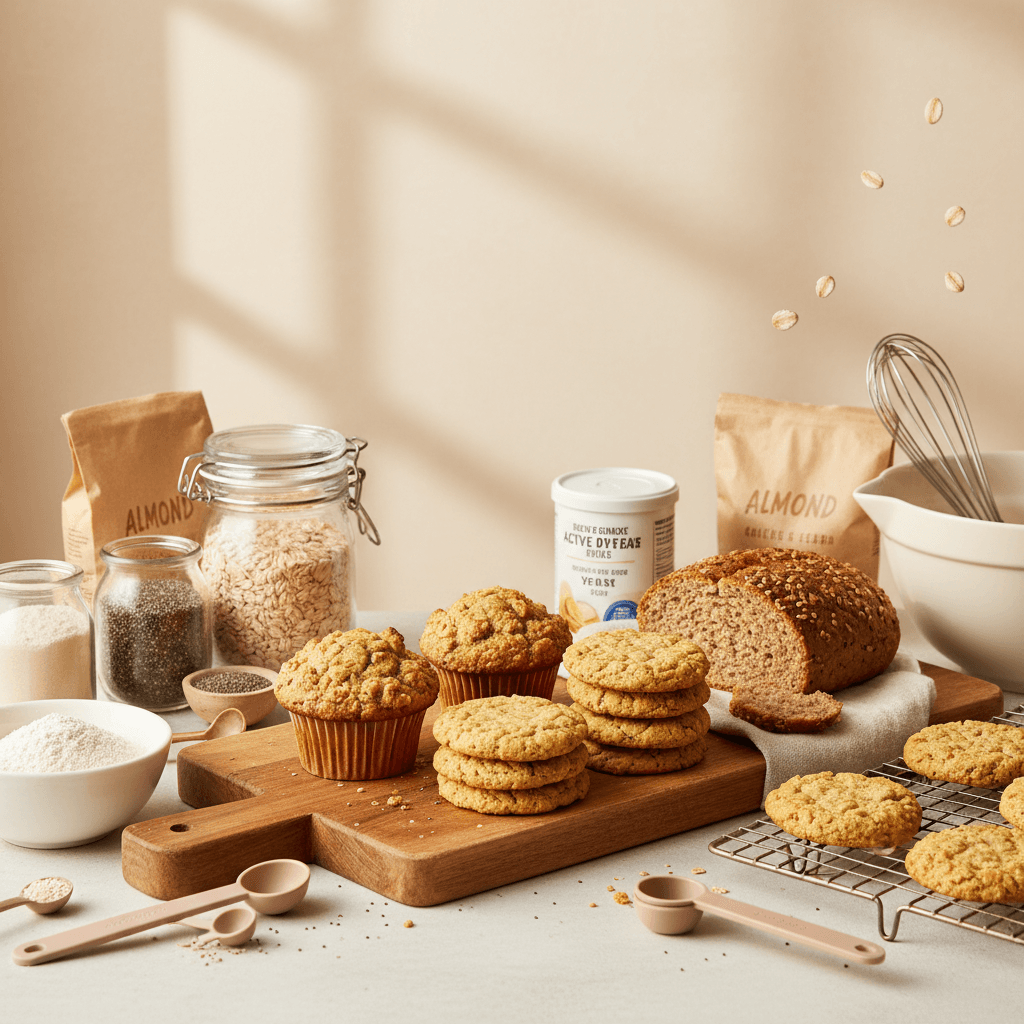
Batch baking is one of the smartest ways to save money, time, and sanity in the kitchen — especially when you're working with gluten-free ingredients that tend to cost more per bag. This guide covers the exact ingredients, tools, and strategies that scale well so you can meal prep baked goods without blowing your budget.
Key takeaways
- Buying flour, starches, and sweeteners in bulk is the single biggest money-saver for batch baking — the cost per recipe drops dramatically at the 5-pound bag level and above.
- A digital kitchen scale, half-sheet pans, and a stand mixer are the three tools that make the biggest difference when scaling recipes up.
- Gluten-free flour blends made from rice flour, tapioca starch, and potato starch are the most affordable base for high-volume baking.
- Prepping and freezing doughs, batters, and finished baked goods in portioned amounts saves both time and waste throughout the week.
- Store-brand staples like sugar, baking powder, and oil perform identically to name brands at a fraction of the cost.
Why batch baking saves more than just time
When you bake in larger quantities, you spread the cost of specialty ingredients across more servings. A bag of brown rice flour that seems expensive for a single loaf becomes very reasonable when it covers four loaves and a batch of muffins. You also reduce energy costs by running your oven fewer times per week, and you cut down on impulse purchases of store-bought gluten-free products that are often two to three times the price of homemade.
The key is having the right ingredients on hand in the right quantities, plus tools that can handle larger batches without slowing you down.
The best budget-friendly ingredients for batch baking
The most cost-effective approach to gluten-free batch baking starts with building a pantry around affordable, versatile staples. Here is what we recommend keeping stocked at all times.
Flours and starches that scale well
Rice flour (both white and brown) and tapioca starch are the backbone of most affordable gluten-free flour blends. Buying these individually in bulk and blending them yourself costs roughly 40-60% less than buying pre-made blends. If you prefer the convenience of a ready-made blend, Bob's Red Mill 1-to-1 Baking Flour in the 5-pound bag offers the best value per ounce among widely available options.
For a deeper look at flour options at every price point, check out our guide to the best baking flours from budget to premium.
| Ingredient | Best bulk size | Approximate cost per pound | Best for |
|---|---|---|---|
| White rice flour | 5 lb bag | $1.50–$2.00 | All-purpose blend base, cookies, quick breads |
| Brown rice flour | 5 lb bag | $1.75–$2.25 | Whole grain flavor, muffins, pancakes |
| Tapioca starch | 5 lb bag | $1.25–$1.75 | Binding, chewiness, blend component |
| Potato starch | 5 lb bag | $1.50–$2.00 | Moisture retention, blend component |
| Oat flour (certified GF) | 3 lb bag | $2.00–$3.00 | Muffins, pancakes, cookies |
Sweeteners and fats
Granulated sugar and brown sugar are already budget-friendly and work perfectly in large batches. For fats, canola oil is the most economical option for recipes where butter flavor is not essential — think muffins, quick breads, and pancakes. When you do need butter, buying it on sale and freezing it in bulk is the best strategy. Our guide to store-brand baking products covers which store brands match name-brand quality for these staples.
Leaveners, binders, and extras
Baking powder, baking soda, salt, and vanilla extract are essentials that you will burn through quickly when batch baking. Buy baking powder and baking soda in the largest containers your store offers — they last a long time and the per-unit savings are significant. For vanilla, imitation vanilla is perfectly fine for large-batch recipes where the vanilla is a background flavor. Save the good stuff for recipes where it is the star. We compared the two in our cheap vs. premium vanilla extract breakdown.
For binding in gluten-free recipes, xanthan gum is essential but expensive. The good news is that a little goes a long way — a single 8-ounce bag can last months of heavy batch baking. Buy the Bob's Red Mill Xanthan Gum 8 oz bag and you are set for a very long time.
If you are building out a gluten-free pantry from scratch, our guide to stocking a baking pantry on a budget walks through the entire process step by step. And if you want a structured approach to getting confident with gluten-free baking overall, the Confident Gluten-Free Baker Toolkit pulls together the techniques and knowledge that make batch baking feel second nature.
Essential tools for scaling up your baking
The right equipment makes batch baking faster, more consistent, and less exhausting. You do not need a professional kitchen setup — just a few key upgrades from the bare minimum.
A digital kitchen scale
This is the single most important tool for batch baking. When you are doubling or tripling recipes, measuring by weight eliminates the inconsistency of cup measurements. A reliable option is the OXO Good Grips 11 lb Food Scale, which handles large batch quantities. It is accurate, easy to clean, and the pull-out display means you can read it even with a big mixing bowl on top.
Half-sheet pans and cooling racks
Standard quarter-sheet pans work fine for a single batch, but half-sheet pans (18x13 inches) are the real workhorse for batch baking. You can fit significantly more cookies, rolls, or muffin portions per oven load. We recommend having at least three so you can rotate — one in the oven, one cooling, and one being loaded. The Nordic Ware Natural Aluminum Half Sheet Pans are commercial-quality and very affordable for what you get.
A stand mixer or large-capacity hand mixer
Hand-mixing a single batch of muffin batter is fine. Hand-mixing a quadrupled batch of cookie dough is a workout nobody asked for. If you are serious about batch baking, a stand mixer pays for itself in time and consistency. That said, you do not need the top-of-the-line model — our budget vs. premium equipment comparison breaks down where to save and where to splurge on tools like these.
Storage containers and freezer bags
Batch baking only works if you have a plan for storing everything. Invest in a set of airtight containers in multiple sizes and a box of quality gallon-size freezer bags. Label everything with the date and contents — your future self will thank you.
| Tool | Budget option | Why it matters for batch baking |
|---|---|---|
| Digital scale | Under $15 | Consistent measurements when scaling recipes up |
| Half-sheet pans (set of 3) | $25–$35 | More baking surface, fewer oven loads |
| Stand mixer | $150–$250 | Handles large dough volumes without fatigue |
| Large mixing bowls (set) | $15–$25 | Room to mix doubled and tripled batches |
| Airtight containers (set) | $20–$30 | Proper storage keeps baked goods fresh longer |
How to plan a batch baking session
The most efficient approach is to group recipes that share ingredients and oven temperatures. This minimizes prep time and lets you move through multiple recipes in a single session.
Step 1: Choose 3-4 recipes with overlapping ingredients
Pick recipes that use the same flour blend, the same fat, or the same leavener. For example, a muffin recipe, a quick bread, and a batch of pancake mix might all use the same gluten-free flour blend, oil, and baking powder. You mix the dry ingredients for all three at once, then split them into separate bowls for the wet ingredients.
Step 2: Prep all dry ingredients first
Weigh and combine your dry ingredients for every recipe before you touch any wet ingredients. This assembly-line approach is faster and cleaner than making one recipe at a time from start to finish.
Step 3: Work from longest bake time to shortest
Start with whatever takes the longest in the oven — usually a loaf of bread or a large cake. While that bakes, prep and portion your quicker items like cookies or muffins. By the time the first item comes out, the next batch is ready to go in.
Step 4: Cool, portion, and freeze
Let everything cool completely on wire racks before packaging. Slice breads and portion muffins individually before freezing — this way you can pull out exactly what you need for the week without thawing an entire batch. Most gluten-free baked goods freeze beautifully for 2-3 months when wrapped tightly.
Best recipes to batch bake on a budget
Not every recipe is worth scaling up. The best candidates for batch baking are items that freeze well, reheat easily, and use affordable ingredients. Here are our top picks.
Muffins and quick breads
These are the ultimate batch baking staple. Gluten-free muffins freeze and reheat perfectly — 30 seconds in the microwave and they taste fresh-baked. A basic muffin recipe using rice flour blend, oil, eggs, and sugar costs very little per muffin when made in large batches. Vary the flavor with mix-ins like frozen blueberries, cocoa powder, or cinnamon and you have variety for the whole week.
Pancake and waffle mix
Make a large batch of dry pancake mix and store it in a labeled container. When you need breakfast, just scoop out the right amount and add wet ingredients. This is faster than any boxed mix and significantly cheaper per serving.
Sandwich bread
Gluten-free sandwich bread is one of the most expensive items to buy pre-made. Baking two or three loaves at once, slicing them, and freezing them saves a remarkable amount of money over time. If your bread tends to come out dry or crumbly, our troubleshooting guide for dry, crumbly gluten-free bakes can help you dial in the right hydration.
Energy bars and granola
Homemade granola and energy bars are dead simple, use inexpensive oats and sweeteners, and store well for weeks. They are also endlessly customizable based on what is on sale.
Money-saving strategies for regular batch bakers
Beyond buying in bulk, there are several habits that keep costs down over time.
Track ingredient prices. Keep a simple note on your phone with the best prices you have found for your core ingredients. This makes it easy to spot a genuine sale versus a fake markdown.
Buy seasonal produce for mix-ins. Frozen fruit is already affordable, but buying fresh berries at peak season and freezing them yourself is even cheaper. Pumpkin puree in November, apples in October, and citrus in winter all cost a fraction of their off-season prices.
Make your own flour blends. Pre-made gluten-free flour blends are convenient but carry a premium. Mixing your own from individual flours and starches can cut your flour costs nearly in half. A basic blend of 2 parts white rice flour, 2/3 part potato starch, and 1/3 part tapioca starch works for most recipes.
Use store-brand staples. Sugar, baking soda, salt, oil, and eggs are all items where store brands perform identically to name brands. Save the brand loyalty for specialty items where it actually matters.
Frequently asked questions
What is the cheapest gluten-free flour for batch baking?
White rice flour bought in bulk (5-pound bags or larger) is consistently the cheapest gluten-free flour available, typically running $1.50 to $2.00 per pound. Combined with inexpensive tapioca starch and potato starch, you can make a versatile all-purpose blend for well under $2.00 per pound — far less than pre-made blends.
How long do gluten-free baked goods last in the freezer?
Most gluten-free baked goods — including muffins, quick breads, cookies, and sliced sandwich bread — keep well in the freezer for 2 to 3 months when wrapped tightly in plastic wrap and stored in airtight freezer bags. Thaw at room temperature or reheat directly from frozen in the microwave for best results.
Is it cheaper to make gluten-free bread at home or buy it?
Homemade gluten-free bread costs roughly $1.50 to $3.00 per loaf in ingredients, while store-bought loaves typically run $6 to $9. Even factoring in your time, baking at home — especially in batches of two or three loaves — saves significant money. Our store-bought vs. homemade cost comparison goes deeper on the math.
What baking tools do I need for meal prep baking on a budget?
At minimum, you need a digital kitchen scale, two to three half-sheet pans, a set of large mixing bowls, and airtight storage containers. You can get all of these for under $75 total. A stand mixer is a worthwhile upgrade if you batch bake regularly, but it is not strictly necessary to get started. Our affordable baking tools guide covers everything you need for under $100.
Can I double or triple any gluten-free recipe?
Most gluten-free quick breads, muffins, cookies, and pancake batters scale up without issues. Yeast breads are trickier — we recommend making multiple single batches of dough rather than one giant batch, because gluten-free bread doughs can behave unpredictably at very large volumes. Always weigh your ingredients when scaling up to maintain consistency.

Written by
Co-founder, BakingSubs
Co-founder of BakingSubs, where he turns the science of ingredient substitutions into tested, reliable guidance for home bakers.
Related Posts
Bake with Confidence
See all
Confident Gluten-Free Baker Toolkit
The science-based system that replaces gluten's seven invisible jobs so your baking turns out soft, fluffy, and foolproof — every time.

Gluten-Free Recipe Vault
Instant access to our complete library of proven gluten-free recipes — no waiting, no guesswork, just results that work tonight.

Fix Your Gluten-Free Bread
Learn the 3-step formula to make bread rise and stay soft, discover why your loaves collapse, and get a tested sandwich bread recipe that actually works.