

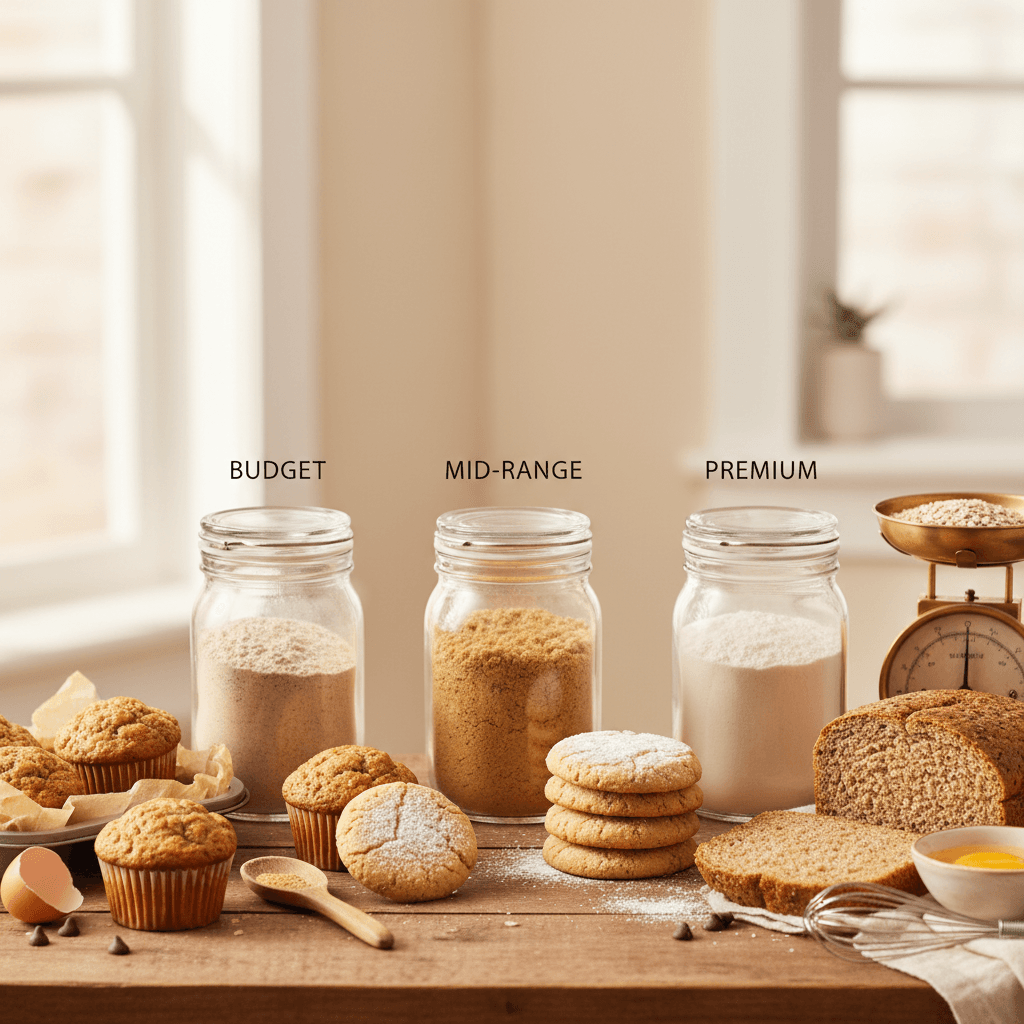
Choosing a gluten-free flour shouldn't require a spreadsheet and a prayer. We've compared flours across every price tier — from the under-$5 bags at Walmart to the artisan blends that cost more per pound than good coffee — so you can spend wisely based on what you're actually baking.
Key takeaways
- Budget gluten-free flour blends ($0.15–$0.30/oz) work surprisingly well for everyday baking like pancakes, quick breads, and cookies.
- Mid-range flours ($0.30–$0.60/oz) typically add better starches and sometimes xanthan gum, giving you noticeably improved texture in cakes and pastries.
- Premium flours ($0.60–$1.00+/oz) use finely milled grains and proprietary blends that excel in bread, laminated doughs, and recipes where texture is everything.
- The biggest quality jump happens between budget and mid-range — premium is worth it only for specific applications.
- Our best overall value pick is King Arthur Gluten Free Measure for Measure Flour, which delivers near-premium results at a mid-range price.
What you're actually paying for when flour costs more
Price differences in gluten-free flour aren't just marketing. They reflect real differences in grain sourcing, milling fineness, starch composition, and testing protocols. A budget flour might use coarser rice flour that creates a gritty texture in delicate cakes, while a premium flour uses superfine milling that virtually eliminates graininess.
Here's what each price tier generally gets you:
| Factor | Budget ($0.15–$0.30/oz) | Mid-range ($0.30–$0.60/oz) | Premium ($0.60–$1.00+/oz) |
|---|---|---|---|
| Milling fineness | Standard grind, sometimes gritty | Fine grind, smooth in most recipes | Superfine or proprietary grind |
| Starch blend complexity | 1–2 starches (usually tapioca, potato) | 2–3 starches, better balanced | 3+ starches, optimized ratios |
| Xanthan gum included | Rarely | Sometimes | Often |
| Dedicated GF facility | Varies | Usually | Almost always |
| Best for | Pancakes, cookies, quick breads | Cakes, muffins, most everyday baking | Bread, pastry, 1:1 wheat substitution |
Understanding these differences helps you avoid overspending on pancake flour or underspending on a loaf of sandwich bread. If you're still getting comfortable with gluten-free baking in general, our Confident Gluten-Free Baker Toolkit walks you through the fundamentals so you can make smarter flour choices from the start.
Budget tier: best gluten-free flours under $0.30 per ounce
Budget flours are the workhorses of a gluten-free pantry. They won't win awards for delicate crumb structure, but for everyday cooking and baking — think pancakes, waffles, banana bread, and cookies — they do the job well. The key is knowing their limits.
Bob's Red Mill 1-to-1 Baking Flour
At roughly $0.20–$0.25/oz depending on where you buy it, Bob's Red Mill 1-to-1 Baking Flour is the most widely available budget blend and one we recommend constantly. It includes xanthan gum (unusual at this price), which means you can substitute it directly into wheat recipes without adding a separate binder. We've covered this brand extensively in our complete guide to Bob's Red Mill gluten-free products.
What to expect: Cookies come out with good spread and chew. Quick breads rise predictably. Cakes are decent but can lean slightly dense compared to mid-range options. Pancakes are excellent — fluffy and tender with no grittiness. For bread, it works in a pinch but doesn't develop the structure you'd want for a sandwich loaf.
Price: ~$6–$8 for a 44 oz bag at most grocery stores. You can find it at Walmart, Target, and Kroger.
Krusteaz Gluten Free All Purpose Flour
Krusteaz Gluten Free All Purpose Flour is another budget-friendly option that runs about $0.18–$0.22/oz. It does not include xanthan gum, so you'll need to add your own — check our guide on xanthan gum vs guar gum if you're not sure which binder to use.
What to expect: This flour has a slightly coarser grind than Bob's, which means it performs best in heartier baked goods. Muffins, pancakes, and banana bread are its sweet spot. It can taste slightly beany in delicate vanilla cakes. For a deeper look at the brand, see our full Krusteaz review.
Price: ~$5–$7 for a 32 oz bag.
Walmart Great Value Gluten Free All Purpose Flour
If you're shopping purely on price, the Great Value store brand at Walmart comes in around $0.15/oz. It's a basic rice flour and starch blend without xanthan gum.
What to expect: Honestly, it's fine for pancakes, simple cookies, and as a coating for fried foods. We wouldn't use it for cakes or anything where a refined crumb matters — you'll likely notice a gritty texture in lighter bakes. But for budget-conscious families doing everyday cooking, it gets the job done.
Price: ~$4–$5 for a 32 oz bag, available in-store and online at Walmart.
Budget tier best overall value
Bob's Red Mill 1-to-1 Baking Flour is the clear winner here. The included xanthan gum saves you money on a separate purchase, and the blend is versatile enough to handle 80% of what most home bakers make. The price difference over the cheapest options is a dollar or two per bag — absolutely worth it.
Mid-range tier: best gluten-free flours from $0.30 to $0.60 per ounce
This is where gluten-free flour starts to feel less like a compromise. Mid-range flours use better starch ratios, finer milling, and more thoughtful formulations. If you bake regularly and care about texture, this is the sweet spot.
King Arthur Gluten Free Measure for Measure Flour
This is our top pick across all price tiers for overall value. At roughly $0.35–$0.45/oz, King Arthur Measure for Measure delivers results that rival flours costing twice as much. It includes xanthan gum and uses a well-balanced blend of rice flours, tapioca starch, and potato starch. We did a detailed head-to-head in our Bob's Red Mill vs King Arthur comparison.
What to expect: Cakes come out tender and moist with a fine crumb. Cookies have great chew and spread. Muffins are fluffy. Even bread turns out reasonably well, though dedicated bread flours still have an edge. This flour handles pie crust beautifully — flaky and workable without crumbling apart. It's the closest thing to a true all-purpose flour in gluten-free baking.
Price: ~$8–$10 for a 22 oz bag, or better value in the 3 lb bag (~$12–$14). Available at most grocery stores and Amazon.
Pamela's Gluten Free All Purpose Flour Blend
Pamela's All Purpose Flour Blend runs about $0.35–$0.40/oz and uses a combination of brown rice flour, tapioca starch, white rice flour, potato starch, sorghum flour, and arrowroot starch. No xanthan gum included. See our full Pamela's product review for more detail.
What to expect: The sorghum flour adds a subtle whole-grain flavor that works beautifully in brownies, chocolate cake, and heartier cookies. It's less ideal for white cake or delicate pastries where you want a completely neutral flavor. Pancakes and waffles are excellent.
Price: ~$9–$12 for a 24 oz bag.
Namaste Foods Perfect Flour Blend
Namaste's blend comes in around $0.30–$0.40/oz and is notable for being free of the top 8 allergens — no dairy, eggs, nuts, soy, or anything else that commonly trips people up. If you're managing multiple food sensitivities, this is worth a serious look. Our Namaste Foods review covers their full lineup.
What to expect: It performs well in cakes and quick breads, producing a tender crumb with minimal grittiness. Cookies can spread a touch more than expected, so chilling the dough helps. It doesn't include xanthan gum, so plan accordingly.
Price: ~$7–$9 for a 22 oz bag.
Mid-range tier best overall value
King Arthur Gluten Free Measure for Measure Flour is the standout. It's the most versatile flour on this list at any price, handles the widest range of recipes successfully, and includes xanthan gum. If you're going to keep one flour on your shelf, this is the one.
Premium tier: best gluten-free flours above $0.60 per ounce
Premium flours are where you go when texture is non-negotiable. These are the flours that make gluten-free bread that people can't tell is gluten-free, pastries with delicate layers, and cakes with the kind of crumb you'd expect from a bakery. They cost significantly more, so we want to be honest about when they're worth it — and when they're overkill.
Cup4Cup Multipurpose Flour
Developed by a former Thomas Keller pastry chef, Cup4Cup is the gold standard of premium gluten-free flour. At roughly $0.65–$0.80/oz, it's a significant investment. It includes xanthan gum and uses a proprietary blend of rice flours, tapioca and potato starches, and milk powder. We did a thorough breakdown in our Cup4Cup flour review.
What to expect: This flour produces one of the finest crumbs of any blend here. Cakes are light, moist, and hard to tell apart from wheat-based versions. Pie crust is flaky and tender. Cookies have perfect texture. Bread is very good, though Jovial still has an edge for hearty loaves. Note that Cup4Cup contains milk powder, so it's not dairy-free.
Price: ~$12–$14 for an 18 oz bag, or ~$20–$24 for 32 oz.
Jovial Gluten Free Pastry Flour
Jovial's whole grain pastry flour runs about $0.60–$0.75/oz and is made from a single ingredient: whole grain sorghum. It's not a blend — it's a single-origin flour meant for specific applications. See our full Jovial review for more on their lineup.
What to expect: This flour shines in recipes where you want a subtle nutty, whole-grain flavor — think rustic scones, muffins, and quick breads. It's not a 1:1 substitute for all-purpose flour and works best when combined with starches. For bakers who enjoy building their own blends, Jovial's single-ingredient approach gives you complete control.
Price: ~$8–$10 for a 24 oz bag.
Cup4Cup Wholesome Flour
Cup4Cup's whole grain version adds sorghum and brown rice flour to their base blend, running about $0.70–$0.85/oz. It's designed for bakers who want the Cup4Cup performance with a more nutritious profile.
What to expect: Bread made with this flour has excellent structure and a pleasant wheaty flavor. It's particularly good for sandwich loaves and dinner rolls. Muffins and banana bread are outstanding. It's heavier than the multipurpose version, so it's not our first choice for delicate white cakes.
Price: ~$13–$15 for an 18 oz bag.
Authentic Foods Superfine Multi Blend
At roughly $0.70–$0.90/oz, Authentic Foods uses superfine brown rice flour, potato starch, and tapioca flour in their blend. The superfine milling is the star here — it virtually eliminates the grittiness that plagues many rice-based flours.
What to expect: This flour excels in anything where a smooth, fine crumb matters. Layer cakes, cupcakes, and fresh pasta all come out beautifully. It doesn't include xanthan gum, so you'll need to add your own. The neutral flavor makes it extremely versatile for bakers who don't want any detectable "gluten-free" taste.
Price: ~$10–$13 for a 25 oz bag, primarily available online.
Premium tier best overall value
Cup4Cup Multipurpose Flour wins the premium tier. Yes, it's expensive, but it delivers the most consistent, highest-quality results across the widest range of recipes. If you're baking for a special occasion or want to convert a treasured family recipe, this is the flour that makes it happen.
When to spend more and when to save
Not every baking project needs premium flour. Here's a practical breakdown of when to upgrade and when budget is perfectly fine:
| What you're baking | Recommended tier | Why |
|---|---|---|
| Pancakes and waffles | Budget | Syrup and toppings mask subtle texture differences |
| Banana bread and quick breads | Budget to mid-range | Strong flavors and moist batters forgive flour quality |
| Cookies | Mid-range | Texture matters more; butter and sugar do heavy lifting |
| Muffins | Mid-range | Crumb quality is noticeable but not critical |
| Layer cakes | Mid-range to premium | Fine crumb and moisture retention are key |
| Pie crust | Mid-range to premium | Flakiness depends on flour quality and fat distribution |
| Sandwich bread | Premium | Structure, rise, and softness demand the best blend |
| Pastry and laminated dough | Premium | No room for gritty texture or poor structure |
A smart strategy is to keep a budget flour for everyday cooking and a mid-range or premium flour for projects where texture really counts. That way you're not burning through $14 bags of Cup4Cup on Tuesday-night pancakes.
How to get the most out of any flour tier
Regardless of which flour you choose, a few techniques will help you get better results:
Weigh your flour. Gluten-free flours vary wildly in density. A cup of one brand can weigh 20–30% more than a cup of another. A kitchen scale — such as the OXO Good Grips 11lb Food Scale — eliminates this variable entirely.
Let batters rest. Many gluten-free flours benefit from a 15–30 minute rest after mixing. This allows starches to hydrate fully, which reduces grittiness and improves rise. This is especially important with budget flours that use coarser grinds.
Don't skip the binder. If your flour doesn't include xanthan gum or guar gum, you need to add one. Without a binder, gluten-free baked goods will be crumbly and fall apart. Our guide on xanthan gum vs guar gum explains exactly how much to use for different recipes.
Watch for off flavors. Some budget rice flours can develop a slightly stale or beany taste, especially if they've been sitting on the shelf a while. Buy from stores with good turnover, and store opened bags in the fridge or freezer.
Frequently asked questions
What is the best gluten-free flour for beginners on a budget?
Bob's Red Mill 1-to-1 Baking Flour is the best starting point for budget-conscious beginners. It includes xanthan gum so you don't need to buy a separate binder, and it works as a direct 1:1 substitute in most wheat-based recipes. At around $0.20–$0.25/oz, it's affordable enough to experiment with while you learn.
Is expensive gluten-free flour actually worth it?
It depends on what you're baking. For bread, layer cakes, and pastry, premium flours like Cup4Cup produce noticeably better texture and rise. For pancakes, cookies, and quick breads, a mid-range flour like King Arthur Measure for Measure delivers excellent results without the premium price tag.
Can you mix budget and premium gluten-free flours together?
Yes, and it's actually a smart strategy. Blending a budget flour with a premium one can improve texture while keeping costs down. A 50/50 mix of Bob's Red Mill and Cup4Cup, for example, gives you better crumb than budget alone at roughly half the cost of going all-premium. This works especially well for cakes and muffins.
Why does some gluten-free flour taste gritty?
Grittiness comes from coarsely milled rice flour, which is more common in budget blends. The rice granules don't fully dissolve during baking, leaving a sandy texture. You can reduce this by letting your batter rest for 20–30 minutes before baking, or by choosing flours labeled "superfine" milled. Our gritty texture troubleshooting guide has more tips.
Do all gluten-free flours need xanthan gum added?
Not all — some blends like Bob's Red Mill 1-to-1, King Arthur Measure for Measure, and Cup4Cup already include xanthan gum. Always check the ingredient list before adding more. Too much xanthan gum makes baked goods gummy and dense. If your flour doesn't include it, a general guideline is 1/4 teaspoon per cup of flour for cookies, 1/2 teaspoon for cakes, and 1 teaspoon for bread.

Written by
Co-founder, BakingSubs
Co-founder of BakingSubs, where he turns the science of ingredient substitutions into tested, reliable guidance for home bakers.
Related Posts
Bake with Confidence
See all
Confident Gluten-Free Baker Toolkit
The science-based system that replaces gluten's seven invisible jobs so your baking turns out soft, fluffy, and foolproof — every time.

Gluten-Free Recipe Vault
Instant access to our complete library of proven gluten-free recipes — no waiting, no guesswork, just results that work tonight.

Fix Your Gluten-Free Bread
Learn the 3-step formula to make bread rise and stay soft, discover why your loaves collapse, and get a tested sandwich bread recipe that actually works.