

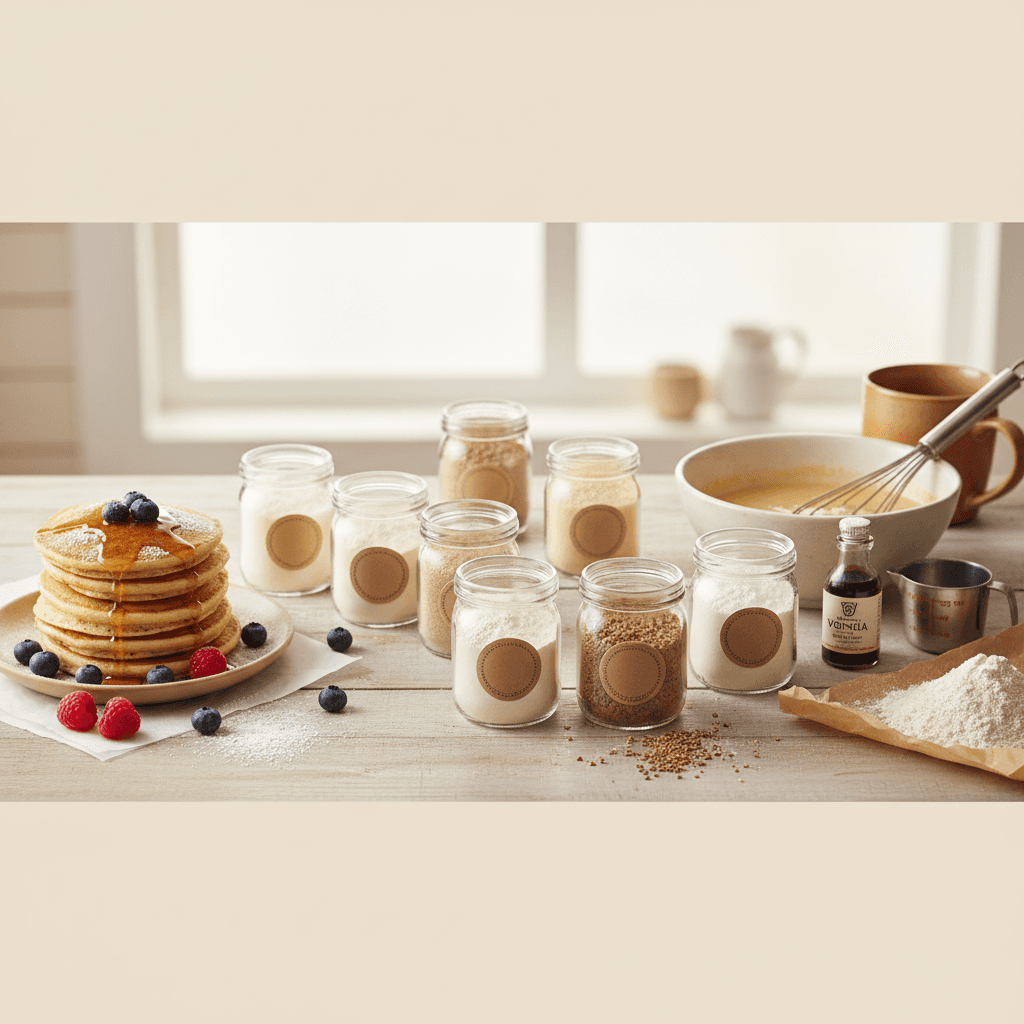
Choosing the right flour is the single biggest factor in whether your gluten-free pancakes turn out fluffy or flat. The differences between flours and blends for pancakes are dramatic. Here's exactly which flours work, which don't, and why.
Key takeaways
- A good all-purpose gluten-free flour blend is the easiest path to fluffy pancakes — Bob's Red Mill 1-to-1 and King Arthur Measure for Measure are the top picks.
- Single-grain flours like rice flour or buckwheat flour work well but need to be combined with a starch for the right texture.
- Almond flour and coconut flour make decent pancakes but produce a completely different texture than traditional ones.
- The protein content, starch ratio, and absorption rate of each flour directly affect whether your pancakes are tender or gummy.
- Xanthan gum is helpful but not always necessary — many blends already include it, and pancakes need less structure than bread.
- Letting your batter rest for 5-10 minutes allows starches to hydrate, which prevents grittiness and improves rise.
Why flour choice matters so much for gluten-free pancakes
Pancakes rely on a delicate balance of structure, tenderness, and moisture. In conventional baking, all-purpose wheat flour handles all three jobs effortlessly. Gluten creates just enough structure to hold the air bubbles from leavening while staying tender enough to cut with a fork.
When you remove gluten, you need a flour (or combination of flours) that can mimic that balance. Too much protein-heavy flour and your pancakes are dense. Too much starch and they fall apart on the griddle. The fundamentals of gluten-free baking apply here — you're essentially engineering a replacement for what gluten does naturally.
The good news? Pancakes are one of the most forgiving gluten-free bakes. They don't need the structural integrity of bread or the delicate crumb of cake. That means you have more flour options than you might think.
Best gluten-free flour blends for pancakes
Pre-made gluten-free flour blends are the fastest way to make pancakes that taste like the ones you remember. These blends combine grain flours with starches and often include xanthan gum, so you can swap them 1:1 for all-purpose flour in any pancake recipe.
Bob's Red Mill gluten-free 1-to-1 baking flour
This is our go-to recommendation for pancakes. The blend of rice flour, tapioca starch, potato starch, and sorghum flour produces a pancake with excellent rise and a tender, slightly fluffy interior. It includes xanthan gum, so you don't need to add any.
Why it works for pancakes: The sorghum flour adds a mild, slightly sweet flavor that complements breakfast flavors beautifully. The starch-to-grain ratio is well balanced, so you get structure without heaviness. Absorption is moderate, meaning your batter won't thicken too much as it sits.
Potential downside: Some batches can produce a very slightly gritty texture if you don't let the batter rest. Give it 5-10 minutes before cooking and this disappears completely.
King Arthur Measure for Measure flour
This blend performs nearly identically to Bob's for pancakes, with a slightly smoother texture straight out of the bag. It uses a similar combination of rice flours, tapioca starch, and potato starch.
Why it works for pancakes: The grind is exceptionally fine, which means less grittiness — a common complaint with gluten-free pancakes. It produces a slightly more delicate pancake than Bob's, which some people prefer.
Potential downside: It's typically more expensive per ounce. For pancakes specifically, the difference between this and Bob's is subtle enough that we'd say save your money unless texture sensitivity is a major concern for you.
For a deeper comparison of these and other blends across different baking applications, check out our full gluten-free flour blend brand comparison.
If you're just getting started with gluten-free baking and want a reliable foundation for pancakes and beyond, our Confident Gluten-Free Baker Toolkit walks you through exactly which ingredients and tools to stock so you're not guessing.
Cup4Cup multipurpose flour
Cup4Cup uses a blend of rice flour, tapioca starch, potato starch, and milk powder. That milk powder is the differentiator — it adds browning and a richer flavor.
Why it works for pancakes: The milk powder promotes beautiful golden-brown color on the griddle and adds a subtle richness. That makes it the most "traditional"-tasting blend on this list.
Potential downside: Contains milk powder, so it's not dairy-free. It's also the most expensive option on this list. And because it contains cornstarch, it's not suitable for people with corn sensitivities.
Best single-grain flours for pancakes
If you prefer to work with individual flours — either for dietary reasons, flavor preferences, or because you like to control your blends — these are the best single-grain options for pancakes.
Buckwheat flour
Buckwheat flour is naturally gluten-free (despite the name) and makes some of the best-tasting pancakes you'll ever have. It has a distinctive earthy, nutty flavor that pairs perfectly with maple syrup and butter.
Why it works for pancakes: Buckwheat has moderate protein content (about 12-15g per cup) which gives pancakes genuine structure. It absorbs liquid well without becoming gummy, and it produces a tender crumb with a slightly denser chew than wheat pancakes — in a good way.
Best approach: Use 75% buckwheat flour and 25% arrowroot powder or tapioca starch. The starch lightens the texture and prevents the pancakes from being too heavy. Pure buckwheat pancakes are a traditional dish in many cultures, but blending with starch gets you closer to a classic American-style pancake.
Potential downside: The flavor is assertive. If you want neutral-tasting pancakes, buckwheat isn't the choice. Also, some brands of buckwheat flour are processed in facilities that handle wheat, so check labels carefully if you have celiac disease.
Brown rice flour
Brown rice flour is one of the most versatile single gluten-free flours and works well in pancakes when combined with a starch. It has a mild, slightly nutty flavor that doesn't overpower other ingredients.
Why it works for pancakes: Brown rice flour provides good structure and a familiar wheat-like flavor. It has more fiber and protein than white rice flour, which helps pancakes hold together on the griddle.
Best approach: Combine 2/3 brown rice flour with 1/3 tapioca starch, plus 1/2 teaspoon xanthan gum per cup of flour mixture. This ratio gives you the right balance of structure and lightness.
Potential downside: Brown rice flour can be gritty if the grind isn't fine enough. We have a full breakdown of the best rice flour brands for gluten-free baking that covers which brands have the finest grind. Letting your batter rest is especially important with rice flour to allow the gritty particles to hydrate.
Oat flour (certified gluten-free)
Certified gluten-free oat flour is a pancake powerhouse. It produces pancakes with a soft, tender texture and a mild, slightly sweet flavor that tastes genuinely like "normal" pancakes.
Why it works for pancakes: Oat flour has a natural sweetness and a protein structure that creates tender, fluffy results. The beta-glucan fiber in oats gives the batter a slight viscosity that helps pancakes hold together without needing xanthan gum.
Best approach: You can use 100% oat flour for pancakes and get great results — it's one of the few single gluten-free flours that works on its own. For extra lightness, blend 80% oat flour with 20% tapioca starch.
Potential downside: Oats are controversial in the celiac community. While certified gluten-free oats test below 20ppm, some people with celiac disease react to the avenin protein in oats. If you tolerate oats, this is arguably the best single flour for pancakes.
Flours that work but need special handling
Almond flour
Almond flour makes rich, filling pancakes that are popular in keto and paleo circles. But they're a fundamentally different pancake than what most people picture.
Why it partially works: The high fat content (about 14g per 1/4 cup) creates a moist, tender pancake. The protein from almonds provides structure. These pancakes brown beautifully and have a satisfying, almost custard-like interior.
Why it's tricky: Almond flour pancakes are dense and don't rise much. They're fragile on the griddle — you need to make them small (3-4 inches) and flip carefully. They also taste distinctly nutty, which is either a pro or con depending on your preference. For more on how almond flour compares to other nut-free options, see our almond flour vs coconut flour comparison.
Best approach: Use about 1 cup almond flour, 2 eggs, and 2-3 tablespoons of milk for 4-6 small pancakes. The eggs are doing most of the structural work here. If you want to learn more about how eggs function in baking and why they're so critical in grain-free pancakes, our guide to egg functions in baking explains it well.
If you go this route, brand matters — our almond flour brand comparison covers which brands have the finest, most consistent grind for baking.
Cassava flour
Cassava flour is a popular grain-free, nut-free option that can make surprisingly good pancakes. It's made from the whole cassava root (unlike tapioca starch, which is just the extracted starch).
Why it partially works: Cassava flour is one of the closest single-flour substitutes for wheat flour in terms of texture and behavior. It creates a soft, pliable pancake with good structure.
Why it's tricky: Cassava flour absorbs significantly more liquid than wheat flour or rice flour. If you use a standard pancake recipe and just swap in cassava flour, you'll get a batter that's way too thick. You need to increase your liquid by about 25-30%.
Best approach: Start with 3/4 cup cassava flour where a recipe calls for 1 cup of all-purpose flour, and add liquid until the batter reaches a pourable consistency. Don't skip the resting time — cassava flour continues to absorb liquid for several minutes after mixing.
Flour comparison for pancakes at a glance
| Flour | Use alone? | Texture | Flavor | Best for |
|---|---|---|---|---|
| Bob's Red Mill 1-to-1 | Yes | Fluffy, tender | Neutral | Closest to traditional pancakes |
| King Arthur Measure for Measure | Yes | Smooth, delicate | Neutral | Texture-sensitive eaters |
| Cup4Cup | Yes | Rich, golden | Slightly rich | Best browning and flavor |
| Buckwheat flour | Yes (better blended) | Dense, tender | Earthy, nutty | Flavor-forward pancakes |
| Brown rice flour | No (needs starch) | Moderate, can be gritty | Mild, nutty | DIY blends |
| Oat flour (GF certified) | Yes | Soft, fluffy | Mildly sweet | Most "normal" tasting option |
| Almond flour | Yes (different result) | Dense, moist | Nutty | Keto/paleo/grain-free |
| Cassava flour | Yes (adjust liquid) | Soft, pliable | Neutral | Grain-free, nut-free |
Tips for the fluffiest gluten-free pancakes with any flour
No matter which flour you choose, these techniques make a real difference in your results.
Weigh your flour. Gluten-free flours vary wildly in density. A cup of almond flour weighs about 96g, while a cup of brown rice flour weighs about 158g. Scooping with a measuring cup can throw your ratios off by 20% or more. We always recommend using a kitchen scale for gluten-free baking — it's especially important for pancakes where batter consistency is everything.
Let the batter rest. This is the most underrated tip for gluten-free pancakes. A 5-10 minute rest lets starches absorb liquid, which eliminates grittiness and gives leaveners time to start working. Your batter will thicken slightly during the rest — that's normal and desirable.
Don't overmix. Even without gluten, overmixing develops the proteins in rice flour and other grain flours, making pancakes tough. Mix until just combined with a few small lumps remaining.
Use medium-low heat. Gluten-free pancakes need a bit more time on the griddle than wheat pancakes. They brown faster on the outside but take longer to cook through. Medium-low heat (about 325F on an electric griddle) gives you even cooking without burning.
Make them smaller. Large gluten-free pancakes are harder to flip without breaking. Keep them to 4-5 inches in diameter for the best results.
Once you've nailed your flour choice, try our collection of gluten-free pancake recipes for specific recipes using different flour approaches.
Flours to avoid for pancakes
Not every gluten-free flour works for pancakes. Here are a few that consistently disappoint in this application.
Coconut flour absorbs 3-4 times more liquid than other flours and produces a very dense, eggy pancake unless you drastically adjust the recipe. It's not impossible, but it requires a completely different recipe — not a substitution.
Sorghum flour on its own is too heavy and slightly bitter for pancakes. It works beautifully as part of a blend (which is why it's in Bob's 1-to-1), but using it as the sole flour produces flat, dense results.
Potato starch on its own has no structure. It's a supporting player in blends, not a standalone flour. If you're interested in how starches work in gluten-free baking, our potato starch and cornstarch brand comparison covers the role they play.
Frequently asked questions
Can I use regular gluten-free flour for pancakes?
Yes, most all-purpose gluten-free flour blends work well for pancakes. Blends like Bob's Red Mill 1-to-1 and King Arthur Measure for Measure can be swapped 1:1 for regular all-purpose flour in any pancake recipe. Just make sure the blend contains xanthan gum, or add 1/2 teaspoon per cup of flour if it doesn't.
Why are my gluten-free pancakes gummy inside?
Gummy gluten-free pancakes usually result from too much starch in the flour blend, too much liquid, or cooking at too high a heat. High heat sets the outside before the inside cooks through. Lower your griddle temperature to medium-low and cook for slightly longer. If you're experiencing this across different recipes, check out our guide to fixing gummy centers in gluten-free baking.
Do I need xanthan gum for gluten-free pancakes?
Not always. Pancakes need much less structure than bread or cakes, so many flours work without it. If you're using a pre-made blend that already contains xanthan gum, don't add more. If you're using a single flour like buckwheat or oat flour, the eggs and natural protein in the flour usually provide enough binding. For DIY blends with rice flour and starch, adding 1/2 teaspoon of xanthan gum per cup of flour helps hold things together.
What is the best gluten-free flour for fluffy pancakes?
For the fluffiest results with the least effort, Bob's Red Mill 1-to-1 Baking Flour or certified gluten-free oat flour are the top choices. Both produce light, airy pancakes that rise well. The key to fluffiness with any gluten-free flour is separating your eggs and folding in whipped egg whites, using fresh baking powder, and not overmixing the batter.
Can I make my own gluten-free flour blend for pancakes?
Absolutely. A simple DIY pancake blend is 2 parts brown rice flour, 2/3 part tapioca starch, and 1/3 part potato starch, with 1/2 teaspoon xanthan gum per cup of the mixture. This produces a neutral-flavored pancake with good structure and tenderness. Weigh your ingredients for consistency — our gluten-free baking pantry checklist covers all the staples you'll need to keep on hand for blends like this.

Written by
Co-founder, BakingSubs
Co-founder of BakingSubs, where he turns the science of ingredient substitutions into tested, reliable guidance for home bakers.
Related Posts
Bake with Confidence
See all
Confident Gluten-Free Baker Toolkit
The science-based system that replaces gluten's seven invisible jobs so your baking turns out soft, fluffy, and foolproof — every time.

Gluten-Free Recipe Vault
Instant access to our complete library of proven gluten-free recipes — no waiting, no guesswork, just results that work tonight.

Fix Your Gluten-Free Bread
Learn the 3-step formula to make bread rise and stay soft, discover why your loaves collapse, and get a tested sandwich bread recipe that actually works.