

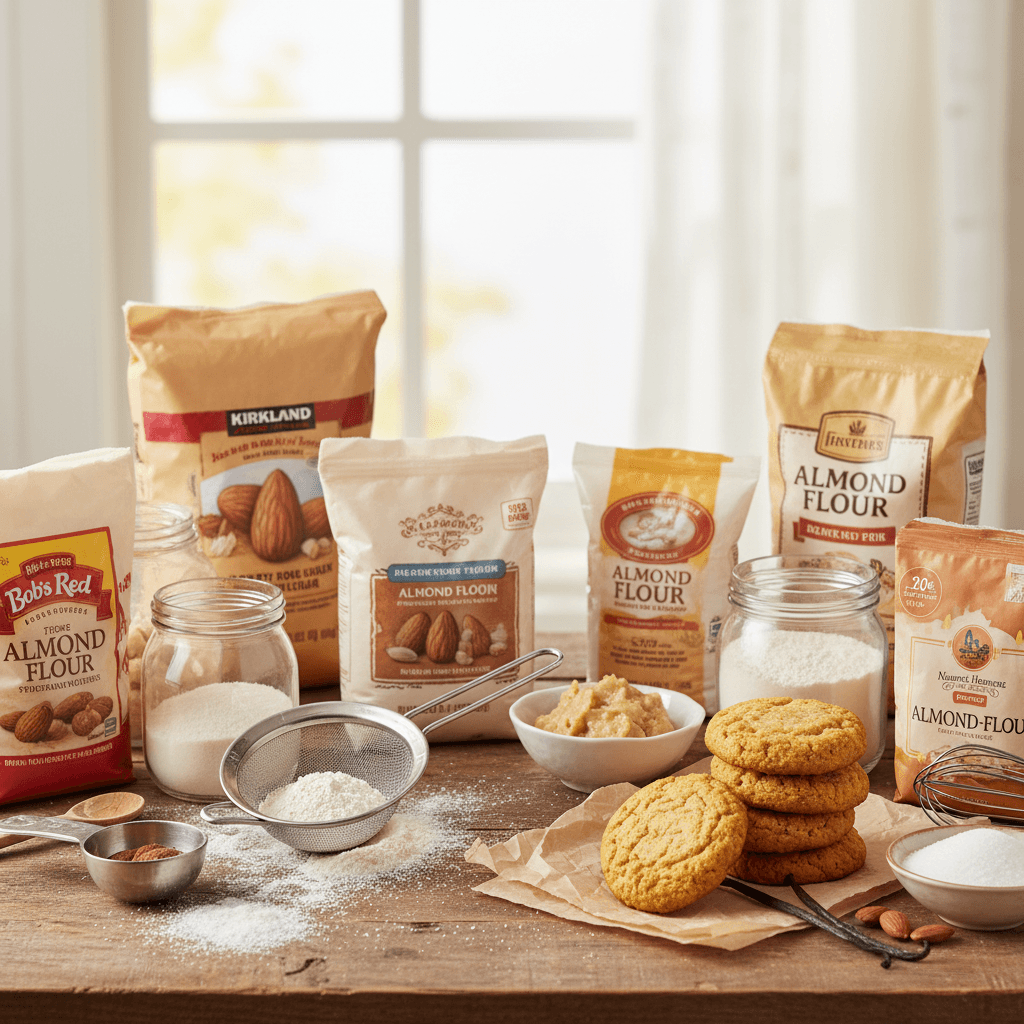
Not all almond flour performs the same in baking, and picking the wrong brand can mean the difference between a tender cake and a gritty, oily mess. We compared seven of the most popular almond flour brands to help you find the one that actually delivers consistent results in gluten-free recipes.
Key takeaways
Blanched, superfine almond flour produces the best texture in cakes, cookies, muffins, and macarons. Unblanched works for rustic baked goods but not delicate ones.
Bob's Red Mill Super Fine and Blue Diamond are the most widely available and reliable everyday options for home bakers.
Price per ounce varies dramatically between brands: bulk bags from Costco or Amazon subscriptions can cut costs by 30-40%.
Freshness matters more than brand name: rancid almond flour ruins everything, so check dates and store it properly.
The grind consistency is the single most important factor. Coarse almond meal and fine almond flour are not interchangeable.
For bread baking specifically, almond flour works best blended with other gluten-free flours rather than used alone.
What to look for when buying almond flour for baking
The best almond flour for baking is blanched (skins removed), superfine in grind, and made from 100% almonds with no fillers. These three factors determine how your baked goods turn out more than the brand name on the bag.
Blanched vs. unblanched: Blanched almond flour has the brown skins removed before grinding, producing a lighter color and smoother texture. Unblanched (or "natural") almond flour includes the skins, which adds fiber but creates a grittier texture and darker color. For cookies, cakes, and especially macarons, blanched is the best option by far.
Grind fineness: This is where brands differ most. A superfine grind absorbs moisture more evenly, creates a smoother crumb, and prevents that sandy mouthfeel. Coarse almond meal, which some brands sell under the "almond flour" label, is a completely different product. If you can see distinct almond pieces, it is too coarse for most baking.
Oil content and freshness: Almond flour is high in fat, so it goes rancid more quickly than grain-based flours. Always check the expiration date, and once opened, store it in an airtight container in the fridge or freezer. If it smells bitter or "off," toss it.
We recommend weighing your almond flour with a good kitchen scale rather than using cup measurements. Almond flour packs differently depending on the grind, and a 10-gram difference can completely mess with a recipe.
Our top pick: Bob's Red Mill super fine almond flour
Bob's Red Mill Super Fine Almond Flour is our overall top recommendation for most home bakers. It delivers a consistently fine grind, is widely available both online and in grocery stores, and performs reliably across a wide range of recipes, from cookies and muffins to cakes and quick breads.

Bob's Red Mill Blanched Almond Flour, Finely Sifted - 2 Pound (Pack of 1) - Non-GMO, Gluten Free, Paleo, Vegan, Keto Friendly
Check price on Amazon →The blanched, superfine grind is its main draw. It is also certified gluten-free and tested to under 20 ppm, which matters if you are baking for someone with celiac disease.
Pros:
Extremely consistent, fine grind
Widely available in stores and online
Certified gluten-free
Works well in cakes, cookies, muffins, macarons, and bread blends
Cons:
More expensive per ounce than some bulk options
Bags are 16 oz or 32 oz, serious bakers will go through them quickly
Price range: Approximately $0.55-$0.70 per ounce, depending on size and retailer.
If you are just getting started with gluten-free baking and want to stock your pantry with confidence, this is the brand we point people to first. For a full rundown of essential ingredients and tools, check out our Confident Gluten-Free Baker Toolkit; it walks you through everything you need to set up your kitchen for success.
The 7 best almond flour brands for baking compared
Here is how all seven brands stack up side by side. We compared each on grind fineness, certifications, intended use, and value for money.
Brand | Type | Grind | Certified GF | Approx. price/oz | Best for |
|---|---|---|---|---|---|
Bob's Red Mill Super Fine | Blanched | Superfine | Yes | $0.55-$0.70 | All-around baking |
Blue Diamond | Blanched | Fine | No (GF label) | $0.45-$0.60 | Everyday baking on a budget |
Anthony's | Blanched | Superfine | Yes (batch tested) | $0.40-$0.55 | Bulk buying, frequent bakers |
Kirkland (Costco) | Blanched | Fine to medium | No | $0.30-$0.40 | Budget-conscious bulk baking |
King Arthur | Blanched | Superfine | Yes | $0.65-$0.80 | Precision baking, macarons |
Wellbee's | Blanched | Superfine | Yes | $0.55-$0.70 | Paleo and grain-free baking |
Nature's Eats | Blanched | Fine | No | $0.45-$0.55 | General baking, good availability |
Brand-by-brand breakdown
Blue Diamond almond flour
Blue Diamond Almond Flour is a solid everyday option that costs less than Bob's Red Mill while still delivering a fine, consistent grind. It is blanched and works well in cookies, muffins, and quick breads.
The grind is slightly less fine than Bob's or King Arthur, which means it is not our first choice for macarons or very delicate cakes. But for the vast majority of home baking, you will not notice a difference. Blue Diamond is also easy to find at most grocery stores.
Pros: Good price point, widely available, consistent quality
Cons: Not certified gluten-free (labeled GF but no third-party certification), slightly coarser than premium options
Anthony's almond flour
Anthony's Almond Flour is the best value pick for bakers who go through almond flour quickly. Their 5-pound bags are significantly cheaper per ounce than smaller bags from other brands, and the quality is genuinely excellent; superfine, blanched, and batch-tested for gluten.
Anthony's works in everything from muffins to sandwich bread blends, and its specs are on par with brands that cost 30% more. The only downside is that 5 pounds is a lot of almond flour, so make sure you have fridge or freezer space.
Pros: Best price per ounce in bulk, superfine grind, batch-tested for gluten
Cons: Large bag requires proper storage, only available online
Kirkland Signature almond flour (Costco)
If you have a Costco membership, the Kirkland Signature Almond Flour is the cheapest option per ounce and perfectly acceptable for most baking. The grind is fine but not superfine; it falls somewhere between almond meal and the premium brands.
For cookies, banana bread, and rustic baked goods, Kirkland works great. For macarons or anything that demands an ultra-fine texture, you will want to sift it first (or choose a different brand). It is not certified gluten-free, so keep that in mind if cross-contamination is a concern.
Pros: Lowest price per ounce, large 3 lb bags, good for everyday baking
Cons: Grind is less consistent, not certified GF, requires Costco membership
King Arthur almond flour
King Arthur Almond Flour is the premium choice and arguably the finest grind on this list. If you are making French macarons, financiers, or any recipe where texture is absolutely critical, this is the brand to reach for. We covered their full gluten-free product line in our King Arthur gluten-free review, and the almond flour is one of their standout products.
The downside is price. At $0.65-$0.80 per ounce, it costs nearly twice as much as Kirkland or Anthony's. For everyday baking, the difference in results does not justify the premium. But for special-occasion baking, it is worth it.
Pros: Finest, most consistent grind available, certified gluten-free, excellent for macarons
Cons: Most expensive option, smaller bag sizes
Wellbee's super fine almond flour
Wellbee's Super Fine Almond Flour is popular in the paleo and grain-free baking community, and for good reason. The grind is genuinely superfine, it is certified gluten-free, and it produces a lighter crumb than most competitors.
Wellbee's is a good middle-ground option, finer than Blue Diamond or Kirkland, priced lower than King Arthur, and available in 2 lb and 5 lb bags. If you bake a lot of grain-free recipes that use almond flour as the primary flour (rather than part of a blend), Wellbee's is a strong choice.
Pros: Excellent superfine grind, certified GF, good for grain-free recipes
Cons: Only available online, slightly higher price than Anthony's for similar quality
Nature's Eats almond flour
Nature's Eats Blanched Almond Flour is a decent mid-range option that is increasingly available in grocery stores. The grind is fine (not superfine), and it works well for cookies, brownies, and quick breads.
It is a perfectly fine choice if it is what your local store carries, but we would not go out of our way to order it online when Anthony's or Bob's are available.
Pros: Good in-store availability, reasonable price, consistent flavor
Cons: Fine rather than superfine grind, not certified GF
How to choose the right almond flour for your recipe
The best brand for you depends on what you are baking most often. Here is a quick guide:
For macarons and delicate pastries: King Arthur or Wellbee's. The superfine grind is essential, any coarseness will show up in the final product. Always sift before using, regardless of brand.
For cookies, brownies, and bars: Bob's Red Mill, Blue Diamond, or Anthony's all work beautifully. These recipes are more forgiving of slight grind variations. If you are troubleshooting texture issues in your gluten-free brownies, the flour brand is rarely the problem. It is usually the moisture ratios or oven temperature.
For bread blends: Any of the seven brands work when almond flour is part of a multi-flour blend (which it usually should be for bread). Almond flour adds moisture, fat, and a tender crumb to gluten-free bread, but it should typically make up no more than 20-30% of your total flour weight. Pair it with brown rice flour, tapioca starch, and a good binder for best results.
For budget-conscious frequent bakers: Anthony's (online) or Kirkland (Costco) give you the most flour for your money without sacrificing too much quality.
Common mistakes when buying and using almond flour
Even experienced gluten-free bakers make these errors. Avoiding them will save you money and frustration.
Confusing almond meal with almond flour. Almond meal is coarsely ground and often includes skins. Almond flour is finely ground and usually blanched. They are not interchangeable in most recipes. If a recipe calls for almond flour and you use almond meal, expect a denser, grittier result.
Not sifting before use. Even superfine almond flour can clump in the bag. A quick pass through a flour sifter breaks up clumps and aerates the flour, which leads to a lighter texture.
Storing it in the pantry. Almond flour goes rancid much faster than wheat flour because of its high fat content. Once opened, transfer it to an airtight container and store it in the fridge (up to 6 months) or freezer (up to 12 months). This is especially important if you are buying bulk bags.
Using it as a 1:1 swap for all-purpose flour. Almond flour behaves completely differently than grain-based flours. It does not absorb liquid the same way, it does not develop structure, and it adds fat to your recipe. If you are trying to convert a conventional recipe, check our guide on how to substitute all-purpose flour in gluten-free baking before experimenting. For a direct comparison with another popular alternative, see our almond flour vs. coconut flour breakdown.
Ignoring cross-contamination risks. If you are baking for someone with celiac disease, "made with gluten-free ingredients" is not the same as "certified gluten-free." Only Bob's Red Mill, King Arthur, Anthony's, and Wellbee's carry a gluten-free certification on their almond flour. The others may be processed in facilities that also handle wheat.
Frequently asked questions
Is almond flour the same as almond meal?
No, almond flour and almond meal are different products. Almond flour is made from blanched almonds (skins removed) and ground to a fine or superfine consistency. Almond meal is coarser and typically includes the skins. For most baking recipes — especially cakes, cookies, and macarons — you want almond flour, not almond meal. Check our almond flour ingredient page for substitution ratios.
Can you use almond flour as a 1:1 substitute for all-purpose flour?
No, almond flour cannot replace all-purpose flour at a 1:1 ratio in most recipes. Almond flour is grain-free, higher in fat, lower in starch, and does not provide structure the way wheat flour does. You will usually need to adjust liquid amounts, add a binder like xanthan gum or psyllium husk, and often combine almond flour with other gluten-free flours for the best results.
What is the best almond flour for macarons?
King Arthur and Wellbee's produce the finest, most consistent grind, which is critical for smooth macaron shells. Regardless of brand, always sift your almond flour before making macarons to remove any larger particles. Bob's Red Mill Super Fine also works well if sifted thoroughly.
How should you store almond flour to keep it fresh?
Store opened almond flour in an airtight container in the refrigerator for up to 6 months or in the freezer for up to 12 months. The high fat content in almonds means the flour goes rancid quickly at room temperature. If your almond flour smells bitter or tastes off, it has gone rancid and should be discarded.
Is almond flour good for gluten-free bread?
Almond flour is a great addition to gluten-free bread blends, but it should not be the only flour. It adds moisture, richness, and a tender crumb, but it lacks the starch and structure needed for a proper loaf. We recommend using almond flour as 20-30% of your total flour blend, combined with starches and a binding agent. See our guide on how to make gluten-free bread rise properly for more tips.

Written by
Co-founder, BakingSubs
Co-founder of BakingSubs, where he turns the science of ingredient substitutions into tested, reliable guidance for home bakers.
Related Posts
Bake with Confidence
See all
Confident Gluten-Free Baker Toolkit
The science-based system that replaces gluten's seven invisible jobs so your baking turns out soft, fluffy, and foolproof — every time.

Gluten-Free Recipe Vault
Instant access to our complete library of proven gluten-free recipes — no waiting, no guesswork, just results that work tonight.

Fix Your Gluten-Free Bread
Learn the 3-step formula to make bread rise and stay soft, discover why your loaves collapse, and get a tested sandwich bread recipe that actually works.