

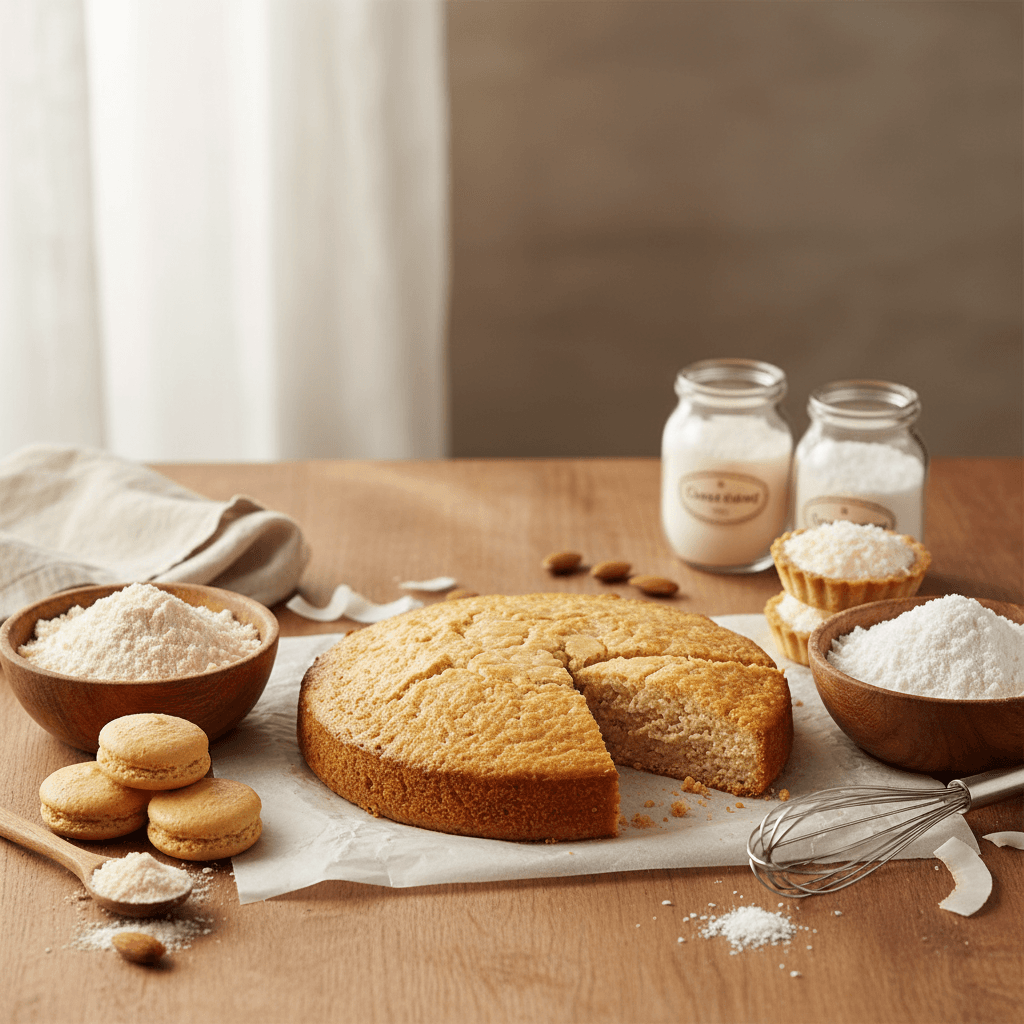
Almond flour and coconut flour are two of the most popular gluten-free flours, but they could not be more different. Understanding how each one absorbs liquid, affects texture, and behaves in a recipe is the key to choosing the right one — and knowing whether you can swap them without disaster.
Key takeaways
- Coconut flour absorbs roughly 3-4 times more liquid than almond flour, so recipes are never a simple 1:1 swap.
- Almond flour produces moist, tender, slightly dense baked goods and works best in cookies, cakes, and crusts.
- Coconut flour creates lighter, fluffier textures but requires significantly more eggs and liquid to hold together.
- You can substitute one for the other with ratio adjustments: use about 1/4 cup coconut flour for every 1 cup almond flour, plus extra eggs and liquid.
- Both flours are naturally gluten-free, grain-free, and paleo-friendly, but they suit different dietary needs — almond flour is nut-based while coconut flour is nut-free.
- For best results in gluten-free baking, many experienced bakers blend both flours together rather than relying on one alone.
Nutritional and structural differences at a glance
Before we dive into baking behavior, here is a side-by-side look at what makes these two flours fundamentally different. These numbers are per 1/4 cup (about 28g), which is the more useful comparison since you use far less coconut flour per recipe.
| Property | Almond flour (1/4 cup) | Coconut flour (1/4 cup) |
|---|---|---|
| Calories | ~160 | ~120 |
| Fat | 14g | 4g |
| Protein | 6g | 4g |
| Fiber | 3g | 10g |
| Carbs (net) | 3g | 6g |
| Liquid absorption | Low | Very high (3-4x more) |
| Texture contribution | Dense, moist, tender | Light, fluffy, can be dry |
| Nut-free | No (tree nut) | Yes (coconut is classified as a fruit) |
The massive difference in fiber content is what drives coconut flour's extreme absorbency. All that fiber soaks up liquid like a sponge, which is why coconut flour recipes call for so many more eggs and so much more liquid than almond flour recipes.
How almond flour behaves in baking
Almond flour adds moisture, fat, and a tender crumb to baked goods. Because it is made from finely ground blanched almonds, it behaves more like a wet ingredient than a dry one — it does not absorb much liquid at all. This means batters and doughs made with almond flour tend to be heavier and denser than those made with wheat flour, but they stay wonderfully moist for days.
Almond flour shines in:
- Cookies — produces chewy, soft cookies with crisp edges. Check out our guide to the best gluten-free flour blends for cookies for more options.
- Cakes and cupcakes — creates a moist, rich crumb similar to a traditional butter cake.
- Pie and tart crusts — presses together easily and holds its shape without a binder.
- Muffins — keeps muffins tender and prevents that dry, crumbly texture. We cover more flour options in our best gluten-free flours for muffins guide.
- Brownies — the high fat content makes for fudgy, rich brownies.
Where almond flour struggles is in recipes that need structure and lift. Breads, for example, rarely work well with almond flour alone because the lack of starch means there is nothing to set firmly during baking. If you are working on gluten-free bread, you will want a starch-based blend and a good binder like xanthan gum or psyllium husk.
One practical tip: always weigh almond flour rather than scoop it. It packs down easily, and a cup measured by scooping can weigh 30-40% more than a cup measured by spooning and leveling. A good kitchen scale makes a real difference here.
How coconut flour behaves in baking
Coconut flour is the opposite of almond flour in almost every way. It is extremely dry, extremely absorbent, and extremely high in fiber. A little goes a long way — most recipes only call for 1/4 to 1/3 cup of coconut flour where you might use a full cup of another flour.
Because coconut flour soaks up so much moisture, recipes built around it typically require 4-6 eggs per 1/2 cup of flour, plus additional liquid like milk or oil. If you do not add enough, the result will be dry, crumbly, and chalky.
If you are newer to gluten-free baking and feeling overwhelmed by all these variables, our Confident Gluten-Free Baker Toolkit walks you through the fundamentals so you can troubleshoot flour issues with confidence.
Coconut flour works well in:
- Pancakes and waffles — the eggs give lift and the flour keeps things light.
- Quick breads and muffins — when properly hydrated, coconut flour produces a surprisingly fluffy crumb.
- Cakes — lighter and more delicate than almond flour cakes, with a subtle sweetness.
- Thickening agent — a tablespoon stirred into a batter can absorb excess moisture without changing the flavor profile.
Coconut flour does impart a mild coconut flavor, though it is less pronounced than you might expect. In chocolate recipes or heavily spiced baked goods, you will barely notice it.
When to use almond flour vs coconut flour
The best flour depends entirely on what you are making and what texture you want. Here is a practical decision guide.
| If you want... | Use this flour | Why |
|---|---|---|
| Dense, fudgy brownies | Almond flour | High fat keeps them moist and rich |
| Light, fluffy pancakes | Coconut flour | Extra eggs give lift; flour stays light |
| Chewy cookies | Almond flour | Moisture and fat create chew |
| Tender muffins | Either (or a blend) | Both work; coconut gives fluffier crumb |
| Pie crust | Almond flour | Presses together easily, holds shape |
| Low-carb baking | Coconut flour | Lower calorie, higher fiber per serving |
| Nut-free baking | Coconut flour | No tree nuts involved |
Blending the two flours often gives the best results. A ratio of about 3 parts almond flour to 1 part coconut flour produces a texture that is moist but not too heavy, with decent structure. You will still need a gluten-free binder in most cases.
Can you substitute almond flour for coconut flour (and vice versa)?
Yes, but it is not a simple 1:1 swap. Because coconut flour absorbs so much more liquid, you need to adjust both the flour amount and the liquid/egg content of the recipe. Here are the general conversion guidelines we use.
Replacing almond flour with coconut flour
For every 1 cup of almond flour, use 1/4 cup of coconut flour. Then add 1 extra egg (or equivalent aquafaba or flax egg for egg-free baking) and 2-4 tablespoons of additional liquid for each cup of almond flour you are replacing.
Start with the lower end of the liquid range, mix, and let the batter rest for 5 minutes. Coconut flour continues to absorb moisture as it sits, so you will get a better read on the true consistency after a brief rest.
Replacing coconut flour with almond flour
For every 1/4 cup of coconut flour, use 1 cup of almond flour. Reduce the eggs in the recipe by 1-2 and cut back on any added liquid by a few tablespoons. Since almond flour brings its own fat, you may also want to slightly reduce the oil or butter.
These are starting points, not exact rules. Every recipe is different, and we strongly recommend testing with a small batch first. If you are troubleshooting a swap that is not working, our guide to common gluten-free baking mistakes covers many of the issues that come up with flour substitutions.
Tips for getting the best results with either flour
Whether you are working with almond flour, coconut flour, or a blend, these practical tips will help you avoid the most common pitfalls.
- Weigh your flour. Both flours are tricky to measure by volume. Almond flour packs, and coconut flour is so fine that a slightly heaped tablespoon throws off the whole recipe.
- Sift coconut flour before using. It clumps badly. A quick pass through a flour sifter breaks up lumps and gives you a smoother batter.
- Let coconut flour batters rest. Give the batter 5-10 minutes after mixing so the flour fully hydrates. You can then adjust the consistency before baking.
- Store almond flour in the fridge or freezer. The high fat content means it can go rancid quickly at room temperature. Sealed in an airtight container, it keeps for 6 months in the freezer.
- Do not over-mix almond flour batters. Over-mixing can release too much oil from the ground almonds, making your baked goods greasy rather than tender.
- Use parchment paper. Both flours tend to stick more than wheat-based batters. A good sheet of parchment paper saves a lot of frustration.
Frequently asked questions
Can I use almond flour and coconut flour interchangeably?
Not at a 1:1 ratio. Coconut flour absorbs 3-4 times more liquid than almond flour, so you need to use about 1/4 cup of coconut flour for every 1 cup of almond flour and add extra eggs and liquid. Without these adjustments, your baked goods will either be too dry (if you use coconut flour without adding liquid) or too wet (if you use almond flour without reducing liquid).
Which is better for keto baking, almond flour or coconut flour?
Both are popular in keto baking, but almond flour is more commonly used because it is easier to work with and produces familiar textures. Coconut flour has fewer calories and more fiber per serving, which can be an advantage, but it requires more eggs — which adds to the overall calorie and fat count of the recipe. For most keto cookies and cakes, almond flour is the simpler choice.
Does coconut flour taste like coconut?
Coconut flour has a mild, slightly sweet coconut flavor, but it is much more subtle than coconut oil or shredded coconut. In recipes with chocolate, vanilla, spices, or fruit, the coconut taste is barely noticeable. If you are sensitive to coconut flavor, pair it with strong-flavored ingredients.
Why is my almond flour cake so dense?
Almond flour naturally produces a denser crumb because it lacks starch and has a high fat content. To lighten an almond flour cake, try adding a small amount of arrowroot powder or tapioca starch (about 2 tablespoons per cup of almond flour), and make sure you are whipping your eggs well before folding them in. Properly beaten eggs are the primary leavening agent in most almond flour cakes.
Can I make my own almond flour or coconut flour at home?
You can make almond flour at home by grinding blanched almonds in a food processor — pulse in short bursts to avoid turning it into almond butter. Our guide to the best food processor for making gluten-free flour covers what to look for. Coconut flour is harder to make at home because it requires dehydrating and grinding coconut pulp, so most bakers find it easier to buy it pre-made.

Written by
Co-founder, BakingSubs
Co-founder of BakingSubs, where he turns the science of ingredient substitutions into tested, reliable guidance for home bakers.
Related Posts
7 Common Healthy Baking Mistakes That Ruin Texture (and How to Fix Each One)
7 Texture Changes With Health Swaps That Catch Bakers Off Guard (and How to Handle Each One)

Gluten-Free Flour Weight Chart: Grams per Cup for 9 Major Brands (and Why the Spread Is Over 20%)
Bake with Confidence
See all
Confident Gluten-Free Baker Toolkit
The science-based system that replaces gluten's seven invisible jobs so your baking turns out soft, fluffy, and foolproof — every time.

Gluten-Free Recipe Vault
Instant access to our complete library of proven gluten-free recipes — no waiting, no guesswork, just results that work tonight.

Fix Your Gluten-Free Bread
Learn the 3-step formula to make bread rise and stay soft, discover why your loaves collapse, and get a tested sandwich bread recipe that actually works.