

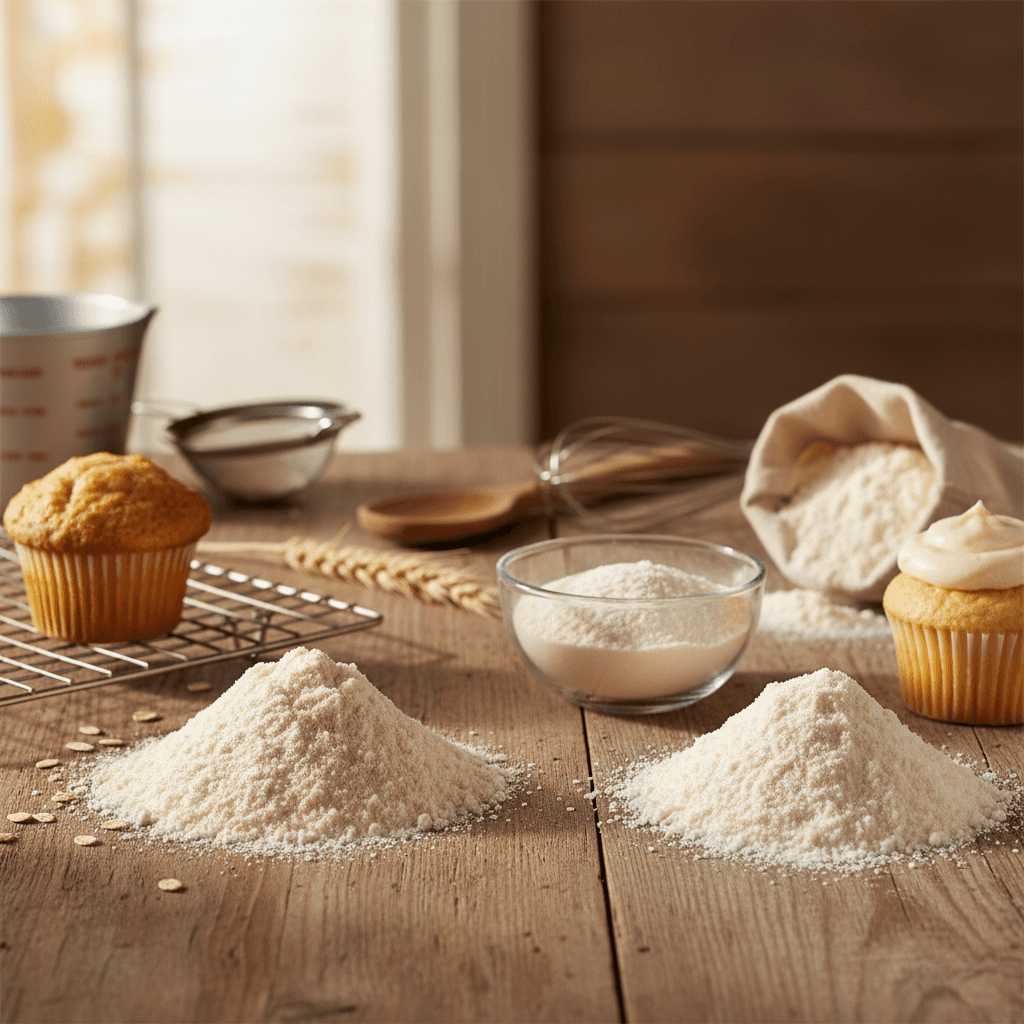
Oat flour and rice flour are two of the most popular gluten-free flours, but they behave completely differently in baked goods. Here's a detailed breakdown of when each flour shines, when it falls flat, and how to pick the right one for what you're making.
Key takeaways
- Oat flour produces softer, more tender baked goods thanks to its higher protein and fat content, but it absorbs more liquid and can make things dense if overused.
- Rice flour (especially white rice flour) creates lighter, crispier textures and works best when blended with starches, but it can turn gritty if you use a coarse grind.
- For muffins, pancakes, and quick breads, oat flour is often the better solo flour. For cookies, cakes, and anything that needs structure, rice flour blends tend to win.
- Neither flour is a perfect 1:1 swap for all-purpose wheat flour on its own — both work best as part of a blend or in recipes designed specifically for them.
- Oat flour is not safe for all celiac patients unless it's certified gluten-free, since oats are frequently cross-contaminated with wheat.
How oat flour and rice flour compare at a glance
Before we dig into the details, here's a side-by-side comparison of the key properties that affect your baking results.
| Property | Oat flour | White rice flour | Brown rice flour |
|---|---|---|---|
| Protein content | ~13-17g per cup | ~6-9g per cup | ~8-11g per cup |
| Fat content | ~5g per cup | ~1g per cup | ~2-3g per cup |
| Fiber content | High (contains beta-glucan) | Very low | Moderate |
| Flavor | Mild, slightly sweet, nutty | Neutral, very mild | Slightly nutty, earthier |
| Texture in baked goods | Soft, tender, can be dense | Light, crisp, can be gritty | Slightly grittier than white |
| Liquid absorption | High — absorbs more liquid | Moderate | Moderate to high |
| Best used for | Muffins, pancakes, quick breads | Cookies, cakes, blends | Bread, heartier baked goods |
| Needs a binder? | Less critical (natural binding) | Yes, usually xanthan or psyllium | Yes, usually xanthan or psyllium |
Why oat flour works so well for soft, tender bakes
Oat flour is higher in protein and fat than rice flour, and that changes everything about the texture it produces. The protein (around 13-17g per cup depending on the brand) gives oat flour a mild binding ability that rice flour simply doesn't have. The fat content contributes to a softer, more tender crumb — which is why oat flour is a standout in gluten-free muffins and pancakes.
The beta-glucan fiber in oats also acts as a natural thickener. This means oat flour absorbs significantly more liquid than rice flour. If you're swapping oat flour into a recipe that calls for rice flour, you'll likely need to add 2-4 tablespoons of extra liquid to compensate, or your batter will be too thick and your final product will come out dry and crumbly. Check our guide on fixing dry, crumbly gluten-free bakes if you've run into this problem.
The downside? Oat flour can make things heavy and dense when used as 100% of the flour in a recipe, especially in cakes or anything that needs a light, airy crumb. It also has a distinct oaty flavor that, while pleasant in most things, can be noticeable in delicate recipes where you want a neutral taste.
If you're building out your gluten-free pantry and want to get set up with the right flours, binders, and starches from the start, our Confident Gluten-Free Baker Toolkit walks you through exactly what to stock and why.
Best oat flour brands for baking
Not all oat flour is created equal. Here are the brands we've had the best results with:
- Bob's Red Mill Gluten Free Oat Flour — The most widely available option. Certified gluten-free, finely milled, and consistent batch to batch. It's our go-to for everyday baking. The grind is fine enough that you won't get a grainy texture.
- Anthony's Oat Flour — A good budget option with a slightly coarser grind than Bob's. Works well in pancakes and muffins, but we recommend sifting it for cakes. Make sure you get the certified gluten-free version.
- DIY oat flour — You can make your own by pulsing certified gluten-free rolled oats in a food processor or high-speed blender until powdery. The catch is that homemade oat flour is almost always coarser than commercial versions, so results can vary.
Why rice flour is the backbone of most gluten-free blends
Rice flour — particularly white rice flour — is the most commonly used base flour in gluten-free baking, and for good reason. It has a neutral flavor that disappears into your baked goods, and when finely milled, it produces a lighter crumb than oat flour can achieve on its own.
The lower protein and fat content means rice flour doesn't bind or tenderize the way oat flour does. That's why nearly every successful rice flour recipe includes a starch (like tapioca starch or potato starch) and a binder (like xanthan gum or psyllium husk). Without those additions, rice flour bakes tend to be crumbly, dry, and fall apart.
The biggest pitfall with rice flour is grittiness. If you use a coarsely ground rice flour, you'll get a sandy, unpleasant texture — especially in cakes and cookies. This is one of the most common complaints in gluten-free baking, and it almost always comes down to flour quality. Check our deep dive on fixing gritty gluten-free texture for more on this.
Best rice flour brands for baking
Grind fineness matters more with rice flour than almost any other gluten-free flour. Here are the brands that actually deliver smooth results:
- Authentic Foods Superfine White Rice Flour — This is the gold standard. The superfine grind is noticeably smoother than most competitors, and it produces baked goods that don't taste or feel "gluten-free." It's pricier, but worth it for cakes and cookies.
- Bob's Red Mill White Rice Flour — Widely available and affordable. The grind is decent but not as fine as Authentic Foods. Works great in blends and for everyday baking, though you may notice slight grittiness in delicate cakes.
- Koda Farms Mochiko Sweet Rice Flour — Technically a sweet (glutinous) rice flour, which is a different product. It's starchier and creates chewier textures. Not a direct substitute for regular rice flour, but amazing for certain applications like mochi-style treats.
For a full comparison with our top picks, see our best rice flour for gluten-free baking roundup.
Which flour is better for specific baked goods
The right choice depends entirely on what you're making. Here's how each flour performs across common baking categories.
Muffins and quick breads
Oat flour is the clear winner here. Its natural tenderness and moisture retention produce soft, bakery-style muffins without a lot of extra engineering. You can use oat flour as 100% of the flour in most muffin recipes and get great results. It's also fantastic in gluten-free banana bread, where the oaty flavor complements the banana beautifully.
Rice flour can work in muffins, but you'll need to pair it with a starch and binder, and the results tend to be slightly drier and less cohesive.
Cookies
Rice flour generally produces better cookies — especially when you want crisp edges and a lighter texture. The lower fat and protein content allows cookies to spread properly and develop that satisfying snap. For gluten-free chocolate chip cookies, a rice flour and starch blend is usually the way to go.
Oat flour cookies tend to be softer and chewier, which can be great if that's what you're after. But they can also turn out cakey or overly dense if you're not careful with the ratios.
Cakes
For cakes that taste like regular cake, a superfine rice flour blend (rice flour + tapioca starch + potato starch) is the standard approach. The neutral flavor and lighter texture of rice flour let the cake flavors shine through.
Oat flour can work in denser, more rustic-style cakes, but it's not ideal for light, fluffy layer cakes. The higher absorption makes it tricky to get a delicate crumb.
Bread
For yeast breads, brown rice flour is often preferred over white because its slightly higher protein content contributes to better structure. Most gluten-free bread recipes use a rice flour base combined with starches and a strong binder like psyllium husk.
Oat flour can be a nice addition to bread blends (maybe 20-30% of the total flour weight) for added softness and flavor, but using it as the primary flour in bread tends to produce a heavy, gummy loaf. If you're troubleshooting dense bread, our guide on gummy centers in gluten-free baking can help.
Pancakes
This is where oat flour truly excels. Oat flour pancakes are fluffy, tender, and have a naturally pleasant flavor that needs minimal additions. Many bakers find that oat flour pancakes are actually better than traditional wheat pancakes.
Rice flour pancakes can work but often come out thinner and crispier — more like crepes than fluffy American-style pancakes.
Can you mix oat flour and rice flour together?
Absolutely, and this is often the best approach. Combining oat flour and rice flour lets you get the tenderness and binding from the oat flour while keeping the lighter texture and neutral flavor of rice flour. A good starting ratio is 40% oat flour, 40% rice flour, and 20% starch (tapioca or potato). From there, you can adjust based on what you're baking.
This blend works especially well for all-purpose-style baking where you want versatility. If you're interested in pre-made blends that use similar logic, check out our best gluten-free flour blend brands comparison.
Absorption differences and how to adjust recipes
This is the most important practical consideration when swapping between these flours. Oat flour absorbs roughly 20-30% more liquid than white rice flour. If a recipe was developed with rice flour and you swap in oat flour without adjusting, your batter will be too thick and your baked goods will come out dry.
Here's a quick reference for adjustments:
| Swap direction | Adjustment needed |
|---|---|
| Rice flour to oat flour | Add 2-4 tablespoons extra liquid per cup of flour swapped |
| Oat flour to rice flour | Reduce liquid by 2-3 tablespoons per cup, and add 1/2 tsp xanthan gum if not already in recipe |
| Either flour to a blend | Follow the blend's specific ratio guidance; adjust liquid as needed based on test batch |
We always recommend weighing your flour with a kitchen scale rather than using cup measurements. Gluten-free flours vary wildly in density, and a cup of oat flour can weigh anywhere from 90g to 130g depending on how you scoop it.
A note on celiac safety and oat flour
This is critical: regular oats are almost always cross-contaminated with wheat, barley, or rye during growing and processing. If you're baking for someone with celiac disease, you must use certified gluten-free oat flour. Even then, a small percentage of celiac patients react to the avenin protein in oats themselves, so it's worth checking with a doctor first.
Rice flour, by contrast, is inherently gluten-free and rarely has cross-contamination issues, making it the safer default for celiac baking.
Frequently asked questions
Can I substitute oat flour for rice flour 1:1 in gluten-free recipes?
Not directly. Oat flour absorbs significantly more liquid than rice flour, so a straight 1:1 swap will usually produce dry, dense results. Add 2-4 tablespoons of extra liquid per cup of oat flour you substitute in, and be prepared for a slightly different texture and flavor. The results will be softer and more tender, but also denser.
Is oat flour or rice flour better for gluten-free bread?
Rice flour (particularly brown rice flour) is generally better as the primary flour for gluten-free bread because it produces a lighter crumb and more neutral flavor. Oat flour works well as a secondary flour at 20-30% of the total blend to add softness. For best results, pair either with starches and a binder like psyllium husk.
Which is healthier, oat flour or rice flour?
Oat flour has more protein, fiber, and healthy fats than rice flour. It also contains beta-glucan, a soluble fiber linked to heart health benefits. Rice flour is lower in calories and fat but also lower in nutrients overall. From a nutritional standpoint, oat flour is the more nutrient-dense choice, though both can be part of a healthy diet.
Why does my rice flour baking taste gritty?
Grittiness almost always comes from using a coarsely ground rice flour. Look for brands labeled "superfine" or "finely milled" — Authentic Foods is the benchmark here. You can also try sifting your rice flour before using it, or letting your batter rest for 15-20 minutes before baking so the flour can hydrate more fully. Our guide on gritty gluten-free texture covers this in detail.
Can people with celiac disease eat oat flour?
Only if it's certified gluten-free. Conventional oats are heavily cross-contaminated with wheat during growing and processing. Even certified gluten-free oats may cause reactions in a small percentage of celiac patients who are sensitive to avenin, the protein in oats. Always consult with a healthcare provider if you're unsure.

Written by
Co-founder, BakingSubs
Co-founder of BakingSubs, where he turns the science of ingredient substitutions into tested, reliable guidance for home bakers.
Related Posts

Bake with Confidence
See all
Confident Gluten-Free Baker Toolkit
The science-based system that replaces gluten's seven invisible jobs so your baking turns out soft, fluffy, and foolproof — every time.

Gluten-Free Recipe Vault
Instant access to our complete library of proven gluten-free recipes — no waiting, no guesswork, just results that work tonight.

Fix Your Gluten-Free Bread
Learn the 3-step formula to make bread rise and stay soft, discover why your loaves collapse, and get a tested sandwich bread recipe that actually works.