

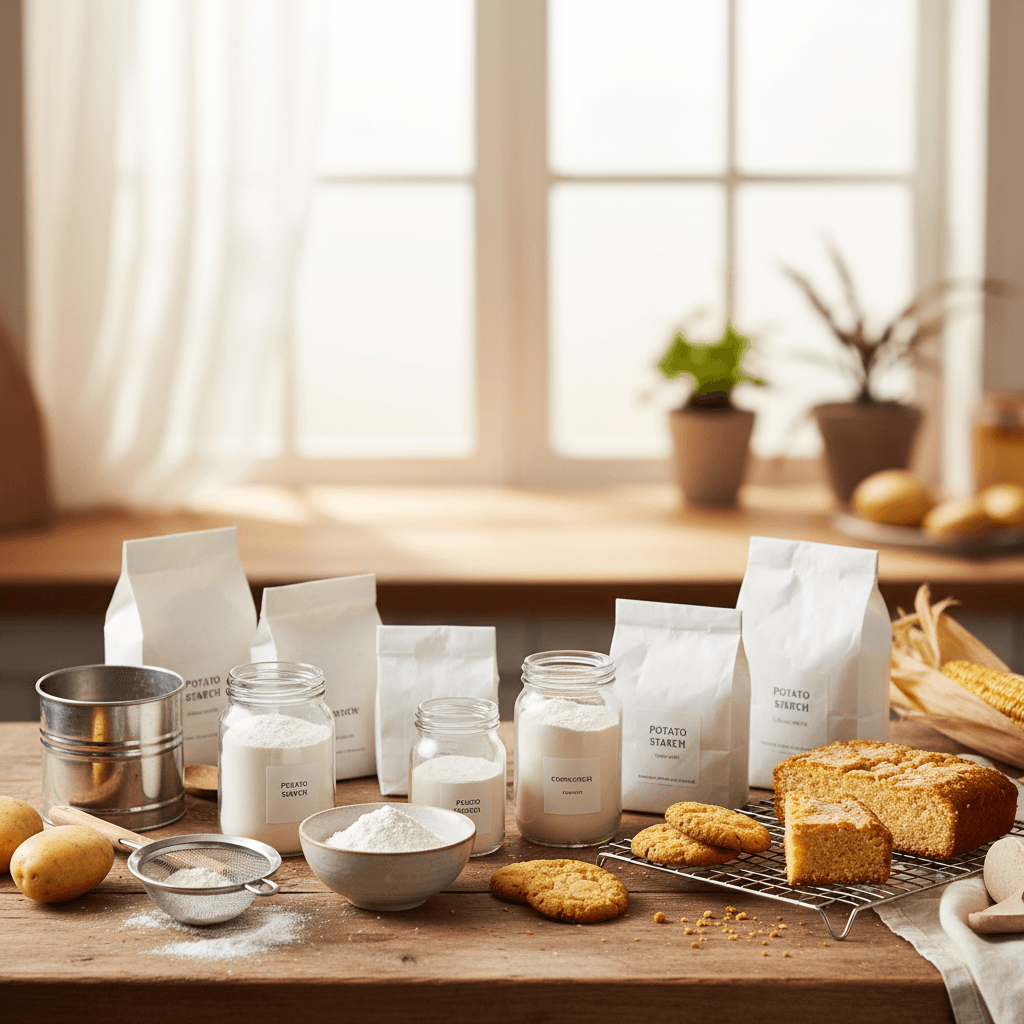
Potato starch and cornstarch are the unsung heroes of gluten-free baking — they lighten texture, improve crumb structure, and help mimic the tenderness that wheat flour provides. But not all brands are created equal, and choosing the wrong one can mean gritty cookies, dense cakes, or a product that isn't truly gluten-free. Here's our breakdown of the best options available right now.
Key takeaways
- Potato starch and cornstarch serve different functions in gluten-free baking — potato starch adds moisture and tenderness, while cornstarch provides structure and crispness.
- Always look for certified gluten-free labeling, especially on cornstarch, which can be processed in facilities that handle wheat.
- Bob's Red Mill and Anthony's are the most reliable everyday picks for both starches, balancing quality and price.
- Buying in bulk (1-2 lb bags) saves money if you bake regularly, but watch expiration dates — starches lose thickening power over time.
- Weighing your starches with a kitchen scale matters more than you think, since packing density varies dramatically between brands.
- Most gluten-free flour blends already contain one or both of these starches, so check your blend before adding more.
Why potato starch and cornstarch matter in gluten-free baking
These two starches are the backbone of nearly every successful gluten-free flour blend. Potato starch brings moisture retention and a soft, tender crumb — it's the reason gluten-free cakes can actually feel light and springy. Cornstarch, on the other hand, adds structure and helps create a crisp exterior on cookies and pastries.
When you're building your own flour blends or following recipes that call for starches separately, the brand you choose affects everything from texture to safety. Some brands process their starches in shared facilities with wheat, and grind quality varies enough to change your results. If you're setting up a dedicated gluten-free kitchen, stocking the right starches is one of the first things to get right.
What to look for when buying potato starch or cornstarch
The most important factor is certified gluten-free status. A "naturally gluten-free" claim on the label is not the same as third-party certification. Here's what to check before you buy:
- Certified gluten-free label: Look for GFCO or similar third-party certification, not just "gluten-free" printed by the manufacturer.
- Single-ingredient product: The only ingredient should be potato starch or cornstarch — no fillers, anti-caking agents, or additives.
- Fine, consistent grind: Coarse or lumpy starch won't incorporate evenly and can leave gritty spots in your baked goods.
- Resealable packaging: Starches absorb moisture from the air quickly, which degrades quality. A good seal matters.
- Non-GMO (if that matters to you): Most cornstarch comes from GMO corn unless specifically labeled otherwise. Potato starch is almost always non-GMO.
If you're already using a good flour sifter, you can work around minor grind inconsistencies, but it's better to start with a quality product.
If you're building out your gluten-free pantry and want a clear roadmap for which starches, flours, and tools to stock, our Confident Gluten-Free Baker Toolkit walks you through everything step by step — no guesswork required.
Potato starch vs cornstarch: when to use which
Potato starch and cornstarch are not interchangeable in every situation, even though many bakers treat them that way. Understanding the difference will immediately improve your results.
| Property | Potato starch | Cornstarch |
|---|---|---|
| Best for | Cakes, muffins, soft breads | Cookies, pie crusts, crispy coatings |
| Texture effect | Moist, tender, springy | Light, crisp, structured |
| Thickening power | Stronger (use less) | Moderate |
| Heat tolerance | Breaks down at high heat or prolonged cooking | More stable at sustained heat |
| Flavor | Neutral | Very slightly sweet |
| Common in GF blends | Yes — usually 20-30% of the blend | Yes — often 15-25% of the blend |
Many gluten-free recipes call for both, and that's intentional. The combination gives you the best of both worlds: tenderness from potato starch and structure from cornstarch. If you're troubleshooting texture problems in gluten-free bread, adjusting the ratio of these two starches is often the fix.
The 7 best potato starch and cornstarch brands for gluten-free baking
1. Bob's Red Mill potato starch (our top pick for potato starch)
Bob's Red Mill Potato Starch is the gold standard for gluten-free home bakers. It's certified gluten-free, tested to under 20 ppm, and the grind is consistently fine and silky. The 24 oz resealable bag is practical for regular bakers, and the brand's reputation for dedicated gluten-free testing gives real peace of mind.
Pros: Certified gluten-free, ultra-fine grind, widely available, resealable bag.
Cons: Slightly more expensive per ounce than store brands.
Price range: $6-9 for 24 oz.
2. Anthony's potato starch (best value for bulk buying)
Anthony's Premium Potato Starch is a fantastic option if you go through starch quickly. The 2 lb bag is a great value, the product is verified gluten-free and non-GMO, and the quality is on par with Bob's Red Mill. The bag is resealable, though transferring the starch to an airtight container is still a good idea.
Pros: Excellent price per ounce, verified gluten-free, fine texture, large bag.
Cons: Less widely available in stores (primarily online).
Price range: $8-11 for 2 lbs.
3. Bob's Red Mill cornstarch (our top pick for cornstarch)
Bob's Red Mill Cornstarch earns the top spot for cornstarch for the same reasons their potato starch does — certified gluten-free processing, consistent quality, and a fine grind that dissolves smoothly. If you're making cookies or pie crusts, it's a dependable choice.
Pros: Certified gluten-free, reliable quality, easy to find.
Cons: Uses conventional (likely GMO) corn — if that matters to you, look at Rumford or Anthony's.
Price range: $5-8 for 18 oz.
4. Argo cornstarch (most widely available)
Argo Cornstarch is the classic pantry staple you'll find in virtually every grocery store. It's naturally gluten-free and works perfectly well in baking. The caveat: it doesn't carry a certified gluten-free label, which means there's no third-party guarantee about cross-contamination during processing.
Pros: Inexpensive, available everywhere, fine consistent grind.
Cons: Not certified gluten-free — risky for celiac bakers. Not non-GMO.
Price range: $2-4 for 16 oz.
5. Rumford non-GMO cornstarch (best non-GMO option)
Rumford Non-GMO Cornstarch is a solid middle-ground pick. It's verified non-GMO, performs identically to conventional cornstarch in baking, and comes at a reasonable price. Like Argo, it doesn't carry a dedicated gluten-free certification, so celiac bakers should weigh that.
Pros: Non-GMO verified, good price, reliable quality.
Cons: No certified gluten-free label.
Price range: $3-5 for 12 oz.
6. Anthony's organic cornstarch (best organic option)
Anthony's Organic Cornstarch checks the most boxes for ingredient-conscious bakers: organic, non-GMO, verified gluten-free, and a beautifully fine grind. It costs a bit more, but if you want the cleanest product possible, this is it.
Pros: Organic, non-GMO, verified gluten-free, fine texture.
Cons: Higher price point, primarily available online.
Price range: $8-12 for 2 lbs.
7. Let's Do Organic tapioca starch (honorable mention alternative)
While not potato starch or cornstarch, Let's Do Organic Tapioca Starch deserves a mention because many gluten-free bakers use it as a direct swap for cornstarch. It adds a slightly chewier texture than cornstarch and works beautifully in bread recipes. It's organic, non-GMO, and widely trusted in the gluten-free community. If you want to learn more about how tapioca starch compares, check out our arrowroot powder page for another common starch alternative.
Pros: Organic, great for bread and chewy baked goods, certified gluten-free.
Cons: Not a 1:1 swap in all recipes — changes texture. Not technically potato starch or cornstarch.
Price range: $5-8 for 6 oz.
Quick comparison of all 7 brands
| Brand | Type | Certified GF | Non-GMO | Organic | Price (approx.) |
|---|---|---|---|---|---|
| Bob's Red Mill Potato Starch | Potato starch | Yes | Yes | No | $6-9 / 24 oz |
| Anthony's Potato Starch | Potato starch | Verified GF | Yes | No | $8-11 / 2 lbs |
| Bob's Red Mill Cornstarch | Cornstarch | Yes | No | No | $5-8 / 18 oz |
| Argo Cornstarch | Cornstarch | No | No | No | $2-4 / 16 oz |
| Rumford Cornstarch | Cornstarch | No | Yes | No | $3-5 / 12 oz |
| Anthony's Organic Cornstarch | Cornstarch | Verified GF | Yes | Yes | $8-12 / 2 lbs |
| Let's Do Organic Tapioca Starch | Tapioca starch | Yes | Yes | Yes | $5-8 / 6 oz |
Common mistakes when buying and using starches for gluten-free baking
Even experienced gluten-free bakers make these errors. Avoiding them will save you a lot of frustration and wasted ingredients.
Confusing potato starch with potato flour
This is the single most common mistake. Potato starch is a fine, white, neutral powder. Potato flour is heavy, off-white, and tastes strongly of potato. They are absolutely not interchangeable. Using potato flour where a recipe calls for potato starch will result in dense, heavy, potato-flavored baked goods. Always double-check the label.
Assuming all cornstarch is gluten-free safe
Cornstarch is naturally gluten-free, but cross-contamination during manufacturing is a real concern. If you have celiac disease, stick with certified gluten-free brands. The price difference is minimal, and the risk isn't worth it.
Measuring by volume instead of weight
Starches are incredibly light and fluffy, which means a packed cup weighs significantly more than a scooped cup. A good kitchen scale eliminates this variable entirely.
Adding too much starch to a flour blend
More starch doesn't always mean lighter texture. Go above about 30-40% starch in a flour blend and you'll get a gummy, pasty crumb that falls apart. If you're having issues with gummy texture, the starch ratio might be the culprit — our guide on why gluten-free bread turns gummy covers this in detail.
Storing starches improperly
Starches absorb moisture from the air, which clumps them and reduces their effectiveness. Store in airtight containers in a cool, dry place. Glass jars with tight-fitting lids work well, and properly stored starches last well over a year.
How to use potato starch and cornstarch in your gluten-free baking
If you're building your own flour blends, a good starting ratio is roughly 40% whole grain flour (like brown rice flour or buckwheat flour), 30% potato starch, and 30% cornstarch or tapioca starch. From there, you adjust based on what you're baking:
- For cakes and muffins: Lean heavier on potato starch (up to 35%) for a tender, moist crumb.
- For cookies and pie crusts: Use more cornstarch for crispness and structure.
- For bread: Use a combination of both, plus a good binder like xanthan gum or psyllium husk.
If you're following an existing recipe rather than building your own blend, our guide on substituting all-purpose flour in gluten-free baking is a great place to start.
Frequently asked questions
Can I substitute potato starch for cornstarch in gluten-free recipes?
You can in most cases, but expect slight texture differences. Potato starch produces a softer, more tender result while cornstarch gives more structure and crispness. For thickening sauces, use about 25% less potato starch than the cornstarch amount called for, since it's a stronger thickener. In baked goods, a 1:1 swap usually works but may change the crumb slightly.
Is all cornstarch gluten-free and safe for celiac disease?
Cornstarch is naturally gluten-free since it comes from corn, but cross-contamination during manufacturing is possible. If you have celiac disease or severe gluten sensitivity, choose a brand with certified gluten-free labeling (like Bob's Red Mill or Anthony's) rather than relying on generic store brands that may be processed on shared equipment.
How much potato starch or cornstarch should I use in a gluten-free flour blend?
A good rule of thumb is 25-35% total starch content in your blend. You can use one starch or a combination. Going above 40% starch tends to produce gummy, pasty results. The exact ratio depends on what you're baking — more potato starch for tender cakes, more cornstarch for crispy cookies.
Does potato starch go bad?
Potato starch doesn't spoil in the traditional sense, but it does lose effectiveness over time, especially if exposed to moisture or humidity. Properly stored in an airtight container in a cool, dry place, it will last 1-2 years. If it smells off, has visible clumps that don't break apart, or your baked goods aren't turning out right, it's time to replace it.
What is the best brand of potato starch for gluten-free baking?
Bob's Red Mill Potato Starch is our top recommendation for most gluten-free home bakers. It's certified gluten-free, has a consistently fine grind, and is widely available both online and in stores. For bulk buying, Anthony's Premium Potato Starch offers comparable quality at a better per-ounce price.

Written by
Co-founder, BakingSubs
Co-founder of BakingSubs, where he turns the science of ingredient substitutions into tested, reliable guidance for home bakers.
Related Posts
Bake with Confidence
See all
Confident Gluten-Free Baker Toolkit
The science-based system that replaces gluten's seven invisible jobs so your baking turns out soft, fluffy, and foolproof — every time.

Gluten-Free Recipe Vault
Instant access to our complete library of proven gluten-free recipes — no waiting, no guesswork, just results that work tonight.

Fix Your Gluten-Free Bread
Learn the 3-step formula to make bread rise and stay soft, discover why your loaves collapse, and get a tested sandwich bread recipe that actually works.