

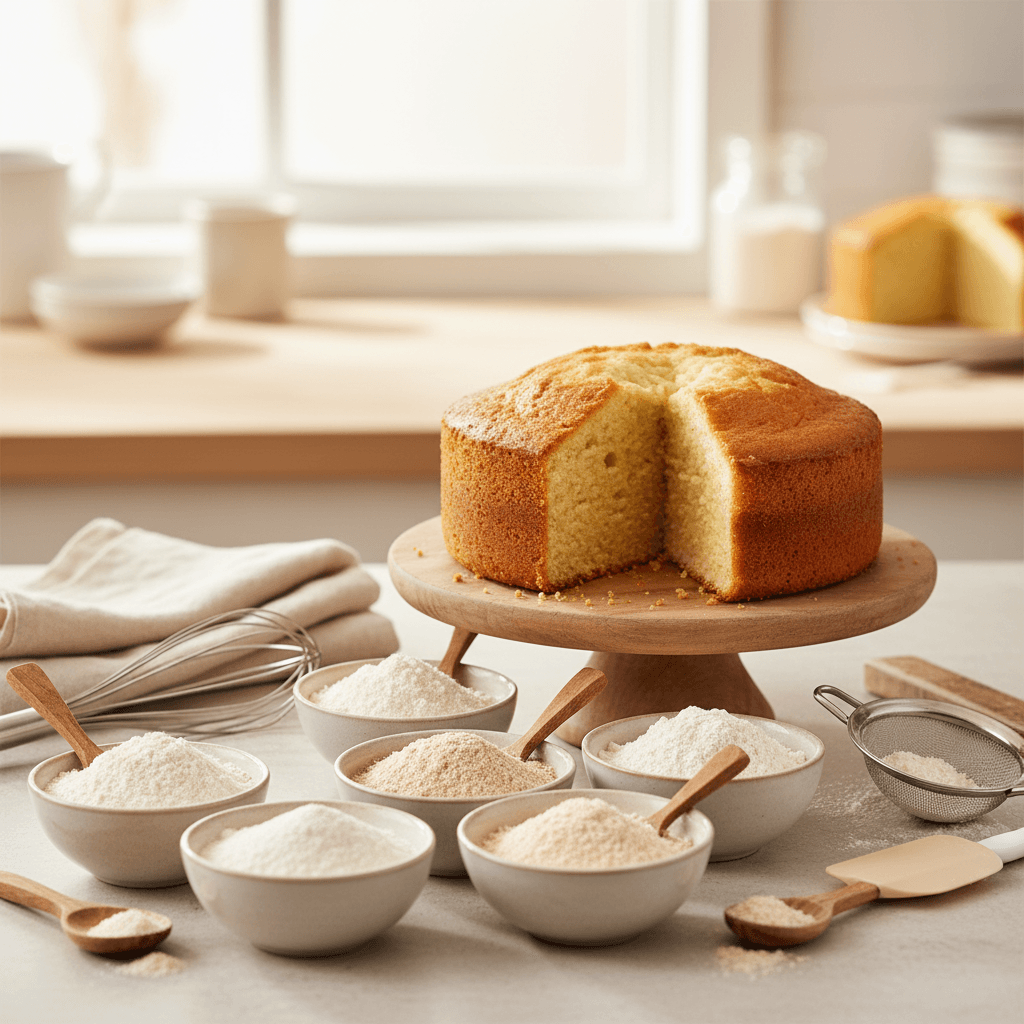
Choosing the right gluten-free flour for cakes is the single biggest decision that determines whether your cake turns out tender and moist or dry, gritty, and crumbly. When it comes to cakes, the differences between flours and blends are dramatic. Here is exactly what works, what does not, and why.
Key takeaways
- The best gluten-free flour for cakes is a fine-milled blend that combines starches with lighter grain flours for tenderness and structure.
- Single-grain flours like brown rice flour or buckwheat flour rarely work well alone in cakes because they lack the starch balance needed for a soft crumb.
- Almond flour and coconut flour are not direct substitutes for all-purpose gluten-free blends — they require completely different ratios and additional liquid or eggs.
- Protein content, grind fineness, and starch-to-flour ratio all affect cake texture more than brand name.
- Weighing your flour with a kitchen scale is non-negotiable for consistent gluten-free cake results.
- Most commercial blends need xanthan gum or another binder added separately unless the blend already includes one.
What makes a gluten-free flour good for cakes
A great cake flour produces a fine, tender crumb with enough structure to hold together without being dense or gummy. In conventional baking, low-protein cake flour does this job. In gluten-free baking, we need to replicate that effect through a careful balance of starches and lighter flours.
The ideal gluten-free cake flour has three qualities: a fine grind (no grittiness), a high starch-to-whole-grain ratio (for tenderness), and neutral flavor. Flours that are too protein-heavy or coarsely ground create dense, heavy cakes. Flours that are all starch give you structure problems and a gummy center. The sweet spot is a blend that combines both.
If you are just getting started with gluten-free baking, our Confident Gluten-Free Baker Toolkit walks you through flour selection, ratios, and troubleshooting so you are not guessing every time you bake.
7 best gluten-free flours and blends for cakes, ranked
We have organized these from best overall performers to more specialized options. Each flour behaves differently in cake batter, so we have noted the specific strengths and limitations for cake baking.
1. Bob's Red Mill 1-to-1 Baking Flour
This is the most accessible and reliable all-purpose gluten-free blend for cakes. It contains rice flour, tapioca starch, potato starch, sorghum flour, and xanthan gum already mixed in, so you do not need to add a binder separately.

Why it works for cakes: The starch-heavy formulation produces a tender, fine crumb that closely mimics conventional cake texture. The included xanthan gum provides just enough structure without making things chewy. The Bob's Red Mill 1-to-1 Baking Flour is our top pick for layer cakes and sheet cakes.
Pros: Widely available, includes xanthan gum, fine grind, neutral flavor, true 1:1 swap for all-purpose flour in most cake recipes.
Cons: Contains sorghum, which some people find slightly earthy in very delicate white cakes. Slightly heavier than a custom starch-forward blend.
2. King Arthur Measure for Measure Flour
Another excellent 1:1 blend that includes rice flour, tapioca starch, potato starch, and rice starch. It also contains xanthan gum.

King Arthur Measure for Measure Gluten-Free Flour: All-Purpose 1:1 Substitute for Wheat Flour, Non-GMO, Kosher Certified, 3 lbs Bag for Baking Cookies, Cakes, Muffins
Check price on Amazon →Why it works for cakes: The rice starch component gives this blend an edge for lighter cakes. It produces a slightly finer, more delicate crumb than Bob's Red Mill, making it our top pick for white cakes, angel food cake, and anything where lightness is the priority.
Pros: Very fine grind, lighter crumb than most blends, includes xanthan gum, excellent for vanilla and white cakes.
Cons: Can be slightly more expensive, and the lighter texture means chocolate cakes sometimes need a touch more structure from an extra egg or tablespoon of starch.
3. Cup4Cup Multipurpose Flour
A premium blend developed by a former Thomas Keller chef. It contains rice flour, tapioca starch, potato starch, milk powder, and xanthan gum.
Why it works for cakes: The milk powder addition promotes browning and adds richness, which is a real advantage in butter cakes and pound cakes. The crumb is exceptionally tender.
Pros: Produces bakery-quality results, beautiful browning, rich flavor, very fine texture.
Cons: Contains dairy (not suitable for dairy-free bakers), significantly more expensive than other blends, harder to find in stores. If you need dairy-free options, check our guide on choosing milk alternatives for baking.
4. Almond flour (blanched, superfine)
Not a 1:1 substitute, but almond flour is exceptional for specific cake styles. It produces naturally moist, rich cakes with a tender crumb.
Why it works for cakes: The high fat content from almonds keeps cakes incredibly moist, and the protein provides structure without gluten. It is the star of flourless chocolate cake, French-style almond cake, and financiers.
Pros: Naturally moist results, rich flavor, high protein for structure, grain-free.
Cons: Cannot replace all-purpose flour 1:1 (requires recipe reformulation), produces denser cakes, nut allergy concern, expensive. For a deep comparison with another popular option, see our post on almond flour vs coconut flour.
5. A custom rice flour and starch blend
Many experienced gluten-free bakers prefer mixing their own blend. A classic cake-optimized ratio is 2 parts brown rice flour (or white rice flour), 2/3 part arrowroot powder or potato starch, and 1/3 part tapioca starch.
Why it works for cakes: You control the starch ratio precisely. For cakes, you can push the starch content higher than commercial blends, which produces an even more tender crumb. You will need to add xanthan gum separately — typically 1/2 teaspoon per cup of flour for cakes.
Pros: Full control over texture, can be optimized for specific cake types, often cheaper per batch.
Cons: Requires a kitchen scale and some experience, not beginner-friendly, inconsistent results if you measure by volume.
6. Cassava flour
Cassava flour is a single-ingredient, grain-free flour that has gained popularity for cake baking. It is made from the whole cassava root and behaves more like wheat flour than most gluten-free options.
Why it works for cakes: Cassava flour absorbs liquid similarly to wheat flour and produces a surprisingly soft crumb. It works well in simple cakes like vanilla sheet cake and snack cakes.
Pros: Grain-free, nut-free, neutral flavor, no gritty texture, close to wheat flour behavior.
Cons: Very absorbent — using too much makes cakes dry and rubbery. Requires reducing flour by about 15-20% compared to a standard recipe. Can produce a slightly gummy texture if overbaked. Not ideal for delicate layer cakes.
7. Coconut flour
Coconut flour is the most challenging gluten-free flour to use for cakes, but it produces uniquely light results when handled correctly.
Why it works for cakes: Its extremely high fiber content creates a surprisingly airy texture in cakes — when you compensate with enough eggs and liquid. It works best in recipes specifically developed for coconut flour.
Pros: Very high fiber, grain-free, nut-free (despite the name, coconut is classified as a fruit), distinctive mild sweetness.
Cons: Absorbs 3-4 times more liquid than other flours, absolutely cannot be swapped 1:1, requires 4-6 eggs per cup of flour in most recipes, can taste strongly of coconut. Read our best coconut flour brands guide if you go this route.
Flour comparison for cakes at a glance
| Flour / Blend | 1:1 swap? | Crumb texture | Best cake types | Binder included? |
|---|---|---|---|---|
| Bob's Red Mill 1-to-1 | Yes | Tender, slightly dense | Layer cakes, chocolate cake, sheet cake | Yes (xanthan gum) |
| King Arthur Measure for Measure | Yes | Light, fine | White cake, angel food, vanilla cake | Yes (xanthan gum) |
| Cup4Cup Multipurpose | Yes | Very tender, rich | Pound cake, butter cake, cupcakes | Yes (xanthan gum) |
| Almond flour (superfine) | No | Dense, moist | Flourless chocolate cake, almond cake | No |
| Custom rice/starch blend | Depends on ratio | Customizable | Any (with experience) | No |
| Cassava flour | Partial (reduce 15-20%) | Soft, slightly chewy | Snack cakes, sheet cake | No |
| Coconut flour | No (use 1/4 to 1/3 amount) | Airy but crumbly | Coconut cake, mug cakes | No |
Why protein content and starch ratio matter for cake texture
In wheat baking, cake flour has about 7-8% protein compared to 10-12% in all-purpose flour. That lower protein means less gluten development, which means a more tender cake. In gluten-free baking, we do not have gluten, but protein content still matters because it affects density and moisture absorption.
High-protein flours like almond flour (21% protein) and buckwheat flour (13% protein) produce denser, heavier cakes. Starches like tapioca starch and potato starch have essentially zero protein, so they create tenderness but no structure. The best cake results come from blends that lean starch-heavy (60-70% starch) with enough whole grain flour (30-40%) to provide structure and flavor.
If your gluten-free cakes are turning out dry and crumbly, your flour blend likely has too little starch. If they are gummy in the center, you may have too much starch or be underbaking.
How to avoid gritty texture in gluten-free cakes
Grittiness is the number one complaint about gluten-free cakes, and it almost always comes from the flour. Rice flour is the most common culprit — coarsely ground rice flour will never produce a smooth cake, no matter how long you mix.
The fix is simple: use only finely milled or superfine rice flour. Bob's Red Mill and King Arthur both use fine grinds in their blends, which is one reason they perform well. If you are making a custom blend, look for rice flour labeled "superfine" and sift it before measuring. Our best rice flour brands comparison covers which brands have the finest grind.
Another trick: let your cake batter rest for 10-15 minutes before baking. This gives the starches time to hydrate, which softens any remaining graininess and produces a smoother crumb.
Tips for getting the best results with any gluten-free cake flour
- Weigh your flour. Gluten-free flours vary wildly in density. A cup of almond flour weighs about 96 grams while a cup of coconut flour weighs about 128 grams. Measuring by volume introduces huge inconsistencies.
- Do not overmix. Without gluten, there is no risk of toughness from overmixing, but excessive mixing incorporates too much air into starch-heavy batters, which can cause cakes to rise dramatically and then collapse.
- Use room temperature ingredients. Cold eggs and butter create lumpy batters that do not emulsify properly, which is even more noticeable in gluten-free cakes where the batter has less structure to mask imperfections.
- Invest in good pans. Light-colored aluminum pans produce the most even baking for gluten-free cakes. Dark pans can overbake the edges before the center sets. Our best baking pans for gluten-free cakes guide covers this in detail.
- Check doneness with a thermometer. Gluten-free cakes can look set on top while still being underdone inside. An internal temperature of 200-210 degrees F means your cake is fully baked.
Frequently asked questions
Can I use regular gluten-free all-purpose flour for cakes?
Yes, most gluten-free all-purpose blends work for cakes, but results vary by brand. Blends with a higher starch ratio (like King Arthur Measure for Measure) produce more tender cakes than blends heavy on whole grain flours. Check our best gluten-free flour blend brands compared to find one that matches your baking style.
Why are my gluten-free cakes so dense and heavy?
Dense gluten-free cakes usually result from too much heavy flour (like brown rice or buckwheat) and not enough starch in the blend. Other common causes include expired leavening agents, cold ingredients, and measuring flour by volume instead of weight. Adding an extra egg or a tablespoon of tapioca starch can lighten the crumb significantly.
Do I need to add xanthan gum to gluten-free cake flour?
Only if your flour blend does not already include it. Blends like Bob's Red Mill 1-to-1 and King Arthur Measure for Measure contain xanthan gum. If you are using a blend without it or making a custom mix, add about 1/2 teaspoon of xanthan gum per cup of flour for cakes. Too much makes cakes gummy and rubbery.
Is almond flour good for birthday cakes and layer cakes?
Almond flour alone is not ideal for tall layer cakes because it produces a dense, heavy crumb that does not stack well. However, it is excellent blended with a starch-based flour for added moisture and richness. For birthday cake ideas that actually work, see our best gluten-free birthday cake recipes guide.
What is the best gluten-free flour for chocolate cake specifically?
For chocolate cake, Bob's Red Mill 1-to-1 or King Arthur Measure for Measure both perform beautifully because the cocoa powder adds its own structure and flavor that masks any mild flour taste. The starch in these blends keeps the crumb tender while the cocoa provides richness. Adding a tablespoon of arrowroot powder can make chocolate cake even more velvety.

Written by
Co-founder, BakingSubs
Co-founder of BakingSubs, where he turns the science of ingredient substitutions into tested, reliable guidance for home bakers.
Related Posts
Bake with Confidence
See all
Confident Gluten-Free Baker Toolkit
The science-based system that replaces gluten's seven invisible jobs so your baking turns out soft, fluffy, and foolproof — every time.

Gluten-Free Recipe Vault
Instant access to our complete library of proven gluten-free recipes — no waiting, no guesswork, just results that work tonight.

Fix Your Gluten-Free Bread
Learn the 3-step formula to make bread rise and stay soft, discover why your loaves collapse, and get a tested sandwich bread recipe that actually works.