

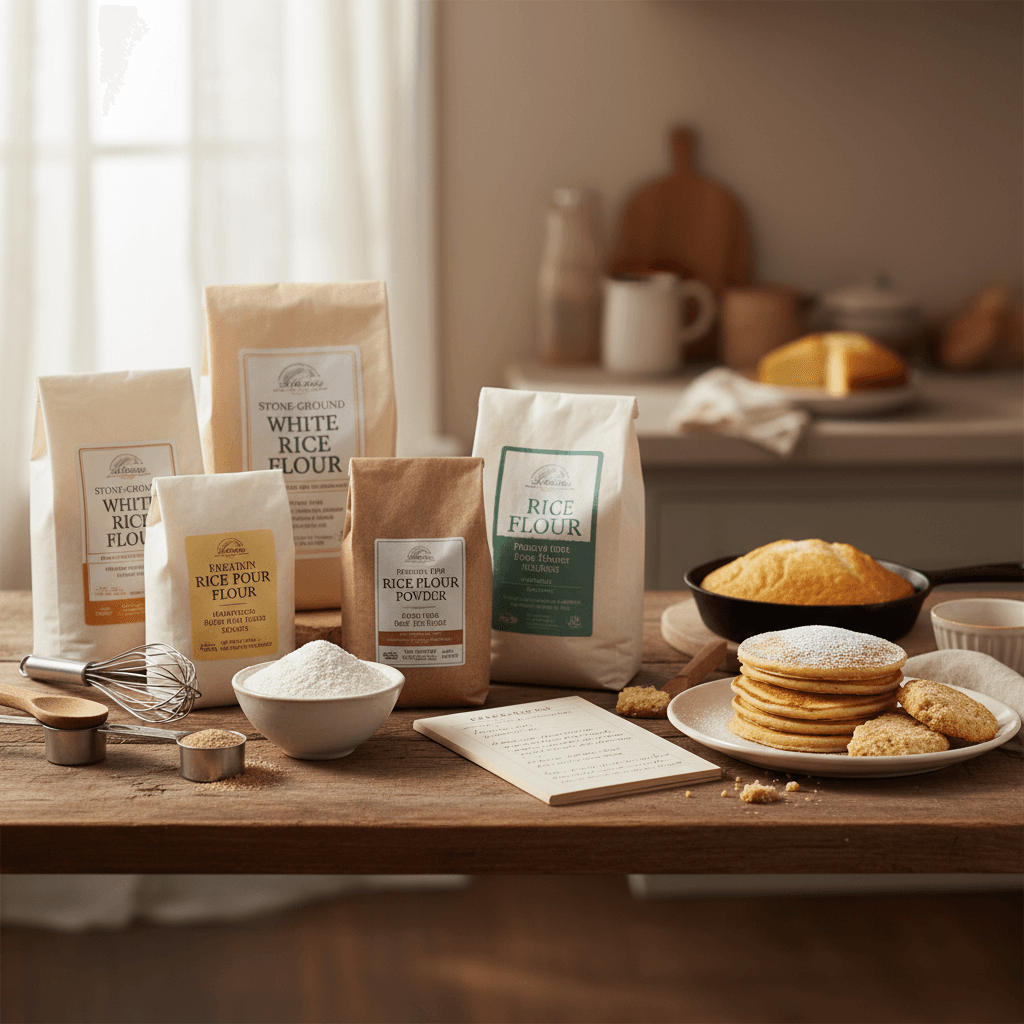
Rice flour is the backbone of most gluten-free flour blends, and the brand you choose matters more than you might think. Grind size, starch content, and whether it's certified gluten-free all affect your final results. Here's our breakdown of the best rice flour options for home bakers who want consistent, reliable outcomes.
Key takeaways
- White rice flour and brown rice flour serve different roles in gluten-free baking — white is lighter and more neutral, brown adds fiber and nuttiness.
- Superfine grind is essential for avoiding gritty texture in cakes, cookies, and bread.
- Not all rice flour is processed in gluten-free facilities — always check for third-party certification if you have celiac disease.
- Price ranges from roughly $0.15 to $0.40 per ounce depending on brand and grind quality.
- Rice flour works best when combined with starches and a binding agent rather than used on its own.
- Weighing your flour with a kitchen scale eliminates the biggest source of inconsistency between batches.
What to look for when buying rice flour for gluten-free baking
Before we get into specific brands, there are a few things that separate a great rice flour from a mediocre one. Getting this right saves you from gritty muffins and dense bread.
Grind size matters most
The single most important factor is how finely the flour is milled. Coarsely ground rice flour produces a grainy, sandy texture that no amount of mixing will fix. Look for labels that say "superfine" or "finely ground." If the flour feels gritty between your fingers, it's too coarse for cakes and cookies — though it may still work for breading or thickening.
White rice flour vs brown rice flour
White rice flour has a neutral flavor and lighter texture, making it ideal for cakes, cookies, and pastries. Brown rice flour retains the bran and germ, giving it more fiber, a slightly nutty flavor, and a heavier crumb. Many experienced gluten-free bakers keep both on hand. Brown rice flour is excellent in bread and heartier baked goods, while white rice flour shines in anything delicate.
Gluten-free certification
Rice itself is naturally gluten-free, but cross-contamination during milling is a real risk. If you're baking for someone with celiac disease, look for certified gluten-free labeling (GFCO or similar) rather than just "naturally gluten-free" claims. If you're setting up a dedicated gluten-free kitchen, this is one of the details that matters.
If you're still building out your gluten-free pantry and want a clear roadmap for what to stock and how to use it, our Confident Gluten-Free Baker Toolkit walks you through everything from flour selection to troubleshooting common problems.
The 6 best rice flours for gluten-free baking
We compared these brands based on grind quality, certification, availability, and intended use. Here's how they stack up.
| Brand | Type | Grind | Certified GF | Approx. price per oz | Best for |
|---|---|---|---|---|---|
| Bob's Red Mill | White & Brown | Fine (not superfine) | Yes | $0.15-$0.20 | Everyday baking, blends |
| Authentic Foods Superfine | White & Brown | Superfine | Yes | $0.30-$0.35 | Cakes, pastries, delicate bakes |
| King Arthur Flour | White | Fine | Yes (GFCO) | $0.20-$0.25 | All-purpose baking |
| Anthony's | White & Brown | Fine | Tested GF | $0.12-$0.18 | Budget-friendly baking |
| Koda Farms Mochiko | Sweet (glutinous) white | Fine | No formal cert | $0.20-$0.25 | Mochi, chewy textures |
| Erawan | White | Superfine | No formal cert | $0.10-$0.15 | Asian-style baking, thickening |
Our top pick: Authentic Foods superfine rice flour
Authentic Foods Superfine Rice Flour is the gold standard for gluten-free bakers who care about texture. The grind is noticeably finer than most competitors, which translates directly into smoother batters and less gritty results. It's certified gluten-free and available in both white and brown varieties. The downside is price — it costs roughly twice what budget brands charge. But if you've ever bitten into a gluten-free cupcake and thought "why is this sandy," this flour solves that problem.

The Authentic Foods Superfine Rice Flour is the rice flour to reach for when texture really matters.
Best value: Bob's Red Mill rice flour
Bob's Red Mill is the most widely available gluten-free rice flour in the US, and for good reason. It's certified gluten-free, reasonably priced, and consistent batch to batch. The grind is fine but not quite superfine — you may notice a slight graininess in very delicate applications like genoise or angel food cake. For everyday baking like muffins, quick breads, and cookies, it performs beautifully.
The Bob's Red Mill White Rice Flour is our recommendation if you want solid results without spending a premium. Their brown rice flour version is equally reliable for heartier recipes.
Best for serious bakers: King Arthur Flour rice flour
King Arthur's gluten-free rice flour carries GFCO certification and is milled to a consistently fine texture. If you already use their gluten-free product line, this fits right in. It's slightly more expensive than Bob's Red Mill but many bakers find the quality worth the small premium. It blends well with arrowroot powder and tapioca starch for custom flour mixes.
Pick up the King Arthur Gluten-Free Rice Flour if you want a trusted name with rigorous testing standards.
Best budget option: Anthony's rice flour
Anthony's offers both white and brown rice flour at some of the lowest prices per ounce you'll find online. It's batch-tested for gluten, though it doesn't carry a formal GFCO certification. The grind is fine and works well in most recipes. If you go through a lot of rice flour and aren't baking for someone with celiac disease, this is a smart way to save money without sacrificing much quality.
The Anthony's Premium White Rice Flour is a solid pick for high-volume bakers on a budget.
Best sweet rice flour: Koda Farms Mochiko
Sweet rice flour (sometimes called glutinous rice flour, though it contains no gluten) is a different product from regular rice flour. It's made from short-grain sticky rice and produces a chewy, stretchy texture. Koda Farms Mochiko is the classic choice — it's been a staple in Japanese and Hawaiian baking for decades. Use it for mochi, butter mochi, and as a small percentage in bread recipes to improve chewiness. It's not a 1:1 substitute for regular rice flour.
Most affordable: Erawan rice flour
Erawan is a Thai brand that's been popular in Asian grocery stores for years. The grind is genuinely superfine — comparable to Authentic Foods at a fraction of the price. The catch is that it doesn't carry gluten-free certification, so cross-contamination risk is unknown. For bakers without celiac who want an exceptionally fine rice flour for thickening, coating, or baking, it's hard to beat the value.
How to use rice flour in gluten-free baking
Rice flour rarely works well on its own. It lacks the protein structure and binding ability of wheat flour, so it needs partners. Most successful gluten-free recipes combine rice flour with one or two starches (tapioca starch, potato starch, or arrowroot powder) plus a binder like xanthan gum or psyllium husk.
A common ratio for a basic all-purpose gluten-free blend is:
- 2 parts white rice flour
- 2/3 part potato starch
- 1/3 part tapioca starch
This blend works as a starting point for most recipes that call for all-purpose flour. From there, you can adjust based on what you're making — more starch for tender cakes, a bit of brown rice flour for bread with more structure.
Common mistakes when buying and using rice flour
Even experienced gluten-free bakers make these errors. Avoiding them will immediately improve your results.
Using coarse rice flour in delicate recipes
This is one of the most common complaints: "my gluten-free cake tastes gritty." Nine times out of ten, the flour is too coarsely ground. If you're making cakes, cookies, or pastries, invest in superfine rice flour or sift your flour thoroughly before measuring.
Measuring by volume instead of weight
Rice flour packs very differently depending on how you scoop it. A cup of rice flour can vary by 20-30 grams depending on technique. Weigh it. Every time. A reliable kitchen scale is the single best investment for consistent gluten-free baking.
Assuming all rice flour is the same
White rice flour, brown rice flour, and sweet rice flour are three different products with different properties. Swapping one for another without adjusting the recipe will change your results significantly. Sweet rice flour in particular absorbs more liquid and creates a much chewier texture.
Skipping the rest period
Rice flour benefits from resting in the batter for 15-30 minutes before baking. This allows the flour to fully hydrate, which reduces grittiness and improves crumb texture. If your recipe doesn't mention this step, try it anyway — the difference is noticeable.
How to store rice flour properly
White rice flour keeps for 6-12 months in a cool, dry pantry. Brown rice flour is more perishable because of its oil content — store it in the refrigerator or freezer and use it within 4-6 months. Both types should be kept in airtight containers. If your rice flour smells musty or off, toss it. Rancid flour will ruin the flavor of anything you bake with it.
Frequently asked questions
Can I use rice flour instead of all-purpose flour in gluten-free recipes?
Rice flour can replace all-purpose flour, but not at a straight 1:1 swap. You'll need to combine it with starches and a binder for good results. Most gluten-free bakers use a blend of rice flour, potato starch, and tapioca starch. Check out our guide on how to substitute all-purpose flour in gluten-free baking for detailed ratios.
Is brown rice flour better than white rice flour for gluten-free baking?
Neither is universally better — they serve different purposes. White rice flour produces a lighter, more neutral-flavored crumb that works well in cakes and cookies. Brown rice flour adds fiber and a nutty flavor that's great in bread and heartier baked goods. Many bakers keep both in their pantry.
Why is my gluten-free baking gritty when I use rice flour?
Gritty texture almost always comes from coarsely ground rice flour. Switch to a superfine grind like Authentic Foods, or sift your flour multiple times before using it. Letting your batter rest for 20-30 minutes before baking also helps the flour hydrate and reduces graininess.
What is the difference between rice flour and sweet rice flour?
Regular rice flour is milled from long-grain or medium-grain rice and has a neutral flavor. Sweet rice flour (also called glutinous rice flour) comes from short-grain sticky rice and creates a chewy, stretchy texture. Despite the name, it contains no gluten. They are not interchangeable in recipes.
How much rice flour should I use in a gluten-free flour blend?
A good starting point is about 60-70% rice flour combined with 20-25% starch (potato or tapioca) and 10-15% additional flour like almond flour or sorghum flour. You'll also need a binder — typically 1/2 to 1 teaspoon of xanthan gum per cup of flour blend.

Written by
Co-founder, BakingSubs
Co-founder of BakingSubs, where he turns the science of ingredient substitutions into tested, reliable guidance for home bakers.
Related Posts
Bake with Confidence
See all
Confident Gluten-Free Baker Toolkit
The science-based system that replaces gluten's seven invisible jobs so your baking turns out soft, fluffy, and foolproof — every time.

Gluten-Free Recipe Vault
Instant access to our complete library of proven gluten-free recipes — no waiting, no guesswork, just results that work tonight.

Fix Your Gluten-Free Bread
Learn the 3-step formula to make bread rise and stay soft, discover why your loaves collapse, and get a tested sandwich bread recipe that actually works.