

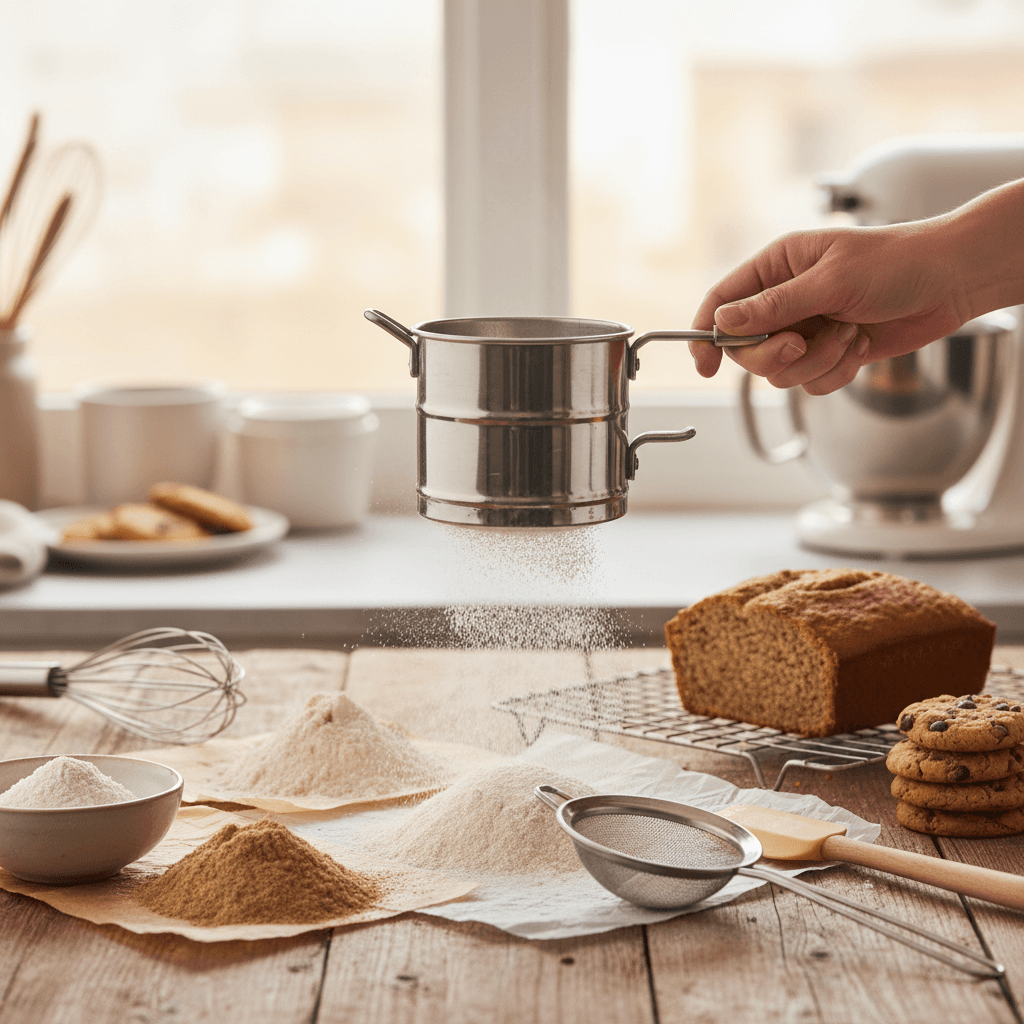
Gluten-free flours clump. A lot. Unlike wheat flour, which you can sometimes get away with just whisking, GF flours compact in the bag and form stubborn lumps that don't break down during mixing. Here are the best flour sifters for gluten-free baking and why sifting matters more than you think.
Key takeaways
- Gluten-free flours are more prone to clumping than wheat flour, making sifting essential rather than optional.
- A crank-style sifter handles dense, starchy GF flours better than a squeeze-handle model.
- Fine-mesh strainers double as excellent sifters and are easier to clean.
- Sifting aerates your flour, leading to more accurate measurements and lighter baked goods.
- Always sift before measuring if a recipe calls for "1 cup sifted flour" — the order matters.
Why gluten-free bakers need a flour sifter more than anyone
Gluten-free flours — especially brown rice flour, cassava flour, and tapioca starch — are notorious for packing down and forming hard clumps in the bag. When those clumps end up in your batter, they create pockets of dry flour that don't hydrate properly. The result? Gritty texture, uneven crumb, and dense spots throughout your bake.
In conventional baking, sifting is often listed as "optional" because all-purpose wheat flour is relatively uniform and forgiving. Gluten-free flour blends contain multiple starches and flours with different particle sizes, and they settle and compact during shipping and storage. Sifting breaks up those clumps and introduces air, which directly helps with rise and texture.
If you're still troubleshooting issues like dense bread or cakes that sink, sifting your flour is one of the simplest fixes you can try before changing anything else.
If you're building out your GF baking setup, our Confident Gluten-Free Baker Toolkit walks you through every essential tool and technique — sifters included.
What to look for in a flour sifter for gluten-free baking
Not all sifters handle gluten-free flours equally well. Here's what actually matters:
Mesh size
Look for a fine mesh (around 30-40 mesh count). GF flours have finer particles than wheat flour, and a coarse sifter won't catch the small clumps that cause problems. If the mesh is too fine, though, denser flours like almond flour will clog it. A medium-fine mesh hits the sweet spot.
Mechanism type
Crank-handle sifters work better for GF flours than squeeze-handle models. Dense, starchy flours require more force to push through, and squeeze handles fatigue your hand fast. A rotary crank gives you consistent motion without the wrist strain.
Capacity
GF recipes often call for multiple flours and starches. A 3-cup sifter is the minimum useful size; 5-cup is better if you regularly make bread or batch your own flour blends.
Ease of cleaning
This matters more than you'd think. If you're baking in a shared kitchen or dealing with cross-contamination concerns, you need a sifter you can fully disassemble and wash. Fine-mesh strainers win here because they're one piece with no hidden crevices.
The 5 best flour sifters for gluten-free flour
We picked these based on mesh size, mechanism, capacity, and ease of cleaning for rice flour blends, almond flour, tapioca starch, and commercial GF flour mixes. Here are our picks.
| Sifter | Type | Capacity | Best for |
|---|---|---|---|
| OXO Good Grips Flour Sifter | Battery-powered | 3 cup | Ease of use, hand fatigue |
| Bellemain Stainless Steel Sifter | Crank handle | 3 cup | All-around GF baking |
| Mrs. Anderson's Baking Sifter | Crank handle | 5 cup | Large batches, bread baking |
| Winco 10-inch Fine Mesh Strainer | Strainer/tap method | N/A | Easy cleaning, cross-contamination |
| Natizo Fine Mesh Strainer Set | Strainer set (3 sizes) | N/A | Versatility, small kitchens |
OXO Good Grips flour sifter
The OXO Good Grips Flour Sifter is battery-powered, which sounds gimmicky until you've tried cranking stiff tapioca starch through a manual sifter for five minutes. One button press and it does the work for you. The 3-cup capacity handles most recipes, and it's comfortable to hold. The downside is that it's harder to fully clean than a simple strainer, and you'll need batteries.
Bellemain stainless steel 3-cup sifter
The Bellemain Stainless Steel Sifter is our pick for most GF bakers. Its crank handle, fine mesh, and all-stainless construction (no rust) make it a good match for rice flour blends and even denser flours like buckwheat. At the 3-cup size, it's right for cakes, muffins, and single-loaf bread recipes.
Mrs. Anderson's 5-cup baking sifter
If you bake bread regularly or mix your own GF flour blends, the Mrs. Anderson's 5-Cup Sifter gives you the extra room you need. The larger capacity means fewer batches when you're sifting a full bread recipe's worth of flour. The crank mechanism is sturdy and the mesh is fine enough for GF work.
Winco 10-inch fine mesh strainer
Here's a secret: many professional bakers skip dedicated sifters entirely and use a Winco Fine Mesh Strainer instead. Hold it over your bowl, add flour, and tap the side. It's faster than a crank sifter for small amounts, infinitely easier to clean, and you can run it through the dishwasher. For GF bakers worried about cross-contamination in shared kitchens, the simple one-piece design with no hidden nooks is a major advantage.
Natizo fine mesh strainer set
The Natizo Fine Mesh Strainer Set gives you three sizes, which is handy if you sift different quantities. The small one works for dusting cocoa powder or powdered sugar, the medium for single recipes, and the large for batch sifting. They nest for storage, and again, cleaning is a breeze compared to mechanical sifters.
How to sift gluten-free flour properly
Sifting seems straightforward, but there's a technique detail that trips people up — especially when it comes to measuring.
- Check your recipe wording. "1 cup sifted flour" means sift first, then measure. "1 cup flour, sifted" means measure first, then sift. The difference can be 15-20% by weight.
- Sift onto parchment or into a wide bowl. This gives you room and makes it easy to pour the sifted flour into your measuring cup or mixing bowl.
- Don't press flour through. Let gravity and the mechanism do the work. Forcing flour through compacts it again, defeating the purpose.
- Sift twice for very clumpy flours. Coconut flour and some starch-heavy blends benefit from a double sift.
Even better than volume measuring: use a kitchen scale and sift directly into the bowl on your scale. You get the aeration benefits of sifting with the accuracy of weighing. Our guide to measuring baking ingredients covers this in more detail.
Flour sifter vs. fine mesh strainer for gluten-free flour
A dedicated flour sifter and a fine mesh strainer both get the job done, but they have different strengths for GF bakers.
| Feature | Flour sifter | Fine mesh strainer |
|---|---|---|
| Best for | Large volumes, consistent results | Quick sifting, easy cleaning |
| Cleaning | Harder (crevices in mechanism) | Easy (dishwasher safe) |
| Cross-contamination risk | Higher (flour gets trapped) | Lower (simple design) |
| Hand fatigue | Moderate (crank) to low (battery) | Low (tap method) |
| Versatility | Sifting only | Straining, dusting, sifting |
Our honest take: if you're only going to buy one, get a good fine mesh strainer. It does everything a sifter does, plus you can use it for straining custards, rinsing quinoa, and dusting powdered sugar. If you bake frequently and in larger quantities, a dedicated crank sifter is a worthwhile addition.
Frequently asked questions
Do you really need to sift gluten-free flour?
Yes. Gluten-free flours clump more than wheat flour because they contain multiple starches with different particle sizes that compact during storage. Skipping the sift can lead to lumpy batter, gritty texture, and uneven bakes. It's one of the most common gluten-free baking mistakes.
Can you use a fine mesh strainer instead of a flour sifter?
Absolutely. A fine mesh strainer works just as well as a dedicated sifter for most GF baking. Hold it over your bowl, add flour, and tap the rim. It's easier to clean and better for shared kitchens where cross-contamination is a concern.
How often should you sift gluten-free flour?
Sift every time you bake. Gluten-free flours settle and clump between uses, even if you sifted them into a storage container previously. A quick sift before measuring takes 30 seconds and makes a noticeable difference in your results.
Does sifting gluten-free flour help with dense bread?
Sifting aerates the flour, which contributes to a lighter crumb. It won't fix every density issue — you'll also want to check your leavening and rise technique — but it's one of the easiest improvements you can make.
What is the best flour sifter for almond flour?
A medium-fine mesh strainer works best for almond flour. Very fine mesh sifters can clog because almond flour has higher fat content and coarser particles. If you're using a mechanical sifter, choose one with a crank handle rather than a squeeze handle to push the flour through more effectively.

Written by
Co-founder, BakingSubs
Co-founder of BakingSubs, where he turns the science of ingredient substitutions into tested, reliable guidance for home bakers.
Related Posts
Bake with Confidence
See all
Confident Gluten-Free Baker Toolkit
The science-based system that replaces gluten's seven invisible jobs so your baking turns out soft, fluffy, and foolproof — every time.

Gluten-Free Recipe Vault
Instant access to our complete library of proven gluten-free recipes — no waiting, no guesswork, just results that work tonight.

Fix Your Gluten-Free Bread
Learn the 3-step formula to make bread rise and stay soft, discover why your loaves collapse, and get a tested sandwich bread recipe that actually works.