

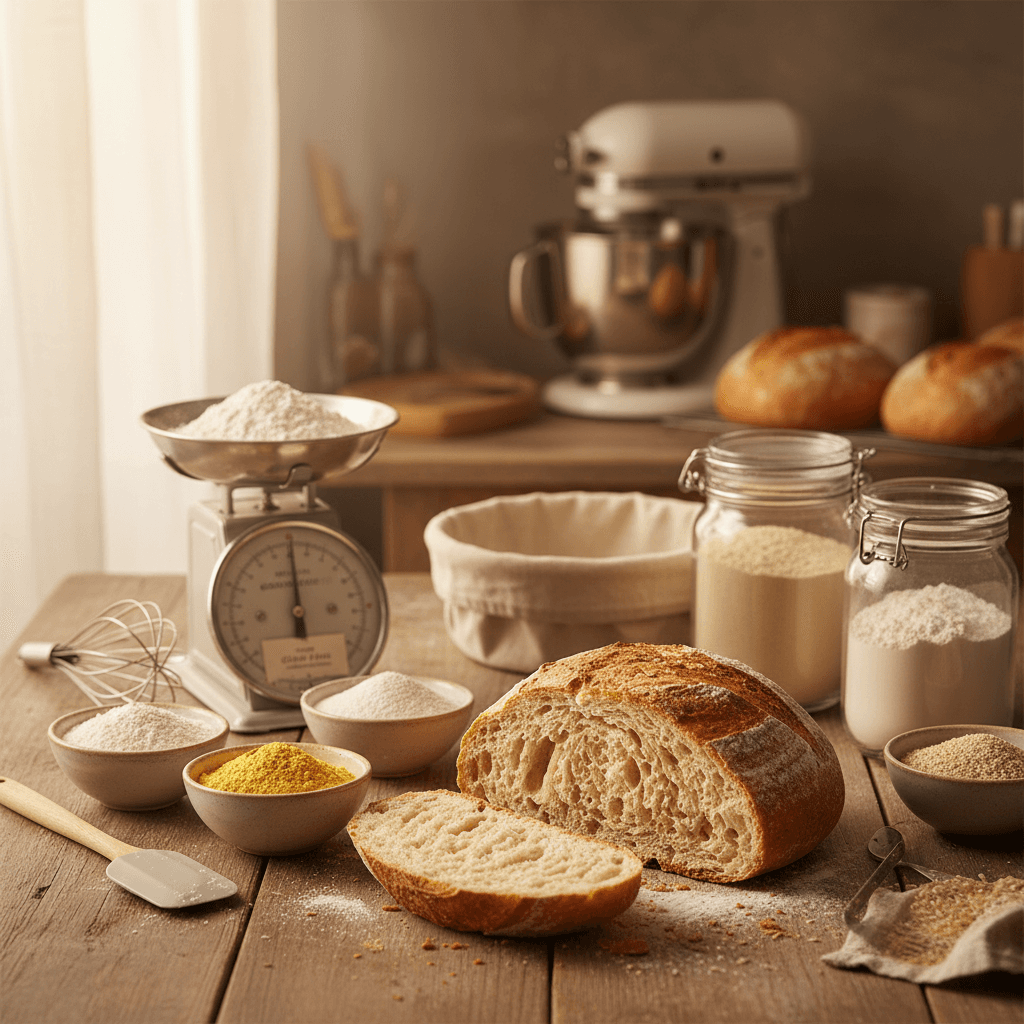
Choosing the right gluten-free flour for bread is the single biggest decision that determines whether your loaf rises tall and stays soft or crumbles into a sad pile of expensive crumbs. The differences between flours and blends in bread baking are dramatic.
Here's exactly which flours work, which don't, and why — so you can stop guessing and start baking bread you actually want to eat.
Key takeaways
- Pre-made gluten-free flour blends are the easiest starting point for bread, but not all blends are formulated for yeast breads — look for ones with higher starch content and added binders.
- Rice flour (white and brown) forms the backbone of most successful gluten-free bread recipes because of its neutral flavor and good structure.
- You need a binding agent like psyllium husk or xanthan gum to replace gluten's elasticity — flour alone won't cut it.
- Sorghum flour and millet flour add protein and a wheat-like flavor that makes bread taste more "normal."
- Single-ingredient flours like almond flour or coconut flour don't work well as the primary flour in yeast breads — they're better as supporting players.
- Weighing your flour with a kitchen scale matters even more in gluten-free bread than conventional bread because absorption rates vary wildly between flours.
Why gluten-free bread flour matters more than any other ingredient
In conventional bread baking, gluten does the heavy lifting — it traps gas from yeast, creates an elastic crumb, and gives bread its characteristic chew. When you remove gluten, your flour choice has to compensate for all of that lost structure. The wrong flour produces bread that's dense, gritty, crumbly, or gummy.
Gluten-free bread flour needs to do three things well: provide structure through starches that gelatinize during baking, contribute enough protein for browning and body, and absorb the right amount of liquid without turning into paste. No single gluten-free grain does all three perfectly, which is why blends outperform individual flours almost every time.
If you're just getting started with gluten-free bread, our Confident Gluten-Free Baker Toolkit walks you through exactly how different flours and binders work together — it takes the guesswork out of your first few loaves.
Best pre-made gluten-free flour blends for bread
Pre-made blends are the fastest path to good gluten-free bread because someone has already done the ratio math for you. That said, blends designed for cookies and cakes often fail at bread because they lack the protein and starch balance that yeast doughs need. Here are the blends we recommend specifically for bread.
Bob's Red Mill 1-to-1 Baking Flour
This is the most widely available gluten-free blend and a solid all-around performer for bread. It contains rice flour, tapioca starch, potato starch, and xanthan gum — a classic combination that produces a reasonably soft crumb with decent rise.
Why it works for bread: The xanthan gum is already included, so you don't need to add a separate binder. The starch-to-flour ratio gives good gas retention during proofing. It absorbs liquid predictably, making it forgiving for beginners.
Limitations: The crumb can be slightly gummy if you overbake or underbake. It doesn't produce the most wheat-like flavor — the rice flour base keeps it mild but a bit "flat" in taste. It works best for sandwich bread rather than crusty artisan loaves.
King Arthur Measure for Measure Flour
King Arthur's blend is our top recommendation for bread bakers who want the closest texture to conventional wheat bread. It uses a combination of rice flours, tapioca starch, potato starch, and rice starch, with both xanthan gum and a small amount of rice protein added.
Why it works for bread: The added rice protein gives the dough slightly more body and helps with browning. The grind is exceptionally fine, which eliminates the gritty texture that plagues many gluten-free breads. It handles hydration well and produces a crumb that's soft enough to fold without cracking.
Limitations: It's more expensive per pound than Bob's Red Mill. The xanthan gum content is on the lower side, so some bread recipes benefit from adding a small amount of psyllium husk for extra structure, especially in free-form loaves.
Cup4Cup Multipurpose Flour
Cup4Cup Multipurpose Flour was developed by a former Thomas Keller chef. It includes milk powder, which adds fat and protein that improve both flavor and texture.
Why it works for bread: The milk powder creates a softer, more tender crumb and promotes better browning. It produces bread that tastes richer and more like wheat bread than most rice-based blends.
Limitations: Not dairy-free, which rules it out for many bakers. It's the most expensive option on this list. The cornstarch base can make the crumb slightly more delicate — great for dinner rolls, less ideal for hearty sandwich loaves.
Flour blend comparison for bread baking
| Flour blend | Best for | Binder included | Dairy-free | Price range |
|---|---|---|---|---|
| Bob's Red Mill 1-to-1 | Everyday sandwich bread | Yes (xanthan gum) | Yes | $ |
| King Arthur Measure for Measure | Closest to wheat bread texture | Yes (xanthan gum) | Yes | $$ |
| Cup4Cup Multipurpose | Rich dinner rolls, soft bread | Yes (xanthan gum) | No | $$$ |
Bread-specific blends worth seeking out
The three blends above are the ones you can find in almost any supermarket. If you are willing to order online or hunt a little, these three are formulated with yeast bread in mind, and each solves a specific problem the everyday blends do not.
gfJules Gluten Free Bread Flour Mix: best for a tall, even rise
The gfJules Gluten Free Bread Flour Mix is one of the most reliable commercial blends for tall, evenly textured loaves. It rises predictably, holds its shape without collapsing, and produces a crumb that's genuinely close to wheat bread — soft, slightly chewy, and sliceable even the next day.

gfJules Certified Gluten Free Bread Baking Mix | Loaf, Baguettes, Bagels, Focaccia and more | No Grit, Non-GMO, Vegan | Certified Top 9 Allergen-Free & Kosher | 18 Ounces
Check price on Amazon →The blend uses a combination of rice flour, tapioca starch, potato starch, and cornstarch, with xanthan gum already included. What sets it apart is how well it handles hydration. Gluten-free bread doughs are notoriously wet and sticky, and gfJules absorbs moisture at a rate that gives you a workable (though still soft) dough rather than a batter.
The downside is price. At roughly $10-12 per 1.5 lb bag, it's one of the most expensive options. But if you're tired of dense, crumbly loaves and want reliable results while you build your skills, this is the blend to start with.
Caputo Fioreglut: best for artisan-style loaves
If you want open crumb structure, a real crust, and bread that looks like it came from a European bakery, Caputo Fioreglut is the blend to try. This Italian flour uses rice starch, potato starch, and rice flour with guar gum as the binder instead of xanthan gum, and the results are noticeably different — lighter, airier, with more irregular holes in the crumb.
Fioreglut handles high-hydration doughs beautifully, which makes it excellent for focaccia, ciabatta-style bread, and pizza dough. It's also one of the few commercial blends where you can get actual oven spring and ear formation when scoring — pair it with a good bread lame for gluten-free dough and you'll see the difference.
The trade-off is availability. Caputo Fioreglut isn't in most American grocery stores, so you'll likely need to order it online. It's also pricier per pound than domestic brands.
Namaste Perfect Flour Blend: best allergen-friendly option
If you're baking for someone who's gluten-free AND dealing with other allergies, the Namaste Perfect Flour Blend is free of the top 8 allergens. It uses a base of sweet brown rice flour, tapioca starch, and arrowroot starch — no dairy, no eggs, no nuts, no soy.
For bread, it's serviceable but not exceptional on its own. The lack of xanthan gum means you'll need to add your own binder. We recommend 1 teaspoon of xanthan gum or 2 teaspoons of psyllium husk powder per cup of flour for bread applications. The sweet rice flour base gives it good stickiness and chew, which is actually an advantage in bread. If you want to learn more about this ingredient, check out our sweet rice flour brand comparison.
Best individual gluten-free flours for bread (and how to use them)
If you prefer to mix your own blends — or you want to understand what's actually in those bags — these are the individual flours that perform best in bread. None of them should be used alone for yeast bread. They work best in combination, typically at specific ratios.
White rice flour
White rice flour is the workhorse of gluten-free bread baking. It has a neutral flavor, fine texture, and provides the primary structure in most blends. We recommend it as 40-50% of any custom bread flour blend.
Why it works: It gelatinizes well during baking, creating a crumb that holds together. It's affordable and widely available. The mild flavor doesn't compete with other ingredients.
Watch out for: Cheap white rice flour can be gritty. Look for superfine or "stone ground" varieties. On its own, rice flour produces a dry, crumbly texture — it needs starch partners.
Brown rice flour
Brown rice flour adds more nutrition and a slightly nuttier flavor than white rice flour. It contains more fiber and protein, which helps bread feel more substantial.
Why it works: The extra protein (about 6g per cup vs. 4g for white rice flour) improves structure and browning. The flavor is closer to whole wheat, which many bread lovers prefer.
Watch out for: It absorbs more water than white rice flour, so you'll need to adjust hydration. It can go rancid faster — store it in the fridge or freezer. Too much brown rice flour (over 30% of your blend) can make bread heavy and dense.
Sorghum flour
Sorghum flour is our secret weapon for making gluten-free bread taste like actual bread. It has a mild, slightly sweet flavor that's the closest to wheat of any gluten-free grain.
Why it works: Higher protein content (around 10g per cup) gives bread better structure and chew. It browns beautifully, producing that golden crust you're looking for. It pairs exceptionally well with rice flour and tapioca starch.
Watch out for: Some people detect a slight bitterness if sorghum flour makes up more than 30-40% of the blend. It's heavier than rice flour, so it can weigh down your rise if you use too much.
Tapioca starch
Tapioca starch (also called tapioca flour) is the ingredient that gives gluten-free bread its chew and elasticity. Without it, your bread will be crumbly and dry. We recommend it at 20-30% of most bread blends.
Why it works: It creates a stretchy, slightly chewy texture that mimics the mouthfeel of gluten. It helps the crust crisp up while keeping the interior soft. It also improves the shelf life of your bread by retaining moisture.
Watch out for: Too much tapioca starch (over 35%) makes bread gummy and overly sticky. It adds almost no nutritional value — it's pure starch. If your bread has gummy centers, excess tapioca is often the culprit.
Potato starch
Potato starch (not potato flour — they're very different) adds moisture and tenderness to gluten-free bread. It's lighter than rice flour and helps create an airier crumb.
Why it works: It absorbs and retains water exceptionally well, which keeps bread soft longer. It lightens the overall texture of your blend. Combined with tapioca starch, it creates a crumb that's both tender and slightly chewy.
Watch out for: Potato starch clumps easily — sift it before measuring. Using a good flour sifter makes a real difference here. Too much potato starch makes bread taste "starchy" and can cause a soggy bottom.
Our recommended custom bread flour blend ratio
This is the blend ratio we recommend for everyday gluten-free bread. It produces a soft, sliceable loaf with good rise and a flavor that's close to wheat bread.
- 40% white or brown rice flour (structure)
- 20% sorghum flour (flavor and protein)
- 20% tapioca starch (chew and elasticity)
- 15% potato starch (moisture and tenderness)
- 5% millet flour or buckwheat flour (flavor complexity)
You'll also need a binder — either 2 teaspoons of psyllium husk powder or 1 teaspoon of xanthan gum per cup of flour blend. For bread specifically, we lean toward psyllium husk because it creates a more bread-like crumb structure and helps with moisture retention. Check out our psyllium husk brand comparison if you're not sure which to buy.
Flours that don't work well as the primary flour in bread
Not every gluten-free flour belongs in bread, even if it's great for other baked goods. Here's what to avoid using as your main bread flour.
Almond flour
Almond flour is fantastic for cookies and quick breads, but it's a poor choice as the primary flour in yeast bread. It's too heavy and too fatty to allow proper rise. Yeast dough made mostly with almond flour stays dense and flat because the fat coats the starch and interferes with gluten-free structure building. Use it at no more than 10-15% of a bread blend for flavor and moisture.
Coconut flour
Coconut flour absorbs roughly four times as much liquid as rice flour, which makes it nearly impossible to use as a primary bread flour. Even small amounts change the hydration of your dough dramatically. It can work at 5-10% of a blend to add fiber and a subtle sweetness, but any more than that and your bread will be dry and crumbly. If you're curious about coconut flour for other baking, we have a full coconut flour brand comparison.
Oat flour
Oat flour can work in bread, but only if you source certified gluten-free oats — conventional oat flour is almost always cross-contaminated with wheat. Even certified GF oat flour produces a denser, heavier loaf than rice-based blends. It's better as a supporting flour at 15-20% of your blend.
Essential equipment for gluten-free bread baking
The right flour gets you halfway there, but gluten-free bread also demands a few specific tools that conventional bread bakers might skip.
A kitchen scale is non-negotiable. Gluten-free flours vary enormously in density — a cup of tapioca starch weighs about 120g while a cup of almond flour weighs about 96g. Measuring by weight eliminates the biggest source of inconsistency in your baking.
An instant-read thermometer tells you when your bread is actually done. Gluten-free bread can look golden on the outside while still being raw in the middle. The internal temperature should reach 205-210 degrees Fahrenheit. And a proper loaf pan sized for gluten-free bread (typically 8.5x4.5 inches) gives your dough the support it needs to rise upward instead of spreading outward.
Tips for getting the best results with any gluten-free bread flour
Even with the perfect flour, a few technique adjustments make a huge difference in gluten-free bread.
- Hydrate your dough more than you think. Gluten-free bread dough should look more like thick cake batter than conventional bread dough. If your dough looks like something you could shape by hand, it's probably too dry.
- Don't skip the vinegar. A tablespoon of apple cider vinegar strengthens the structure of gluten-free bread and helps the rise. It's a small addition that makes a noticeable difference.
- Use room temperature ingredients. Cold eggs and milk slow down yeast activity and can cause uneven hydration in gluten-free flours.
- Let it cool completely. This is the hardest part. Gluten-free bread continues setting its structure as it cools. Cutting into it early guarantees a gummy center. Use a cooling rack and wait at least an hour.
- Only do one rise. Most gluten-free bread recipes work best with a single rise. Without gluten to re-trap gas, punching down and re-rising usually produces a denser loaf.
If you're looking for recipes to pair with these flours, start with our guide to the easiest gluten-free bread recipes to bake at home.
The fastest way to judge any blend is to bake the same loaf twice with two different flours. Our no-knead gluten-free bread recipe works well as a benchmark: the long overnight ferment means differences in absorption and flavor show up clearly instead of being masked by a fast rise.
Frequently asked questions
Can I use regular all-purpose gluten-free flour for bread?
You can, but results vary widely. Many all-purpose gluten-free blends are optimized for cookies and cakes, not yeast breads. Blends that include xanthan gum and a mix of starches (tapioca and potato) tend to perform better in bread. King Arthur Measure for Measure and Bob's Red Mill 1-to-1 are among the few all-purpose blends that work reliably for bread without modification.
Do I need xanthan gum or psyllium husk for gluten-free bread?
Yes, you need one or the other (sometimes both). These binders replace the structural role of gluten by trapping gas and holding moisture. For bread specifically, psyllium husk powder tends to produce a better crumb structure and more bread-like texture than xanthan gum alone. Most recipes call for about 2 teaspoons of psyllium husk powder or 1 teaspoon of xanthan gum per cup of flour.
Why is my gluten-free bread so dense and heavy?
Dense gluten-free bread is usually caused by too little liquid, too much heavy flour (like almond or brown rice flour), or insufficient leavening. Gluten-free bread dough needs to be wetter than wheat dough — closer to a thick batter consistency. Make sure your yeast is fresh and active, and try increasing your liquid by 2-3 tablespoons. You can also check our guide on troubleshooting poor rise for more solutions.
What is the best gluten-free flour for sourdough bread?
For gluten-free sourdough bread, a blend of brown rice flour, sorghum flour, and tapioca starch works best. The brown rice flour feeds the sourdough culture well, sorghum adds the complex flavor that complements sourdough tang, and tapioca starch provides the chew. You'll definitely want psyllium husk as your binder for sourdough — it handles the longer fermentation times better than xanthan gum.
Can I make my own gluten-free bread flour blend at home?
Absolutely, and it's often cheaper than buying pre-made blends. Start with our recommended ratio of 40% rice flour, 20% sorghum flour, 20% tapioca starch, 15% potato starch, and 5% millet or buckwheat flour. Mix a large batch and store it in an airtight container. Just remember to add your binder (psyllium husk or xanthan gum) separately when you make your dough, since the amount can vary by recipe.
Why is my gluten-free bread gummy in the middle?
Gummy centers in gluten-free bread usually come from too much xanthan gum, underbaking, or too much moisture. If you're using a blend that already contains xanthan gum and your recipe adds more, reduce or eliminate the extra. Also, gluten-free bread often needs 5-10 minutes longer in the oven than wheat bread. Use an instant-read thermometer — the internal temperature should reach 205-210 degrees F. Our guide on fixing gummy centers covers this in detail.
What is the best gluten-free flour for bread machines?
King Arthur Measure for Measure and Bob's Red Mill 1-to-1 both work well in bread machines because they're designed as direct 1:1 swaps. Use your machine's gluten-free setting if it has one — this typically uses a single rise cycle instead of two, which works better for gluten-free doughs that lose structure with repeated kneading.
How do you keep gluten-free bread from going stale so fast?
Gluten-free bread stales faster than wheat bread because it lacks the gluten network that traps moisture. To slow staling, add a tablespoon of oil or melted butter to the dough, include psyllium husk (which holds water), and store the cooled loaf tightly wrapped at room temperature for up to 2 days. For longer storage, slice and freeze immediately after cooling — frozen slices toast up beautifully. Our troubleshooting guide on quick staling in gluten-free bakes has more strategies.

Written by
Co-founder, BakingSubs
Co-founder of BakingSubs, where he turns the science of ingredient substitutions into tested, reliable guidance for home bakers.
Related Posts
Bake with Confidence
See all
Confident Gluten-Free Baker Toolkit
The science-based system that replaces gluten's seven invisible jobs so your baking turns out soft, fluffy, and foolproof — every time.

Gluten-Free Recipe Vault
Instant access to our complete library of proven gluten-free recipes — no waiting, no guesswork, just results that work tonight.

Fix Your Gluten-Free Bread
Learn the 3-step formula to make bread rise and stay soft, discover why your loaves collapse, and get a tested sandwich bread recipe that actually works.