

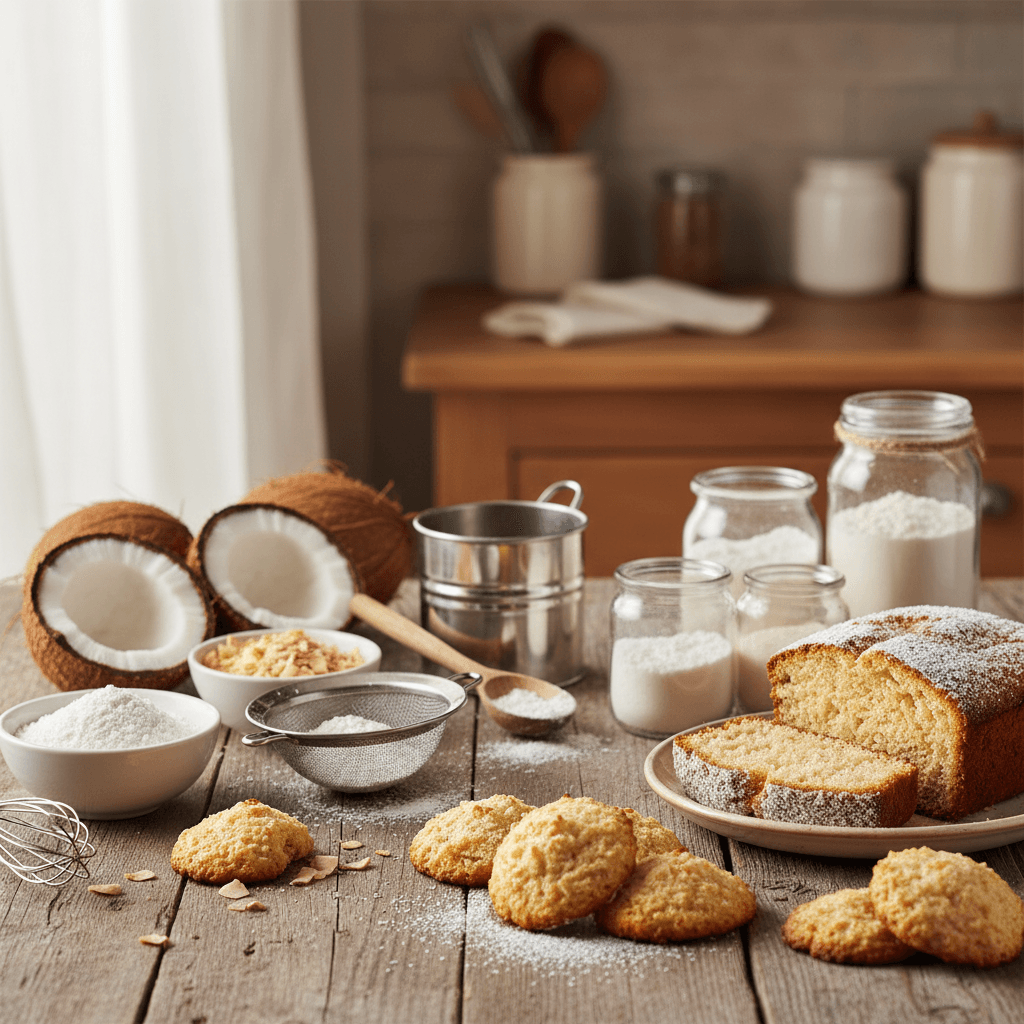
Not all coconut flour is created equal. Brand differences in grind, moisture content, and fat level can make or break your gluten-free baked goods. Here are the best coconut flour brands we recommend, compared on grind, certification, price, and intended use.
Key takeaways
- Coconut flour absorbs 3-4 times more liquid than most gluten-free flours, so consistency between brands matters enormously.
- The best coconut flour brands for baking are finely ground, low in moisture, and produce consistent results batch to batch.
- Our top overall pick is Anthony's Organic Coconut Flour for its fine texture, reliable absorption, and great price per ounce.
- Avoid coconut flour with a gritty or coarse texture — it leads to dense, crumbly baked goods that fall apart.
- Always weigh coconut flour with a kitchen scale rather than using cup measurements, since density varies between brands.
- Coconut flour works best when paired with a binding agent like arrowroot powder or eggs to offset its high absorbency.
What to look for in a coconut flour for baking
The best coconut flour for baking should be finely milled with a powdery, almost silky texture. Coarse grinds leave you with gritty muffins and crumbly cakes no matter how good your recipe is. Here are the key factors we evaluate:
- Grind fineness: A fine, uniform grind is non-negotiable. It hydrates more evenly and produces a smoother crumb.
- Moisture content: Drier coconut flour absorbs liquid more predictably. If the flour feels clumpy out of the bag, that's a red flag.
- Fat content: Most coconut flour is defatted (a byproduct of coconut oil production), but some brands retain more fat than others. Higher fat content can affect shelf life and absorption rates.
- Organic vs. conventional: This is a personal choice, but organic brands tend to have fewer processing additives.
- Certification: If you need strict gluten-free certification, look for a third-party GF seal — not just a "gluten-free" label.
If you're still getting comfortable with coconut flour and how it compares to other options, our guide on almond flour vs coconut flour breaks down the key differences and when to use each.
And if you want a solid foundation for working with specialty flours like coconut flour, the Confident Gluten-Free Baker Toolkit walks you through ratios, hydration adjustments, and binding strategies that take the guesswork out of your bakes.
The 6 best coconut flour brands for baking compared
Here is a quick side-by-side comparison of the brands we compared before we dive into individual reviews.
| Brand | Organic | GF certified | Grind | Approx. price (per lb) | Best for |
|---|---|---|---|---|---|
| Anthony's Organic | Yes | Yes | Very fine | $4-5 | Overall best pick |
| Bob's Red Mill | No (organic version available) | Yes | Fine | $5-7 | Grocery store availability |
| Nutiva Organic | Yes | No | Fine | $5-6 | Organic on a budget |
| Let's Do Organic | Yes | No | Medium-fine | $5-7 | Mild coconut flavor |
| Terrasoul Superfoods | Yes | No | Very fine | $4-5 | Bulk buying |
| Healthworks | Yes | No | Fine | $4-5 | Budget pick |
Detailed reviews of each coconut flour brand
1. Anthony's Organic Coconut Flour — best overall
Anthony's is our top pick for coconut flour baking. It has an exceptionally fine grind that hydrates evenly, which is critical when you're working with a flour that absorbs as much liquid as coconut does. The flour is powdery and dry with no clumping, and it's consistent batch to batch.
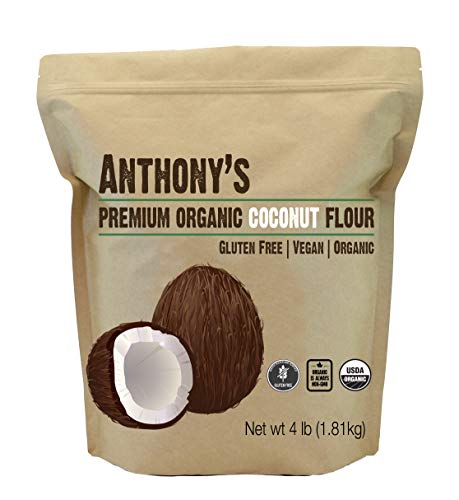
Anthony's Organic Coconut Flour, 4 lb, Batch Tested Gluten Free, Non GMO, Vegan, Keto Friendly
Check price on Amazon →Pros:
- Very fine, uniform grind
- Certified organic and gluten-free
- Excellent price per pound, especially in the 4 lb bag
- Neutral-sweet coconut aroma without being overpowering
Cons:
- Only available online (not typically in grocery stores)
- Resealable bag could be sturdier
We recommend the Anthony's Organic Coconut Flour 4 lb bag for the best value. At around $4-5 per pound, it's hard to beat.
2. Bob's Red Mill Coconut Flour — best grocery store option
Bob's Red Mill is the coconut flour most people encounter first because it's widely available in supermarkets. It performs well in baking with a fine (though not quite as fine as Anthony's) grind and consistent absorption. Their dedicated gluten-free facility and testing program make it a trustworthy choice for anyone with celiac disease. If you want to learn more about their broader lineup, check out our King Arthur gluten-free product line review for how another major brand compares.
Pros:
- Widely available in stores nationwide
- Tested and verified gluten-free
- Consistent quality batch to batch
- Organic version also available
Cons:
- More expensive per pound than online brands
- Slightly coarser grind than Anthony's or Terrasoul
Grab the Bob's Red Mill Coconut Flour if you want something you can pick up on your next grocery run or need certified gluten-free assurance.
3. Nutiva Organic Coconut Flour — best organic mid-range
Nutiva is a solid organic option that sits comfortably between budget and premium. The grind is fine and the flour hydrates well, though it can be slightly more variable between batches than Anthony's. The coconut flavor is moderate — pleasant in pancakes and muffins, but noticeable enough that you'll want to account for it in delicate recipes.
Pros:
- USDA organic certified
- Good price for organic quality
- Fine grind that works well in most recipes
Cons:
- Not certified gluten-free (though labeled GF)
- Slightly more coconut flavor than some competitors
- Occasional batch variation
The Nutiva Organic Coconut Flour 3 lb bag is a good starting point if you want to try before committing to a larger size.
4. Let's Do Organic Coconut Flour — mildest coconut flavor
If you want the structural benefits of coconut flour without a strong coconut taste, Let's Do Organic is worth trying. It has the mildest flavor profile of any brand on this list, making it a great choice for recipes where you want coconut flour's absorbency without its flavor dominating. The grind is medium-fine — not as silky as Anthony's, but still perfectly workable.
Pros:
- Very mild coconut flavor
- Organic certified
- Good for recipes where you don't want coconut taste
Cons:
- Medium-fine grind (not the finest available)
- Not gluten-free certified
- Can be harder to find in stores
Try the Let's Do Organic Coconut Flour if coconut flavor has been holding you back from using this flour.
5. Terrasoul Superfoods Coconut Flour — best for bulk buying
Terrasoul offers excellent quality at bulk prices. Their coconut flour has a very fine grind comparable to Anthony's, and it comes in larger bags that make sense if you bake frequently. Its absorption rate is consistent and predictable, which is exactly what you want when you're scaling recipes up.
Pros:
- Very fine grind
- Great bulk pricing (2 lb and 4 lb bags)
- Organic certified
- Consistent absorption
Cons:
- Online only
- Not gluten-free certified (labeled GF)
- Less brand recognition
The Terrasoul Superfoods Coconut Flour is an excellent value pick for regular coconut flour bakers.
6. Healthworks Coconut Flour — best budget option
Healthworks consistently comes in at the lowest price per pound while still delivering acceptable baking quality. The grind is fine (though occasionally slightly less uniform than our top picks) and it absorbs liquid predictably. For everyday baking where you're going through flour quickly, this is a smart choice.
Pros:
- Lowest price per pound
- Organic certified
- Fine grind suitable for most recipes
Cons:
- Grind can be slightly less uniform
- Not gluten-free certified
- Packaging is basic
Pick up the Healthworks Coconut Flour if budget is your primary concern and you don't need certified gluten-free.
Common mistakes when buying and using coconut flour
Even the best coconut flour brand won't save you if you're making these errors. Here are the most common mistakes:
- Using cup measurements instead of weight: Coconut flour packs differently depending on the brand and how settled it is. A kitchen scale eliminates this variable entirely.
- Substituting coconut flour 1:1 for other flours: Coconut flour absorbs roughly 3-4 times more liquid than almond flour and far more than all-purpose flour. You typically need only 1/4 to 1/3 cup of coconut flour for every cup of regular flour, plus extra eggs or liquid.
- Skipping the sifting step: Coconut flour clumps easily. Running it through a flour sifter before measuring ensures even hydration and a smoother batter.
- Not letting the batter rest: Coconut flour continues to absorb liquid for several minutes after mixing. Let your batter sit for 5-10 minutes before baking, then adjust if it looks too thick or too thin.
- Storing it improperly: Because of its fat content, coconut flour can go rancid. Store it in an airtight container in a cool, dry place — or in the fridge or freezer for longer shelf life.
If you're running into texture issues beyond flour choice, our 10 gluten-free baking mistakes guide covers the most common pitfalls and how to fix them.
How to get the best results with coconut flour
Coconut flour is one of the trickiest gluten-free flours to work with, but once you understand its quirks, it's incredibly rewarding. Here are our best tips:
- Pair it with plenty of eggs: Most coconut flour recipes call for 4-6 eggs per cup of flour. The eggs provide structure and moisture that coconut flour desperately needs.
- Use a binding agent: Adding a gluten-free binder like psyllium husk or xanthan gum helps compensate for the lack of gluten and prevents crumbling.
- Blend it with other flours: Pure coconut flour recipes exist, but many bakers get better results blending coconut flour with cassava flour or brown rice flour for a more balanced texture.
- Don't overmix: Coconut flour batters thicken quickly. Mix until just combined and then stop.
Frequently asked questions
Is coconut flour always gluten-free?
Pure coconut flour made from dried coconut meat is naturally gluten-free. However, not all brands are processed in dedicated gluten-free facilities, so cross-contamination is possible. If you have celiac disease, look for brands with third-party gluten-free certification like Bob's Red Mill or Anthony's. For more on preventing cross-contamination, see our guide on setting up a gluten-free baking kitchen.
Can you substitute coconut flour for almond flour in recipes?
You cannot swap them 1:1. Coconut flour absorbs significantly more liquid than almond flour, so you'll need roughly 1/4 cup of coconut flour for every 1 cup of almond flour, plus additional eggs or liquid. Our almond flour vs coconut flour comparison walks through the exact ratios and when each flour works best.
Why is my coconut flour baking always dry and crumbly?
The most common cause is not adding enough liquid or eggs to compensate for coconut flour's extreme absorbency. Make sure you're following a recipe specifically designed for coconut flour (not adapting a regular flour recipe) and let the batter rest for 5-10 minutes before judging the consistency. Adding a binder also helps — see our post on gluten-free binders that actually work.
How long does coconut flour last once opened?
Stored in an airtight container in a cool, dry pantry, coconut flour lasts about 3-6 months after opening. For longer storage, keep it in the refrigerator (up to 9 months) or freezer (up to a year). If it develops an off smell or tastes sour, the natural fats have gone rancid and it should be discarded.
What is the best coconut flour brand for keto baking?
Anthony's Organic and Terrasoul Superfoods are both excellent for keto baking because of their very fine grind and low carb-to-fiber ratio. Coconut flour is naturally high in fiber and relatively low in net carbs compared to other gluten-free flours, making it a keto staple. Just make sure you're using pure coconut flour and not a blend that may contain higher-carb starches.

Written by
Co-founder, BakingSubs
Co-founder of BakingSubs, where he turns the science of ingredient substitutions into tested, reliable guidance for home bakers.
Related Posts
Bake with Confidence
See all
Confident Gluten-Free Baker Toolkit
The science-based system that replaces gluten's seven invisible jobs so your baking turns out soft, fluffy, and foolproof — every time.

Gluten-Free Recipe Vault
Instant access to our complete library of proven gluten-free recipes — no waiting, no guesswork, just results that work tonight.

Fix Your Gluten-Free Bread
Learn the 3-step formula to make bread rise and stay soft, discover why your loaves collapse, and get a tested sandwich bread recipe that actually works.