

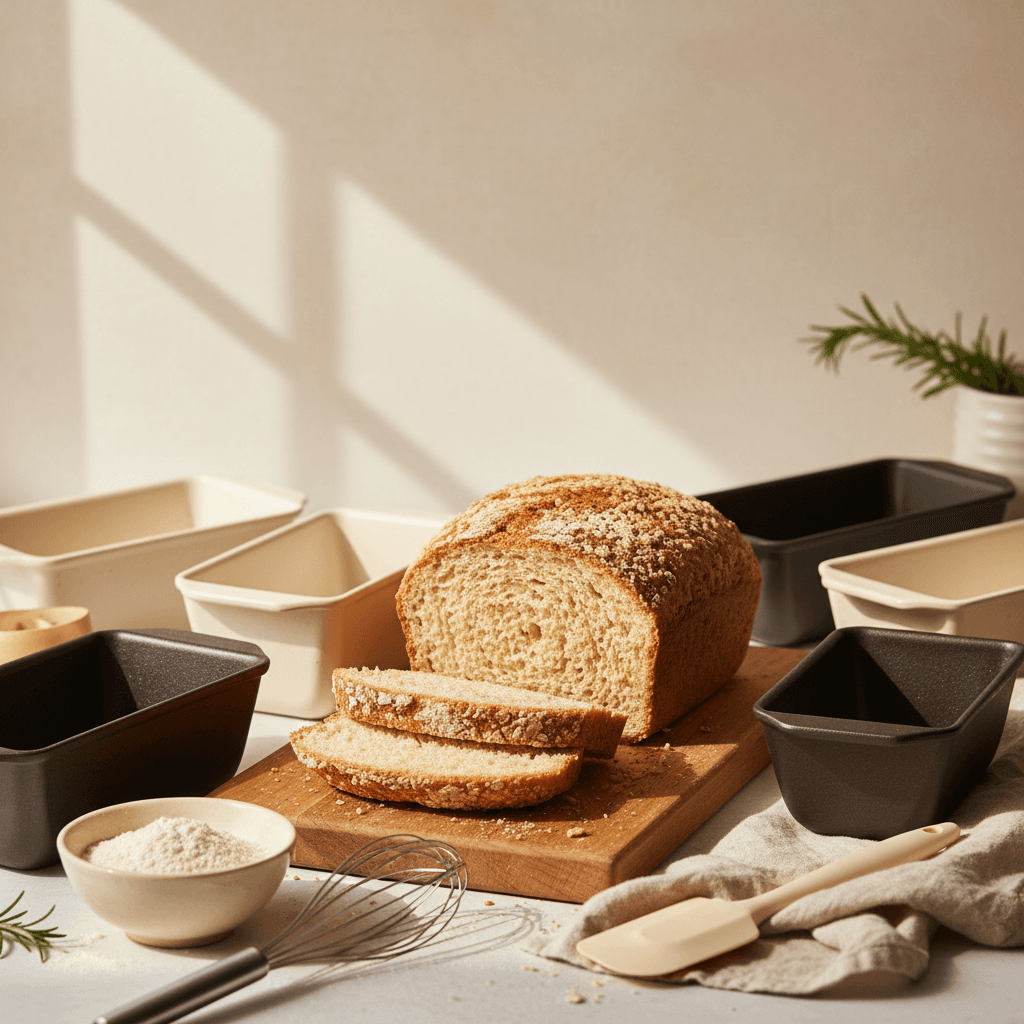
Your loaf pan matters more than you think when baking gluten-free bread. The wrong pan leads to collapsed centers, gummy middles, and loaves that stick so badly you need a chisel. Here are the best gluten free loaf pans we recommend, based on size, material, and how each design handles gluten-free batters.
Key takeaways
- Smaller loaf pans (8.5 x 4.5 inches or smaller) work best for gluten-free bread because the batter needs structural support from the pan walls.
- Light-colored metal pans produce the most even baking and help prevent over-browned crusts with gummy centers.
- Nonstick coating is essential for gluten-free bread since GF batters are stickier and more delicate than wheat-based doughs.
- Glass and ceramic pans retain too much heat and increase the risk of an overcooked exterior with an underdone interior.
- A pullman (lidded) loaf pan can help gluten-free bread maintain its shape and produce a more uniform crumb.
- Always grease your pan even if it says nonstick — gluten-free batters are notorious for sticking.
Why your loaf pan size matters for gluten-free bread
The single biggest mistake is using a standard 9 x 5-inch loaf pan for gluten-free bread. Gluten-free batters lack the protein network that holds wheat bread up, so they rely heavily on the pan walls for support. A pan that's too wide or too deep lets the batter spread thin and collapse in the center. For most gluten-free bread recipes, an 8.5 x 4.5-inch pan is the sweet spot — it keeps the batter compact enough to rise properly without spilling over.
If you've been dealing with bread that collapses after baking, switching to a smaller pan is often the easiest fix. The taller column of batter creates more steam pressure inside the loaf, which helps it rise and hold its structure while the starches set.
The 7 best loaf pans for gluten-free bread
We compared loaf pans on size, material, and release for gluten-free recipes. Here are the ones best suited to the job.
1. USA Pan 1-pound loaf pan
This is our top pick. The USA Pan 1-Pound Loaf Pan measures 8.5 x 4.5 inches and has a corrugated surface that promotes airflow and even browning. The silicone-based nonstick coating (called Americoat) releases gluten-free bread cleanly without excessive greasing. It's also made from aluminized steel, which conducts heat beautifully without hot spots.

2. USA Pan pullman loaf pan with lid
If you want perfectly square sandwich slices, the USA Pan Pullman Loaf Pan is a game-changer for gluten-free bread. The lid constrains the dough so it can't over-rise and then collapse. This is especially helpful if you struggle with getting gluten-free bread to rise properly. The enclosed environment also traps moisture, giving you a softer crumb.

USA Pan Bakeware Pullman Loaf Pan With Cover, 9 x 4 inch, Nonstick & Quick Release Coating, Made in the USA from Aluminized Steel
Check price on Amazon →3. Fat Daddio's bread pan (7.75 x 3.75 inches)
For smaller loaves, the Fat Daddio's Bread Pan is excellent. It's slightly narrower than our top pick, which provides even more structural support for delicate GF batters. The anodized aluminum construction is durable, heats evenly, and the smooth surface releases bread without fuss. We especially like this one for denser gluten-free bread recipes that use heavier flours like brown rice flour or buckwheat flour.
4. Chicago Metallic commercial II loaf pan
A solid budget option, the Chicago Metallic Commercial II is made from heavy-gauge aluminized steel with a nonstick coating. It's 8.5 x 4.5 inches and produces reliable results. The nonstick isn't quite as durable as USA Pan's Americoat over time, but at a lower price point it's hard to beat for everyday gluten-free baking.
5. Nordic Ware heritage loaf pan
The Nordic Ware Heritage Loaf Pan is cast aluminum with a beautiful design that makes your gluten-free bread look bakery-worthy. Cast aluminum retains heat well and distributes it evenly. Just note that the decorative pattern means you'll want to be extra thorough with greasing — we recommend a generous coating of butter or baking spray to ensure clean release.
6. Wilton Perfect Results loaf pan
Another budget-friendly choice, the Wilton Perfect Results pan is widely available at most kitchen stores. It's a standard 8.5 x 4.5-inch size with decent nonstick coating. It's thinner gauge steel than our top picks, which means slightly less even heat distribution, but for occasional gluten-free bread baking it gets the job done.
7. Le Creuset stoneware loaf pan
If you prefer stoneware, the Le Creuset loaf pan is the stoneware option to get — but know that it breaks two of our own rules: it's a standard 9 x 5-inch size, and ceramic heats slowly and holds heat after it leaves the oven. Expect a longer bake time — typically 5-10 minutes more. The enamel interior releases bread well, though we still recommend greasing it. Save this pan for denser, heartier gluten-free bread recipes written for a 9 x 5-inch pan; for everyday gluten-free loaves, the metal pans above are the better choice.
If you're building out your gluten-free baking setup, our Confident Gluten-Free Baker Toolkit walks you through all the essential equipment and techniques — it's a great companion to having the right pan.
Loaf pan comparison chart
Pan | Size | Material | Best for | Price range |
|---|---|---|---|---|
USA Pan 1-Pound | 8.5 x 4.5" | Aluminized steel | Everyday GF bread | $$ |
USA Pan Pullman | 9 x 4" | Aluminized steel | Sandwich bread | $$$ |
Fat Daddio's | 7.75 x 3.75" | Anodized aluminum | Smaller/denser loaves | $$ |
Chicago Metallic | 8.5 x 4.5" | Aluminized steel | Budget everyday baking | $ |
Nordic Ware Heritage | 8.5 x 4.5" | Cast aluminum | Decorative loaves | $$ |
Wilton Perfect Results | 8.5 x 4.5" | Steel | Occasional baking | $ |
Le Creuset Stoneware | 9 x 5" | Stoneware | Dense, hearty breads | $$$$ |
What material is best for gluten-free bread pans
Light-colored aluminized steel or anodized aluminum produces the best results for gluten-free bread. These materials conduct heat evenly and don't absorb excess heat the way dark metal or glass does.
Dark-colored pans absorb more radiant heat, which can over-brown the crust before the center is done — a common cause of gummy gluten-free bread middles. If you only have a dark pan, reduce your oven temperature by 25 degrees Fahrenheit to compensate.
Glass and ceramic pans are our least recommended options for gluten-free bread. They heat slowly and unevenly, and they retain heat long after you remove them from the oven, which can continue cooking (and drying out) your bread. If you do use glass, reduce the oven temp by 25 degrees and check for doneness earlier than the recipe suggests.
Tips for getting gluten-free bread out of the pan cleanly
Even with the best nonstick pan, gluten-free bread can stick. Here's what helps:
- Grease generously. Use butter, coconut oil, or a baking spray with flour. Don't skip this step even with nonstick pans.
- Line the bottom with parchment. Cut a strip of parchment paper to fit the bottom and up the two short sides, creating "handles" you can use to lift the bread out.
- Let it cool in the pan for 10-15 minutes. Gluten-free bread is fragile when hot. Trying to remove it immediately almost guarantees it'll crack or crumble. If your bread is too crumbly, this cooling step is critical.
- Run a thin knife or offset spatula around the edges before inverting. A silicone spatula works too and won't scratch nonstick coatings.
For more on tackling sticky batters before they even hit the pan, check out our guide on how to make gluten-free bread less sticky.
Should you use a loaf pan with a lid for gluten-free bread
A lidded (pullman) loaf pan can be a secret weapon for gluten-free bread. The lid prevents over-rising, which is one of the main reasons gluten-free loaves collapse. It also traps steam, creating a moister crumb and a thinner, softer crust.
That said, lidded pans require some recipe adjustment. You'll want to fill the pan about two-thirds full and let the dough proof until it's about an inch from the lid before baking. Too much batter and the bread will press against the lid and become dense. Too little and you'll get a squat loaf with a big air gap at the top.
Pullman pans tend to work best with lighter gluten-free flour blends and recipes that use psyllium husk as a binder, since psyllium creates a more elastic dough that responds well to the contained environment.
How to care for your loaf pan so it lasts
A good loaf pan should last years if you treat it right. Here are a few care tips:
- Hand wash only. Dishwashers strip nonstick coatings faster than anything. A quick soak in warm soapy water and a soft sponge is all you need.
- Avoid metal utensils in the pan. Use silicone, wood, or plastic tools to protect the coating.
- Don't use cooking sprays with propellants (like PAM) on nonstick pans — they leave a residue that builds up over time. Use a pump sprayer with plain oil or brush on butter.
- Store with care. If you stack pans, put a paper towel or cloth between them to prevent scratching.
For a full rundown of everything you need in a gluten-free kitchen, our essential gluten-free baking equipment list covers pans, scales, thermometers, and more.
Frequently asked questions
What size loaf pan is best for gluten-free bread?
An 8.5 x 4.5-inch loaf pan is the ideal size for most gluten-free bread recipes. This slightly smaller-than-standard size gives the batter enough structural support from the pan walls to rise properly without collapsing. Avoid 9 x 5-inch pans unless the recipe specifically calls for one.
Can you use a glass loaf pan for gluten-free bread?
You can, but metal pans produce better results. Glass heats unevenly and retains heat after removal from the oven, which can lead to over-browned crusts and gummy centers. If you must use glass, reduce your oven temperature by 25 degrees Fahrenheit and check doneness 5-10 minutes early.
Why does my gluten-free bread stick to the pan?
Gluten-free batters contain more moisture and sugar than wheat bread doughs, making them stickier. Always grease your pan generously and line the bottom with parchment paper, even with nonstick pans. Let the bread cool in the pan for 10-15 minutes before attempting to remove it.
Is a pullman loaf pan worth it for gluten-free baking?
Yes, especially if you want uniform sandwich bread slices. The lid prevents over-rising and collapse, which are common problems with gluten-free bread. It also traps steam for a softer crumb. Just be sure to fill the pan only two-thirds full to allow room for the dough to expand.
Do I need to adjust baking time with different loaf pan materials?
Yes. Dark metal pans and glass require a 25-degree Fahrenheit temperature reduction to prevent over-browning. Stoneware pans typically need 5-10 extra minutes of bake time. Light-colored aluminized steel and anodized aluminum pans work best at standard recipe temperatures without adjustment.

Written by
Co-founder, BakingSubs
Co-founder of BakingSubs, where he turns the science of ingredient substitutions into tested, reliable guidance for home bakers.
Related Posts
Bake with Confidence
See all
Confident Gluten-Free Baker Toolkit
The science-based system that replaces gluten's seven invisible jobs so your baking turns out soft, fluffy, and foolproof — every time.

Gluten-Free Recipe Vault
Instant access to our complete library of proven gluten-free recipes — no waiting, no guesswork, just results that work tonight.

Fix Your Gluten-Free Bread
Learn the 3-step formula to make bread rise and stay soft, discover why your loaves collapse, and get a tested sandwich bread recipe that actually works.