
Best gluten-free birthday cake recipes: 5 proven styles that actually taste like celebration
Discover 5 proven gluten-free birthday cake recipes that actually taste great. Learn which flours, binders, and techniques work best for celebration-worthy cakes.

Malik
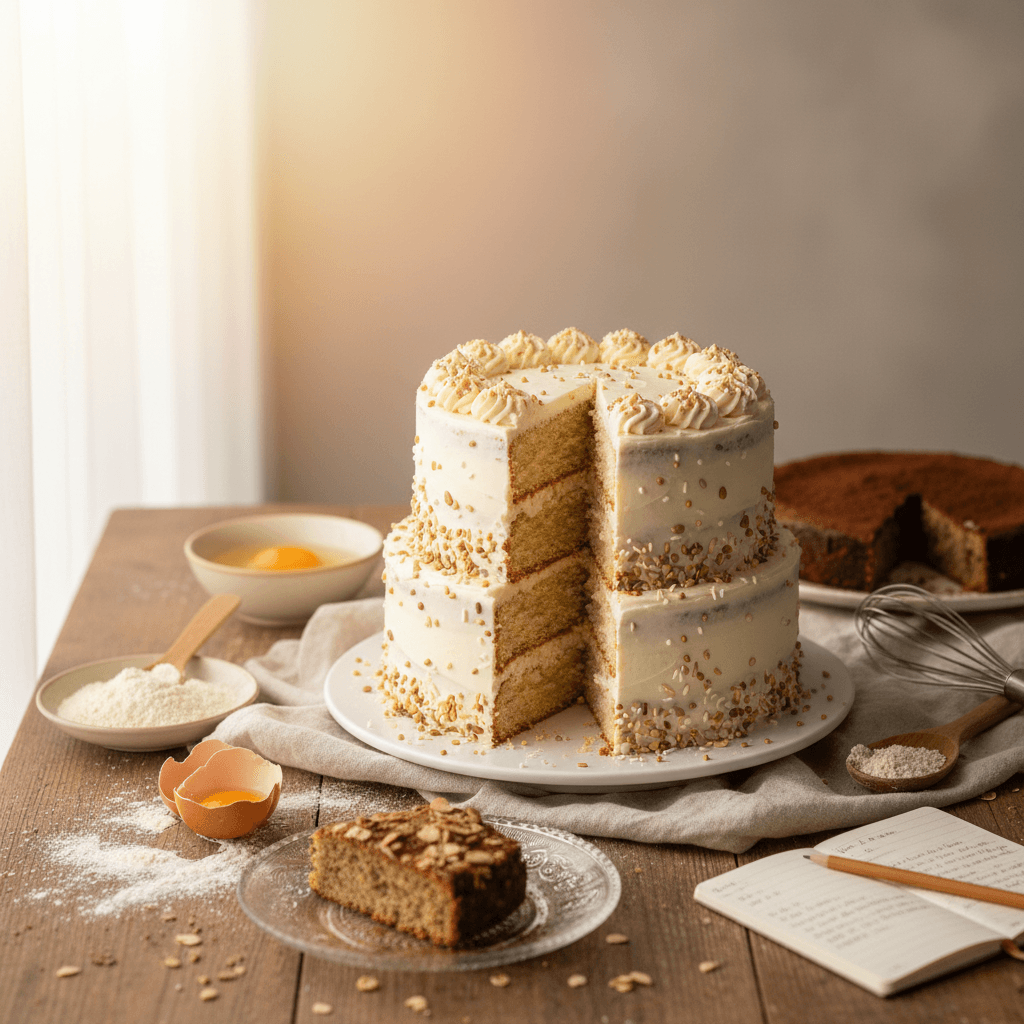
If you've ever pulled a gluten-free birthday cake out of the oven only to find it crumbly, gummy, or weirdly grainy, you're not alone. The good news: gluten-free birthday cakes can be genuinely impressive when you pick the right approach for the style you want. Here are five proven recipe styles, what makes each one work, and how to avoid the most common pitfalls.
Key takeaways
- The best gluten-free birthday cakes start with the right flour strategy — a commercial blend for classic styles, or nut flours for naturally grain-free options.
- Xanthan gum or a starch-based binder is essential for layer cakes that hold together when frosted and stacked.
- Oil-based cake batters produce moister gluten-free cakes than butter-based ones because they stay tender longer.
- Letting gluten-free cake layers cool completely (and even chilling them) before frosting prevents crumbling and tearing.
- Weighing ingredients with a kitchen scale matters more in GF baking than conventional baking — small measurement errors cause big texture problems.
Classic vanilla layer cake with a commercial flour blend
A commercial gluten-free flour blend is the fastest path to a birthday cake that tastes like the one you grew up with. Blends like Bob's Red Mill 1-to-1 or King Arthur Measure for Measure already include starches and binders in the right ratios, so you can follow a standard vanilla cake recipe with minimal changes.
The science here is straightforward: these blends combine rice flour for structure, tapioca and potato starch for tenderness and moisture retention, and xanthan gum for binding. That combination mimics what gluten does — trapping gas from leaveners and creating a crumb that holds together.
For the best results, use oil instead of (or in addition to) butter. Oil coats flour particles more evenly, which keeps the cake moist for days — a big deal if you're baking the night before a party. We also recommend adding an extra egg yolk to the batter. The fat and emulsifiers in yolks improve crumb structure without making the cake taste eggy.
If you want to go deeper on this style, our full guide to gluten-free cake recipes that taste normal covers the technique in detail.
Common mistakes with flour blend layer cakes
- Overmixing the batter. Without gluten, there's no network to "develop," but overmixing still deflates the air you've beaten in. Mix until just combined.
- Skipping the rest. Let the batter sit for 5-10 minutes before baking. This gives starches time to hydrate, which reduces grittiness. Learn more about fixing gritty texture in gluten-free baking.
- Opening the oven too early. GF cakes are more fragile during the rise phase. Don't open the door for at least the first 20 minutes.
If you're still building out your gluten-free pantry, our Confident Gluten-Free Baker Toolkit walks you through exactly which ingredients and tools you need so you're not guessing at the store.
Rich chocolate cake with almond flour
Almond flour chocolate cake is one of the most naturally successful gluten-free birthday cakes because it doesn't try to imitate wheat — it leans into what almond flour does best. The high fat content in almond flour creates a dense, fudgy crumb that pairs perfectly with chocolate.
This style typically uses 2-3 cups of blanched almond flour, cocoa powder, eggs (usually 4-5), sugar, and a bit of baking powder. Some recipes add a tablespoon of tapioca starch for a slightly lighter texture, but it's optional.
The eggs do the heavy lifting here. They provide all the structure and rise, so room-temperature eggs are non-negotiable. If you want to understand why eggs matter so much in this context, our guide to egg functions in baking breaks it down.
Why this style works so well for birthdays
Chocolate is forgiving. It masks any subtle "alternative flour" flavors, and the naturally dense texture reads as rich and intentional rather than heavy or failed. Most people can't tell this cake is gluten-free, which is exactly what you want at a birthday party where not everyone eats GF.
Common mistakes with almond flour chocolate cake
- Using almond meal instead of blanched almond flour. Almond meal has the skins ground in, which creates a coarser, speckled crumb. For birthday cake, go blanched. Our almond flour brand comparison can help you pick the right one.
- Underbaking. The fudgy texture makes it hard to judge doneness. Use a thermometer — the center should reach about 200-205 degrees F.
- Cutting too soon. This cake needs at least 30 minutes of cooling in the pan before you attempt to remove it. The structure sets as it cools.
Fluffy white cake with a custom flour blend
If you want a light, airy white birthday cake — the kind with a pillowy crumb and pure vanilla flavor — a custom flour blend gives you more control than a commercial mix. The ideal ratio for white cake is roughly 40% white rice flour, 30% potato starch, and 30% tapioca starch, plus half a teaspoon of xanthan gum per cup of the blend.
The potato starch is the secret weapon here. It holds moisture exceptionally well and creates a tender, almost cottony crumb that rice flour alone can't achieve. Tapioca starch adds slight chewiness and helps the cake brown properly.
| Flour/starch | Role in white cake | What happens without it |
|---|---|---|
| White rice flour | Primary structure, neutral flavor | Cake won't hold shape |
| Potato starch | Moisture retention, tender crumb | Cake dries out quickly |
| Tapioca starch | Chewiness, browning | Pale, crumbly texture |
| Xanthan gum | Binding, gas trapping | Cake falls apart when sliced |
For the lightest possible texture, use the reverse creaming method: mix the dry ingredients with softened butter first, then add the wet ingredients. This coats the flour particles in fat before they can absorb too much liquid, which limits gluten-free starches from getting gummy.
Common mistakes with custom blend white cake
- Measuring flour by volume. A cup of rice flour can vary by 30 grams depending on how you scoop it. Use a kitchen scale — this is the single biggest thing you can do to improve consistency.
- Forgetting vinegar. A teaspoon of apple cider vinegar reacts with baking soda to boost rise and tenderness. It's a small addition that makes a noticeable difference.
- Not sifting. Rice flour and starches clump. Sift your dry ingredients together at least once for an even crumb.
Flourless chocolate torte for an elegant option
A flourless chocolate torte uses zero flour of any kind, which makes it inherently gluten-free without any substitution gymnastics. It's built on just chocolate, butter, sugar, and eggs — and when done right, it's one of the most impressive desserts you can serve, birthday or otherwise.
The technique matters more than the ingredients here. You melt chocolate and butter together, whisk in sugar, then fold in eggs one at a time. Some recipes separate the eggs and fold in whipped whites for a lighter texture. Either way, the eggs provide all the structure — there's no starch or gum involved.
Bake it in a springform pan lined with parchment paper, and bake at a lower temperature (325 degrees F) in a water bath for the smoothest texture. The center should still jiggle slightly when you pull it out — it firms up as it cools.
Why this works for mixed-diet parties
This is the style we recommend most for parties where some guests eat gluten and some don't. A well-made flourless torte isn't a "substitute" for anything — it's a legitimate dessert in its own right. Dust it with cocoa powder, top with fresh berries, and nobody asks whether it's gluten-free.
Common mistakes with flourless torte
- Using cheap chocolate. The chocolate IS the cake. Use something with at least 60% cacao that you'd enjoy eating on its own. A Guittard 60% baking bar is a solid choice.
- Overbaking. If the center is fully set when you take it out, it'll be dry and crumbly once cooled. Pull it when it still has a slight wobble.
- Skipping the water bath. Without it, the edges overbake before the center sets, giving you a cracked, uneven top.
Funfetti or confetti cake that kids actually love
Let's be honest — if you're baking for a kid's birthday, the cake needs sprinkles, bright colors, and a soft texture they'll actually eat. A gluten-free funfetti cake works best with a commercial flour blend base (same approach as the vanilla layer cake above) plus a few specific tweaks.
Use a white or yellow cake base — not chocolate — so the sprinkles show up. Add 1/3 cup of sprinkles folded gently into the batter right before pouring into pans. The key word is gently. Overmixing at this stage bleeds the sprinkle colors into the batter and turns it gray.
For sprinkles, use jimmies (the rod-shaped ones), not nonpareils (the tiny balls). Jimmies hold their color better during baking. Make sure your sprinkles are certified gluten-free — many conventional brands are processed on shared equipment. We like Supernatural brand sprinkles for this.
Getting the right texture for kids
Kids tend to reject cakes that are too dense or dry. For this style, increase the oil by 2 tablespoons beyond what the recipe calls for, and add 2 tablespoons of sour cream or yogurt. Both additions improve moisture and tenderness. The lactic acid in dairy also helps activate leaveners for a slightly better rise.
If your child also needs a dairy-free option, check our guide on choosing milk alternatives for baking — coconut cream yogurt works well here.
Common mistakes with funfetti cake
- Adding sprinkles too early. If you fold them into the batter and then let it sit, the colors bleed. Add them last, right before the batter goes into the pans.
- Using gel food coloring in the batter. A tiny amount is fine for tinting, but too much adds liquid that throws off the flour-to-liquid ratio. Stick to 2-3 drops max.
- Underbaking because the top looks pale. GF cakes often don't brown as much as wheat cakes. Test with a toothpick rather than relying on color.
Tips that apply to every gluten-free birthday cake
Regardless of which style you choose, these principles will improve your results across the board.
- Weigh your ingredients. We say this constantly because it matters constantly. A good kitchen scale is the single most impactful tool for GF baking.
- Use the right pan. Light-colored aluminum pans bake more evenly than dark nonstick. Our GF cake pan guide has specific recommendations.
- Check your oven temperature. If your oven runs hot, your cake edges will set before the center catches up, leading to a sunken middle. An oven thermometer costs under $10 and eliminates this variable.
- Cool completely before frosting. GF cakes are more fragile than wheat cakes. Let layers cool in the pan for 15 minutes, then on a wire rack until fully room temperature. Chilling in the fridge for 30 minutes before frosting makes them even easier to handle.
- Frost generously. A thick layer of frosting (especially buttercream or cream cheese) actually helps seal in moisture and prevents the cake from drying out before the party. It's functional, not just decorative.
Frequently asked questions
What is the best flour for gluten-free birthday cake?
For most birthday cake styles, a commercial gluten-free flour blend like Bob's Red Mill 1-to-1 or King Arthur Measure for Measure produces the most reliable results. These blends already contain the right ratio of rice flour, starches, and xanthan gum. For a richer, denser cake, almond flour works beautifully, especially with chocolate.
How do you keep a gluten-free cake from falling apart?
The most common cause of crumbly gluten-free cake is insufficient binding. Make sure your recipe includes xanthan gum (about half a teaspoon per cup of flour) or enough eggs to provide structure. Also, let the cake cool completely before removing it from the pan — GF cakes set their structure as they cool, not just in the oven.
Can you make a gluten-free birthday cake ahead of time?
Yes, and we actually recommend it. Bake your layers a day ahead, wrap them tightly in plastic wrap, and refrigerate or freeze them. Chilled layers are much easier to frost without crumbling. A frosted cake can be refrigerated for up to 3 days. Just bring it to room temperature for 30-60 minutes before serving for the best flavor and texture.
Why is my gluten-free cake gummy in the middle?
Gummy centers usually come from underbaking or too much liquid relative to starch. Use a toothpick or thermometer to check doneness — the internal temperature should be around 200-210 degrees F for most cake styles. Also make sure you're measuring flour by weight, not volume, since packed flour throws off the ratio. Our gummy centers troubleshooting guide has more fixes.
What is the best gluten-free cake for someone who doesn't usually eat gluten-free?
A flourless chocolate torte is the safest bet for impressing people who don't normally eat gluten-free. Since it's not trying to substitute for anything — it's just chocolate, butter, eggs, and sugar — there's no "alternative" flavor to detect. Almond flour chocolate cake is a close second for the same reason.

Written by
Co-founder, BakingSubs
Co-founder of BakingSubs, where he turns the science of ingredient substitutions into tested, reliable guidance for home bakers.
Related Posts
Bake with Confidence
See all
Confident Gluten-Free Baker Toolkit
The science-based system that replaces gluten's seven invisible jobs so your baking turns out soft, fluffy, and foolproof — every time.

Gluten-Free Recipe Vault
Instant access to our complete library of proven gluten-free recipes — no waiting, no guesswork, just results that work tonight.

Fix Your Gluten-Free Bread
Learn the 3-step formula to make bread rise and stay soft, discover why your loaves collapse, and get a tested sandwich bread recipe that actually works.