

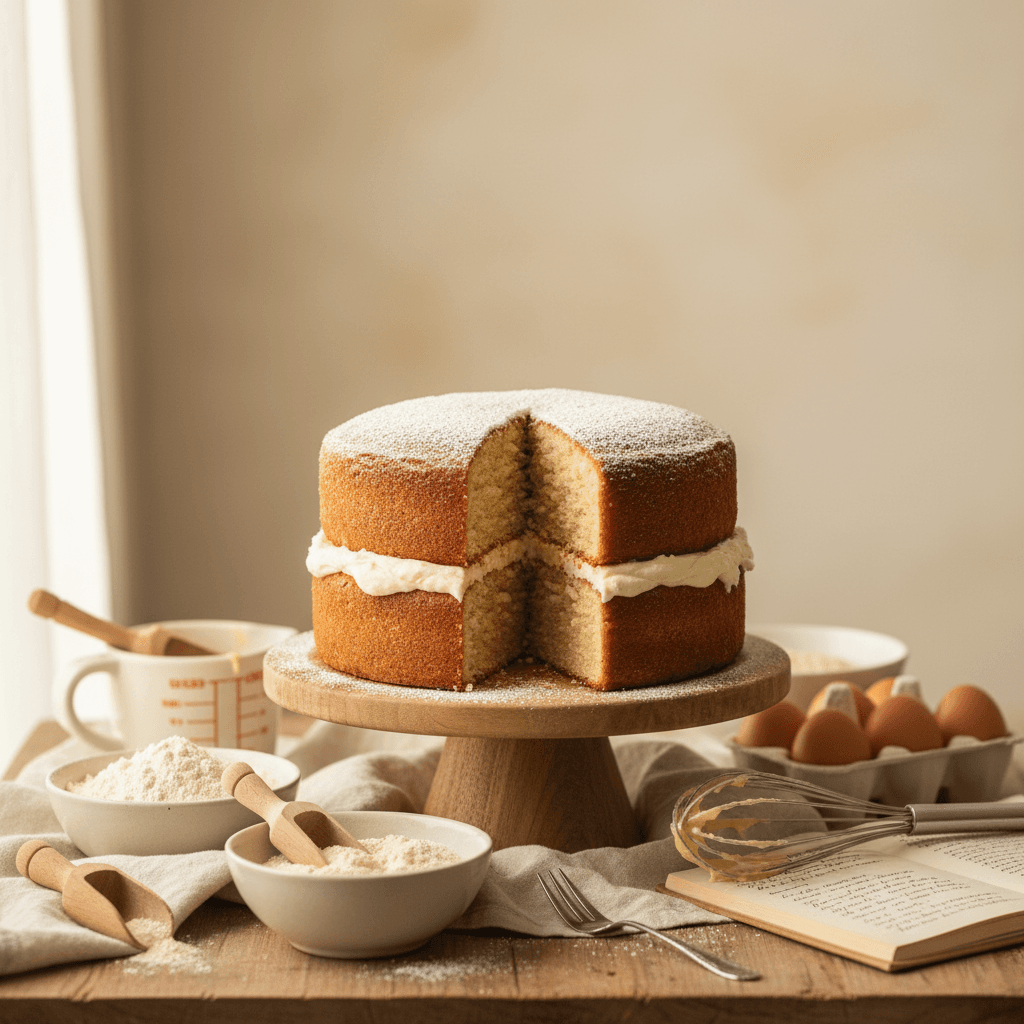
If you've thrown away one more crumbly, gritty, or weirdly gummy gluten-free cake, we get it. The good news is that gluten-free cakes can absolutely taste like the real thing — you just need the right flour combinations, proper technique, and a little baking science on your side. Here are five approaches that come closest to regular wheat cake.
Key takeaways
- The best gluten-free cakes use a blend of flours and starches rather than a single flour — this mimics the protein-starch balance of wheat flour.
- Almond flour and oil-based recipes produce the moistest cakes because fat compensates for the lack of gluten's moisture-trapping network.
- Xanthan gum or psyllium husk is essential for structure, but too much creates a gummy texture — measure by weight, not volume.
- Room-temperature ingredients and proper creaming technique matter even more in gluten-free baking than in conventional baking.
- Underbaking is the number one mistake — use an instant-read thermometer and pull cakes at 200-210°F internal temperature.
Why most gluten-free cakes don't taste like regular cake
The problem usually isn't one thing — it's a cascade of small issues. Wheat flour gives conventional cakes three things at once: structure from gluten proteins, tenderness from starch, and a neutral flavor. Most gluten-free flours only deliver one of those, which is why single-flour recipes almost always disappoint.
The other big culprit is texture. Gluten creates an elastic crumb that traps air bubbles evenly. Without it, cakes can turn out dry and crumbly, dense, or gummy in the center. Every approach below solves these problems differently, but they all share one principle: you need to replace gluten's functions, not just its presence.
Approach 1: custom flour blend cakes (the closest match)
A well-designed custom flour blend is the single best way to replicate the taste and texture of a wheat-based cake. The key is combining a protein-rich flour, a neutral starch, and a second starch for elasticity.
The formula that works
A reliable starting point is roughly 40% brown rice flour (or white rice flour for lighter cakes), 30% arrowroot powder or potato starch, and 30% tapioca starch. Add about half a teaspoon of xanthan gum per cup of flour blend.
This combination works because the rice flour provides body and a neutral flavor, the potato starch or arrowroot adds tenderness and moisture retention, and the tapioca starch creates a slight chewiness that mimics gluten's elasticity. Together, they hit all three functions that wheat flour provides.
Common mistakes and how to fix them
The biggest mistake is eyeballing flour measurements. Gluten-free flours have wildly different densities — a cup of rice flour weighs about 160g while a cup of tapioca starch weighs around 120g. Use a kitchen scale every time. If your cake tastes gritty, your rice flour is too coarse — look for finely milled brands from our rice flour comparison. If it's gritty despite fine flour, try soaking your batter for 20-30 minutes before baking to let the starches hydrate.
If you want a reliable shortcut, a pre-made blend like Bob's Red Mill 1-to-1 or King Arthur Measure for Measure does a solid job. We break down the best options in our gluten-free flour blend comparison.
If you're building out your gluten-free pantry and want a structured approach to understanding flour blends, binders, and technique, the Confident Gluten-Free Baker Toolkit walks you through the science behind every substitution so you can adapt any recipe with confidence.
Approach 2: almond flour butter cakes (rich and tender)
Almond flour cakes are the easiest path to a cake that people genuinely can't tell is gluten-free. The natural fat in almonds creates an incredibly moist, tender crumb that stays fresh longer than most GF cakes.
Why almond flour works so well for cake
Almond flour is roughly 50% fat by weight, which means it essentially has built-in butter. This fat coats the starch molecules and prevents them from absorbing too much moisture, which is exactly what causes that dry, crumbly texture in many gluten-free cakes. The protein in almonds also provides structure without the toughness that comes from over-working gluten.
For the best results, use blanched, superfine almond flour — not almond meal. The finer the grind, the lighter the crumb. We compare seven brands in our almond flour comparison and the differences are significant.
The recipe framework
A classic almond flour cake uses about 2.5 cups almond flour, 4 eggs, half a cup of sugar, a quarter cup of butter or oil, and a teaspoon of baking powder. That's it. No gums needed — the eggs provide all the binding and structure.
For a vanilla butter cake style, add a tablespoon of vanilla extract and a pinch of salt. For chocolate, swap out a quarter cup of almond flour for cocoa powder. These cakes bake at 325°F (lower than wheat cakes) for 30-35 minutes.
Common mistakes and how to fix them
Overbaking is the enemy here. Almond flour cakes go from perfect to dry in about 3 minutes, so start checking early. The other common issue is a dense, flat cake — this usually means your eggs weren't beaten enough. Whip the eggs and sugar together for a full 3-4 minutes until they're pale and thick. This is where all your rise comes from since there's no gluten network to trap air. Understanding how eggs function in baking makes a real difference here.
Approach 3: oil-based chocolate cake (the crowd pleaser)
Here's a secret that professional bakers know: the best chocolate cakes — even wheat-based ones — often use oil instead of butter and rely on cocoa powder and eggs for structure rather than gluten. That means a gluten-free version can be virtually indistinguishable from the original.
Why chocolate cake is the easiest GF win
Cocoa powder is naturally gluten-free and provides its own structure through starch and fiber. Combined with oil (which distributes more evenly than butter), eggs, and a small amount of starch, you get a cake that's fudgy, moist, and deeply chocolatey. The strong chocolate flavor also masks any subtle differences in flour taste.
The recipe framework
Use a cup of your preferred GF flour blend, three-quarters cup of cocoa powder, 3 eggs, a cup of sugar, half a cup of neutral oil like avocado oil or canola oil, a cup of hot coffee or hot water, and standard leaveners (baking powder and baking soda). The hot liquid blooms the cocoa and activates the leaveners for maximum rise.
This batter will be thin — almost pourable like pancake batter. That's correct. Don't panic. It bakes into an incredibly tender, moist cake.
Common mistakes and how to fix them
If your chocolate cake sinks in the middle, you likely opened the oven too early or your leaveners are expired. Test your baking powder by dropping a teaspoon into hot water — it should bubble vigorously. If your cake is not rising properly, check that you're using the right amount of xanthan gum in your flour blend (about half a teaspoon per cup). Also, make sure your oven temperature is accurate — we recommend using a reliable oven thermometer since even a 25°F difference can ruin a cake.
Approach 4: European-style tortes (naturally flourless)
Some of the world's most celebrated cakes were never made with wheat flour in the first place. Flourless chocolate torte, Swedish almond cake, and Italian ricotta cake all rely on eggs, nuts, and sometimes a small amount of starch for structure. These aren't "adapted" recipes — they're the originals.
Why tortes work for gluten-free bakers
A classic flourless chocolate torte uses just five ingredients: dark chocolate, butter, sugar, eggs, and a pinch of salt. The eggs are separated, the whites whipped to stiff peaks, and then gently folded into the chocolate base. The whipped egg whites provide all the lift and structure, creating a dense but not heavy cake with an incredibly silky texture.
Because these recipes were designed without flour, there's nothing to "substitute" and nothing to go wrong from a gluten-free perspective. The result tastes exactly like it's supposed to because it is exactly what it's supposed to be.
The recipe framework
For a flourless chocolate torte: 8 ounces dark chocolate, half a cup of butter, three-quarters cup of sugar, 5-6 eggs (separated), and a pinch of salt. Melt the chocolate and butter together, whisk in sugar and yolks, then fold in the whipped whites. Bake at 325°F for 25-30 minutes. The center should still jiggle slightly — it sets as it cools.
For a nut-based torte, replace the chocolate with 2 cups of finely ground almonds or hazelnuts and add a tablespoon of almond extract.
Common mistakes and how to fix them
The critical step is the egg white folding. If you stir instead of fold, you'll deflate all the air and end up with a dense, flat disc. Use a large spatula, cut down through the center, sweep along the bottom, and fold over the top. Rotate the bowl a quarter turn and repeat. It should take about 15-20 strokes — some streaks of white are fine. If you're not confident with egg techniques, our guide on eggs in baking covers everything you need to know.
Approach 5: commercial blend layer cakes (reliable and forgiving)
Sometimes you just want a straightforward layer cake that works on the first try. For those moments, a high-quality commercial flour blend with a well-tested recipe is the most reliable path to a cake that tastes like regular cake.
Why commercial blends are underrated
Good commercial blends have been engineered by food scientists who've already done the hard work of balancing protein, starch, and binder ratios. They've tested dozens of combinations so you don't have to. The best ones — like King Arthur Measure for Measure or Bob's Red Mill 1-to-1 — can be swapped directly into conventional cake recipes with minimal adjustments.
How to get the best results
Even with a 1-to-1 blend, a few tweaks make a big difference. Add an extra egg yolk to your recipe for moisture and richness. Use buttermilk instead of regular milk — the acidity helps activate leaveners and tenderizes the crumb. If the recipe calls for butter, use room-temperature butter and cream it thoroughly with the sugar for at least 4-5 minutes. This extended creaming creates more air pockets, which compensates for the weaker structure of gluten-free batters.
Bake in well-prepared cake pans — grease, line with parchment, and grease again. Gluten-free cakes stick more aggressively than wheat cakes.
Common mistakes and how to fix them
The most frequent issue with commercial blend cakes is a strange aftertaste. This usually comes from bean-based blends. If you're sensitive to this, stick with rice-and-starch-based blends. The other common problem is the cake staling quickly. Wrap layers tightly in plastic wrap while still slightly warm — the steam gets trapped and keeps the cake moist for days.
Quick comparison of all five approaches
| Approach | Difficulty | Best for | Closest to wheat cake? | Key ingredient |
|---|---|---|---|---|
| Custom flour blend | Intermediate | Any style of cake | Very close | Rice flour + starch blend |
| Almond flour butter cake | Easy | Pound cake, coffee cake | Close (richer) | Superfine almond flour |
| Oil-based chocolate cake | Easy | Chocolate layer cake, sheet cake | Nearly identical | Cocoa powder + oil |
| European-style torte | Intermediate | Special occasions, dinner parties | Different but equally impressive | Eggs (separated) |
| Commercial blend layer cake | Easy | Birthday cakes, everyday baking | Very close | 1-to-1 flour blend |
Essential tips that apply to every approach
Weigh your ingredients
We say this constantly because it's the single biggest improvement most gluten-free bakers can make. A good kitchen scale costs less than a bag of almond flour and will transform your results overnight. Gluten-free flours vary in density far more than wheat flour, so cup measurements are unreliable.
Don't skip the rest time
Let your batter sit for 10-15 minutes before baking. This gives starches time to hydrate and binders time to activate, which improves both rise and texture. This is especially important for rice flour-based batters.
Use an instant-read thermometer
The toothpick test is unreliable for gluten-free cakes because the crumb structure is different. A cake is done when the internal temperature reaches 200-210°F. An instant-read thermometer takes the guesswork out completely.
Cool cakes completely before frosting
Gluten-free cakes are more fragile when warm. Let them cool in the pan for 15 minutes, then turn out onto a rack and cool completely — at least an hour — before handling or frosting.
Frequently asked questions
What is the best gluten-free flour for cakes that taste normal?
A blend of rice flour, tapioca starch, and potato starch (or arrowroot) in roughly equal parts produces the most neutral-tasting cake. Pre-made blends like King Arthur Measure for Measure or Bob's Red Mill 1-to-1 also work well. Avoid bean-based blends if you're sensitive to aftertaste — check our flour blend comparison for specific recommendations.
Do you need xanthan gum for gluten-free cake?
For flour blend cakes, yes — about half a teaspoon per cup of flour. Xanthan gum replaces gluten's binding function and prevents crumbling. For almond flour cakes and flourless tortes, you typically don't need it because eggs provide the structure. If you're comparing binder options, our guide on xanthan gum vs psyllium husk vs flax explains the differences.
Why is my gluten-free cake gummy in the middle?
Gummy centers are almost always caused by underbaking or too much liquid. Gluten-free batters can look set on top while the center is still raw. Use an instant-read thermometer and check for 200-210°F internally. Too much xanthan gum can also create a gummy texture — never exceed the recommended amount. Our guide to fixing gummy centers covers this in detail.
Can you convert a regular cake recipe to gluten-free?
Yes, if you use a 1-to-1 flour blend and make a few adjustments: add an extra egg yolk for moisture, use buttermilk for tenderness, and let the batter rest 10-15 minutes before baking. Reduce oven temperature by 25°F and expect slightly longer baking times. Oil-based recipes convert more reliably than butter-based ones.
How do you keep gluten-free cake from going stale overnight?
Gluten-free cakes stale faster because they lack gluten's moisture-trapping network. Wrap layers tightly in plastic wrap while slightly warm to trap steam. Store at room temperature for up to two days, or freeze wrapped layers for up to three months. Adding an extra tablespoon of oil or a tablespoon of applesauce to the batter also helps extend freshness.

Written by
Co-founder, BakingSubs
Co-founder of BakingSubs, where he turns the science of ingredient substitutions into tested, reliable guidance for home bakers.
Related Posts
Bake with Confidence
See all
Confident Gluten-Free Baker Toolkit
The science-based system that replaces gluten's seven invisible jobs so your baking turns out soft, fluffy, and foolproof — every time.

Gluten-Free Recipe Vault
Instant access to our complete library of proven gluten-free recipes — no waiting, no guesswork, just results that work tonight.

Fix Your Gluten-Free Bread
Learn the 3-step formula to make bread rise and stay soft, discover why your loaves collapse, and get a tested sandwich bread recipe that actually works.