

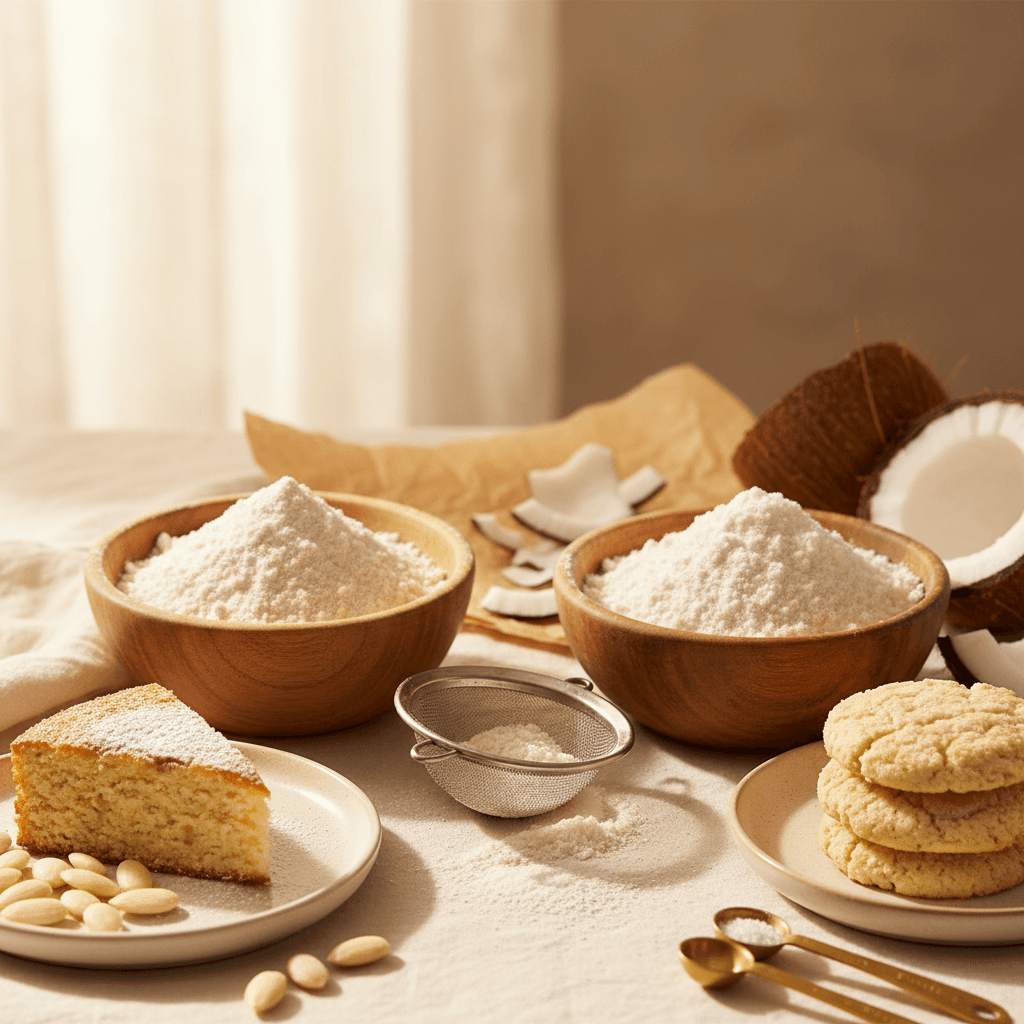
Almond flour and coconut flour are two of the most popular grain-free flours, but they behave so differently that you can't just swap one for the other. Here's a detailed breakdown of how each flour works, which bakes they're best for, and how to choose the right one for your next recipe.
Key takeaways
- Almond flour and coconut flour are not interchangeable — coconut flour absorbs roughly 3-4 times more liquid than almond flour.
- Almond flour produces moist, tender baked goods with a rich flavor, while coconut flour creates lighter, airier textures when used correctly.
- For every 1 cup of almond flour, you typically only need about 1/4 cup of coconut flour (plus extra eggs and liquid).
- Almond flour works best in cookies, cakes, and quick breads; coconut flour shines in pancakes, muffins, and lighter pastries.
- Both flours are naturally gluten-free and grain-free, but they require different binding strategies to hold baked goods together.
- Brand quality matters significantly — finer grinds and consistent moisture content make a real difference in results.
How almond flour and coconut flour actually differ
The core difference comes down to composition. Almond flour is simply blanched almonds ground into a fine powder. It's high in fat (about 14g per 1/4 cup), moderate in protein, and low in carbs. That fat content is what gives almond flour baked goods their naturally moist, tender crumb.
Coconut flour, on the other hand, is made from dried, defatted coconut meat. It's extremely high in fiber (about 10g per 2 tablespoons) and very low in fat. That fiber is what makes coconut flour behave like a sponge — it absorbs an enormous amount of liquid, which is why recipes calling for coconut flour always require significantly more eggs and moisture.
| Property | Almond flour (1/4 cup) | Coconut flour (1/4 cup) |
|---|---|---|
| Calories | ~160 | ~120 |
| Fat | 14g | 4g |
| Protein | 6g | 4g |
| Fiber | 2g | 10g |
| Carbs | 6g | 16g |
| Liquid absorption | Low | Very high (3-4x more) |
| Texture in baked goods | Dense, moist, tender | Light, airy, cake-like |
| Flavor | Mild, nutty, buttery | Mildly sweet, coconut-forward |
We've covered the basics of swapping between these two in our almond flour vs coconut flour substitution guide, but this post goes deeper into the practical baking science and brand-specific recommendations.
Why almond flour works so well in baking
Almond flour's high fat content acts as a natural tenderizer. In traditional baking, butter and oil coat flour proteins to prevent tough gluten networks from forming. Since we're already gluten-free here, almond flour's built-in fat does something slightly different — it keeps the crumb moist and prevents the dry, crumbly texture that plagues so many gluten-free bakes.
The protein in almond flour (about 6g per quarter cup) also provides some structural support, though not nearly as much as wheat gluten would. That's why most almond flour recipes still need a binder like eggs or xanthan gum to hold everything together.
Where almond flour excels
- Cookies — Almond flour makes naturally chewy, buttery cookies. Check out our gluten-free chocolate chip cookie recipes for proof.
- Quick breads and banana bread — The moisture from almond flour pairs perfectly with fruit-based batters.
- Cakes — Especially denser cakes like pound cake, almond cake, and financiers.
- Pie crusts — Almond flour creates a sandy, shortbread-like crust that holds together well.
- Brownies — That fudgy, dense texture? Almond flour delivers it naturally.
Where almond flour struggles
Almond flour doesn't work well in recipes that need a light, airy crumb. It's too heavy and dense for angel food cake, for example, and it can make bread loaves overly compact. It also browns quickly because of its fat and sugar content, so you may need to lower oven temperatures by 25 degrees or tent with foil partway through baking.
If you're building out your gluten-free pantry, our Confident Gluten-Free Baker Toolkit walks you through exactly which flours, starches, and binders to stock so you're never guessing at what to reach for.
Why coconut flour requires a totally different approach
Coconut flour's extreme absorbency is the single most important thing to understand. A recipe that uses 2 cups of almond flour might only need 1/3 to 1/2 cup of coconut flour. If you don't compensate with extra liquid and eggs, you'll end up with something that tastes like sawdust.
Most coconut flour recipes call for roughly one egg per 2 tablespoons of coconut flour. That sounds like a lot, and it is — but those eggs provide the moisture, structure, and binding that the flour itself can't. The result, when balanced correctly, is a surprisingly light and tender crumb that's quite different from almond flour's denser texture.
Where coconut flour excels
- Pancakes — Coconut flour pancakes are fluffy and light when you get the egg ratio right. We cover several approaches in our gluten-free pancake recipes guide.
- Muffins — The airy texture works beautifully in muffins, especially with fruit mix-ins.
- Light cakes — Coconut flour can mimic the lightness of wheat-based sponge cakes better than almond flour can.
- Crepes and wraps — Small amounts of coconut flour create thin, pliable batters.
Where coconut flour struggles
Coconut flour is not forgiving. Small measurement errors lead to dramatically different results — too much flour and the bake is dry and crumbly, too little and it won't set. It also imparts a noticeable coconut flavor that doesn't work in every recipe. And because it requires so many eggs, it's a poor choice for anyone baking egg-free. If you're working with vegan egg substitutes, almond flour is almost always the easier option.
Best almond flour brands for baking
Not all almond flours are created equal. The grind size and whether the almonds are blanched make a huge difference. We did a deep dive in our best almond flour for baking comparison, but here's a summary of the top picks.
| Brand | Grind quality | Best for | Notes |
|---|---|---|---|
| Blue Diamond | Very fine, consistent | Cakes, cookies, pastries | Blanched, widely available, great all-rounder |
| Bob's Red Mill (super-fine) | Fine | General baking | Reliable and easy to find; slightly coarser than Blue Diamond |
| Wellbee's | Ultra-fine | Delicate bakes, macarons | Premium price but exceptional texture |
| Nature's Eats | Medium-fine | Cookies, quick breads | Good value; works well in rustic bakes |
We recommend the Blue Diamond Blanched Almond Flour as an everyday go-to. It's consistently fine, reasonably priced, and a dependable all-purpose choice. For special-occasion bakes where texture really matters, the Wellbee's Super Fine Almond Flour is worth the upgrade.
One important tip: always measure almond flour by weight, not volume. A cup of loosely scooped almond flour can weigh anywhere from 90g to 120g depending on how you scoop it. A good kitchen scale eliminates this problem entirely.
Best coconut flour brands for baking
Coconut flour varies even more between brands than almond flour does. Different drying processes and fat content levels mean one brand's coconut flour might absorb 20-30% more liquid than another's. We compared seven brands in our best coconut flour brands for baking roundup. Here are the highlights.
| Brand | Absorbency | Best for | Notes |
|---|---|---|---|
| Anthony's | Moderate-high | General baking | Consistent batch to batch; fine grind |
| Bob's Red Mill | High | Pancakes, muffins | Widely available; slightly coarser texture |
| Nutiva | Moderate | Cakes, lighter bakes | Slightly higher fat content; milder flavor |
| Let's Do Organic | Moderate-high | All-purpose use | Certified organic; good value |
The Anthony's Organic Coconut Flour is our top recommendation for most bakers. It's consistently ground, reasonably priced, and it's consistent batch to batch — which matters a lot with coconut flour.
How to substitute almond flour for coconut flour (and vice versa)
This is where most people get tripped up. You absolutely cannot do a 1:1 swap. Here are the general conversion guidelines:
Replacing almond flour with coconut flour: Use about 1/4 cup coconut flour for every 1 cup almond flour. Add one extra egg per 1/4 cup coconut flour, and increase liquid by 2-3 tablespoons.
Replacing coconut flour with almond flour: Use about 4 cups almond flour for every 1 cup coconut flour. Reduce eggs by about 2-3, and reduce liquid by several tablespoons.
These are starting points, not exact rules. Every recipe is different, and you'll likely need to adjust based on what you're baking. The batter should look similar in consistency to the original — if it looks like paste, add more liquid; if it's soup, add a bit more flour.
When blending both flours together works best
Some of the best gluten-free results come from combining almond and coconut flour. A blend of about 3 parts almond flour to 1 part coconut flour gives you the moisture and richness of almond flour with the lightness and structure of coconut flour. This works especially well in muffins, banana bread, and brownies where you want both density and lift.
Choosing the right flour for specific bakes
Rather than thinking about these flours in the abstract, here's a practical guide for common baking projects:
| Bake | Best flour choice | Why |
|---|---|---|
| Chocolate chip cookies | Almond flour | Fat content creates chewy, buttery texture |
| Pancakes | Coconut flour | Creates fluffy, light texture with proper egg ratio |
| Banana bread | Almond flour (or blend) | Keeps the loaf moist; banana provides extra binding |
| Muffins | Blend or coconut flour | Lighter crumb; coconut flour absorbs fruit juices well |
| Pound cake | Almond flour | Dense, rich crumb matches the style perfectly |
| Birthday cake | Coconut flour (or blend) | Lighter, more cake-like texture closer to wheat |
| Pie crust | Almond flour | Creates sandy, shortbread-like crust that holds shape |
| Bread | Neither alone | Both need starch support; use a blend with tapioca or potato starch |
For bread specifically, neither almond nor coconut flour works well on its own. You'll get much better results combining them with starches like tapioca starch or potato starch, plus a strong binder. Our easiest gluten-free bread recipes guide covers several approaches that work.
Common mistakes when baking with these flours
These are the most common mistakes:
- Doing a 1:1 swap — This is the number one mistake. Coconut flour absorbs 3-4 times more liquid, so a direct swap will fail every time.
- Not weighing your flour — Both of these flours pack differently depending on how you scoop. Use a scale.
- Skipping the rest time — Coconut flour batters benefit from sitting for 5-10 minutes before baking. This lets the flour fully hydrate and gives you a better sense of the true batter consistency.
- Overbaking — Almond flour bakes brown faster than you'd expect. Check 5-10 minutes before the recipe says to.
- Using almond meal instead of almond flour — Almond meal includes the skins and has a coarser grind. It works in some recipes but will give you a grittier texture in anything delicate. If you're troubleshooting texture issues, our guide to fixing gritty gluten-free bakes can help.
Frequently asked questions
Can I use almond flour and coconut flour interchangeably in recipes?
No, almond flour and coconut flour are not interchangeable without significant adjustments. Coconut flour absorbs 3-4 times more liquid than almond flour, so you need to reduce the amount of coconut flour dramatically (about 1/4 of the almond flour amount) and add extra eggs and liquid to compensate. Simply swapping equal amounts will result in either a soggy mess or a dry, crumbly brick.
Which is better for keto baking, almond flour or coconut flour?
Both work well for keto baking, but almond flour is generally easier to use because it behaves more predictably and doesn't require as many recipe adjustments. Coconut flour is slightly lower in calories and fat per serving, but the extra eggs needed offset some of that advantage. For most keto bakers, almond flour is the more forgiving starting point.
Why is my coconut flour baking always dry and crumbly?
Coconut flour bakes turn out dry when there isn't enough liquid or eggs in the recipe. Most recipes need about one egg per 2 tablespoons of coconut flour. If your bake is dry, try adding an extra egg or a couple tablespoons of liquid next time. Also make sure you're letting the batter rest for 5-10 minutes before baking — coconut flour continues absorbing moisture after mixing, and the rested batter will show you the true consistency.
Does coconut flour taste like coconut in baked goods?
Yes, coconut flour does impart a mild coconut flavor, though it's more subtle than you might expect. In recipes with chocolate, strong spices, or fruit, the coconut flavor fades into the background. In plainer bakes like sugar cookies or white cake, it's more noticeable. If you want to minimize the coconut flavor, blending it with almond flour helps significantly.
What binder works best with almond flour and coconut flour?
Eggs are the most effective binder for both flours. For almond flour, 1-2 eggs per cup of flour usually provides enough structure. For coconut flour, you'll need more — roughly one egg per 2 tablespoons of flour. If you're baking egg-free, xanthan gum combined with a flax egg or applesauce can work in almond flour recipes, though results are trickier with coconut flour.

Written by
Co-founder, BakingSubs
Co-founder of BakingSubs, where he turns the science of ingredient substitutions into tested, reliable guidance for home bakers.
Related Posts

Bake with Confidence
See all
Confident Gluten-Free Baker Toolkit
The science-based system that replaces gluten's seven invisible jobs so your baking turns out soft, fluffy, and foolproof — every time.

Gluten-Free Recipe Vault
Instant access to our complete library of proven gluten-free recipes — no waiting, no guesswork, just results that work tonight.

Fix Your Gluten-Free Bread
Learn the 3-step formula to make bread rise and stay soft, discover why your loaves collapse, and get a tested sandwich bread recipe that actually works.