

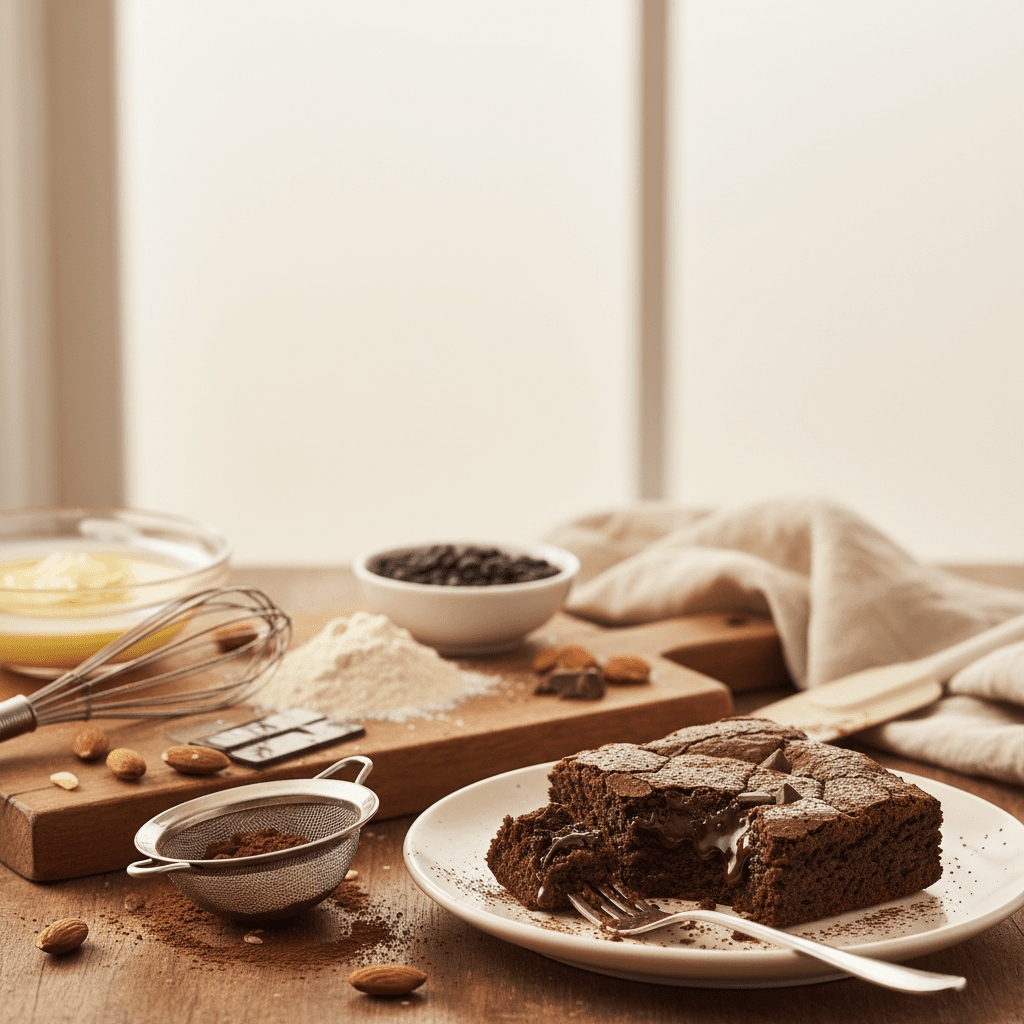
If you've ever pulled a batch of gluten-free brownies from the oven only to find a gummy, wet mess that sticks to your teeth, you're not alone. The good news is that fudgy and gummy are two completely different things, and once you understand why they happen, you can consistently nail rich, dense, melt-in-your-mouth brownies every single time.
Key takeaways
- Gummy texture in gluten-free brownies usually comes from too much starch, too much xanthan gum, or underbaking — not from the recipe being "fudgy."
- The best fudgy gluten-free brownies rely on a high fat-to-flour ratio, with butter or oil doing most of the structural work instead of flour.
- Almond flour-based brownies are naturally fudgy and almost impossible to make gummy because of their fat content and low starch.
- Black bean and avocado-based brownies can achieve fudgy texture without any flour at all, but technique matters.
- Cooling brownies completely before cutting is one of the simplest fixes for gummy texture — the center continues to set as it cools.
- Weighing ingredients with a kitchen scale eliminates the excess flour that causes gumminess in gluten-free baking.
Why gluten-free brownies turn gummy instead of fudgy
Gummy brownies happen when excess starch gelatinizes and doesn't set properly, creating a sticky, chewy layer — usually in the center. This is different from fudgy texture, which comes from a high ratio of fat and sugar to flour. In traditional brownies, gluten provides just enough structure to hold everything together. Without it, gluten-free bakers often overcompensate by adding too much starch-heavy flour blend or too much binder, and that's where things go wrong.
The three biggest culprits are:
- Too much xanthan gum or guar gum. Brownies need very little binding — often none at all. If your flour blend already contains xanthan gum and you add more, you'll get a gummy, elastic texture. Check out our guide on gummy centers in gluten-free baking for a deeper dive.
- Too much tapioca starch or cornstarch. These starches gelatinize at baking temperatures and create a gummy layer if they're the dominant flour component. A little is fine for chewiness, but the ratio matters.
- Underbaking. Because gluten-free batters look wet longer than wheat batters, it's easy to pull brownies out too early. An accurate oven thermometer helps enormously here.
5 proven approaches to fudgy gluten-free brownies
These five gluten-free brownie approaches consistently deliver fudgy results without the dreaded gummy center. Each uses a different flour or base, so you can pick the one that fits your pantry and dietary needs.
1. Almond flour brownies (the most reliable fudgy option)
Almond flour is arguably the single best flour for fudgy gluten-free brownies. Its high fat content and low starch mean you're almost guaranteed a rich, dense crumb. A classic almond flour brownie uses roughly 1 cup almond flour, 1/2 cup cocoa powder, 2 eggs, 1/2 cup melted butter, and 3/4 cup sugar. That's it — no binder needed.
Why it works: Almond flour is about 50% fat by weight. Combined with butter and eggs, the batter has an extremely high fat-to-starch ratio, which is exactly what creates fudgy texture. There's almost no free starch to gelatinize, so gumminess is nearly impossible.
Common mistakes:
- Using almond meal instead of finely ground blanched almond flour — the coarser grind creates a grainy, crumbly brownie instead of a smooth fudgy one. Our almond flour brand comparison breaks down which brands are ground fine enough for brownies.
- Adding xanthan gum. Almond flour brownies don't need it. Even 1/4 teaspoon can push the texture toward gummy.
- Overbaking. Pull them when the center still looks slightly underdone and a toothpick comes out with moist crumbs (not wet batter). They'll firm up as they cool.
If you're also exploring other almond flour baked goods, our post on almond flour vs coconut flour explains when to use each one.
2. Butter-heavy brownies with a rice flour blend
This approach uses a commercial gluten-free flour blend or a homemade rice flour blend, but keeps the flour quantity low and the butter quantity high. Think of it as a traditional brownie recipe adapted for GF — the key is restraint with the flour.
The formula: About 1/2 cup of a gluten-free flour blend, 1 stick (8 tablespoons) of butter, 6-8 ounces of chocolate, 2-3 eggs, and 1 cup sugar. The chocolate and butter do most of the structural work. The flour is just there for a slight crumb.
Why it works: When chocolate cools, its cocoa butter solidifies and creates that signature fudgy snap. By using real melted chocolate (not just cocoa powder) plus a generous amount of butter, you're building structure from fat rather than starch. The small amount of flour just gives the brownie enough body to slice cleanly.
Common mistakes:
- Using a full cup of flour blend. This is the number one cause of gummy GF brownies. Most wheat brownie recipes call for 1/2 to 3/4 cup flour, and gluten-free blends are often starchier than wheat flour, so you should use the same amount or even slightly less.
- Skipping the kitchen scale. A cup of GF flour blend can vary by 30+ grams depending on how you scoop it. We always recommend weighing your ingredients for consistent results.
- Using a flour blend with a lot of tapioca starch. Blends that are heavy on tapioca create chewier, potentially gummier results. Look for blends that balance rice flour with potato starch and only a small percentage of tapioca.
If you're still building out your gluten-free pantry, our pantry checklist will make sure you have everything you need before you start.
For a more structured approach to understanding how gluten-free flours, starches, and binders work together, check out the Confident Gluten-Free Baker Toolkit. It walks you through the science behind flour blends so you can troubleshoot any recipe, not just brownies.
3. Cocoa powder-forward brownies (minimal flour, maximum chocolate)
This style leans heavily on cocoa powder as the primary dry ingredient, with only a few tablespoons of starch or flour for structure. It's the approach many professional pastry chefs use because cocoa powder contributes intense chocolate flavor and a naturally fudgy, almost truffle-like texture.
The formula: 3/4 cup cocoa powder, 2-3 tablespoons of cornstarch or potato starch, 10 tablespoons butter, 1 1/4 cups sugar, 3 eggs, and vanilla. Some versions add a tablespoon of brown rice flour for body.
Why it works: Cocoa powder is naturally low in starch compared to any flour. It absorbs moisture without creating that gummy gel that starch-heavy batters produce. The result is an intensely chocolatey brownie that's dense and fudgy without any gumminess.
Common mistakes:
- Using natural cocoa when the recipe calls for Dutch-process (or vice versa). They behave differently with leaveners. For brownies without leavening, Dutch-process gives a smoother, darker result.
- Adding too much cornstarch. Keep it under 3 tablespoons. Any more and you'll reintroduce the gummy starch problem you're trying to avoid.
- Not blooming the cocoa in hot melted butter. Mixing cocoa powder into hot fat deepens the flavor and smooths out any grittiness.
4. Black bean brownies (naturally flourless and fudgy)
We know — black bean brownies have a reputation. But done right, they're legitimately fudgy, and the beans are easy to disguise. The key is proper blending and the right supporting ingredients.
The formula: One 15-ounce can of black beans (drained and rinsed very well), 3 eggs, 1/3 cup cocoa powder, 1/2 cup sugar, 2 tablespoons melted coconut oil or butter, 1 teaspoon vanilla, and a pinch of salt. Blend until completely smooth — no bean chunks.
Why it works: Black beans are high in protein and fiber, which create a dense, moist crumb similar to what flour and eggs do in traditional brownies. There's no starch gelatinization happening because there's no added starch, so gumminess is essentially off the table. The natural moisture in the beans keeps the brownies from drying out.
Common mistakes:
- Not blending long enough. If you can see any bean texture at all, blend for another full minute. A good food processor or high-speed blender is essential here.
- Skipping the rinse. Canned bean liquid adds a savory, metallic flavor. Rinse the beans thoroughly under cold water.
- Not adding enough chocolate. Black bean brownies need more cocoa or melted chocolate than you'd think to mask any residual bean flavor. Don't be shy with it.
5. Avocado or sweet potato brownies (oil-free, naturally fudgy)
For bakers avoiding both gluten and added fats, mashed avocado or sweet potato puree can replace butter entirely. These brownies are dense and creamy — genuinely fudgy — and work well for anyone watching saturated fat intake.
The formula: 1 ripe avocado (or 1 cup sweet potato puree), 1/2 cup cocoa powder, 1/2 cup sugar or maple syrup, 2 eggs, 1/4 cup almond flour, and a pinch of salt.
Why it works: Avocado is roughly 15% fat, and that fat is distributed in a creamy emulsion that mimics the role of butter in creating fudgy texture. Sweet potato puree works similarly — its natural sugars caramelize during baking and its moisture creates a dense, brownie-like crumb.
Common mistakes:
- Using unripe avocado. It needs to be very soft and ripe, or you'll get a chalky texture.
- Expecting the same richness as butter-based brownies. These are lighter in flavor. Adding espresso powder or extra vanilla helps compensate.
- Overbaking. Without butter, these dry out faster. Check at 18-20 minutes in a 350F oven.
The science of fudgy vs gummy in gluten-free baking
Understanding the difference between fudgy and gummy comes down to two things: fat crystallization and starch gelatinization.
| Property | Fudgy texture | Gummy texture |
|---|---|---|
| Primary source | Fat (butter, oil, chocolate) | Starch (tapioca, cornstarch, rice flour) |
| What happens when cooled | Fat solidifies into a dense, smooth crumb | Starch gel remains sticky and elastic |
| Mouthfeel | Melts on the tongue, rich | Sticks to teeth, chewy in a bad way |
| Fix | Increase fat, decrease flour | Reduce starch, reduce binder, bake longer |
When you melt chocolate and butter together and they cool in the oven, the fat crystallizes into a smooth, dense matrix. That's fudgy. When starch granules absorb water and swell during baking but don't fully set — because there's too much starch or the brownies were underbaked — they create a sticky gel. That's gummy.
This is the same principle behind gummy centers in gluten-free bread and cakes. The solution is always the same: less starch, more fat, and proper baking time.
Essential tips for any gluten-free brownie recipe
No matter which approach you choose, these universal tips will help you get consistently fudgy results:
- Weigh your ingredients. This is the single most impactful change you can make. A kitchen scale removes the guesswork from measuring flour, and in gluten-free baking, even 20 extra grams of flour can push brownies from fudgy to gummy.
- Use parchment paper. Line your pan with parchment paper with overhang on two sides. Gluten-free brownies are more delicate and stick more than wheat brownies. Parchment lets you lift the whole slab out for clean cutting.
- Cool completely before cutting. This is non-negotiable. Gluten-free brownies need at least 2 hours at room temperature (or 30 minutes in the fridge) to fully set. Cutting them warm will always give you a gummy-looking center, even if the recipe is perfect.
- Use the right pan size. A too-large pan spreads the batter thin, leading to dry, cakey brownies. A too-small pan makes them too thick to bake through. An 8x8 pan for a standard batch is the sweet spot.
- Don't add xanthan gum to brownie recipes. Seriously. Brownies get their structure from eggs and fat, not from binders. If your flour blend already contains xanthan gum, that's enough. Adding more is the fastest path to gummy texture. Learn more about binders in our guide to xanthan gum vs psyllium husk vs flax — it's focused on bread, but the principles of how binders affect texture apply to all GF baking.
Frequently asked questions
Why are my gluten-free brownies gummy in the middle?
The most common cause is too much starch-heavy flour or too much xanthan gum, which creates a sticky gel instead of a fudgy crumb. Underbaking is the other major culprit — gluten-free batters look wetter than wheat batters at the same stage of doneness, so bakers often pull them too early. Let them cool completely before judging the texture, and check out our guide on fixing gummy centers for more detail.
Can I use a gluten-free flour blend for brownies?
Yes, but use less than you think. Most brownie recipes need only 1/3 to 1/2 cup of flour blend. Choose a blend that's balanced between rice flour and starches rather than one that's starch-dominant. Our flour blend comparison ranks the best options for different types of baking.
Do gluten-free brownies need xanthan gum?
Almost never. Brownies rely on eggs and fat for structure, not gluten. Adding xanthan gum — especially if your flour blend already contains it — is one of the top causes of gummy texture. If a recipe calls for it, try making a batch without and compare.
What is the best flour for fudgy gluten-free brownies?
Almond flour is the most reliable choice for fudgy brownies because its high fat content naturally creates a dense, rich crumb with virtually no risk of gumminess. For a more traditional brownie flavor, a cocoa powder-heavy recipe with minimal starch also works beautifully.
How do I know when gluten-free brownies are done baking?
Insert a toothpick into the center — it should come out with moist crumbs clinging to it, not wet batter. The top should look set and slightly crackled. The center will still jiggle slightly, and that's fine. Gluten-free brownies continue setting as they cool, so resist the urge to bake them until the toothpick comes out clean, or you'll end up with dry, cakey brownies instead of fudgy ones.

Written by
Co-founder, BakingSubs
Co-founder of BakingSubs, where he turns the science of ingredient substitutions into tested, reliable guidance for home bakers.
Related Posts
Bake with Confidence
See all
Confident Gluten-Free Baker Toolkit
The science-based system that replaces gluten's seven invisible jobs so your baking turns out soft, fluffy, and foolproof — every time.

Gluten-Free Recipe Vault
Instant access to our complete library of proven gluten-free recipes — no waiting, no guesswork, just results that work tonight.

Fix Your Gluten-Free Bread
Learn the 3-step formula to make bread rise and stay soft, discover why your loaves collapse, and get a tested sandwich bread recipe that actually works.