

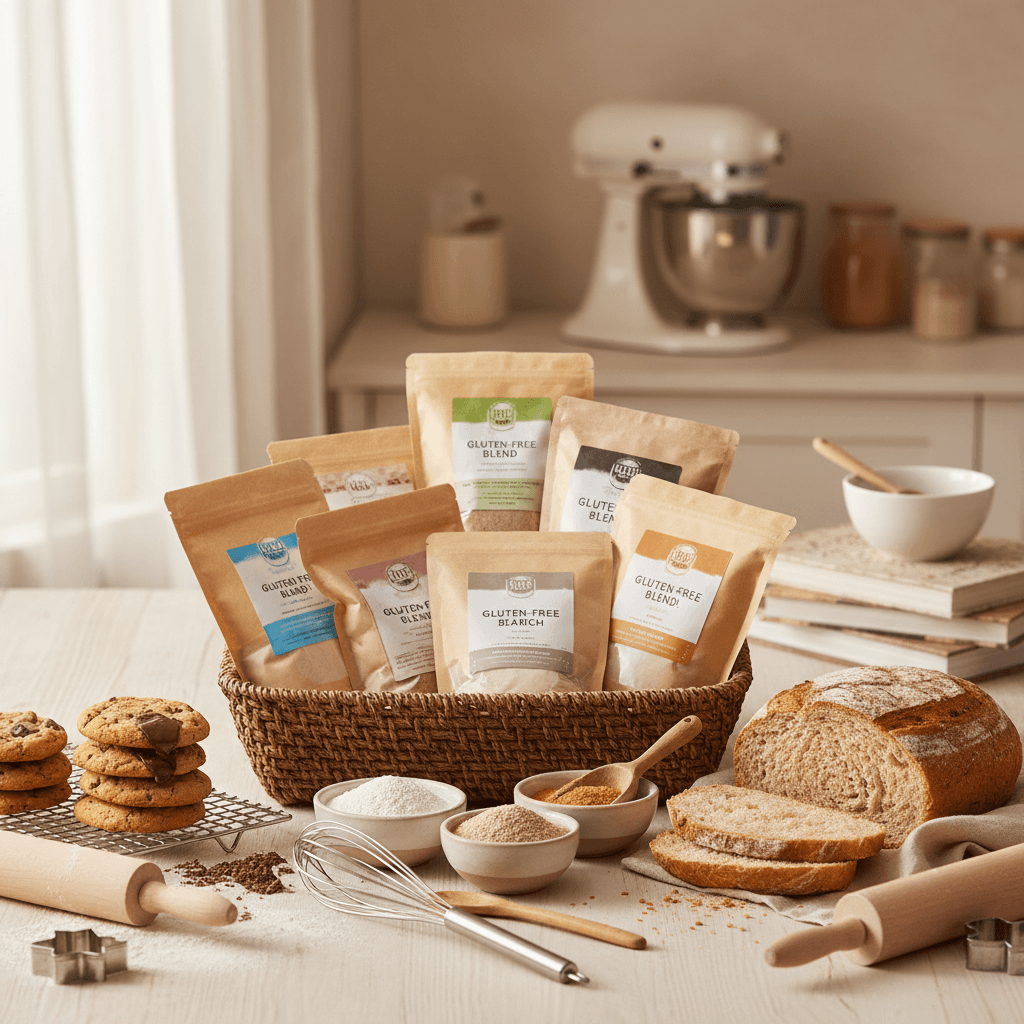
Choosing the right gluten-free flour blend can make or break your baking. With dozens of brands on the market, each with different flour ratios, starches, and binders, it's hard to know which one will actually deliver results. We've compared seven of the best gluten-free flour blend brands so you can stop guessing and start baking with confidence.
Key takeaways
- Bob's Red Mill 1-to-1 is our top overall pick for its versatility, wide availability, and consistent results across recipes.
- Not all gluten-free flour blends are interchangeable — rice-based blends behave very differently from those built on cassava flour or almond flour.
- Blends that include xanthan gum save you a step, but blends without it give you more control over texture.
- Price per ounce varies dramatically — from about $0.10/oz to over $0.30/oz — so buying in bulk matters.
- The best blend for cookies is not necessarily the best blend for bread. Match the blend to the recipe type for the best results.
- Weighing your flour with a kitchen scale is even more important with gluten-free blends than with conventional flour.
What to look for in a gluten-free flour blend
The best gluten-free flour blends balance protein, starch, and binding agents to mimic the structure that wheat gluten normally provides. Before we get into specific brands, here's what actually matters when you're shopping.
Flour base and starch ratio
Most blends use a combination of rice flours (brown rice flour, white rice flour) and starches like arrowroot, tapioca, or potato starch. The ratio between the grain flours and the starches determines whether you get a sturdy, bread-like crumb or a lighter, more cake-like texture. Too much starch and your baked goods taste hollow. Too little and they're dense and gritty.
Binder included or not
Some blends include xanthan gum or guar gum so you can use them as a direct 1:1 swap for all-purpose flour. Others leave the binder out, which gives experienced bakers more flexibility. If you're newer to gluten-free baking, a blend with a binder included is much easier to work with. For a deeper dive on binder options, check out our guide on the best binders for gluten-free bread.
Allergen considerations
Many blends contain ingredients beyond just grains and starches. Some include milk powder, soy, or are processed in facilities that handle tree nuts. Always check labels if you're managing multiple food sensitivities.
If you want a complete foundation for gluten-free baking — including flour blend guidance, binder ratios, and troubleshooting charts — our Confident Gluten-Free Baker Toolkit walks you through all of it step by step.
The 7 best gluten-free flour blend brands compared
Here's a quick-reference comparison of all seven blends before we dive into the individual reviews.
| Brand | Base flours | Includes binder | Best for | Approx. price per oz |
|---|---|---|---|---|
| Bob's Red Mill 1-to-1 | Rice flour, potato starch, tapioca | Yes (xanthan gum) | All-purpose baking | $0.12 |
| King Arthur Measure for Measure | Rice flour, tapioca, potato starch | Yes (xanthan gum) | Cookies, cakes, muffins | $0.15 |
| Cup4Cup Original | Rice flour, tapioca, potato starch, milk powder | Yes (xanthan gum) | Delicate pastries, pie crust | $0.28 |
| Namaste Perfect Flour Blend | Brown rice flour, tapioca, arrowroot | Yes (xanthan gum) | Budget-friendly everyday baking | $0.10 |
| Better Batter Original | Rice flour, tapioca, potato starch | Yes (xanthan gum) | Bread and structured bakes | $0.18 |
| Anthony's Premium GF Blend | Rice flour, potato starch, tapioca | Yes (xanthan gum) | Bulk buying, everyday use | $0.11 |
| Jovial Cassava Flour | 100% cassava flour (single ingredient) | No | Grain-free, paleo baking | $0.30 |
Bob's Red Mill 1-to-1 Baking Flour: best overall
Bob's Red Mill 1-to-1 is the most widely recommended gluten-free flour blend for good reason — it works reliably across the widest range of recipes. The blend of rice flour, potato starch, tapioca starch, and xanthan gum produces results that are remarkably close to conventional all-purpose flour in most applications.

The Bob's Red Mill 1-to-1 Baking Flour is the blend we recommend most often. It handles cookies, muffins, quick breads, and pancakes without fuss. The texture is slightly grainier than Cup4Cup, but at roughly half the price, most home bakers won't mind.
Pros:
- Available at nearly every grocery store and online
- Consistent batch-to-batch quality
- Includes xanthan gum for true 1:1 substitution
- Affordable, especially in bulk bags
Cons:
- Slight grittiness in very delicate applications like choux pastry
- Contains rice — not suitable for rice-free diets
King Arthur Measure for Measure flour: best for cookies and cakes
King Arthur Measure for Measure produces exceptionally tender baked goods with a fine, smooth crumb. It edges out Bob's Red Mill in recipes where delicacy matters — think sugar cookies, layer cakes, and muffins.

King Arthur Measure for Measure Gluten-Free Flour: All-Purpose 1:1 Substitute for Wheat Flour, Non-GMO, Kosher Certified, 3 lbs Bag for Baking Cookies, Cakes, Muffins
Check price on Amazon →The King Arthur Measure for Measure Flour is our pick when you want a more refined crumb. It costs a bit more than Bob's, but the difference in texture is noticeable in butter-forward recipes. For a full breakdown of how King Arthur's gluten-free products stack up, see our King Arthur Gluten-Free product line review.
Pros:
- Extremely fine grind with minimal grittiness
- Excellent in cookies — check our rankings of flour blends for cookies
- Includes xanthan gum
- Widely available
Cons:
- Slightly more expensive than Bob's Red Mill
- Can produce a softer, more fragile crumb in bread
Cup4Cup Original Blend: best for pastry and pie crust
Cup4Cup was developed by a former chef at The French Laundry, and you can taste the difference in pastry applications. It's one of the closest things to conventional flour when it comes to pie crusts, tart shells, and laminated doughs.

Cup4Cup Multipurpose Flour, 2 Pounds, Certified Gluten Free, Dairy Free Flour, 1:1 All Purpose Flour Substitution, Non-GMO, Kosher, Made in the USA
Check price on Amazon →The Cup4Cup Original Blend includes milk powder, which gives it a richer flavor and helps with browning. That said, it's the most expensive blend on this list, and the milk powder makes it off-limits for dairy-free bakers.
Pros:
- Closest to conventional flour in texture and flavor
- Exceptional for pie crust, biscuits, and cream puffs
- Beautiful browning
Cons:
- Contains milk powder (not dairy-free)
- Significantly more expensive ($0.28/oz)
- Harder to find in stores — easier to buy online
Namaste Perfect Flour Blend: best budget option
Namaste Perfect Flour Blend delivers solid results at the lowest price point of any blend on this list. At around $0.10 per ounce, it's the best option if you bake frequently and want to keep costs down.
The Namaste Perfect Flour Blend uses brown rice flour, tapioca starch, and arrowroot as its base. The results are good — not exceptional — across most recipe types. It works particularly well in quick breads, pancakes, and muffins where a slightly rustic texture is welcome.
Pros:
- Most affordable blend on the market
- Free from common allergens (no dairy, soy, corn, or nuts)
- Good for everyday baking
Cons:
- Slightly coarser grind than premium blends
- Not as refined in delicate pastry applications
Better Batter Original Blend: best for bread
Better Batter Original is a cult favorite among dedicated gluten-free bread bakers, and for good reason. Its starch-to-flour ratio is calibrated to produce a more structured, chewy crumb that holds up well in yeast breads and sandwich loaves.
If bread is your primary focus, the Better Batter Original Blend is worth seeking out. It's a strong fit for bread machine recipes, and its structure suits loaves that need to hold together for sandwiches. Pair it with the right binder and you'll get impressive rise — our guide on how to make gluten-free bread rise properly covers the technique.
Pros:
- Excellent structure for yeast breads
- Produces a chewier, more bread-like crumb
- Includes xanthan gum
Cons:
- Less widely available — primarily online
- Can be too starchy for delicate cakes
Anthony's Premium Gluten-Free Blend: best for bulk buying
Anthony's is a newer player in the gluten-free flour space, but their premium blend has earned a loyal following for its quality-to-price ratio. At around $0.11 per ounce in larger bags, it's nearly as affordable as Namaste with a noticeably finer grind.
The blend uses rice flour, potato starch, and tapioca starch with xanthan gum included. It performs well across cookies, quick breads, and pancakes. If you bake multiple times a week and want to buy in 5-pound bags without breaking the bank, Anthony's is a smart choice.
Pros:
- Excellent value in bulk sizes
- Finer grind than Namaste at a similar price
- Includes xanthan gum
Cons:
- Less established brand with fewer long-term reviews
- Not as widely tested in complex pastry applications
Jovial Cassava Flour: best grain-free option
Jovial Cassava Flour isn't technically a blend — it's a single-ingredient flour made from whole cassava root. We're including it because many gluten-free bakers also avoid grains entirely, and Jovial is the gold standard for grain-free baking flour.
Because it contains no binder, you'll need to add xanthan gum or psyllium husk separately. It has a mild, neutral flavor and produces a texture closer to wheat flour than most nut-based alternatives. It works particularly well in flatbreads, tortillas, and simple cakes.
Pros:
- Single ingredient — no additives
- Grain-free, nut-free, and dairy-free
- Closest to wheat flour texture among grain-free options
Cons:
- Most expensive option on this list
- Requires adding your own binder
- Not a true 1:1 substitute — recipes need adjustment
Common mistakes when choosing a gluten-free flour blend
Even the best flour blend won't save you from these common pitfalls. Avoiding them will make a bigger difference than which brand you choose.
Using one blend for everything
A blend that makes great cookies might produce gummy bread. If you bake a variety of things, consider keeping two blends on hand — one for everyday baking and one optimized for bread. Our guide to substituting all-purpose flour explains how different flour compositions affect different recipe types.
Measuring by volume instead of weight
Gluten-free flours pack differently than wheat flour, and different brands have different densities. A cup of Bob's Red Mill weighs differently than a cup of Cup4Cup. Always weigh your flour for consistent results.
Skipping the rest time
Many gluten-free flour blends benefit from a 15-30 minute rest after mixing. This lets the starches hydrate fully, which reduces grittiness and improves crumb structure. If your baked goods taste gritty or sandy, this is often the fix.
Ignoring the binder situation
If your blend doesn't include xanthan gum and your recipe calls for it, you need to add it. Conversely, if your blend already has xanthan gum and your recipe adds more, you can end up with a gummy, rubbery texture. Always check both the blend's ingredient list and the recipe. For more on this, see our post on 10 common gluten-free baking mistakes.
Our top pick and final recommendation
Bob's Red Mill 1-to-1 Baking Flour is our top overall pick for most home bakers. It's affordable, widely available, and performs consistently across the broadest range of recipes. If you only buy one gluten-free flour blend, make it this one.
For specialized use cases: grab King Arthur Measure for Measure when you want the finest crumb in cakes and cookies, Better Batter when bread is the priority, and Cup4Cup when you're making pastry that needs to impress. Budget bakers will be well served by Namaste or Anthony's for everyday use.
Whatever blend you choose, pair it with the right tools — a good flour sifter helps aerate gluten-free blends that tend to pack down, and a reliable scale ensures you're measuring accurately every time.
Frequently asked questions
Can you substitute one gluten-free flour blend brand for another in a recipe?
In most cases, yes — especially if both blends include xanthan gum and use a similar rice-flour-and-starch base. However, results may vary slightly in texture and moisture. Weigh your flour rather than measuring by volume to minimize differences between brands.
Do gluten-free flour blends expire faster than regular flour?
Gluten-free flour blends typically last 6-12 months in a cool, dry pantry and longer in the freezer. Blends containing brown rice flour or nut flours can go rancid faster than those made with white rice flour and pure starches. Always check for off smells before using an older bag.
Is it cheaper to make your own gluten-free flour blend at home?
It can be, especially if you buy individual flours in bulk. A basic blend of white rice flour, brown rice flour, potato starch, and tapioca starch can cost as little as $0.06-0.08 per ounce. The trade-off is convenience and consistency — commercial blends are pre-mixed to exact ratios every time. If you go the DIY route, a good food processor helps you grind your own flours from whole grains.
Which gluten-free flour blend tastes the most like regular flour?
Cup4Cup Original consistently gets the highest marks for taste and texture similarity to conventional wheat flour. The inclusion of milk powder gives it a richer, more familiar flavor. For a dairy-free option, King Arthur Measure for Measure is the closest runner-up.
Do I still need to add xanthan gum if my flour blend already contains it?
Usually no. If your blend lists xanthan gum in the ingredients, skip any additional xanthan gum called for in the recipe. Adding too much creates a gummy, unpleasant texture. Our guide on xanthan gum vs. psyllium husk explains how much binder different recipe types actually need.

Written by
Co-founder, BakingSubs
Co-founder of BakingSubs, where he turns the science of ingredient substitutions into tested, reliable guidance for home bakers.
Related Posts
Bake with Confidence
See all
Confident Gluten-Free Baker Toolkit
The science-based system that replaces gluten's seven invisible jobs so your baking turns out soft, fluffy, and foolproof — every time.

Gluten-Free Recipe Vault
Instant access to our complete library of proven gluten-free recipes — no waiting, no guesswork, just results that work tonight.

Fix Your Gluten-Free Bread
Learn the 3-step formula to make bread rise and stay soft, discover why your loaves collapse, and get a tested sandwich bread recipe that actually works.