

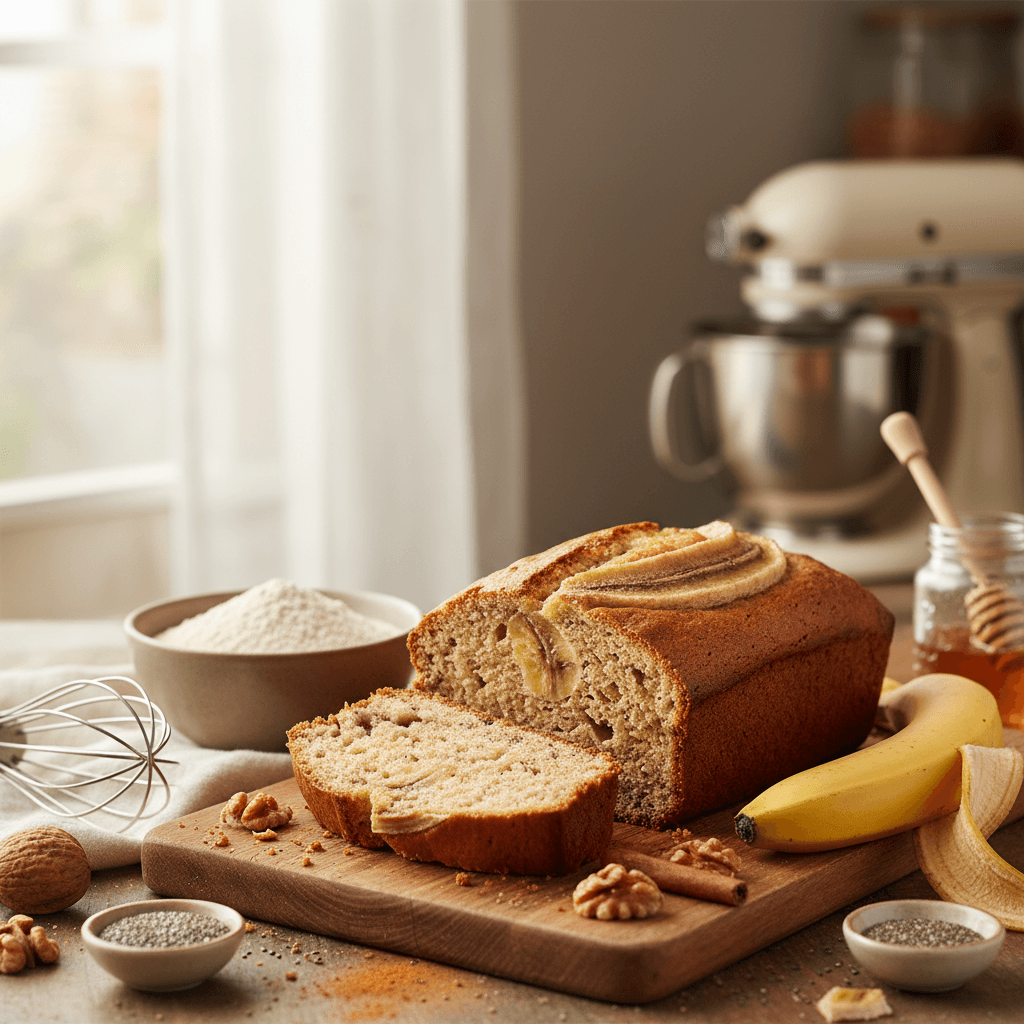
If you've tried gluten-free banana bread and ended up with a gummy brick or a crumbly mess, you're not alone. This guide breaks down five proven recipe approaches, the science behind why they work, and the specific tips and tricks that make the difference between banana bread you tolerate and banana bread you genuinely love.
Key takeaways
- The ripeness of your bananas matters more in gluten-free baking than conventional — overripe bananas provide moisture, natural sugar, and binding that compensate for the lack of gluten.
- Almond flour-based banana bread produces the moistest results, while rice flour blends give you the closest texture to traditional wheat banana bread.
- Xanthan gum and psyllium husk serve different roles — xanthan prevents crumbling, while psyllium adds structure and chew. Choosing the right binder changes everything.
- Gluten-free banana bread almost always needs 10-15 minutes longer in the oven than wheat-based recipes, and an instant-read thermometer is the only reliable way to know when it's done.
- Resting gluten-free banana bread in the pan for at least 15 minutes before turning it out prevents collapse and improves sliceability.
- Weighing your flour with a kitchen scale eliminates the single biggest source of gluten-free baking failures.
Why gluten-free banana bread is different from regular banana bread
Gluten-free banana bread behaves differently because you're removing the protein network that normally traps gas and holds the loaf together. In wheat-based banana bread, gluten does a lot of quiet structural work — it keeps the crumb tender but cohesive, and it helps the loaf hold moisture without becoming gummy. Without it, you need to rebuild that structure using a combination of the right flours, binders, and techniques.
The good news is that banana bread is actually one of the most forgiving places to start with gluten-free baking. The bananas themselves contribute moisture, binding, and natural sweetness, which means you're already partway there before you even think about flour.
Approach 1: all-purpose gluten-free flour blend (the easiest starting point)
A commercial gluten-free flour blend is the simplest swap for all-purpose flour in banana bread. Blends like Bob's Red Mill 1-to-1 or King Arthur Measure for Measure are designed to mimic wheat flour's behavior, so you can often follow a conventional banana bread recipe with minimal changes.
What makes this approach work
These blends typically combine rice flour, potato starch, and tapioca starch in ratios that balance structure, tenderness, and chew. Most include xanthan gum already, so you don't need to add your own binder. The result is a banana bread that tastes and feels familiar — not identical to wheat, but close enough that most people won't notice.
Tips for the best results
- Weigh your flour. A kitchen scale is non-negotiable here. Gluten-free flour blends pack differently than wheat flour, and a cup can vary by 30 grams or more depending on how you scoop. Aim for about 140-145 grams per cup unless the blend's packaging says otherwise.
- If your blend doesn't contain xanthan gum, add 3/4 teaspoon per cup of flour. Check our guide on the best xanthan gum brands for recommendations.
- Let the batter rest for 10 minutes before baking. This gives the starches time to hydrate, which reduces grittiness and improves the crumb.
Common mistakes and how to fix them
Gummy center: This is the number one complaint. It usually means underbaking. Use an instant-read thermometer and pull the bread when the center reads 200-205°F. If you're struggling with this issue across your baking, our gummy centers troubleshooting guide walks through every possible cause.
Dry, crumbly texture: You may need more moisture. Add an extra tablespoon of oil or a splash of milk. Gluten-free flours are thirstier than wheat flour, and banana bread batter should look wetter than you'd expect.
If you want a structured approach to understanding how gluten-free flours, binders, and techniques work together, our Confident Gluten-Free Baker Toolkit walks you through the fundamentals so you can troubleshoot any recipe, not just banana bread.
Approach 2: almond flour banana bread (the moisture champion)
Almond flour produces the moistest, most tender gluten-free banana bread you'll find. Because it's made from ground almonds, it's naturally high in fat and protein, which means it stays soft for days — a major advantage since gluten-free baked goods tend to stale quickly.
What makes this approach work
Almond flour's fat content keeps the crumb from drying out, while the protein from the almonds provides some structure. The flavor is subtle and nutty, which pairs beautifully with banana. Most almond flour banana bread recipes use eggs as the primary binder, which means you often don't need xanthan gum at all.
Tips for the best results
- Use blanched, finely ground almond flour — not almond meal. The finer grind gives you a smoother crumb. We compare several in our almond flour brand comparison.
- Reduce sugar by about 25% compared to a wheat recipe. Almond flour browns faster, and the extra-ripe bananas add plenty of sweetness on their own.
- Add 2 tablespoons of tapioca starch to the batter. This gives the bread a slight chew and helps bind the crumb without making it heavy.
- Bake at 325°F instead of 350°F. The lower temperature prevents the outside from over-browning before the center is cooked through.
Common mistakes and how to fix them
Dense, heavy loaf: Almond flour banana bread will always be denser than a wheat version — that's the nature of nut flour. But if it's unpleasantly heavy, make sure you're beating the eggs well before adding them. Whipped eggs are your primary leavening agent here.
Oily texture: This usually means too much banana or too much added fat. Stick to three medium bananas maximum for a standard loaf, and consider cutting the oil or butter by a tablespoon.
Approach 3: oat flour banana bread (the fiber-rich option)
Oat flour gives gluten-free banana bread a hearty, slightly nutty flavor and a surprisingly tender crumb. It's also one of the cheapest gluten-free flours, and you can make it at home by blending certified gluten-free rolled oats in a food processor or high-powered food processor.
What makes this approach work
Oat flour has more protein and fiber than rice flour, which gives the bread better structure and a more satisfying chew. The beta-glucan fiber in oats also helps retain moisture, so the bread stays soft longer than most gluten-free options. Oat flour absorbs liquid slowly, so the batter thickens as it rests — plan for that.
Tips for the best results
- Always use certified gluten-free oats. Regular oats are frequently cross-contaminated with wheat during processing.
- Let the batter rest for 15-20 minutes before baking. This hydration time is even more important with oat flour than with blends.
- Add 1/2 teaspoon of xanthan gum per cup of oat flour. Oat flour has some binding ability on its own, but it's not enough for a loaf that holds together well when sliced.
- A tablespoon of apple cider vinegar added to the wet ingredients reacts with baking soda to improve the rise and tenderness.
Common mistakes and how to fix them
Gritty texture: Your oat flour isn't ground finely enough. Process it longer, or sift out the larger pieces. Our gritty texture troubleshooting guide covers this in detail.
Flat loaf that doesn't rise: Oat flour is heavier than rice-based blends. Make sure your baking powder is fresh (it loses potency after about 6 months) and consider adding an extra 1/2 teaspoon.
Approach 4: coconut flour banana bread (the low-carb, high-protein option)
Coconut flour is dramatically different from every other gluten-free flour, and using it in banana bread requires a completely different mindset. You cannot simply swap it 1:1 for wheat flour. But when you understand how it works, it produces a surprisingly light, fluffy banana bread that's naturally lower in carbohydrates.
What makes this approach work
Coconut flour is extremely absorbent — it soaks up roughly four times as much liquid as wheat flour. This means you use far less flour (typically 1/3 to 1/4 cup where you'd use a full cup of wheat flour) and far more eggs (often 4-6 eggs per loaf). The eggs provide all the structure and leavening, while the coconut flour provides fiber and a subtle sweetness. For a deeper look at how coconut flour compares to other nut flours, check out our almond flour vs coconut flour comparison.
Tips for the best results
- Follow a recipe specifically designed for coconut flour. Do not try to adapt a wheat or almond flour banana bread recipe — the ratios are too different.
- Sift the coconut flour before measuring. It clumps badly, and clumps lead to dry pockets in the finished bread. A good flour sifter makes this painless.
- Add the eggs one at a time, mixing well after each. This builds the structure gradually and prevents a dense, eggy loaf.
- Use very ripe bananas — the extra moisture and sugar they provide are essential to counterbalance coconut flour's dryness.
Common mistakes and how to fix them
Dry, crumbly bread: You almost certainly need more eggs or more liquid. Coconut flour continues absorbing moisture even after mixing, so the batter should look quite wet before it goes in the oven. See our dry and crumbly troubleshooting page for more solutions.
Strong coconut flavor: Some brands have a more pronounced coconut taste than others. If this bothers you, our coconut flour brand comparison identifies the most neutral-tasting options.
Approach 5: custom flour blend banana bread (the advanced method)
Once you're comfortable with gluten-free baking, building your own flour blend for banana bread gives you complete control over flavor and texture. This is where things get really fun — and where you can produce banana bread that genuinely rivals the wheat version.
A proven custom blend for banana bread
| Flour/starch | Amount (by weight) | Role |
|---|---|---|
| Brown rice flour | 40% | Structure, mild flavor |
| Tapioca starch | 30% | Chew, binding, tenderness |
| Potato starch | 20% | Moisture retention, lightness |
| Almond flour | 10% | Fat, flavor, tender crumb |
What makes this approach work
By combining flours with different properties, you can balance structure, moisture, and flavor in ways that no single flour can achieve. Brown rice flour provides the backbone, tapioca starch adds chew and helps bind the crumb, potato starch keeps things light and moist, and a small amount of almond flour adds richness without making the bread heavy.
Tips for the best results
- Weigh everything. With custom blends, precision matters even more than with commercial blends.
- Add 1 teaspoon of psyllium husk powder per cup of your blend. Psyllium creates a gel that mimics gluten's binding action and gives the bread excellent structure. See our binder comparison guide for more on choosing between psyllium, xanthan, and flax.
- Mix the psyllium into the wet ingredients first and let it gel for 5 minutes before combining with the dry ingredients.
- Make a big batch of your blend and store it in an airtight container. This saves time and ensures consistency across bakes.
Common mistakes and how to fix them
Bread falls apart when sliced: Not enough binder, or the bread wasn't cooled long enough. Let it cool completely in the pan — at least 30 minutes — before attempting to slice. If the problem persists, increase your psyllium by 1/2 teaspoon.
Strange aftertaste: This can come from brown rice flour that's gone rancid (it has a shorter shelf life than white rice flour) or from using too much of a single starch. Our strange aftertaste guide helps you identify the culprit.
Universal tips that apply to every gluten-free banana bread approach
No matter which flour or approach you choose, these tips will improve your results every time.
Get your bananas as ripe as possible
We're talking black-skinned, almost-liquid-inside ripe. At this stage, the starches have fully converted to sugar, which means more sweetness, more moisture, and better binding. If your bananas aren't ripe enough, bake them in their peels at 300°F for 15-20 minutes. They won't be quite as sweet, but the texture will soften enough to work.
Use a loaf pan that fits
An 8.5 x 4.5-inch loaf pan is ideal for most banana bread recipes. A pan that's too large spreads the batter thin, leading to dry bread. Too small, and the center won't cook through. We compare several in our best gluten-free loaf pan roundup.
Don't overmix the batter
This matters even without gluten. Overmixing develops the starches and activates the binders too aggressively, leading to a gummy, tough texture. Mix until just combined — a few lumps are fine.
Check doneness with a thermometer, not a toothpick
A toothpick can come out clean while the center is still underbaked and gummy. An instant-read thermometer reading of 200-205°F at the center is much more reliable. This is especially important for gluten-free banana bread because the batter is naturally wetter.
Cool the bread properly
Let the bread cool in the pan for 15-20 minutes, then transfer to a cooling rack. Cutting too early traps steam inside and creates a gummy crumb. We know it's hard to wait, but this step makes a real difference.
Frequently asked questions
Can you use a regular banana bread recipe and just swap in gluten-free flour?
You can if you use a 1-to-1 gluten-free flour blend that already contains xanthan gum. The results won't be identical, but they'll be close. You may need to add a tablespoon or two of extra liquid since gluten-free flours absorb more moisture. For blends we recommend, see our flour blend comparison.
Why is my gluten-free banana bread gummy in the middle?
The most common cause is underbaking. Gluten-free banana bread takes 10-15 minutes longer than wheat-based recipes. Use an instant-read thermometer and bake until the center reaches 200-205°F. Too much banana or too little binder can also cause gumminess. Our gummy centers guide covers all the causes and fixes.
What is the best gluten-free flour for banana bread?
For beginners, a commercial 1-to-1 blend is the easiest and most reliable choice. For the moistest results, almond flour wins. For the most traditional wheat-like texture, a custom blend of brown rice flour, tapioca starch, and potato starch with psyllium husk produces excellent results.
How do you keep gluten-free banana bread from falling apart?
Make sure you're using enough binder — either xanthan gum (3/4 teaspoon per cup of flour) or psyllium husk powder (1 teaspoon per cup). Let the bread cool completely before slicing, and use a serrated knife with a gentle sawing motion rather than pressing down. If crumbliness is a recurring problem, our dry and crumbly troubleshooting page has detailed solutions.
Can you make gluten-free banana bread without eggs?
Yes. Flax eggs (1 tablespoon ground flax mixed with 3 tablespoons water per egg, rested for 5 minutes) or applesauce (1/4 cup per egg) both work well in banana bread. Since bananas already provide moisture and some binding, egg-free banana bread is more forgiving than other egg-free gluten-free bakes. See our egg substitute guide for more options.

Written by
Co-founder, BakingSubs
Co-founder of BakingSubs, where he turns the science of ingredient substitutions into tested, reliable guidance for home bakers.
Related Posts
Bake with Confidence
See all
Confident Gluten-Free Baker Toolkit
The science-based system that replaces gluten's seven invisible jobs so your baking turns out soft, fluffy, and foolproof — every time.

Gluten-Free Recipe Vault
Instant access to our complete library of proven gluten-free recipes — no waiting, no guesswork, just results that work tonight.

Fix Your Gluten-Free Bread
Learn the 3-step formula to make bread rise and stay soft, discover why your loaves collapse, and get a tested sandwich bread recipe that actually works.