

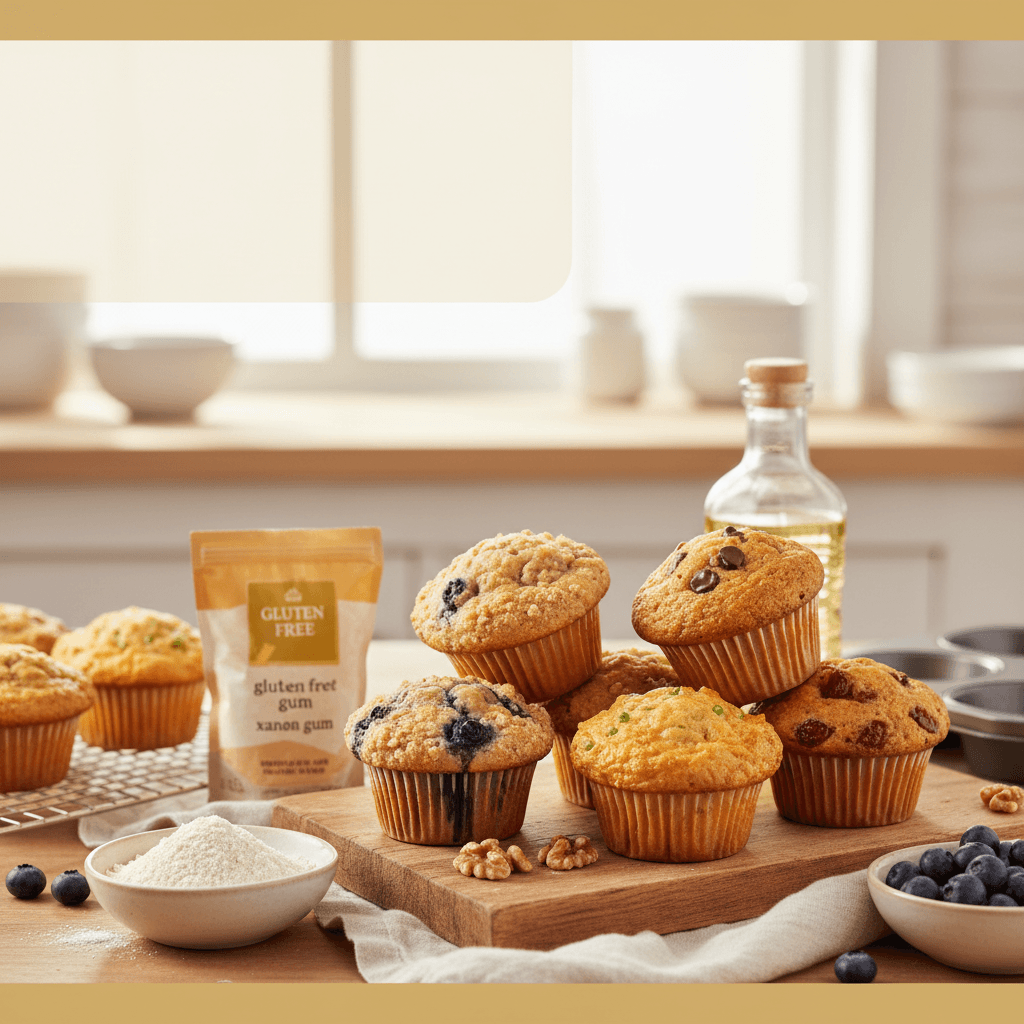
If you've ever batch-baked gluten-free muffins only to find them crumbly, gummy, or stale by Tuesday, you're not alone. The good news: with the right flour combinations, binders, and techniques, gluten-free muffins can be one of the most meal-prep-friendly baked goods you'll make.
Key takeaways
- The best gluten-free muffin recipes for meal prep use a combination of starches and protein-rich flours for structure that holds up after freezing and thawing.
- Xanthan gum or psyllium husk is essential for binding — skip it and your muffins will crumble apart by day two.
- Oil-based muffins freeze and reheat better than butter-based ones because the fat stays soft at lower temperatures.
- Weighing your flour with a kitchen scale eliminates the number-one cause of dense, dry gluten-free muffins.
- Most gluten-free muffins freeze well for up to 3 months when wrapped individually and stored in airtight containers.
- Letting muffins cool completely on a rack before freezing prevents ice crystals and gummy centers on reheating.
Why gluten-free muffins are ideal for meal prep
Muffins are actually one of the easiest gluten-free baked goods to meal prep because they're portioned, quick to bake, and freeze beautifully when made correctly. Unlike gluten-free bread, which can go stale within hours, muffins have enough fat and sugar to retain moisture through a freeze-thaw cycle.
The key is choosing recipe styles that are built for durability — not just fresh-from-the-oven appeal. That means prioritizing ingredients that hold moisture (like applesauce, yogurt, and oil) and structural binders that don't break down over time.
If you're just getting started with gluten-free baking, make sure you have the basics covered. Our gluten-free baking pantry checklist walks you through everything you need on hand before your first batch.
The flour blends that work best for meal-prep muffins
Not all gluten-free flours behave the same way in muffins, and your flour choice has the single biggest impact on whether your muffins survive meal prep or turn into sad, dry pucks. Here's what we've found works best across dozens of batches.
Option 1: use a quality commercial blend
If you want simplicity, a good commercial gluten-free flour blend is the easiest path to consistent muffins. Blends like Bob's Red Mill 1-to-1 or King Arthur Measure for Measure already balance starches and protein flours, so you can swap them into most muffin recipes cup-for-cup.
Option 2: build your own blend for better results
For meal prep specifically, we prefer a custom blend that leans slightly heavier on starches for tenderness. A ratio of 40% brown rice flour, 30% arrowroot powder or tapioca starch, and 30% almond flour produces muffins that stay moist after freezing and don't develop that gritty texture gluten-free bakers dread.
If grittiness has been an issue for you, our guide on fixing gritty texture in gluten-free baking breaks down exactly why it happens and how to prevent it.
| Flour component | Role in muffins | Meal-prep benefit |
|---|---|---|
| Brown rice flour | Structure and mild flavor | Holds shape well after freezing |
| Tapioca starch | Chewiness and binding | Prevents crumbling on day 2-3 |
| Almond flour | Moisture and richness | Keeps muffins soft through thaw cycle |
| Oat flour (certified GF) | Tender crumb and fiber | Absorbs moisture slowly, stays fresh longer |
| Coconut flour | Absorbency and protein | Use sparingly — too much dries muffins out |
Want to go deeper on flour science? The Confident Gluten-Free Baker Toolkit includes our Gluten Replacement Protocol, which shows you exactly how to match flour blends to specific baked goods — including muffins built for freezing.
5 gluten-free muffin styles that freeze and reheat perfectly
Not every muffin recipe is created equal when it comes to meal prep. These five approaches consistently produce muffins that taste nearly as good on day five (or from the freezer) as they do fresh out of the oven.
1. Classic blueberry muffins with a rice flour base
A rice flour and tapioca starch base with oil instead of butter is the gold standard for freezer-friendly muffins. The rice flour provides neutral flavor and structure, while the tapioca starch adds a slight chew that prevents crumbling. Use fresh or frozen blueberries — frozen actually works better for meal prep because the berries release less moisture during baking, which means less sogginess after thawing.
What makes it work: Oil-based batters don't harden when cold the way butter does, so your muffins stay soft straight from the freezer. Add 1 teaspoon of xanthan gum per cup of flour blend for the binding that gluten would normally provide.
Common mistake: Overmixing the batter. Without gluten, you'd think overmixing doesn't matter — but it actually compresses the starches and leads to dense, gummy muffins. Mix until just combined, with a few streaks of flour still visible.
2. Banana oat muffins (naturally moist)
Ripe bananas are a meal-prep baker's best friend. They add natural sweetness, moisture, and binding power that keeps muffins soft for days. Pair them with certified gluten-free oat flour for a tender crumb that reheats beautifully. The natural sugars in banana also help with browning, so you get a nice crust even at moderate oven temperatures.
What makes it work: Banana acts as both a moisture source and a partial egg replacement — its pectin helps bind the batter. You can even reduce the eggs by one in most recipes when using very ripe bananas.
Common mistake: Using bananas that aren't ripe enough. You want them heavily spotted, almost black. Under-ripe bananas don't have enough sugar or pectin to do their job, and you'll end up with dry, bland muffins that stale quickly.
3. Almond flour chocolate chip muffins (grain-free option)
For those avoiding grains entirely, almond flour muffins are a powerhouse for meal prep. The high fat content in almond flour means these muffins stay incredibly moist even after freezing. They're also naturally higher in protein, making them a more filling grab-and-go breakfast.
What makes it work: Almond flour's natural oils act as a built-in moisture insurance policy. Add a small amount of arrowroot powder (about 2 tablespoons per cup of almond flour) to give the crumb a lighter, less dense texture.
Common mistake: Using almond meal instead of finely ground blanched almond flour. Almond meal has the skins ground in, which creates a coarser, grittier texture and doesn't bind as well. For muffins, always use blanched and finely ground. If you're curious about how almond flour compares to other nut-free options, our almond flour vs coconut flour comparison breaks it all down.
4. Pumpkin spice muffins with tapioca starch
Pumpkin puree is another moisture powerhouse that makes gluten-free muffins practically meal-prep-proof. The starch in pumpkin helps create a soft, almost custardy interior that reheats in the microwave without drying out. Use a blend of brown rice flour and tapioca starch for the best texture.
What makes it work: Pumpkin puree is about 90% water, which keeps the crumb hydrated through the freeze-thaw cycle. The warm spices (cinnamon, nutmeg, ginger) also help mask any subtle off-flavors that sometimes develop in frozen gluten-free baked goods.
Common mistake: Grabbing pumpkin pie filling instead of plain pumpkin puree. Pie filling has added sugar and spices that throw off the recipe's balance. Also, don't skip draining excess liquid from the puree — press it through a fine mesh strainer for 10 minutes before using.
5. Savory cheese and herb muffins
Meal prep isn't just about sweet muffins. Savory gluten-free muffins with sharp cheddar, herbs, and a touch of garlic make an excellent side for soups and salads, or a quick snack on their own. Use a commercial flour blend for simplicity, and add grated cheese directly into the batter for pockets of flavor.
What makes it work: The fat from cheese serves double duty — it adds flavor and keeps the muffin moist during storage. Buttermilk in the batter adds tanginess and reacts with baking soda for a better rise.
Common mistake: Adding too much cheese on top, which can burn and become greasy during reheating. Keep most of the cheese inside the batter and only add a light sprinkle on top.
The binder question: xanthan gum vs psyllium husk for muffins
Every gluten-free muffin recipe needs a binder to replace the structural network that gluten normally provides. The two most common options are xanthan gum and psyllium husk, and they behave very differently in muffins.
Xanthan gum is the standard choice for muffins. Use 1/2 to 1 teaspoon per cup of flour. It creates a stretchy, elastic network that holds the muffin together without affecting flavor. For most meal-prep muffins, this is what we recommend. Check out our xanthan gum brand comparison if you need a recommendation.
Psyllium husk works better in bread than muffins, but it can be useful in banana or pumpkin muffins where you want a denser, more bread-like crumb. Use about 1 tablespoon per cup of flour. Be aware that psyllium absorbs a lot of water, so you'll need to increase your liquid slightly.
If you want the full breakdown of how these binders compare, our post on xanthan gum vs psyllium husk vs flax covers the science in detail — the principles apply to muffins too.
How to freeze and reheat gluten-free muffins without ruining them
The baking is only half the battle. How you cool, store, and reheat your muffins determines whether they taste fresh or taste like cardboard.
Cooling properly before freezing
Always cool muffins completely on a wire rack before wrapping. If you wrap them warm, steam gets trapped inside and creates ice crystals in the freezer, which leads to gummy centers when you thaw them. Give them at least 1-2 hours at room temperature.
Wrapping and storage method
Wrap each muffin individually in plastic wrap or beeswax wrap, then place them in a freezer-safe zip-top bag or airtight container. Squeeze out as much air as possible. This prevents freezer burn, which is the main enemy of frozen baked goods. Properly wrapped, gluten-free muffins keep for up to 3 months.
Reheating for best results
For the best texture, thaw muffins overnight in the refrigerator, then warm them in a 300°F oven for 5-8 minutes. The microwave works in a pinch (20-30 seconds on medium power), but it can make the edges rubbery if you overdo it. Never reheat from frozen at high heat — you'll get a scorching hot outside and a frozen center.
Common mistakes that ruin gluten-free meal-prep muffins
We've seen these mistakes derail even experienced bakers. Here's what to watch for:
- Measuring flour by volume instead of weight. Gluten-free flours pack differently than wheat flour, and even a tablespoon too much can make your muffins dense and dry. A good kitchen scale is non-negotiable for consistent results.
- Skipping the binder entirely. Some recipes claim you don't need xanthan gum or psyllium husk. Those recipes are lying. Without a binder, your muffins will crumble apart the moment they cool, and they'll be even worse after freezing.
- Overbaking by even 2-3 minutes. Gluten-free muffins dry out faster than wheat muffins because they lack gluten's moisture-trapping network. Pull them when a toothpick comes out with a few moist crumbs — not completely clean. An oven thermometer helps ensure your oven isn't running hot.
- Not resting the batter. Letting your batter sit for 10-15 minutes before scooping allows the starches to hydrate fully. This single step can transform a gritty, crumbly muffin into one with a smooth, tender crumb.
- Storing muffins in the fridge instead of the freezer. The refrigerator actually accelerates staling in gluten-free baked goods due to starch retrogradation. If you're not eating them within 2 days, go straight to the freezer.
Frequently asked questions
Can you freeze gluten-free muffins for meal prep?
Yes, gluten-free muffins freeze exceptionally well for up to 3 months. The key is cooling them completely before wrapping each muffin individually in plastic wrap, then storing them in an airtight container or freezer bag. Oil-based muffins with moisture-rich ingredients like banana or pumpkin freeze best.
What is the best gluten-free flour for muffins?
A blend of brown rice flour, tapioca starch, and almond flour produces the best texture for gluten-free muffins. You can also use a quality commercial flour blend for convenience. Avoid using a single flour on its own — blends produce a much better crumb and flavor.
Why are my gluten-free muffins dry after freezing?
Dry muffins after freezing usually means they were overbaked before going into the freezer, or they weren't wrapped tightly enough and suffered freezer burn. Pull muffins from the oven when they're still slightly moist in the center, and make sure there's no air in your storage container. Adding moisture-rich ingredients like applesauce or yogurt to the batter also helps.
Do you need xanthan gum in gluten-free muffins?
In most cases, yes. Xanthan gum (or another binder like psyllium husk or guar gum) replaces the structural role of gluten, keeping your muffins from crumbling apart. Use about 1/2 to 1 teaspoon of xanthan gum per cup of gluten-free flour. The only exception is recipes that rely heavily on eggs and almond flour, which can sometimes hold together on their own.
How long do gluten-free muffins last at room temperature?
Gluten-free muffins stay fresh at room temperature for about 2 days when stored in an airtight container. After that, they begin to stale and dry out due to starch retrogradation. For meal prep beyond 2 days, always freeze them rather than refrigerating — the fridge actually makes staling worse.

Written by
Co-founder, BakingSubs
Co-founder of BakingSubs, where he turns the science of ingredient substitutions into tested, reliable guidance for home bakers.
Related Posts
Bake with Confidence
See all
Confident Gluten-Free Baker Toolkit
The science-based system that replaces gluten's seven invisible jobs so your baking turns out soft, fluffy, and foolproof — every time.

Gluten-Free Recipe Vault
Instant access to our complete library of proven gluten-free recipes — no waiting, no guesswork, just results that work tonight.

Fix Your Gluten-Free Bread
Learn the 3-step formula to make bread rise and stay soft, discover why your loaves collapse, and get a tested sandwich bread recipe that actually works.