

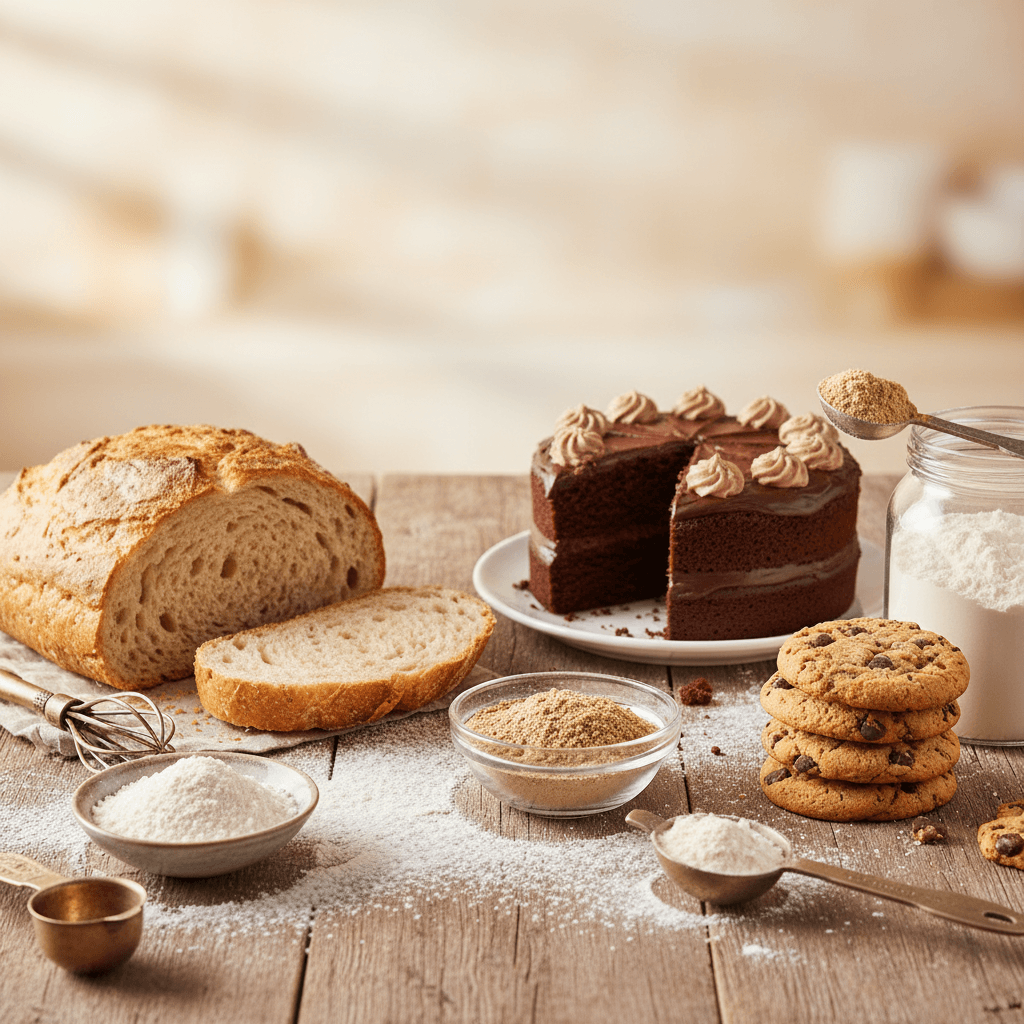
Xanthan gum and guar gum both replace gluten's binding and thickening role in gluten-free baking, but they behave differently depending on what you're making. Here's a clear breakdown of when to reach for each one, and when to combine them.
Key takeaways
- Xanthan gum creates a more elastic, stretchy structure that mimics gluten's chewiness, making it ideal for breads and pizza doughs.
- Guar gum is better at holding moisture and works well in cakes, muffins, and softer baked goods where tenderness matters more than structure.
- Using too much of either gum produces a gummy, slimy texture. Precision matters, so always measure by weight.
- Some bakers combine both gums at reduced amounts for a balance of elasticity and moisture retention.
- Guar gum is generally cheaper and works better for people with corn sensitivities, since xanthan gum is often derived from corn.
- Neither gum is a one-to-one swap for the other. You may need to adjust liquid ratios when switching between them.
What xanthan gum and guar gum actually do in gluten-free baking
Both xanthan gum and guar gum are hydrocolloids, meaning they absorb water and form a gel-like network that traps gas bubbles and holds ingredients together. In gluten-free baking, this is the job that wheat gluten normally handles. Without one of these binders (or another alternative like psyllium husk), your baked goods will crumble apart, spread too much, or collapse.
The key difference is how they form that network. Xanthan gum creates a more elastic, stretchy gel that resists tearing. Guar gum creates a softer, more flexible gel that excels at trapping moisture. This distinction drives every recommendation below.
Xanthan gum vs guar gum: side-by-side comparison
| Property | Xanthan gum | Guar gum |
|---|---|---|
| Source | Fermented sugar (often corn-derived) | Ground guar beans (a legume) |
| Texture effect | Elastic, chewy, stretchy | Soft, tender, moist |
| Best for | Breads, pizza dough, anything needing structure | Cakes, muffins, cookies, pancakes |
| Moisture retention | Moderate | High |
| Elasticity | High | Low to moderate |
| Typical amount per cup of GF flour | 1/2 to 1 tsp | 3/4 to 1-1/2 tsp |
| Allergen concerns | Corn (for corn-sensitive individuals) | Legumes (rare reactions) |
| Price | Higher (roughly $10-15 per 8 oz) | Lower (roughly $6-10 per 8 oz) |
| Cold liquid performance | Works well | Works well |
| Heat stability | Very stable | Slightly less stable at high temps |
If you're just getting started with gluten-free baking and want a solid foundation of essential ingredients and tools, our Confident Gluten-Free Baker Toolkit walks you through exactly what to stock and why.
When to use xanthan gum
Xanthan gum is the better choice when you need structure, elasticity, and chew. It forms a gel that stretches without breaking, which is exactly what bread dough needs to trap carbon dioxide from yeast and rise properly.
Breads and yeasted doughs
For gluten-free sandwich bread, xanthan gum gives you that slightly springy crumb that holds together when you slice it. Without enough elasticity, gluten-free bread tends to be crumbly and dense. Most bread recipes call for about 1 teaspoon of xanthan gum per cup of gluten-free flour blend.
Pizza dough
If you're making gluten-free pizza dough, xanthan gum helps you roll or press the dough without it cracking apart. The elasticity lets you stretch it thin while still holding its shape.
Pastry that needs to hold a shape
For pie crusts and other pastry work where the dough needs to be rolled and handled, xanthan gum provides just enough flexibility to work with the dough without making it tough.
Recommended xanthan gum brands
For a detailed brand-by-brand breakdown, check out our best xanthan gum brands for gluten-free baking comparison. In short:
- Bob's Red Mill Xanthan Gum is the most widely available and a dependable choice. The downside is that it's corn-derived, which matters if you have a corn sensitivity.
- Judee's Xanthan Gum is another solid option that's a bit finer in texture, which helps it incorporate more evenly into flour blends.
When to use guar gum
Guar gum is the better choice when you want a tender, moist crumb and don't need much structural elasticity. It holds onto water exceptionally well, which keeps baked goods from drying out.
Cakes and cupcakes
For gluten-free cakes, guar gum produces a softer, more delicate crumb. Xanthan gum can make cakes feel slightly rubbery if you use too much, but guar gum keeps things tender. Use about 3/4 teaspoon per cup of flour blend.
Muffins and quick breads
Muffins and banana bread benefit from guar gum's moisture retention. These bakes don't need the stretch that yeast breads require, and the extra moisture guar gum holds means they stay fresh longer.
Cookies and pancakes
In cookies and pancakes, guar gum provides enough binding to hold everything together without creating a chewy, bread-like texture. It lets the butter and sugar flavors come through without that slightly gummy quality xanthan gum can introduce in delicate bakes.
Recommended guar gum brands
We compared six brands in our best guar gum for gluten-free baking roundup. The highlights:
- Bob's Red Mill Guar Gum is affordable, widely available, and works reliably. It's a great starting point if you're new to using guar gum.
- NOW Foods Guar Gum is slightly finer ground, which means it disperses more easily and reduces the risk of clumps in your batter.
Can you combine xanthan gum and guar gum?
Yes, and many experienced gluten-free bakers do exactly this. Combining both gums gives you the elasticity of xanthan gum with the moisture retention of guar gum. The trick is to reduce the amount of each so you don't end up with a gummy, heavy result.
A common starting ratio is half the called-for amount of each. So if a recipe calls for 1 teaspoon of xanthan gum, you might try 1/2 teaspoon xanthan gum plus 1/2 teaspoon guar gum. This works especially well for enriched breads like cinnamon rolls where you want softness and structure at the same time.
How flour blends affect your gum choice
The flour blend you use matters just as much as which gum you pick. Some flours absorb more water than others, and that changes how much binding power you need.
Rice flour-based blends
Rice flour is relatively low in protein and doesn't absorb a huge amount of water. Blends built around rice flour (like many commercial all-purpose GF blends) tend to work well with standard gum amounts. If you're using a blend like Bob's Red Mill 1-to-1 or King Arthur Measure for Measure, the gum is already included, so don't add more.
Blends with high-absorption flours
If your blend includes almond flour or coconut flour, be aware that these absorb significantly more liquid. Coconut flour in particular can absorb 3-4 times its weight in liquid. In these blends, guar gum's moisture-holding ability can be especially helpful to prevent dryness. For more on this dynamic, see our almond flour vs coconut flour comparison.
Starch-heavy blends
Blends that rely heavily on arrowroot, tapioca starch, or potato starch and cornstarch need a gum to provide the structural binding that starches alone can't deliver. Xanthan gum is typically the better choice here for breads because starches already contribute tenderness.
How much to use: a quick reference
| Baked good | Xanthan gum per cup GF flour | Guar gum per cup GF flour |
|---|---|---|
| Yeast bread | 1 tsp | 1-1/2 tsp |
| Quick bread / muffins | 3/4 tsp | 1 tsp |
| Cake | 1/2 tsp | 3/4 tsp |
| Cookies | 1/4 to 1/2 tsp | 1/2 to 3/4 tsp |
| Pancakes / waffles | 1/4 tsp | 1/2 tsp |
| Pie crust | 1/2 tsp | 3/4 tsp |
Notice that guar gum amounts are consistently higher. That's because guar gum's binding power per gram is slightly lower than xanthan gum's, so you need a bit more to get the same structural effect.
Precision really matters here. We always recommend measuring gums by weight using a kitchen scale, especially since a quarter teaspoon too much can push your results from perfect to gummy.
Common mistakes when using xanthan gum or guar gum
The most common problem is using too much. If your gluten-free baked goods have a slimy, gummy, or rubbery texture, the gum is almost always the culprit. Here's how to avoid the biggest pitfalls:
- Double-dosing with a pre-blended flour. Many commercial gluten-free flour blends already contain xanthan gum. If your blend lists xanthan or guar gum in the ingredients, don't add more unless the recipe specifically says to.
- Not whisking the gum into dry ingredients first. Both gums clump instantly when they hit liquid. Always whisk them thoroughly into your flour blend before adding any wet ingredients.
- Substituting 1:1 without adjusting. If a recipe calls for xanthan gum and you want to use guar gum instead, increase the amount by about 50%. Going the other direction, reduce by about a third.
- Ignoring the bake type. Using bread-level amounts of gum in a cookie recipe will give you tough, chewy cookies. Match the amount to what you're baking.
If you're troubleshooting texture problems, our guide on gummy centers in gluten-free baking covers the most common causes and fixes.
What about psyllium husk as an alternative?
Psyllium husk powder has become increasingly popular as a third option, especially for bread baking. It creates excellent structure and a more "wheaty" crumb than either gum alone. Many artisan-style gluten-free bread recipes now use psyllium husk instead of xanthan gum entirely.
The tradeoff is that psyllium husk absorbs a lot of water and can give baked goods a slightly purple or grey tinge if you use the wrong brand. It's also not ideal for delicate cakes or cookies where you want a light, airy texture. For a deep dive, see our best psyllium husk for gluten-free bread brand comparison.
Frequently asked questions
Can I substitute guar gum for xanthan gum in gluten-free bread?
You can, but increase the amount by about 50%. If the recipe calls for 1 teaspoon of xanthan gum, use 1-1/2 teaspoons of guar gum. The bread may be slightly softer and less chewy than with xanthan gum, and you might need to reduce liquid slightly since guar gum holds more moisture. For best results in gluten-free bread, many bakers prefer xanthan gum or a combination of both.
Is xanthan gum or guar gum better for gluten-free cookies?
Guar gum is generally better for cookies because it produces a softer, more tender result without the slight chewiness xanthan gum can add. Use about 1/2 to 3/4 teaspoon per cup of flour. If you want a chewier cookie, xanthan gum at 1/4 to 1/2 teaspoon per cup works well. Check out our best gluten-free cookie recipes for beginners for specific ratios.
Why does my gluten-free baking taste gummy or slimy?
Too much gum is the most common cause. Even a small excess can create a gummy, slimy texture. Always measure by weight rather than volume, and check whether your flour blend already contains a gum before adding more. Our guide on gummy centers walks through all the possible causes.
Can I skip xanthan gum and guar gum entirely?
In some recipes, yes. Brownies, for example, often work fine without any gum because eggs and fat provide enough binding. Psyllium husk powder is another option, especially for bread. But for most gluten-free baking, you need some kind of binder to replace gluten's structural role. Skipping it entirely in cakes or bread usually results in a crumbly mess.
Is xanthan gum safe for people with corn allergies?
Most commercial xanthan gum is produced by fermenting sugar derived from corn, wheat, or soy. While the final product is highly purified and generally considered safe, some people with severe corn sensitivities report reactions. If corn is a concern, guar gum is a good alternative since it comes from guar beans. Look for xanthan gum brands that specify non-corn sources if you want to try both.

Written by
Co-founder, BakingSubs
Co-founder of BakingSubs, where he turns the science of ingredient substitutions into tested, reliable guidance for home bakers.
Related Posts
7 Common Healthy Baking Mistakes That Ruin Texture (and How to Fix Each One)
7 Texture Changes With Health Swaps That Catch Bakers Off Guard (and How to Handle Each One)

Gluten-Free Flour Weight Chart: Grams per Cup for 9 Major Brands (and Why the Spread Is Over 20%)
Bake with Confidence
See all
Confident Gluten-Free Baker Toolkit
The science-based system that replaces gluten's seven invisible jobs so your baking turns out soft, fluffy, and foolproof — every time.

Gluten-Free Recipe Vault
Instant access to our complete library of proven gluten-free recipes — no waiting, no guesswork, just results that work tonight.

Fix Your Gluten-Free Bread
Learn the 3-step formula to make bread rise and stay soft, discover why your loaves collapse, and get a tested sandwich bread recipe that actually works.