

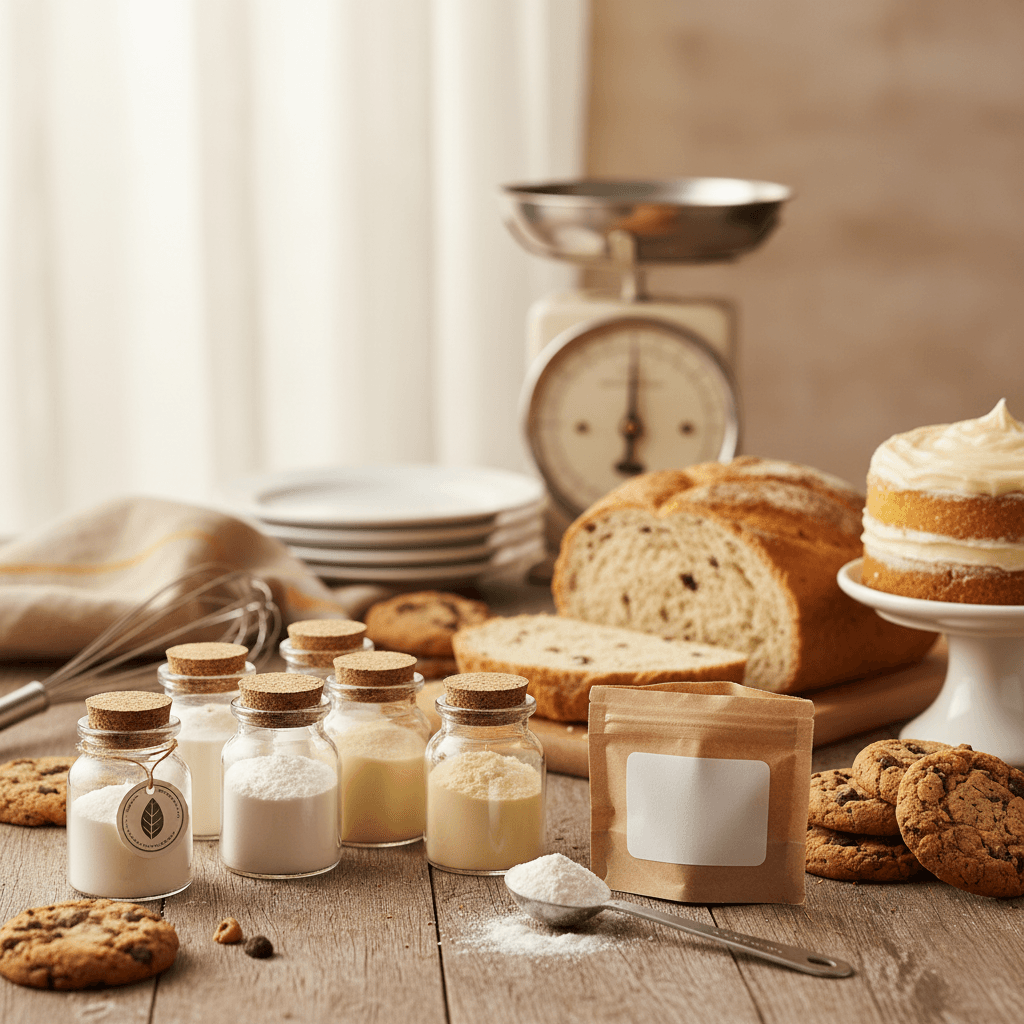
Guar gum is one of the most reliable binders for gluten-free baking, but the brand you choose makes a real difference in how your bread rises, how your cookies hold together, and whether you get that weird gritty texture nobody wants. We compared six popular guar gum products available on Amazon on certification, grind, packaging, and price to help you find the right one for your kitchen.
Key takeaways
- Bob's Red Mill is the best overall guar gum for most gluten-free home bakers due to its consistent grind, wide availability, and certified gluten-free status.
- Guar gum works best in cold applications and recipes with dairy or high-fat content, while xanthan gum tends to perform better in lean breads.
- You need very little guar gum per recipe — typically 1/4 to 1 teaspoon per cup of gluten-free flour, depending on what you're baking.
- Always check for certified gluten-free labeling, as some guar gum products are processed in facilities that also handle wheat.
- Price per ounce varies dramatically between brands — buying in bulk can save you over 50% compared to small pouches.
- Guar gum has a shorter effective shelf life than most bakers realize; store it sealed in a cool, dry place and use within 12 months of opening.
What to look for when buying guar gum for baking
The most important factor is the mesh rating, which tells you how finely the guar gum has been ground. A higher mesh number (200 mesh or above) means a finer powder that dissolves more smoothly in batters and doughs. Coarser grinds can leave tiny lumps or a gritty mouthfeel, especially in delicate baked goods like muffins and cakes.
Beyond fineness, you want to check for certified gluten-free status. Guar gum itself is naturally gluten-free — it comes from guar beans — but cross-contamination during processing is a real concern. If you're baking for someone with celiac disease, look for third-party testing or a certified gluten-free seal on the label.
Finally, consider the packaging. Guar gum absorbs moisture from the air, which degrades its binding power over time. Resealable bags or jars with tight-fitting lids will keep your guar gum effective much longer than flimsy packaging. If you're setting up a dedicated gluten-free baking kitchen, having a reliable supply of fresh guar gum is essential.
Our top 6 guar gum picks compared
Here's a side-by-side look at the six products we compared, followed by detailed reviews of each one.
| Product | Size | Certified GF | Mesh rating | Best for | Price range |
|---|---|---|---|---|---|
| Bob's Red Mill Guar Gum | 8 oz | Yes | 200+ | All-around baking | $8-$12 |
| NOW Foods Guar Gum Powder | 8 oz | No (GF labeled, not certified) | 200+ | Budget-friendly option | $6-$9 |
| Anthony's Guar Gum Powder | 8 oz / 1 lb | Yes (batch tested) | 200+ | Bulk buying | $7-$14 |
| Judee's Guar Gum Powder | 11.25 oz | Yes (dedicated facility) | 200+ | Allergy-sensitive baking | $10-$14 |
| Kate Naturals Guar Gum | 8 oz | No (GF labeled) | Not specified | Occasional bakers | $8-$11 |
| Landor Trading Guar Gum | 2 lb | No | 200+ | High-volume baking | $14-$18 |
If you're still building out your gluten-free baking pantry, our Confident Gluten-Free Baker Toolkit walks you through exactly which ingredients and tools to stock so you're never guessing.
Best overall: Bob's Red Mill guar gum
Bob's Red Mill Guar Gum is our top pick for most gluten-free home bakers. It delivers a consistently fine grind, dissolves smoothly in both cold and warm mixtures, and carries a certified gluten-free label backed by third-party testing.
It's suited to everything from sandwich bread to chocolate chip cookies. The 8-ounce pouch lasts a surprisingly long time since you're using such small amounts per recipe. The resealable bag isn't the sturdiest, so we recommend transferring it to an airtight container after opening.
Pros:
- Certified gluten-free with third-party testing
- Very fine, consistent grind — no grittiness
- Widely available in stores and online
- Trusted brand with a long track record in gluten-free baking
Cons:
- Slightly more expensive per ounce than some competitors
- Bag could be more durable
Best budget option: NOW Foods guar gum powder
NOW Foods Guar Gum Powder is a solid choice if you're watching your budget. The grind quality is comparable to Bob's Red Mill, and it performs well in most baking applications. The main trade-off is that while it's labeled gluten-free, it doesn't carry a certified gluten-free seal from a third-party organization.
For most home bakers, this won't be an issue. But if you're baking for someone with celiac disease or severe gluten sensitivity, the lack of certified testing is worth noting. NOW Foods does test their products, but the level of assurance isn't quite the same as a dedicated certification.
Pros:
- Excellent price per ounce
- Fine, smooth powder
- Reputable supplement brand with quality controls
Cons:
- Not certified gluten-free by a third party
- Packaging is basic
Best for allergy-sensitive baking: Judee's guar gum powder
Judee's Guar Gum Powder stands out because it's processed in a dedicated gluten-free, nut-free, soy-free facility. If you're baking for someone with multiple food allergies, this is the safest option on our list. The powder is exceptionally fine and works beautifully in everything from gluten-free muffins to pie crusts.
The 11.25-ounce size is a nice touch — slightly more product than most competitors at a reasonable price point. Judee's also provides batch-specific allergen testing results, which gives extra peace of mind.
Pros:
- Processed in a dedicated allergen-free facility
- Certified gluten-free
- Very fine grind with excellent dissolving properties
- Slightly larger container than standard
Cons:
- Higher price per ounce than budget options
- Less widely available in physical stores
Best for bulk buying: Anthony's guar gum powder
Anthony's Guar Gum Powder is a great value when you buy the 1-pound bag. If you bake frequently — especially gluten-free breads that need consistent binding — buying in bulk saves you a significant amount over time. Anthony's batch-tests for gluten and the powder quality is on par with the more expensive brands.
It also comes in a sturdy, resealable bag, which matters since a pound of guar gum will last most home bakers quite a while.
Pros:
- Excellent price per ounce in the 1 lb size
- Batch tested for gluten
- Durable, resealable packaging
- Fine, consistent grind
Cons:
- A pound is a lot if you only bake occasionally
- Not processed in a dedicated gluten-free facility
Other options worth considering
Kate Naturals guar gum
Kate Naturals Guar Gum is a decent mid-range option. It's labeled gluten-free but not certified, and the mesh rating isn't specified on the packaging. The grind may be slightly less fine than Bob's Red Mill or Judee's, which can occasionally show up as a subtle texture difference in very delicate bakes. It works perfectly fine in heartier recipes like bread and pizza dough.
Landor Trading guar gum
Landor Trading Guar Gum is the most economical option if you go through a lot of guar gum. The 2-pound bag is priced competitively, and the 200+ mesh grind is smooth. However, it doesn't carry any gluten-free certification, and the brand is less established in the baking community. We'd recommend this for experienced bakers who are comfortable evaluating product quality themselves.
Guar gum vs xanthan gum: which should you use?
This is one of the most common questions in gluten-free baking, and the honest answer is that both work well — but in slightly different situations. Guar gum tends to perform better in cold recipes (like ice cream or no-bake desserts) and in recipes with higher fat content. Xanthan gum generally gives better structure in lean breads and recipes that rely heavily on rise.
Many experienced gluten-free bakers keep both on hand and use them interchangeably depending on the recipe. For a deep dive into how these binders compare, check out our guide on xanthan gum vs psyllium husk and our overview of 5 gluten-free binders that actually work.
If your bread is falling apart or crumbling despite using a binder, the issue might not be which gum you're using — it could be how much. Our guide to fixing crumbly gluten-free bread covers the most common causes.
How much guar gum to use per cup of gluten-free flour
The amount of guar gum you need depends entirely on what you're baking. Too little and your baked goods fall apart; too much and you get a gummy, unpleasant texture. Here's a quick reference:
| Baked good | Guar gum per cup of GF flour |
|---|---|
| Cookies and bars | 1/4 to 1/2 teaspoon |
| Cakes and cupcakes | 1/2 to 3/4 teaspoon |
| Muffins and quick breads | 3/4 teaspoon |
| Yeast breads | 3/4 to 1 teaspoon |
| Pizza dough | 1 teaspoon |
We always recommend weighing your guar gum with a good kitchen scale rather than relying solely on measuring spoons. Small differences in guar gum quantity can have an outsized effect on texture.
Common mistakes when using guar gum
Even with the best product, technique matters. Here are the most common mistakes:
Using too much. This is the number one error. Excess guar gum creates a heavy, gummy texture that's particularly noticeable in cakes and muffins. Start with the lower end of the recommended range and increase only if needed.
Not whisking it into the dry ingredients first. Guar gum clumps when it hits liquid directly. Always whisk it thoroughly into your flour blend before adding any wet ingredients. A good flour sifter makes this even easier.
Using expired or poorly stored guar gum. Guar gum loses its binding power over time, especially if exposed to moisture. If your baked goods are suddenly falling apart with the same recipe that used to work, your guar gum might be past its prime.
Treating it as a 1:1 swap for xanthan gum. While they serve similar purposes, guar gum is roughly twice as strong as xanthan gum by volume. If a recipe calls for 1 teaspoon of xanthan gum, start with 1/2 teaspoon of guar gum and adjust from there.
If you're running into texture issues despite using guar gum correctly, our complete texture troubleshooting guide can help you pinpoint the real problem.
Frequently asked questions
Is guar gum better than xanthan gum for gluten-free baking?
Neither is universally better — they excel in different situations. Guar gum works especially well in cold applications and high-fat recipes like cookies and pastries. Xanthan gum tends to provide better structure in lean yeast breads. Many gluten-free bakers keep both on hand. For a detailed comparison of binder options, see our guide to the best binders for gluten-free bread.
How much guar gum do I use per cup of gluten-free flour?
For cookies, use 1/4 to 1/2 teaspoon per cup of flour. For cakes and muffins, use 1/2 to 3/4 teaspoon. For yeast breads and pizza dough, use 3/4 to 1 teaspoon. Always start at the lower end and increase only if your baked goods aren't holding together well enough.
Can guar gum cause digestive issues?
In the small amounts used in baking (typically less than a teaspoon per entire recipe), guar gum is well-tolerated by most people. However, guar gum is a soluble fiber, and some individuals — particularly those with IBS or sensitive digestive systems — may notice bloating or discomfort. If this is a concern, psyllium husk is an alternative binder worth exploring.
Does guar gum expire or go bad?
Guar gum doesn't spoil in the traditional sense, but it does lose its binding effectiveness over time. An unopened package stored in a cool, dry place is good for about two years. Once opened, aim to use it within 12 months. If your gluten-free baked goods are suddenly crumbling with a recipe that used to work, stale guar gum is a likely culprit.
Is all guar gum gluten-free?
Guar gum is derived from guar beans and is naturally gluten-free. However, cross-contamination during manufacturing is possible if the product is processed in a facility that also handles wheat. If you have celiac disease, look for products with certified gluten-free labeling, such as Bob's Red Mill or Judee's.

Written by
Co-founder, BakingSubs
Co-founder of BakingSubs, where he turns the science of ingredient substitutions into tested, reliable guidance for home bakers.
Related Posts
Bake with Confidence
See all
Confident Gluten-Free Baker Toolkit
The science-based system that replaces gluten's seven invisible jobs so your baking turns out soft, fluffy, and foolproof — every time.

Gluten-Free Recipe Vault
Instant access to our complete library of proven gluten-free recipes — no waiting, no guesswork, just results that work tonight.

Fix Your Gluten-Free Bread
Learn the 3-step formula to make bread rise and stay soft, discover why your loaves collapse, and get a tested sandwich bread recipe that actually works.