
Best gluten-free pie crust recipes from scratch: 5 approaches that actually work
Discover 5 proven gluten-free pie crust recipes from scratch, from classic rolled crusts to almond flour press-ins. Learn which flours, binders, and techniques actually work.

Malik
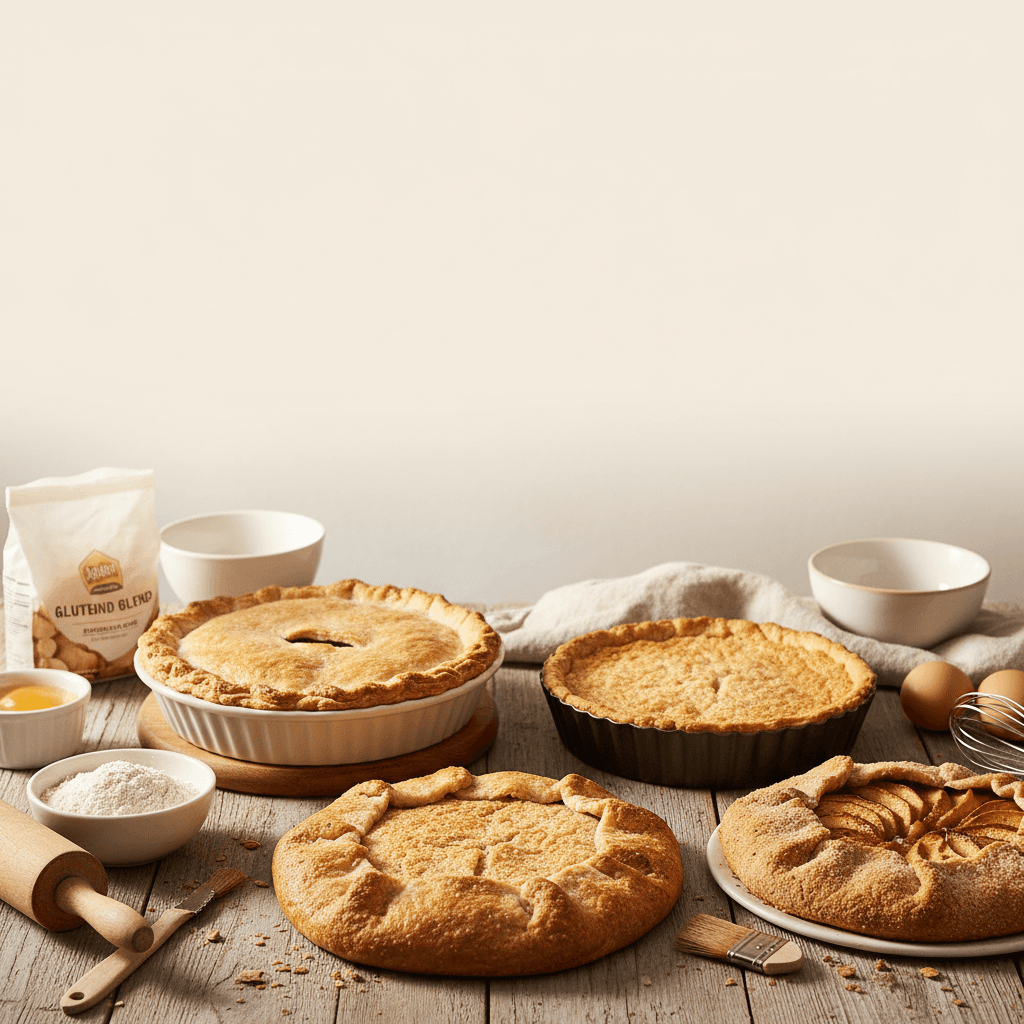
If you've ever pulled a gluten-free pie out of the oven only to find a crust that crumbles into dust or tastes like cardboard, you're not alone. We've tested dozens of approaches, and the truth is that great gluten-free pie crust absolutely exists — you just need the right flour combination, the right fat, and the right technique. Here are five proven approaches that deliver real, flaky, tender results.
Key takeaways
- The best gluten-free pie crusts use a blend of flours and starches rather than a single flour — this mimics the texture range that wheat provides.
- Cold fat is non-negotiable. Whether you use butter, lard, or shortening, it must stay cold to create flaky layers.
- Xanthan gum or psyllium husk acts as the structural binder that replaces gluten's role in holding the dough together.
- Almond flour pie crusts work beautifully for press-in styles but behave differently than rolled crusts — choose your approach based on the pie.
- Resting gluten-free pie dough in the fridge for at least 30 minutes makes it dramatically easier to roll and prevents cracking.
- Blind baking with pie weights is even more important for gluten-free crusts because they're more prone to slumping.
Why gluten-free pie crust is different from regular pie crust
In a traditional pie crust, gluten does two things: it creates an elastic network that holds the dough together when you roll it, and it provides the slight chewiness that makes a crust feel substantial rather than sandy. Without gluten, you need to replace both of those functions — structure and texture — using different tools.
That's where xanthan gum, psyllium husk, and egg all come in. Each one provides binding in a slightly different way, and the best recipes use at least one of them deliberately. The flour blend matters too: a mix of a protein-rich flour (like rice flour or sorghum), a starch (like tapioca or potato starch), and sometimes a nut flour gives you the closest approximation to wheat's complex texture.
Approach 1: Classic rolled pie crust with a rice flour blend
This is the most traditional approach and produces the closest thing to a standard all-butter pie crust. The base is typically a combination of white rice flour, tapioca starch, and potato starch — essentially the same ratio used in many commercial gluten-free flour blends.
What makes it work
Rice flour provides the bulk and a neutral flavor. Tapioca starch adds a slight chewiness and helps with browning. Potato starch contributes tenderness and moisture retention. Together, they create a dough that can actually be rolled out, transferred to a pie plate, and crimped.
You'll need about half a teaspoon of xanthan gum per cup of flour blend to hold everything together. Too much and the crust gets gummy; too little and it falls apart when you try to move it. If you're unsure which brand to use, we've done a full comparison in our best xanthan gum brands roundup.
The technique that matters most
Cut cold butter into the flour mixture until you have pea-sized pieces — a food processor works great here, but a pastry cutter is fine too. Add ice water one tablespoon at a time until the dough just comes together. Then wrap it in plastic, press it into a disc, and refrigerate for at least 30 minutes.
Roll the dough between two sheets of parchment paper. This is the single biggest tip we can give you — gluten-free pie dough sticks to everything, and good parchment paper eliminates that problem entirely. If the dough cracks while rolling, let it warm up for 2-3 minutes and press the cracks together with your fingers.
Common mistakes and how to fix them
| Problem | Cause | Fix |
|---|---|---|
| Dough crumbles when rolling | Too dry or too cold | Add ice water 1 tsp at a time; let dough warm slightly |
| Crust is tough and chewy | Too much xanthan gum or overworked dough | Reduce xanthan to 1/2 tsp per cup flour; handle less |
| Crust shrinks during blind baking | Not enough resting time; no pie weights | Chill at least 30 min; use pie weights or dried beans |
| Gritty texture | Coarse rice flour | Use finely ground rice flour or sift before measuring |
That gritty texture issue is one of the most common complaints in gluten-free baking. If you're experiencing it, our guide on fixing gritty texture in gluten-free baking goes deep on the causes and solutions.
If you want a reliable foundation for this kind of baking — and you're tired of guessing at ratios — our Confident Gluten-Free Baker Toolkit walks you through flour blend formulation and binder ratios so you can adapt any pie crust recipe with confidence.
Approach 2: Almond flour press-in crust
This is the easiest gluten-free pie crust you can make, and it's naturally grain-free too. An almond flour crust is pressed directly into the pie plate — no rolling required — and bakes up with a rich, slightly nutty flavor that pairs beautifully with custard pies, cheesecakes, and fruit tarts.
What makes it work
Almond flour is high in fat and protein, which means it binds well on its own with just a little help from an egg or some melted butter. The fat content also makes it naturally tender. You typically need about 1.5 cups of almond flour, 2-3 tablespoons of melted butter or coconut oil, a pinch of salt, and optionally a tablespoon of sugar.
The key is using finely ground, blanched almond flour — not almond meal. Almond meal has the skins still on and a coarser grind, which produces a gritty, crumbly crust. We compared the top options in our best almond flour for baking guide if you need help choosing.
Best uses for this crust
Press-in almond flour crusts are perfect for pies where you blind bake the crust first and then add the filling — think pumpkin pie, key lime pie, chocolate cream pie, or any custard-based pie. They're less ideal for double-crust fruit pies because they can't be rolled or draped.
Common mistakes
The biggest mistake is overbaking. Almond flour browns quickly because of its fat and sugar content, so keep a close eye on it after the 10-minute mark. If the edges are getting too dark, tent with foil. Also, don't skip the par-bake step for custard pies — an unbaked almond crust under a wet filling turns soggy fast.
Approach 3: Sorghum and oat flour flaky crust
If you want a pie crust with more depth of flavor than a plain rice flour blend, sorghum flour combined with certified gluten-free oat flour is an excellent option. This approach produces a crust with a slightly wheaty, toasty flavor that many people find closer to a traditional wheat crust than any other gluten-free version.
What makes it work
Sorghum flour has a mild, slightly sweet flavor and a protein content that helps with structure. Oat flour adds softness and a familiar baked-goods taste. Combined with tapioca starch for elasticity and a binder like xanthan gum or psyllium husk, this blend rolls out surprisingly well.
A typical ratio is 1 cup sorghum flour, 1/2 cup oat flour, 1/2 cup tapioca starch, and 1/2 teaspoon xanthan gum. Use cold butter cut into the flour, just like the classic approach above.
Important note on oats
If you're celiac, make absolutely sure your oat flour is certified gluten-free. Regular oats are almost always cross-contaminated with wheat during processing. This is a real safety concern, not just a preference. Our guide to setting up a gluten-free baking kitchen covers cross-contamination in more detail.
Common mistakes
Sorghum flour can taste slightly bitter if used in too high a proportion. Keep it as the primary flour but balance it with the oat flour and starch. If you notice a slight aftertaste, try reducing the sorghum by a couple of tablespoons and replacing it with more tapioca starch.
Approach 4: Coconut flour crust for grain-free and paleo baking
Coconut flour pie crust is a bit of a different animal. Coconut flour absorbs an enormous amount of liquid — roughly four times what other flours absorb — so the ratios look completely different from any other pie crust recipe. But when done right, it produces a tender, slightly sweet crust that works wonderfully for tropical-flavored pies and cream pies.
What makes it work
Because coconut flour is so absorbent, you use far less of it — typically only 1/3 to 1/2 cup for a full pie crust. You'll need 2-3 eggs to provide both moisture and binding, plus a generous amount of fat (butter or coconut oil). The eggs are doing the heavy lifting here in terms of structure, so this is not an approach that adapts well to egg-free baking without significant changes. If you're exploring egg substitutes, our guide to choosing egg substitutes can help you understand the tradeoffs.
Common mistakes
The most common mistake is using too much coconut flour, which produces a dry, crumbly crust that tastes like sawdust. Measure by weight if possible — a kitchen scale is genuinely essential here because coconut flour compacts dramatically in a measuring cup. Also, let the batter rest for 5 minutes before pressing it into the pan so the flour can fully hydrate.
Approach 5: Commercial flour blend pie crust (the shortcut that works)
If you don't want to blend your own flours, using a high-quality commercial gluten-free flour blend is a completely legitimate approach. Many experienced gluten-free bakers use blends for pie crust because the ratios are already optimized and the results are consistent.
Which blends work best for pie crust
Look for a blend that contains both a base flour (rice flour is most common) and at least one starch (tapioca, potato, or cornstarch). Blends that already include xanthan gum save you a step, but if yours doesn't, add 1/2 teaspoon per cup. Bob's Red Mill 1-to-1 and King Arthur Measure for Measure are two of the most widely available options that work well for pie crust specifically.
The technique adjustment
The only real change from a standard pie crust recipe is adding slightly more liquid. Gluten-free flour blends tend to be thirstier than wheat flour, so start with the amount of ice water the recipe calls for and expect to add 1-2 extra tablespoons. The dough should hold together when you squeeze a handful without being sticky.
Common mistakes
Don't just swap a gluten-free blend into a wheat pie crust recipe one-to-one without any other adjustments. You'll almost certainly need more fat and more liquid. And always check whether your blend already contains xanthan gum before adding more — doubling up on xanthan is one of the fastest ways to end up with a rubbery, unpleasant crust.
Universal tips for better gluten-free pie crust
No matter which approach you choose, these techniques apply across the board:
- Weigh your ingredients. Gluten-free flours vary wildly in density. A cup of rice flour can weigh anywhere from 120g to 160g depending on how you scoop it. A scale removes all that guesswork.
- Keep everything cold. Cold butter, cold water, cold bowl. If your kitchen is warm, chill the flour too. Cold fat creates steam pockets during baking, which is what makes crust flaky.
- Don't skip the rest. Gluten-free dough needs time in the fridge to hydrate fully. Skip this step and you'll fight cracking the entire time you're rolling.
- Blind bake properly. Line the crust with parchment, fill with pie weights or dried beans, and bake at 375F for 15 minutes before removing the weights. This prevents the bottom from being soggy and the sides from slumping.
- Use an oven thermometer. Pie crust is sensitive to temperature. If your oven runs 25 degrees hot, your crust will brown too fast on the outside while staying raw inside. An accurate oven thermometer is a small investment that makes a big difference.
Which approach should you choose?
| Approach | Best for | Difficulty | Dietary notes |
|---|---|---|---|
| Rice flour blend (rolled) | Traditional double-crust pies, fruit pies | Moderate | Can be dairy-free with shortening |
| Almond flour (press-in) | Custard pies, cheesecakes, tarts | Easy | Grain-free, low-carb friendly |
| Sorghum and oat flour | Savory pies, quiche, pot pies | Moderate | Must use certified GF oats |
| Coconut flour | Cream pies, tropical pies | Moderate | Grain-free, paleo |
| Commercial blend | Any pie, convenience baking | Easy | Varies by blend |
If you're just starting out with gluten-free pie baking, we'd suggest beginning with either the almond flour press-in crust (for sheer ease) or the commercial blend approach (for the most traditional result with the least fuss). Once you're comfortable, experimenting with custom flour blends opens up a whole new level of flavor and texture control.
Frequently asked questions
Can you make gluten-free pie crust without xanthan gum?
Yes. Psyllium husk powder is an excellent alternative binder for pie crust — use about 1 teaspoon per cup of flour. Almond flour press-in crusts don't need any added binder at all because the egg and fat hold them together. Our binder comparison guide breaks down how each option performs in different baked goods.
Why does my gluten-free pie crust crack when I roll it?
Cracking usually means the dough is either too dry or too cold. Add ice water one teaspoon at a time until the dough holds together when squeezed. If it's been in the fridge too long, let it sit at room temperature for 5 minutes before rolling. Rolling between parchment paper also helps because it applies more even pressure than a rolling pin on a floured surface.
Do I need to blind bake a gluten-free pie crust?
For custard pies, cream pies, and any filling that's wet or cooks quickly, yes — blind baking is essential. Gluten-free crusts absorb moisture faster than wheat crusts, so an unbaked bottom will turn soggy. For fruit pies with a long bake time, you can skip blind baking, but placing the pie on a preheated baking sheet helps the bottom crust cook through.
What is the best gluten-free flour for pie crust?
There's no single best flour — the best results come from a blend. A combination of white rice flour, tapioca starch, and potato starch in a 2:1:1 ratio is the most versatile starting point. For a richer flavor, substitute some of the rice flour with sorghum flour.
Can I freeze gluten-free pie crust dough?
Absolutely. Wrap the dough disc tightly in plastic wrap and then foil, and freeze for up to 3 months. Thaw overnight in the refrigerator before rolling. You can also freeze an already-rolled crust in the pie plate — just wrap the whole thing well. Frozen crusts can go directly from the freezer to the oven for blind baking without thawing first.

Written by
Co-founder, BakingSubs
Co-founder of BakingSubs, where he turns the science of ingredient substitutions into tested, reliable guidance for home bakers.
Related Posts
Bake with Confidence
See all
Confident Gluten-Free Baker Toolkit
The science-based system that replaces gluten's seven invisible jobs so your baking turns out soft, fluffy, and foolproof — every time.

Gluten-Free Recipe Vault
Instant access to our complete library of proven gluten-free recipes — no waiting, no guesswork, just results that work tonight.

Fix Your Gluten-Free Bread
Learn the 3-step formula to make bread rise and stay soft, discover why your loaves collapse, and get a tested sandwich bread recipe that actually works.