

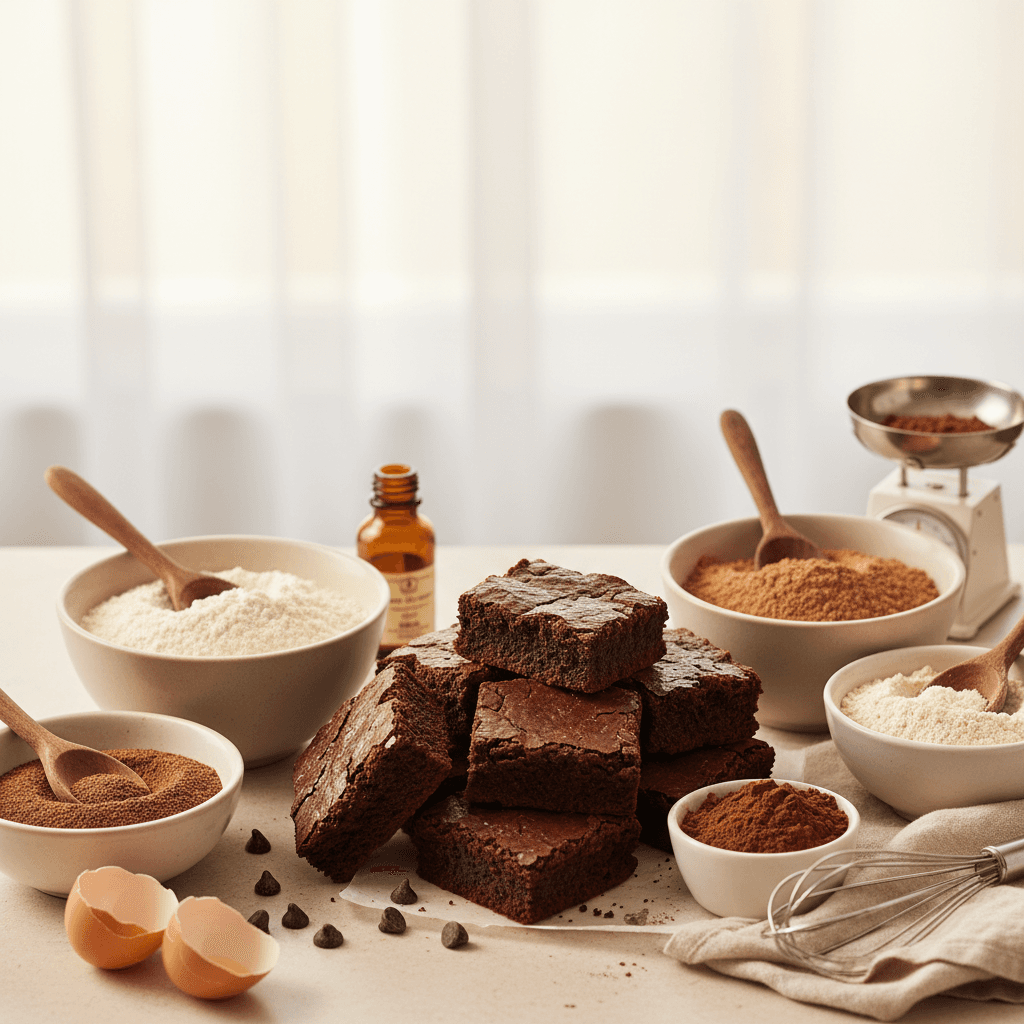
Choosing the right flour is the single biggest factor in whether your gluten-free brownies turn out fudgy and rich or dry and crumbly. We've compared the most common flours and blends specifically for brownies, and the differences are dramatic.
Here's exactly which flours work, which ones don't, and why — so you can nail it on your first try.
Key takeaways
- Brownies are one of the most forgiving gluten-free bakes because they rely on fat and eggs for structure more than flour.
- A good all-purpose gluten-free blend (like Bob's Red Mill 1-to-1 or King Arthur Measure for Measure) is the easiest starting point for consistent results.
- Almond flour produces naturally fudgy, moist brownies and works especially well in grain-free recipes.
- Avoid high-absorption flours like coconut flour as your primary flour — they'll suck the moisture right out of your batter.
- Starches like arrowroot and tapioca help create that coveted crackly top and chewy interior when blended with other flours.
- Weighing your flour with a kitchen scale matters even more in brownies because small measurement differences change the fudgy-to-cakey ratio significantly.
Why flour choice matters more for brownies than most bakes
Brownies sit in a sweet spot between cake and fudge, and the flour you choose shifts that balance dramatically. Unlike bread or even cookies, brownies use relatively little flour compared to fat and sugar. That means every property of your flour — its protein content, starch ratio, and how much liquid it absorbs — gets amplified.
A flour that absorbs too much moisture will push your brownies toward dry and cakey. One that contributes too little structure will leave you with a gooey puddle that never sets. The goal is a flour that provides just enough body while letting the butter and chocolate do the heavy lifting.
If you're new to gluten-free baking and want to get your pantry sorted before diving into brownies, our Confident Gluten-Free Baker Toolkit walks you through exactly which ingredients and tools you need — no guesswork required.
Best gluten-free flours for brownies ranked
We compared each flour based on how its starch, fat, protein, and absorption behave in a standard brownie recipe (butter, sugar, eggs, cocoa, chocolate, and flour). Here's how they stack up.
| Flour | Best for | Texture | Ease of use |
|---|---|---|---|
| All-purpose GF blend | Easiest 1:1 swap | Classic chewy-fudgy | Beginner-friendly |
| Almond flour | Grain-free, extra fudgy | Dense, moist, rich | Easy (different ratios) |
| Oat flour (GF certified) | Mild flavor, soft crumb | Tender, slightly cakey | Easy |
| Brown rice flour + starch blend | DIY control | Chewy with crackly top | Intermediate |
| Cassava flour | Nut-free, grain-free | Chewy, slightly stretchy | Intermediate |
| Buckwheat flour | Earthy, complex flavor | Fudgy, deep flavor | Intermediate |
| Coconut flour | Low-carb (with adjustments) | Cakey if not careful | Advanced |
All-purpose gluten-free blends: the easiest path to great brownies
A pre-made all-purpose gluten-free blend is the most reliable choice for brownies, especially if you're following a recipe that originally calls for regular all-purpose flour. These blends are engineered to mimic wheat flour's behavior, combining rice flour, starches, and usually xanthan gum in balanced ratios.
Why it works: The starch component (typically tapioca and potato starch) creates chewiness and that signature crackly brownie top. The rice flour base provides mild flavor that doesn't compete with chocolate. The xanthan gum adds just enough binding to hold everything together without making things gummy.
Top brand picks:
- Bob's Red Mill 1-to-1 Baking Flour — Our go-to recommendation. Produces consistently fudgy brownies with a nice chew. The blend includes xanthan gum, so you don't need to add any. Widely available and affordable.
- King Arthur Measure for Measure Flour — Slightly finer grind than Bob's, which gives a smoother crumb. Excellent for brownies where you want a more refined texture. Also contains xanthan gum.
- Cup4Cup Multipurpose Flour — Premium option aimed at close-to-wheat results. Contains milk powder, so not dairy-free. The brownies come out with a tender, almost bakery-quality crumb.
For a deeper comparison of these and other blends, check out our guide to the best gluten-free flour blend brands.
Almond flour: the fudgy brownie champion
Almond flour produces the most naturally fudgy brownies of any single flour on this list. Its high fat content (about 50% by weight) adds richness that amplifies the chocolate flavor beautifully.
Why it works: The fat in almond flour keeps brownies incredibly moist, and the lack of starch means you won't get a cakey crumb. Almond flour brownies are dense in the best possible way — think truffle-like centers with a slightly nutty undertone that pairs perfectly with dark chocolate.
What to watch for: You can't swap almond flour 1:1 for a GF blend. It behaves completely differently — it doesn't absorb liquid the same way, and it provides no binding on its own. Most almond flour brownie recipes use more eggs to compensate for the lack of gluten and starch structure. You'll also want to use blanched, finely ground almond flour (not almond meal) for the smoothest texture.
Top brand pick: Blue Diamond Finely Sifted Almond Flour — Consistent grind, no grittiness, and the flavor is clean. It's also one of the more affordable options at scale.
Oat flour: the tender, approachable option
Certified gluten-free oat flour makes surprisingly good brownies with a soft, tender crumb that leans slightly more cakey than fudgy — but in a pleasant way.
Why it works: Oat flour has a mild, slightly sweet flavor that doesn't interfere with chocolate. It absorbs moisture at a moderate rate, so you won't get the dryness issues you'd have with coconut flour. The soluble fiber in oats (beta-glucan) gives brownies a gentle chewiness.
What to watch for: Make absolutely sure your oat flour is certified gluten-free, as conventional oats are frequently cross-contaminated with wheat. Oat flour brownies tend to be softer and more crumbly than blend-based brownies, so they benefit from chilling before cutting. If you want to push them toward fudgier territory, add an extra tablespoon of butter or oil.
Brown rice flour plus starch: the DIY approach
If you prefer to control exactly what goes into your flour mix, a combination of brown rice flour and starch gives you excellent brownie results with full transparency over ingredients.
A ratio that works well for brownies: 60% brown rice flour, 25% tapioca starch, 15% potato starch, plus 1/2 teaspoon xanthan gum per cup of flour blend. The rice flour provides body, the tapioca starch creates chewiness, and the potato starch adds moisture retention.
For sourcing the starch components, we have detailed comparisons of tapioca starch brands and potato starch and cornstarch brands that can help you choose wisely.
Why it works: Brown rice flour has a slightly nuttier flavor than white rice flour, which complements chocolate well. The starch ratio is weighted toward chewiness rather than structure, which is exactly what you want for brownies.
What to watch for: Brown rice flour can be gritty if it's coarsely ground. Look for finely milled brands, or check our rice flour brand comparison for recommendations. If you notice grittiness, try soaking the batter for 20-30 minutes before baking — this lets the flour hydrate fully.
Cassava flour: the nut-free, grain-free option
Cassava flour is a solid choice if you need brownies that are both gluten-free and nut-free. It's made from the whole cassava root and behaves more like wheat flour than most alternatives.
Why it works: Cassava flour is high in starch, which gives brownies excellent chewiness and a slightly stretchy quality. It's also very neutral in flavor — you won't taste it at all behind the chocolate. It absorbs liquid similarly to wheat flour, making recipe conversion straightforward.
What to watch for: Use about 15-20% less cassava flour than you would an all-purpose GF blend, as it's slightly more absorbent. Too much and your brownies will be dense and dry rather than dense and fudgy. Otto's Naturals is the gold standard brand for consistency.
Buckwheat flour: the bold, earthy choice
Buckwheat flour (which is naturally gluten-free despite the misleading name) produces intensely flavored brownies with a deep, almost malty quality that pairs beautifully with dark chocolate.
Why it works: Buckwheat has a robust flavor profile that enhances rather than hides behind chocolate. It's relatively high in protein for a gluten-free flour, which gives brownies better structure. The result is a fudgy, complex brownie that tastes more sophisticated than a standard batch.
What to watch for: The flavor is strong. We recommend using buckwheat as 50-75% of your flour, blending it with tapioca starch or a neutral rice flour to balance the intensity. Pure buckwheat brownies can taste slightly bitter to some palates.
Coconut flour: proceed with caution
We include coconut flour here because people ask about it constantly, but we want to be honest — it's our least recommended option for brownies unless you have a recipe specifically developed for it.
Why it's tricky: Coconut flour absorbs roughly 3-4 times more liquid than other flours. If you try to substitute it into a standard brownie recipe, you'll end up with a dry, crumbly mess. It also has a distinct coconut flavor that can clash with chocolate depending on your taste preferences. For more on how coconut flour compares to other options, see our almond flour vs coconut flour breakdown.
If you insist on using it: Use only about 1/3 cup of coconut flour where you'd normally use 1 cup of a GF blend, and increase your eggs by 2-3. The extra eggs provide the moisture and structure that coconut flour strips away. The result can actually be quite good — dense, protein-rich brownies with a slight tropical note — but only if the recipe is calibrated for it.
How to avoid common texture problems with gluten-free brownies
Even with the right flour, a few common mistakes can derail your brownies. Here's how to sidestep them.
Gritty texture: This usually comes from coarsely ground rice flour. Either switch to a finer brand or let your batter rest for 20-30 minutes before baking so the flour can fully hydrate. Our guide on fixing gritty texture in gluten-free baking covers this in detail.
Gummy centers: Overbaking is actually not the issue here — underbaking is. Gluten-free brownies often look underdone when they're actually perfect. Use an instant-read thermometer and pull them at 200-205 degrees F internal temperature. Then let them cool completely in the pan. If gummy centers are a recurring issue, check out our guide to getting fudgy brownies without gummy texture.
Dry, crumbly brownies: This means too much flour or not enough fat. Weigh your flour rather than scooping with measuring cups — a packed cup of GF blend can weigh 30-40% more than a spooned-and-leveled cup. Our troubleshooting guide for dry, crumbly results has more fixes.
Too cakey: You're probably using too many eggs or too much leavener. For fudgy brownies, most recipes need only 2-3 eggs for a standard 8x8 pan, and many great brownie recipes use zero baking powder. The fudginess comes from a high fat-to-flour ratio, not from leavening.
Our recommended approach for your first batch
If you're making gluten-free brownies for the first time, here's what we'd suggest:
- Start with a pre-made all-purpose GF blend like Bob's Red Mill 1-to-1. It removes the guesswork.
- Weigh your flour. Seriously. For brownies, even 20 grams too much flour changes the texture noticeably.
- Use a recipe specifically developed for gluten-free flour, not a wheat recipe with a simple flour swap. While brownies are forgiving, a purpose-built recipe will give you better results.
- Line your pan with parchment paper with overhang on two sides. Gluten-free brownies stick more than conventional ones, and the overhang lets you lift the whole slab out for clean cutting.
- Cool completely before cutting. This is non-negotiable. Gluten-free brownies need at least 2 hours (ideally overnight in the fridge) to set up properly.
Frequently asked questions
Can I use regular all-purpose flour substitute for brownies?
Yes, a 1-to-1 gluten-free all-purpose blend is the simplest swap for brownies. Brands like Bob's Red Mill 1-to-1 and King Arthur Measure for Measure already contain xanthan gum and are designed to replace all-purpose flour cup for cup. Brownies are especially forgiving because they rely more on fat and eggs for structure than on flour.
Is almond flour or a GF blend better for brownies?
It depends on what texture you want. Almond flour produces denser, more truffle-like brownies with extra richness from its natural fat content. A GF blend gives you a more traditional brownie texture with a chewy interior and crackly top. Both work well — almond flour is better for grain-free diets, while blends are easier for beginners.
Why are my gluten-free brownies gummy in the middle?
Gummy centers usually mean the brownies haven't cooled long enough or the flour-to-fat ratio is off. Let brownies cool completely in the pan — at least 2 hours at room temperature or 1 hour in the fridge. If the problem persists, try adding 1-2 tablespoons more flour to your recipe. Our fudgy-not-gummy brownie guide covers this in depth.
Do I need xanthan gum in gluten-free brownies?
Not always. If your flour blend already contains xanthan gum (check the label), don't add more. If you're using a single flour like almond flour or brown rice flour, adding 1/4 to 1/2 teaspoon of xanthan gum per cup of flour helps the brownies hold together when sliced. That said, many excellent brownie recipes skip it entirely and rely on eggs and chocolate for binding.
Can I make gluten-free brownies without any special flour?
Yes. Some of the best gluten-free brownies are made with just almond flour or even black beans (seriously). Almond flour brownies need no additional starches or gums — just almond flour, cocoa powder, eggs, sugar, and butter. They won't taste like a traditional wheat brownie, but many people actually prefer the richer, more fudgy result.

Written by
Co-founder, BakingSubs
Co-founder of BakingSubs, where he turns the science of ingredient substitutions into tested, reliable guidance for home bakers.
Related Posts
Bake with Confidence
See all
Confident Gluten-Free Baker Toolkit
The science-based system that replaces gluten's seven invisible jobs so your baking turns out soft, fluffy, and foolproof — every time.

Gluten-Free Recipe Vault
Instant access to our complete library of proven gluten-free recipes — no waiting, no guesswork, just results that work tonight.

Fix Your Gluten-Free Bread
Learn the 3-step formula to make bread rise and stay soft, discover why your loaves collapse, and get a tested sandwich bread recipe that actually works.