
Best grain-free baking flour and products: 7 picks that actually work for multiple dietary needs
Discover the best grain-free baking flour and products that are verified gluten-free. 7 top picks with label tips, a DIY blend recipe, and common mistakes to avoid.

Malik
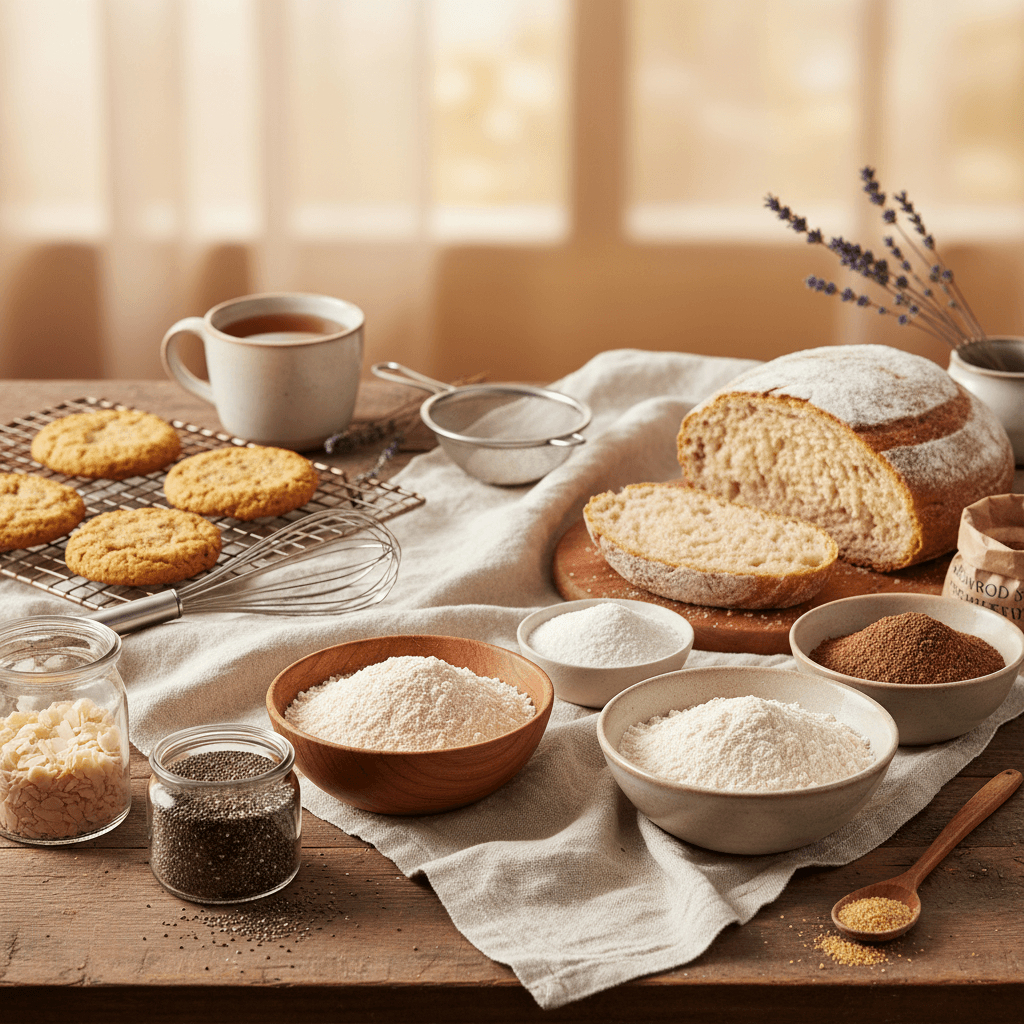
If you're managing both grain-free and gluten-free requirements, finding flours and baking products you can actually trust gets complicated fast. Many "grain-free" products still contain hidden gluten sources or undisclosed allergens, and not every grain-free flour behaves the same way in a recipe. Here's what we recommend.
Key takeaways
- Grain-free flours include almond flour, coconut flour, cassava flour, tigernut flour, and arrowroot starch — all naturally gluten-free, but cross-contamination risk varies by brand.
- Always check labels for "manufactured in a facility that also processes wheat" warnings, even on products that seem obviously grain-free.
- Cassava flour is the closest 1:1 swap for all-purpose flour among grain-free options, making it the most versatile choice for beginners.
- Coconut flour absorbs roughly 3-4 times more liquid than almond flour, so these two are not interchangeable without major recipe adjustments.
- Some grain-free baking mixes contain corn (which is technically a grain) or oat fiber — read every ingredient list carefully.
- Blending two or more grain-free flours almost always produces better texture than relying on a single flour.
What makes a flour grain-free (and what to watch for on labels)
A grain-free flour is made from nuts, seeds, roots, or tubers instead of grains like wheat, rice, corn, oats, sorghum, or millet. This means many popular gluten-free flours — like brown rice flour, sorghum flour, and millet flour — are off the table if you're strictly grain-free.
Here's what trips people up on labels:
- Corn starch and corn flour — Corn is a grain. It shows up in many gluten-free baking mixes and even some baking powders.
- Oat fiber — Sometimes added to grain-free products for texture. Oats are a grain, and they carry a high cross-contamination risk with wheat.
- Rice starch or rice flour — Rice is a grain, yet it sneaks into "paleo-friendly" mixes more often than you'd think.
- "Natural flavors" — Rarely an issue, but in some products these can be derived from grain-based sources. When in doubt, contact the manufacturer.
- Modified food starch — Often derived from corn or wheat. Look for products that specify the source (like "tapioca-based").
The safest approach is to buy single-ingredient flours from brands that test for gluten and clearly label their allergen practices, then blend them yourself. If you're new to gluten-free baking in general, our complete beginner's guide covers the fundamentals before you start layering on additional restrictions.
The best grain-free baking flours and products we recommend
We've narrowed this down to seven products that are verified grain-free, gluten-free, and reliably available. Each one serves a different purpose in your baking, and we've noted exactly what it's best for.
1. Otto's Naturals cassava flour
Otto's Naturals Cassava Flour is the gold standard for grain-free baking. It's made from a single ingredient (yuca root), has a neutral flavor, and behaves more like all-purpose flour than any other grain-free option. It works in everything from tortillas to cakes to banana bread. The texture is smooth, not gritty, and it's certified gluten-free. You can learn more about how cassava flour works on our cassava flour ingredient page.
Best for: Bread, tortillas, muffins, pancakes — anything where you want a wheat-like result without grains.
2. Anthony's blanched almond flour
Anthony's Blanched Almond Flour is finely ground, batch-tested for gluten, and comes at a price point that won't wreck your budget. Almond flour adds moisture and fat to baked goods, which helps combat the dryness that can plague grain-free recipes. It's ideal for cookies, cakes, and quick breads. Check out our almond flour ingredient page for substitution ratios and tips.
Best for: Cookies, cakes, muffins, pie crusts, and anywhere you want a rich, tender crumb.
3. Nutiva organic coconut flour
Nutiva Organic Coconut Flour is grain-free, gluten-free, and incredibly high in fiber. A little goes a long way — you'll typically use about one-quarter to one-third the amount you'd use of almond flour, plus extra eggs or liquid to compensate for its absorbency. It's great for people who also need to avoid nuts.
Best for: Pancakes, waffles, quick breads, and recipes where you want a slightly sweet, light texture. Also excellent for nut-free households.
If you're juggling grain-free baking alongside gluten-free fundamentals, the Confident Gluten-Free Baker Toolkit can help you understand how different flours work together so you stop guessing and start getting consistent results.
4. Organic Gemini tigernut flour
Organic Gemini Tigernut Flour is made from tigernuts, which are actually small tubers — not nuts at all. That makes it safe for people with nut allergies who are also grain-free. It has a slightly sweet, earthy flavor and works beautifully in cookies and banana bread. We did a deep dive on brands in our best tigernut flour for baking comparison.
Best for: Cookies, quick breads, and muffins — especially when you need something nut-free and grain-free simultaneously.
5. Bob's Red Mill arrowroot starch
Bob's Red Mill Arrowroot Starch is a pure, grain-free starch that works as a thickener and helps lighten the texture of grain-free baked goods when blended with heavier flours like almond or cassava. It's essential for creating grain-free flour blends that don't feel dense. For a brand comparison, see our arrowroot starch brand roundup.
Best for: Blending with other grain-free flours, thickening fillings, and lightening dense batters.
6. Simple Mills almond flour baking mix (artisan bread)
Simple Mills Almond Flour Artisan Bread Mix stands out among pre-made grain-free baking mixes. The ingredients are clean — almond flour, arrowroot, flax meal, and seasonings. No corn, no rice, no oats. It's a great shortcut when you want grain-free bread without formulating your own blend from scratch.
Best for: Quick weeknight bread, dinner rolls, and anyone who wants a reliable grain-free mix without hidden grains.
7. Siete Foods grain-free tortillas (cassava and coconut)
Siete Grain-Free Cassava and Coconut Tortillas aren't a flour, but they solve one of the biggest pain points for grain-free bakers: wraps and flatbreads. These are made with cassava flour and coconut flour, with no corn or rice. They're pliable and save you the trouble of making tortillas from scratch every time.
Best for: Wraps, tacos, quesadillas, and quick meals when you don't have time to bake.
Grain-free flour comparison at a glance
| Flour | Source | Nut-free | Best use | Swap ratio vs. AP flour |
|---|---|---|---|---|
| Cassava flour | Yuca root | Yes | Bread, tortillas, all-purpose | Roughly 1:1 |
| Almond flour | Almonds | No | Cookies, cakes, pie crust | Not a direct swap — needs recipe formulation |
| Coconut flour | Coconut meat | Yes (tree nut debate — check with allergist) | Pancakes, quick breads | Use 1/4 to 1/3 cup per 1 cup AP flour + extra liquid |
| Tigernut flour | Tiger nut tubers | Yes | Cookies, muffins | Roughly 1:1 but denser |
| Arrowroot starch | Arrowroot plant | Yes | Blending, thickening | Use as 25-30% of a flour blend |
How to build a grain-free flour blend that works
Single grain-free flours rarely produce great results on their own. The trick is blending them so you get the right balance of structure, moisture, and lightness. Here's a starting formula we like:
- 60% cassava flour — provides structure and a neutral base
- 25% almond flour or tigernut flour — adds moisture, fat, and tenderness
- 15% arrowroot starch — lightens the crumb and helps with binding
This blend works for muffins, quick breads, and simple cakes. For cookies, increase the almond flour percentage to 40-50% and reduce cassava accordingly. For bread, you'll likely need to add extra binding — a flax egg or psyllium husk powder helps hold things together without grains.
If you've been working with grain-based gluten-free blends and want to understand the science behind flour blending, our post on homemade gluten-free flour blend ratios explains the principles, even though that recipe uses rice flour. The blending logic transfers directly to grain-free work.
Common mistakes with grain-free baking
Grain-free baking has a learning curve, and most of the frustrations come from a few predictable mistakes.
Using coconut flour like almond flour
These two behave completely differently. Coconut flour is extremely absorbent and will turn your batter into a dry brick if you use it cup-for-cup with almond flour. Always follow a recipe specifically written for coconut flour, or reduce the amount drastically and add extra eggs and liquid.
Skipping the binding agent
Without gluten or grains to provide structure, grain-free baked goods fall apart easily. Eggs are the most common binder, and most grain-free recipes call for more eggs than you'd expect. If you're also egg-free, look into agar agar or psyllium husk as alternatives. Our guide to choosing egg substitutes walks through the options.
Not resting the batter
Grain-free flours, especially cassava and coconut, benefit from a 5-10 minute rest after mixing. This lets the flour fully hydrate so you can accurately judge the consistency before baking. If the batter looks too thick after resting, add liquid a tablespoon at a time.
Trusting "paleo" labels without reading ingredients
"Paleo" doesn't have a regulated definition. Paleo-labeled mixes can contain oat fiber or corn-derived ingredients, or be processed on shared equipment with wheat. Always read the full ingredient list and allergen statement.
Frequently asked questions
Is cassava flour grain-free and gluten-free?
Yes, cassava flour is both grain-free and gluten-free. It's made from the yuca root, which is a tuber, not a grain. It's one of the most versatile grain-free flours because it behaves similarly to wheat flour in many recipes. Look for brands that are certified gluten-free to avoid cross-contamination.
Can I use almond flour as a 1:1 substitute for all-purpose flour?
No, almond flour cannot be swapped 1:1 for all-purpose flour. It's much higher in fat and moisture and contains no starch, so the texture and structure of your baked goods will be completely different. You'll need a recipe specifically developed for almond flour, or you'll need to blend it with a starch like arrowroot.
What grain-free flour is best for bread?
Cassava flour is the best single grain-free flour for bread because it provides structure and a neutral flavor. For the best results, blend it with a starch like arrowroot and add a binding agent such as psyllium husk or extra eggs. Pre-made mixes like Simple Mills Artisan Bread Mix also work well.
Is coconut flour safe for people with tree nut allergies?
Since January 2025, the FDA no longer lists coconut as a tree nut for allergen labeling, so packages won't flag it as a tree nut (it still appears in the ingredient list). Coconut is botanically a fruit, but coconut allergy does exist, so if you have a tree nut or coconut allergy, check with your allergist before trying it. If coconut is off the table, tigernut flour is an excellent nut-free, grain-free alternative.
What hidden ingredients should I watch for in grain-free baking products?
The most common hidden grain-based ingredients in supposedly grain-free products are corn starch, oat fiber, rice starch, and modified food starch derived from corn or wheat. Also check for maltodextrin (often corn-derived) and barley malt extract, which contains gluten. Always read the full ingredient list rather than relying on front-of-package claims.

Written by
Co-founder, BakingSubs
Co-founder of BakingSubs, where he turns the science of ingredient substitutions into tested, reliable guidance for home bakers.
Related Posts
Bake with Confidence
See all
Confident Gluten-Free Baker Toolkit
The science-based system that replaces gluten's seven invisible jobs so your baking turns out soft, fluffy, and foolproof — every time.

Gluten-Free Recipe Vault
Instant access to our complete library of proven gluten-free recipes — no waiting, no guesswork, just results that work tonight.

Fix Your Gluten-Free Bread
Learn the 3-step formula to make bread rise and stay soft, discover why your loaves collapse, and get a tested sandwich bread recipe that actually works.