

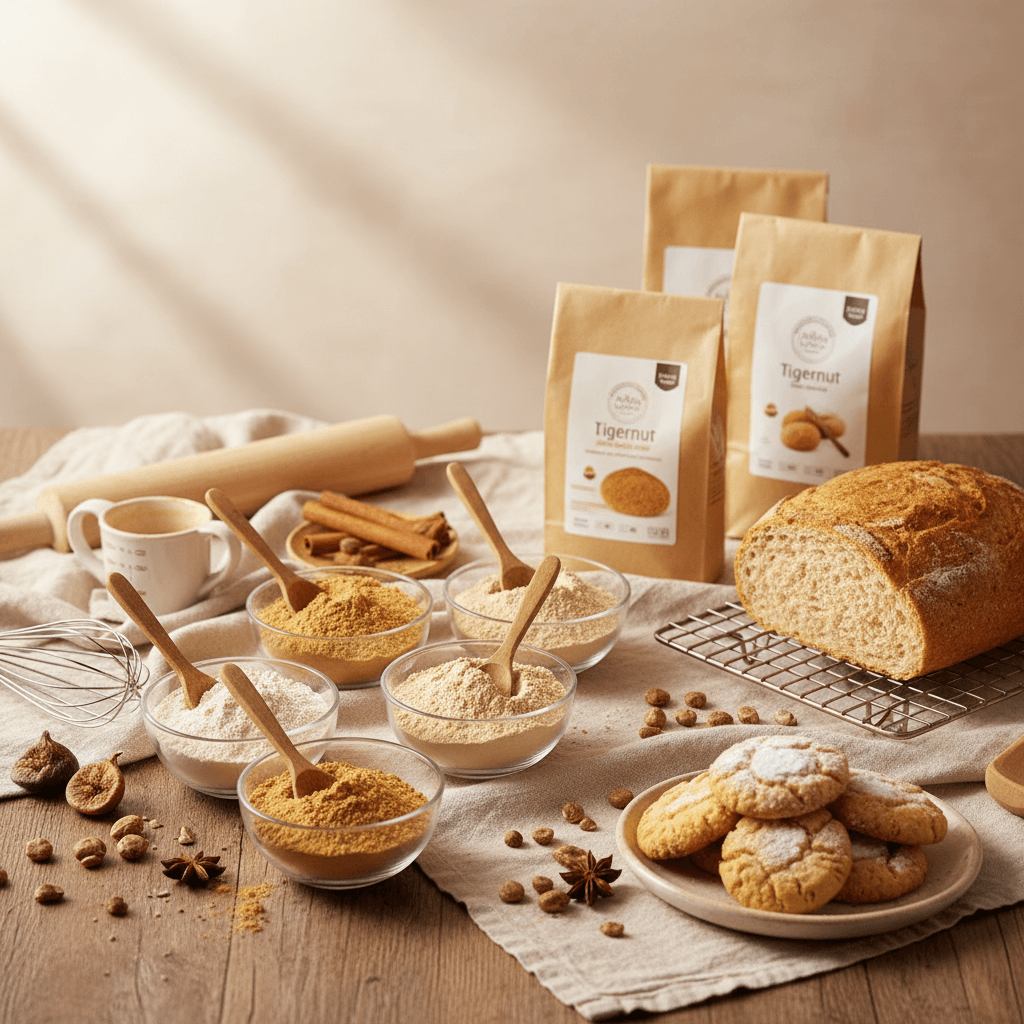
Tigernut flour is one of the most underrated gluten-free flours out there, and the brand you pick makes a real difference in your results. We've compared six popular tigernut flour brands so you can find the right one for your baking style, budget, and recipes.
Key takeaways
- Tigernut flour is naturally gluten-free, grain-free, nut-free (it's a tuber), and paleo-friendly, making it one of the most allergy-friendly flours available.
- Grind fineness varies dramatically between brands and is the single biggest factor in baking success — a coarse grind will ruin delicate cakes.
- Tigernut flour has a naturally sweet, slightly nutty flavor that works beautifully in cookies, muffins, quick breads, and pancakes without added sugar.
- Most tigernut flours run between $1.00 and $2.50 per ounce, making this a premium flour — buying in bulk helps.
- You typically cannot swap tigernut flour 1:1 for all-purpose flour; it works best as part of a blend or in recipes specifically designed for it.
- Organic and peeled vs. unpeeled tigernuts affect both flavor and texture, so check the label before buying.
What is tigernut flour and why use it in gluten-free baking?
Tigernut flour is milled from tigernuts, which aren't actually nuts at all — they're small root vegetables (tubers) related to sedge grass. That makes tigernut flour safe for most people with tree nut allergies, though you should always confirm with your allergist.
What makes it special for gluten-free baking is its combination of natural sweetness, mild flavor, and decent binding ability. It has a starchy quality that helps hold baked goods together better than many other grain-free flours. It's also high in resistant starch and fiber, which can improve the texture of cookies and quick breads by keeping them moist.
Tigernut flour works best in recipes where you want a tender, slightly sweet crumb: think cookies, muffins, banana bread, pancakes, and pie crusts. It's less ideal as a sole flour in yeast breads, where you'd want to combine it with something like cassava flour or arrowroot powder for better structure.
If you're building a homemade gluten-free flour blend, tigernut flour can serve as your base starchy flour in paleo-friendly blends, replacing rice flour for those avoiding grains entirely.
What to look for when buying tigernut flour
Not all tigernut flour is the same. Before we get into specific brands, here's what actually matters:
Grind fineness
This is the most important factor. A fine, powdery grind gives you smooth batters and tender crumbs. A coarser grind creates a gritty texture that can ruin cakes and cookies. If you've ever dealt with gritty texture in gluten-free baking, you know how frustrating this is. Always look for brands that specifically advertise a fine or extra-fine grind.
Peeled vs. unpeeled
Some brands mill from peeled tigernuts, which gives a lighter color and milder flavor. Unpeeled tigernut flour has more fiber and a slightly more earthy taste. For baking, peeled generally gives better results in delicate recipes.
Organic certification
If organic matters to you, check the label. Several brands offer USDA organic tigernut flour, though it typically costs a bit more.
Price per ounce
Tigernut flour is expensive compared to rice flour or tapioca starch. Prices range from about $1.00 to $2.50 per ounce depending on the brand and bag size. Buying larger bags brings the cost down significantly.
If you're just getting started with gluten-free baking and feeling overwhelmed by all the flour options, the Confident Gluten-Free Baker Toolkit walks you through how different flours work together so you stop wasting money on ingredients that don't perform.
6 best tigernut flour brands for baking compared
We compared these brands based on grind quality, flavor, intended use, certification, and value. Here's how they stack up:
| Brand | Grind | Peeled? | Organic | Approx. price/oz | Best for |
|---|---|---|---|---|---|
| Organic Gemini | Fine | Yes | Yes | $1.50 | All-around baking |
| Anthony's | Medium-fine | Yes | No | $1.10 | Budget-friendly baking |
| Root | Extra-fine | Yes | Yes | $2.00 | Delicate cakes and pastries |
| Terrasoul Superfoods | Medium | No (unpeeled) | Yes | $1.20 | Hearty muffins and breads |
| Zemas Madhouse Foods | Fine | Yes | No | $1.80 | Allergy-friendly baking |
| Tiger Nuts USA | Fine | Yes | Yes | $1.60 | General purpose, bulk buying |
Organic Gemini tigernut flour
Organic Gemini is the brand most people think of first when it comes to tigernut flour, and for good reason. Their flour has a consistently fine grind that works well in cookies, muffins, and pancakes. It's made from peeled, organic tigernuts sourced from West Africa, and the flavor is pleasantly sweet without being overpowering.
It suits everything from banana bread to pie crusts. The 16-ounce bag is the most common size, and they also sell a larger 32-ounce option that brings the per-ounce cost down.
Best for: All-around gluten-free and paleo baking. A great starting point if you've never used tigernut flour before.
Organic Gemini Tigernut Flour — available in 16 oz and 32 oz bags.
Anthony's tigernut flour
Anthony's is the budget pick. Their tigernut flour is made from peeled tigernuts and has a medium-fine grind — not quite as silky as Organic Gemini or Root, but perfectly acceptable for most recipes. It's not certified organic, but it is batch-tested for gluten.

Anthony's Organic Tiger Nut Flour, 1 lb, Gluten Free, Non GMO, Paleo Friendly
Check price on Amazon →If you're baking cookies or sturdy muffins, you won't notice much difference between this and pricier options. Where it falls short is in very fine-crumbed cakes, where the slightly coarser texture becomes noticeable.
Best for: Budget-conscious bakers who use tigernut flour regularly and want to keep costs down.
Anthony's Tigernut Flour — one of the best values per ounce.
Root tigernut flour
Root produces what we'd call the premium option. Their extra-fine grind is the smoothest in this lineup, which makes a real difference in delicate recipes like layer cakes and French-style pastries. It's organic, peeled, and has a clean, mildly sweet flavor.
The downside is the price — at around $2.00 per ounce, it's one of the most expensive options. But if you're making something where texture really matters, like a gluten-free cake that needs to impress, it's worth the splurge.
Best for: Delicate cakes, pastries, and any recipe where a smooth, fine crumb is essential.
Root Tigernut Flour — the finest grind in this lineup.
Terrasoul Superfoods tigernut flour
Terrasoul takes a different approach by using unpeeled tigernuts. This gives their flour more fiber and a slightly darker color, along with a more earthy, robust flavor. The grind is medium — noticeably coarser than Organic Gemini or Root.
This isn't the flour for delicate vanilla cupcakes. But for hearty banana muffins, pumpkin bread, or rustic pancakes, the extra fiber and earthiness actually work in your favor. It's also organic and reasonably priced.
Best for: Hearty quick breads, muffins, and recipes where a rustic texture is a feature, not a bug.
Terrasoul Superfoods Tigernut Flour — great for fiber-rich, rustic baking.
Zemas Madhouse Foods tigernut flour
Zemas is a brand built around allergen-free baking, and their tigernut flour reflects that focus. It's free from the top allergens, made from peeled tigernuts, and has a fine grind that works well across recipes. The company is transparent about their processing and testing protocols.
If you're baking for someone with multiple food allergies — which is common in the gluten-free community — Zemas gives you extra peace of mind. The flavor is clean and slightly sweet, similar to Organic Gemini.
Best for: Bakers managing multiple allergies who need a trusted, allergen-conscious brand.
Zemas Madhouse Foods Tigernut Flour — designed with allergy-friendly baking in mind.
Tiger Nuts USA tigernut flour
Tiger Nuts USA offers organic, peeled tigernut flour with a fine grind and a pleasant, naturally sweet flavor. They sell in multiple sizes including bulk options, which makes them a solid choice if you bake with tigernut flour regularly and want to bring your per-ounce cost down.
The quality is consistent and the flour performs well in cookies, muffins, and pancakes. It's comparable to Organic Gemini in most respects, with the added benefit of larger bag sizes for serious bakers.
Best for: General-purpose baking, especially if you want to buy in bulk.
Tiger Nuts USA Tigernut Flour — great bulk options for regular bakers.
How to use tigernut flour in gluten-free recipes
Tigernut flour behaves differently from wheat flour and even from other gluten-free flours like almond flour or brown rice flour. Here are the key things to know:
Substitution ratios
In most paleo and grain-free recipes, you can use tigernut flour as a 1:1 replacement for almond flour. The texture will be slightly different — tigernut flour tends to be a bit starchier and less oily — but the results are usually good.
For replacing all-purpose flour, you'll need to adjust. Tigernut flour absorbs more liquid, so start by using about 3/4 cup tigernut flour for every 1 cup of all-purpose flour, and add a tablespoon or two of extra liquid. You'll also want a binder like arrowroot powder or eggs to compensate for the lack of gluten. If you're new to this process, our guide on how to convert any recipe to gluten-free walks you through it step by step.
Best recipes for tigernut flour
Tigernut flour shines in:
- Cookies — the natural sweetness means you can reduce sugar, and the starchiness gives a satisfying chew
- Muffins and quick breads — banana bread and pumpkin muffins are especially good
- Pancakes and waffles — creates a tender, slightly sweet result (pair it with a good waffle maker for crispy edges)
- Pie crusts — the starchy quality makes a pliable, workable dough
- Coating for fried foods — works as a grain-free breading
Tips for better results
Sift your tigernut flour before measuring, especially if you're using a brand with a medium grind. This removes any larger particles and gives you a more consistent batter. Let your batter rest for 5-10 minutes before baking — tigernut flour absorbs liquid slowly, and resting gives it time to hydrate fully. This helps prevent dry, crumbly results.
Tigernut flour vs. other grain-free flours
If you're choosing between tigernut flour and other popular grain-free options, here's a quick comparison:
| Flour | Nut-free? | Flavor | Texture | Best for |
|---|---|---|---|---|
| Tigernut flour | Yes | Mildly sweet, slightly nutty | Fine to medium, starchy | Cookies, muffins, pancakes |
| Almond flour | No | Nutty, rich | Fine, moist | Cakes, macarons, cookies |
| Cassava flour | Yes | Neutral | Fine, stretchy | Tortillas, bread, all-purpose use |
| Coconut flour | Depends on allergy | Coconutty | Very absorbent, dense | Small-batch recipes, pancakes |
Tigernut flour's biggest advantage is that it's nut-free while still behaving somewhat like almond flour. For bakers managing nut allergies on top of gluten-free needs, it fills a gap that few other flours can.
Frequently asked questions
Is tigernut flour actually nut-free?
Yes, tigernut flour is made from tigernuts, which are tubers (small root vegetables), not tree nuts. It's safe for most people with tree nut allergies. However, always check with your allergist, especially if you have severe allergies, and verify the brand's processing facility doesn't handle tree nuts.
Can you use tigernut flour as a 1:1 substitute for all-purpose flour?
Not directly. Tigernut flour absorbs more liquid than all-purpose flour and lacks gluten, so you'll need to reduce the flour amount (about 3/4 cup per 1 cup of AP flour), add extra liquid, and include a binder. Our guide on converting recipes to gluten-free covers the full process.
Does tigernut flour taste like nuts?
Tigernut flour has a mildly sweet, slightly earthy flavor that some describe as nutty. It doesn't taste like any specific tree nut. The sweetness is subtle enough that it works in most recipes without clashing, and it can actually let you reduce added sugar.
What is the best tigernut flour brand for cookies?
For cookies, Organic Gemini and Anthony's are both excellent choices. Organic Gemini has a finer grind that gives a smoother texture, while Anthony's is more budget-friendly and still performs well in sturdier cookie recipes. If you want the absolute finest crumb, Root is the best option.
How should you store tigernut flour?
Store tigernut flour in an airtight container in a cool, dark place. It will keep for several months in the pantry. For longer storage (up to a year), keep it in the refrigerator or freezer. The natural oils in tigernuts can go rancid over time, so smell it before using if it's been sitting for a while.

Written by
Co-founder, BakingSubs
Co-founder of BakingSubs, where he turns the science of ingredient substitutions into tested, reliable guidance for home bakers.
Related Posts


Bake with Confidence
See all
Confident Gluten-Free Baker Toolkit
The science-based system that replaces gluten's seven invisible jobs so your baking turns out soft, fluffy, and foolproof — every time.

Gluten-Free Recipe Vault
Instant access to our complete library of proven gluten-free recipes — no waiting, no guesswork, just results that work tonight.

Fix Your Gluten-Free Bread
Learn the 3-step formula to make bread rise and stay soft, discover why your loaves collapse, and get a tested sandwich bread recipe that actually works.