

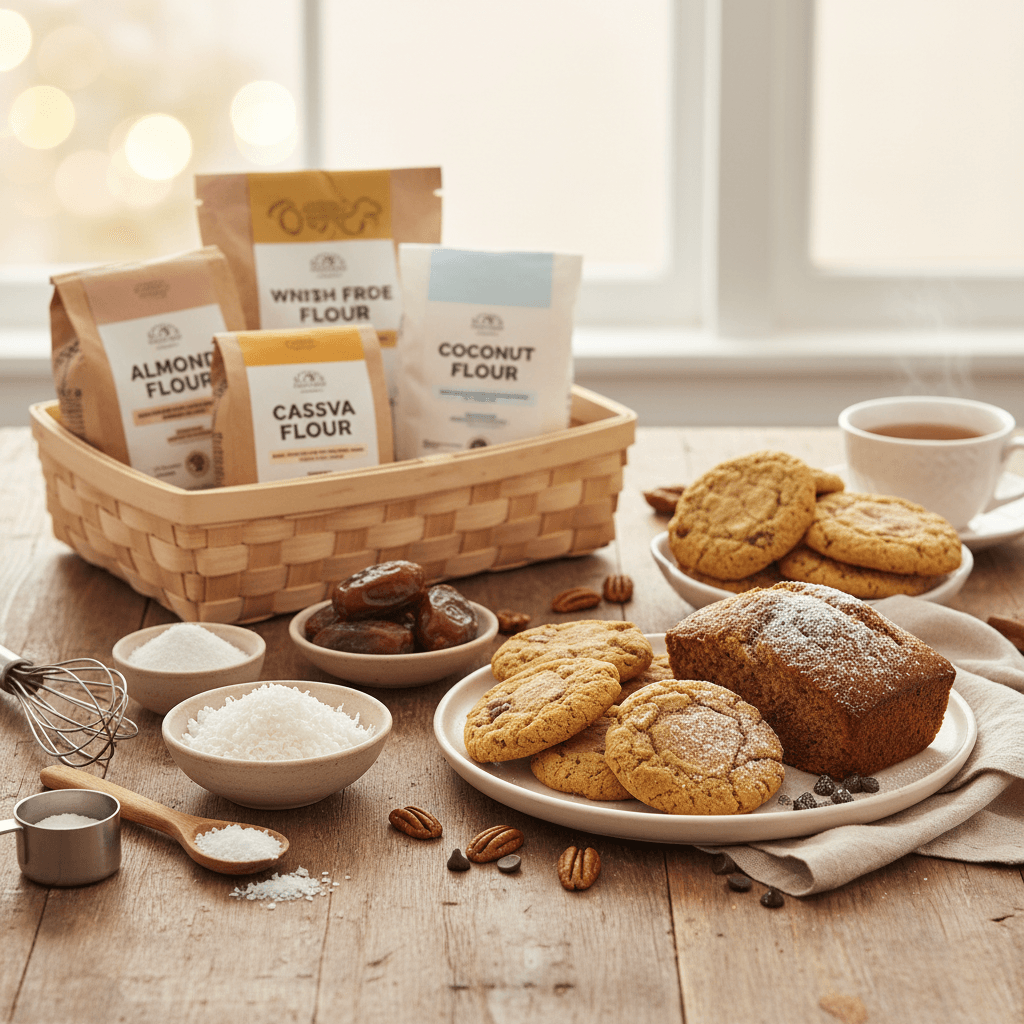
Baking on Whole30 while also being gluten-free means navigating two strict sets of rules at once, and most "gluten-free" products on store shelves still contain ingredients that are off-limits on Whole30. Here are the products and ingredients that actually satisfy both dietary needs, plus the hidden label traps to watch for.
Key takeaways
- Most commercial gluten-free flour blends contain rice, corn, or added sugars that are not Whole30-compliant, so you need to choose single-ingredient flours instead.
- Whole30 eliminates all grains (including gluten-free grains like rice, corn, oats, and sorghum), all dairy, all added sugars, all legumes, and all soy.
- Compliant flours include cassava flour, almond flour, coconut flour, tigernut flour, arrowroot powder, and tapioca starch.
- Watch labels carefully for hidden corn starch, rice starch, cane sugar, and soy lecithin in products marketed as "gluten-free."
- Fats for baking must come from compliant sources: ghee (clarified butter), coconut oil, or avocado oil rather than butter or vegetable oils.
- Eggs are fully compliant on both Whole30 and gluten-free diets and serve as your primary binder and leavener.
Why most gluten-free products fail the Whole30 test
The vast majority of gluten-free baking mixes, flours, and prepared goods rely on rice flour, corn starch, or other grains as their base. Whole30 eliminates all grains, not just gluten-containing ones. That means your favorite gluten-free all-purpose blend is almost certainly off the table.
Beyond grains, Whole30 also bans added sugars of any kind (including honey, maple syrup, and coconut sugar), all dairy (butter, milk, cream), all legumes (so chickpea flour is out), and soy. When you stack these restrictions on top of gluten-free requirements, the list of compliant ingredients shrinks dramatically. But it does not disappear.
If you are newer to gluten-free baking in general, our complete guide to gluten-free baking for beginners covers the fundamentals that apply regardless of which additional dietary protocol you follow.
Whole30 compliant flours and starches for baking
Cassava flour is the closest thing to a one-to-one all-purpose flour replacement that meets both Whole30 and gluten-free standards. It is grain-free, nut-free, and has a neutral flavor that works in everything from tortillas to simple flatbreads.
Almond flour brings moisture and healthy fats to baked goods and is a Whole30 staple. It works beautifully in muffin-style bakes, crusts, and pancakes. Just be sure the brand you buy is pure ground almonds with no added ingredients.
Coconut flour is another strong option, though it absorbs significantly more liquid than other flours. You will need roughly one-third the amount compared to cassava flour and additional eggs to compensate for the absorption.
Arrowroot powder and tapioca starch serve as your binding and thickening agents. Both are Whole30-compliant, grain-free, and gluten-free. They help give structure to bakes that would otherwise crumble apart without gluten or grains.
If you want to take your gluten-free baking further, our Confident Gluten-Free Baker Toolkit walks you through flour blending ratios, troubleshooting, and recipe conversion so you waste fewer ingredients while learning.
Hidden ingredients to watch for on labels
Even products labeled "gluten-free" and "paleo" can contain Whole30 disqualifiers. Here is what to scan for before buying anything.
| Hidden ingredient | Why it fails Whole30 | Where you will find it |
|---|---|---|
| Corn starch or corn flour | Grain (all corn is eliminated) | Gluten-free baking powder, flour blends |
| Rice flour or rice starch | Grain | Most GF all-purpose blends |
| Cane sugar, coconut sugar, honey | Added sweetener | GF baking mixes, "paleo" mixes |
| Soy lecithin | Soy (legume) | Chocolate chips, cocoa mixes |
| Chickpea flour | Legume | Some GF pasta flours, savory blends |
| Xanthan gum (from corn) | Potentially derived from corn | GF flour blends, baking mixes |
| Buttermilk powder, whey | Dairy | GF pancake and biscuit mixes |
A quick note on xanthan gum: while some Whole30 resources allow it, others flag it because it is often derived from corn fermentation. If you are being strict, use psyllium husk or extra eggs as binders instead.
7 Whole30 gluten-free baking products we recommend
Every product below is verified to be both certified gluten-free and Whole30-compliant based on ingredient lists.
1. Otto's Naturals cassava flour
This is the gold standard for grain-free, Whole30 baking. Otto's Naturals Cassava Flour is made from a single ingredient (yuca root), and it behaves more like wheat flour than any other compliant option. It works in tortillas, flatbreads, pizza crusts, and simple biscuits.
2. Bob's Red Mill super-fine almond flour
For muffins, pancakes, and crusts, Bob's Red Mill Super-Fine Almond Flour delivers consistent results. It is blanched, which gives a lighter color and milder flavor. Single ingredient: blanched almonds. If you want to compare brands, our tigernut flour brand comparison covers another excellent nut-free alternative that is also Whole30-friendly.
3. Anthony's organic coconut flour
Anthony's Organic Coconut Flour is affordable, certified gluten-free, and contains nothing but organic coconut. Remember that coconut flour is extremely absorbent, so recipes typically call for lots of eggs and much less flour by volume.
4. Hain Pure Foods baking powder (corn-free)
Standard baking powder almost always contains corn starch. Hain Pure Foods Featherweight Baking Powder replaces corn starch with potato starch, making it both gluten-free and Whole30-compliant. This is a critical swap that many people overlook. For more on leaveners, check our baking powder ingredient page.
5. Nutiva organic virgin coconut oil
Since butter is off-limits on Whole30, Nutiva Organic Virgin Coconut Oil is our top pick for a solid baking fat. It creates flaky textures in pie crusts and adds moisture to muffins and quick breads. If you prefer a neutral flavor, look for their refined version.
6. Fourth and Heart original ghee
Ghee is the one dairy-derived fat allowed on Whole30 because the milk solids have been removed. Fourth and Heart Original Ghee is grass-fed, certified gluten-free, and adds a rich, buttery flavor to baked goods without the dairy proteins that Whole30 eliminates.
7. Bob's Red Mill arrowroot starch
Every Whole30 baker needs a good starch for binding and structure. Bob's Red Mill Arrowroot Starch is single-ingredient, certified gluten-free, and works as a thickener and binder in everything from sauces to baked goods. Our arrowroot starch brand comparison covers additional options if you want to explore alternatives.
How to build a Whole30 gluten-free flour blend
Since commercial blends are off-limits, you will need to mix your own. A reliable starting point for a Whole30-compliant all-purpose blend is:
- 2 parts cassava flour
- 1 part arrowroot starch
- 1/2 part coconut flour
This blend works for simple baked goods like biscuits, pancakes, and flatbreads. For items that need more structure, add an extra egg per cup of flour blend. The cassava provides the bulk and wheat-like texture, arrowroot adds binding, and coconut flour absorbs excess moisture for a better crumb.
If you want to understand the science behind building your own blends, our post on homemade gluten-free flour blend ratios breaks down the principles in detail. Just note that some of the flours mentioned there (like rice flour and sorghum flour) are grain-based and not Whole30-compliant.
Whole30 baking tips that actually work
Baking without grains, dairy, and sugar simultaneously requires some adjustments beyond just swapping ingredients.
Use eggs as your workhorse
Eggs provide structure, leavening, moisture, and binding all at once. Most Whole30-compliant baking recipes call for more eggs than you might expect. Do not skip them or try to reduce the count. Learn more about their role on our eggs functions page.
Sweetness without sweeteners
Whole30 bans all added sweeteners, but you can still get natural sweetness from compliant ingredients. Mashed banana, unsweetened applesauce, and dates (blended into a paste) add sweetness without violating the rules. Keep in mind that Whole30 discourages recreating desserts, so these work best in breakfast-style bakes like muffins and pancakes.
Let baked goods cool completely
Grain-free bakes set their structure as they cool. Cutting into a cassava flour biscuit or almond flour muffin too early will give you a gummy, underdone center. Wait at least 15 to 20 minutes after removing from the oven.
Weigh your ingredients
This matters even more with grain-free flours because their densities vary wildly. A cup of coconut flour weighs about 120 grams, while a cup of cassava flour weighs about 150 grams. Using a kitchen scale eliminates guesswork and gives you consistent results every time.
Frequently asked questions
Can you use gluten-free oats on Whole30?
No. Whole30 eliminates all grains, and oats are a grain regardless of whether they are certified gluten-free. This includes oat flour, rolled oats, and oat-based products. Use almond flour or cassava flour as alternatives.
Is tapioca starch Whole30-compliant?
Yes. Tapioca starch (also called tapioca flour) is derived from the cassava root and contains no grains, dairy, soy, or added sugars. It is both gluten-free and Whole30-compliant, making it useful as a binder and thickener in baked goods.
Can you bake bread on Whole30?
Technically you can make flatbreads and simple quick breads using cassava flour, eggs, and compliant fats. However, Whole30 guidelines discourage recreating bread-like foods because the program emphasizes changing your relationship with certain food categories. Simple flatbreads for wrapping proteins are generally considered acceptable.
Is coconut sugar allowed on Whole30?
No. Coconut sugar is an added sweetener and is not permitted on Whole30, even though it is often marketed alongside paleo and gluten-free products. This is one of the most common label traps. Check our sugar alternatives guide for more details on different sweetener options.
What can I use instead of xanthan gum on Whole30?
Psyllium husk powder, ground flax seeds (though flax is debated in strict Whole30 circles), or simply adding extra eggs are the best alternatives. Arrowroot starch also helps with binding. Many Whole30 bakers find that between eggs and arrowroot powder, they do not miss xanthan gum at all.

Written by
Co-founder, BakingSubs
Co-founder of BakingSubs, where he turns the science of ingredient substitutions into tested, reliable guidance for home bakers.
Related Posts

Bake with Confidence
See all
Confident Gluten-Free Baker Toolkit
The science-based system that replaces gluten's seven invisible jobs so your baking turns out soft, fluffy, and foolproof — every time.

Gluten-Free Recipe Vault
Instant access to our complete library of proven gluten-free recipes — no waiting, no guesswork, just results that work tonight.

Fix Your Gluten-Free Bread
Learn the 3-step formula to make bread rise and stay soft, discover why your loaves collapse, and get a tested sandwich bread recipe that actually works.