

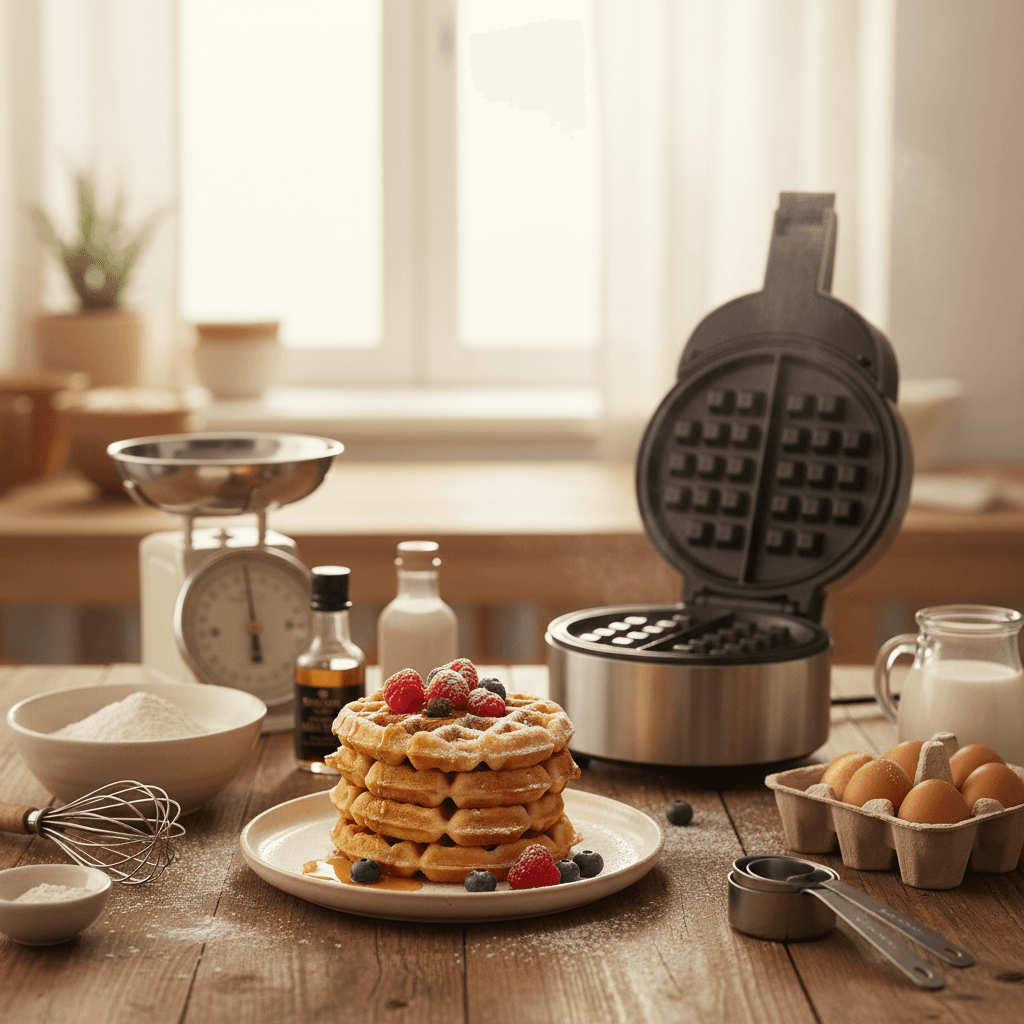
Gluten-free waffle batter behaves differently than conventional batter, and the wrong waffle maker will give you soggy, stuck-on messes instead of crispy, golden waffles. Here are 7 waffle makers we recommend across every budget, plus what to look for so your gluten-free waffles come out perfect every time.
Key takeaways
- Gluten-free batters are thinner and stickier than wheat-based batters, so a waffle maker with deep pockets, even heat distribution, and excellent non-stick coating matters more than usual.
- Belgian-style waffle makers with deeper grids work best for gluten-free waffles because the extra depth helps the batter set properly without becoming gummy in the center.
- Adjustable temperature control is essential — gluten-free batters often need a slightly longer cook at medium-high heat to achieve crispness without burning.
- Flip-style waffle makers distribute thin GF batter more evenly than standard models, reducing the risk of undercooked centers.
- Non-stick quality is the single most important feature since gluten-free batters lack the structural proteins that help conventional waffles release cleanly.
- Budget picks starting around $25 can work well for occasional use, while serious waffle lovers and home bakers should invest in the $60-$150 range.
Why gluten-free waffles need a different waffle maker
Standard waffle makers work fine for wheat-based batters because gluten creates a strong, elastic structure that holds together during cooking and releases from the plates easily. Gluten-free batters are a different story. They tend to be thinner, stickier, and more prone to spreading unevenly. Without gluten's structural network, the batter relies heavily on starches like arrowroot or brown rice flour to set up, which means even heat distribution and proper cook time are critical.
If your waffle maker has hot spots, you'll end up with edges that are burnt while the center stays gummy and undercooked — one of the most common gluten-free baking frustrations. A waffle maker with consistent heat across the entire plate solves this problem. And because GF batters don't have gluten to help them pull away from the cooking surface, the non-stick coating on your waffle maker needs to be genuinely excellent, not just adequate.
If you're building out your gluten-free baking setup, our Confident Gluten-Free Baker Toolkit covers the foundational techniques and ingredient knowledge that make every recipe — waffles included — turn out better.
What to look for in a waffle maker for gluten-free batter
Before we get into specific picks, here are the features that matter most when you're working with gluten-free batter:
Non-stick coating quality
This is non-negotiable. Gluten-free batters contain more sugar and starch relative to protein, which makes them prone to sticking. Look for ceramic or PFOA-free non-stick surfaces, and even with great non-stick, a light brush of oil before cooking helps enormously.
Adjustable browning or temperature control
Most gluten-free waffle recipes benefit from cooking at medium-high heat for a longer time than conventional waffles. A waffle maker with adjustable settings lets you dial this in rather than guessing.
Deep grid plates
Belgian-style deep grids (at least 1 inch deep) give gluten-free batter more room to set up structurally. Thinner classic-style grids can work, but you'll need to use less batter and watch the timing more carefully.
Flip mechanism
Flip-style waffle makers rotate 180 degrees after you pour the batter, which spreads it evenly across both plates. This is especially helpful for thinner GF batters that might not fill every pocket on their own.
Indicator lights or audible alerts
Since gluten-free waffles often need an extra 30-60 seconds beyond the standard cycle, having a clear indicator of when the maker thinks it's done helps you know when to start your extra cook time.
Best waffle makers for gluten-free waffles compared
| Waffle maker | Type | Best for | Price range | Key feature |
|---|---|---|---|---|
| Dash Mini Waffle Maker | Classic, single | Budget / small batches | $10-$15 | Compact, heats fast |
| Hamilton Beach Flip Belgian | Belgian, flip | Best value overall | $30-$40 | Flip design, adjustable browning |
| Cuisinart WAF-F20 Double Belgian | Belgian, flip, double | Families / batch cooking | $60-$80 | Two waffles at once, 6-setting browning |
| Breville BWM520XL No-Mess | Classic, round | Even cooking precision | $70-$90 | Moat catches overflow, thermal pro element |
| All-Clad Belgian Waffle Maker | Belgian, standard | Premium home use | $100-$130 | Steam-release system, 7 browning settings |
| Breville Smart Waffle Pro | Belgian, multiple plates | Serious waffle enthusiasts | $150-$200 | A-bit-more technology, 12 browning settings |
| Waring Pro WMK600 Double Belgian | Belgian, flip, double | Home bakery production | $80-$120 | Commercial-grade build, extra-deep grids |
Budget pick: Dash Mini Waffle Maker
The Dash Mini Waffle Maker is the entry point for anyone who wants to test gluten-free waffles without a big investment. At around $10-$15, it's almost disposable — but it's a practical choice for single servings.
The 4-inch cooking surface heats up in about 2 minutes and produces thin, crispy waffles that are ideal for GF batters made with almond flour or rice flour blends. The non-stick surface is decent, though we recommend a light spray of oil every time. The main limitation is size — you're making one small waffle at a time, which gets tedious for a family.
Pros: Incredibly affordable, compact storage, heats fast, good non-stick for the price.
Cons: Tiny waffles, no temperature control, not great for thick Belgian-style batters.
Best value: Hamilton Beach Flip Belgian Waffle Maker
The Hamilton Beach Flip Belgian Waffle Maker is our top recommendation for most gluten-free bakers. The flip design is the key feature here — after you pour your batter, you rotate the unit 180 degrees, and gravity pulls the batter evenly across the entire cooking surface. This solves the biggest problem with GF batters: uneven distribution.

Hamilton Beach Belgian Waffle Maker with Removable PFAS-Free Durathon Nonstick Coated Plates, Easy Flip, Ceramic Grids, Black (26031)
Check price on Amazon →It has adjustable browning control and an indicator light, so you can push the cook time a bit longer for that crispy exterior gluten-free waffles need. The deep Belgian-style pockets (about 1.2 inches) give the batter room to set up without going gummy. At $30-$40, this is the sweet spot of performance and price.
Pros: Flip design distributes GF batter evenly, adjustable browning, deep pockets, very affordable.
Cons: Single waffle at a time, plastic exterior feels less premium, drip tray is small.
Best for families: Cuisinart WAF-F20 Double Belgian Waffle Maker
If you're making waffles for more than two people, the Cuisinart WAF-F20 makes two deep-pocket Belgian waffles simultaneously with a flip design. The six browning settings give you precise control; setting 4 or 5 is a good starting point for most gluten-free batters — slightly higher than you'd typically use for conventional waffles.
The dual plates cut your cooking time in half for batch breakfasts, and it has a quality non-stick coating for this price point. It's a larger appliance, so make sure you have counter or storage space for it.
Pros: Two waffles at once, flip design, 6 browning settings, excellent non-stick.
Cons: Bulky, takes up significant counter space, heavier than single models.
Best for even cooking: Breville BWM520XL No-Mess Waffle Maker
The Breville BWM520XL takes a different approach. Instead of a flip mechanism, it uses Breville's thermal pro heating element for exceptionally even heat distribution across the entire plate. For gluten-free bakers, this means no hot spots and consistent browning from edge to center.
The standout feature is the overflow moat — a channel around the cooking plates that catches excess batter. Since GF batters can be unpredictable in how much they expand, this saves you from cleaning batter off your counter. It makes round classic-style waffles rather than Belgian, so they're thinner but very crispy.
Pros: Incredibly even heating, overflow moat catches excess batter, 7 browning settings.
Cons: Classic-style (thinner) waffles only, no flip mechanism, higher price for a non-Belgian model.
Premium pick: All-Clad Belgian Waffle Maker
The All-Clad Belgian Waffle Maker is built like a tank and performs accordingly. The steam-release system is particularly useful for gluten-free batters, which tend to produce more steam during cooking due to their higher moisture content. Venting that steam helps the exterior crisp up instead of staying soft.
Seven browning settings and a solid, heavy construction mean consistent results batch after batch. The non-stick coating is excellent. If you're someone who makes waffles weekly — or if you're thinking about selling gluten-free items at a farmers market — this is a worthwhile investment.
Pros: Steam-release system, 7 browning settings, excellent build quality, superior non-stick.
Cons: Premium price, heavy, single waffle at a time.
Best for serious enthusiasts: Breville Smart Waffle Pro
The Breville Smart Waffle Pro is the most feature-rich option on this list. Twelve browning settings, an LCD display, and Breville's A-bit-more button (which adds extra time in small increments) make it ideal for dialing in the exact cook time gluten-free batters need. The A-bit-more feature is especially handy for GF batches, which often need a little extra time.
It makes four square waffles at once and the even heat distribution is outstanding. The price is steep, but if waffles are a regular part of your rotation, the precision and capacity justify it.
Pros: 12 browning settings, A-bit-more button perfect for GF, makes 4 waffles, LCD display.
Cons: Expensive, large footprint, more features than casual waffle makers need.
Best for home bakery production: Waring Pro WMK600 Double Belgian
If you're running a gluten-free home bakery and waffles are on your menu, the Waring Pro WMK600 is built for volume. It's a commercial-grade double Belgian waffle maker with a flip design and extra-deep grids that handle thick GF batters beautifully.
The rotary mechanism is smooth and the heating elements are more robust than consumer models, so it maintains consistent temperature even when you're cooking batch after batch. Pair it with a reliable food scale to measure your batter portions consistently and you'll get uniform waffles every time. If you're considering the business side, our guide to pricing gluten-free baked goods can help you figure out what to charge.
Pros: Commercial-grade durability, double capacity, flip design, extra-deep grids.
Cons: Heavier and bulkier than home models, overkill for occasional use, higher price.
Tips for getting the best results with gluten-free waffle batter
Even the best waffle maker won't save a bad batter. Here are a few tips that help:
- Let the batter rest for 5-10 minutes before cooking. This gives starches time to hydrate and produces a better texture.
- Always preheat fully. Pour batter onto a hot surface so it starts setting immediately rather than spreading too thin.
- Use a bit more fat in your batter than conventional recipes call for. An extra tablespoon of melted butter or oil helps with crispness and release.
- Don't open the lid too early. Gluten-free waffles need that full cook time (and often a bit extra) to develop a crispy shell. Opening early lets steam escape and can cause the waffle to tear.
- Cook until steam stops. When you see steam slowing down significantly, that's your signal the waffle is close to done.
- Consider using cassava flour or a blend that includes tapioca starch for better crispness and chew.
Frequently asked questions
Can you use a regular waffle maker for gluten-free waffles?
Yes, you can use any waffle maker for gluten-free waffles, but results vary significantly. Models with adjustable temperature, deep grids, and high-quality non-stick coatings produce much better results because GF batters are thinner, stickier, and need more precise heat control than conventional batters.
Why do my gluten-free waffles stick to the waffle maker?
Gluten-free batters lack the structural proteins that help conventional waffles release cleanly. To prevent sticking, use a waffle maker with excellent non-stick coating, brush the plates with oil or melted butter before each waffle, and make sure the waffle is fully cooked before opening the lid. If your waffles are still sticking, your batter may need more fat. Check our guide to common gluten-free baking issues for more troubleshooting tips.
Are Belgian or classic waffle makers better for gluten-free batter?
Belgian waffle makers with deeper grids generally work better for gluten-free batters. The extra depth gives the batter more room to set up structurally, which helps prevent the gummy centers that plague thinner GF waffles. Classic-style makers can work well if you use less batter and cook at a slightly higher setting.
Do flip waffle makers make a difference for gluten-free waffles?
Flip waffle makers make a noticeable difference for gluten-free batters. Because GF batters are often thinner and don't spread as evenly as wheat-based batters, the flip mechanism uses gravity to distribute batter across both cooking surfaces. This results in more even thickness and more consistent cooking throughout the waffle.
What is the best gluten-free waffle batter consistency?
The ideal gluten-free waffle batter should be slightly thicker than pancake batter but pourable — roughly the consistency of yogurt. If your batter is too thin, it will spread too quickly and produce flat, crispy waffles. If it's too thick, it won't fill the waffle maker's pockets properly. Letting the batter rest for 5-10 minutes after mixing allows starches to hydrate and thickens it naturally.

Written by
Co-founder, BakingSubs
Co-founder of BakingSubs, where he turns the science of ingredient substitutions into tested, reliable guidance for home bakers.
Related Posts
Bake with Confidence
See all
Confident Gluten-Free Baker Toolkit
The science-based system that replaces gluten's seven invisible jobs so your baking turns out soft, fluffy, and foolproof — every time.

Gluten-Free Recipe Vault
Instant access to our complete library of proven gluten-free recipes — no waiting, no guesswork, just results that work tonight.

Fix Your Gluten-Free Bread
Learn the 3-step formula to make bread rise and stay soft, discover why your loaves collapse, and get a tested sandwich bread recipe that actually works.