

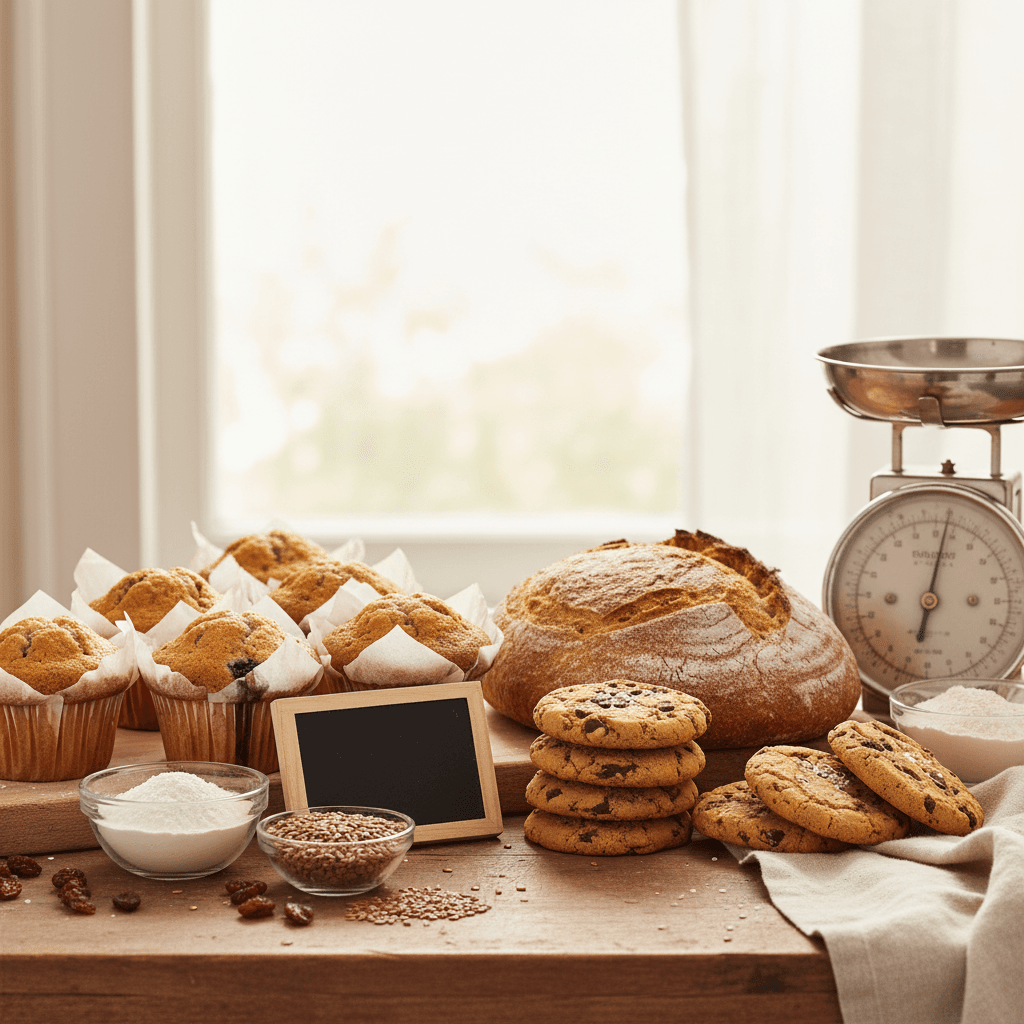
Farmers markets are one of the best places to launch a gluten-free home bakery because customers can taste your products, ask questions, and become loyal regulars on the spot. But not every gluten-free baked good sells equally well at a market booth. Here's exactly what to stock, how to price it, and how to build a customer base that keeps coming back week after week.
Key takeaways
- Gluten-free bakers face far less competition at farmers markets than conventional bakers — most markets have zero dedicated GF vendors.
- The best-selling gluten-free items are grab-and-go products priced between $4 and $8 per unit, like cookies, brownies, muffins, and quick breads.
- Gluten-free customers expect higher prices and rarely push back — they're used to paying $7 for a box of cookies at the grocery store.
- Seasonal items (pumpkin bread in fall, lemon bars in spring) drive impulse buys and keep your table looking fresh.
- Building relationships with local celiac support groups and GF Facebook communities is the fastest way to fill your booth with ready-to-buy customers.
- Starting with 4-6 core products and rotating 1-2 seasonal specials is the sweet spot for a new vendor.
Why gluten-free is the smartest niche at a farmers market
Walk through any farmers market and you'll count a dozen conventional bakers selling sourdough, cookies, and pies. Now count the gluten-free vendors. Usually zero. Maybe one. That's your opportunity.
The gluten-free market keeps growing, driven by rising celiac diagnosis rates, gluten sensitivity awareness, and general health trends. And the customers in this niche are different from typical market shoppers in three important ways:
- They're fiercely loyal. When someone with celiac disease finds a baker they trust, they tell everyone. Word of mouth in the GF community spreads faster than any Instagram post.
- They expect higher prices. Gluten-free shoppers are already paying premium prices at grocery stores. A $6 muffin doesn't make them blink.
- They're underserved. Most farmers market shoppers with dietary restrictions walk past booth after booth of things they can't eat. Being the one vendor who serves them makes you memorable instantly.
If you're still in the planning stages of your baking business, our guide on how to start a gluten-free home bakery walks through every step from licensing to your first sale.
The best gluten-free items to sell at a farmers market
The items that sell best at markets share a few traits: they're easy to grab and go, they look appealing on a table, and they're priced for impulse purchases. Here's what consistently performs, based on what real GF home bakers report moving week after week.
Cookies and cookie bars
Cookies are the single best-selling item for most farmers market bakers, gluten-free or not. They're cheap to produce in volume, easy to package, and priced perfectly for impulse buys at $3-5 per cookie or $8-12 per bag. Chocolate chip cookies, snickerdoodles, and double chocolate cookies are reliable top sellers. Cookie bars like blondies and lemon bars add variety without much extra work.
The key with gluten-free cookies is nailing the texture. If you've struggled with dry, crumbly results, our troubleshooting guide for dry and crumbly gluten-free baking can help you fix that before market day.
Brownies and blondies
Brownies are a powerhouse market item because they're naturally close to gluten-free anyway — they rely mostly on chocolate, butter, eggs, and sugar with minimal flour. That means your GF brownies can taste virtually identical to conventional ones, which makes them an easy sell to everyone at the market, not just GF shoppers. Price them at $4-6 each or $10-14 for a 4-pack.
Muffins
Blueberry, banana nut, lemon poppy seed, and pumpkin muffins all move quickly. Muffins feel like a breakfast item, which gives them a different purchase occasion than cookies and brownies. Price point: $4-6 each. Wrap them individually in clear bags so customers can see what they're getting.
Quick breads and loaves
Banana bread, pumpkin bread, and zucchini bread sell well as whole loaves ($10-16) or by the slice ($4-5). These are especially strong in fall and winter. Quick breads are also efficient to bake in batches, and they hold up well on a market table for several hours.
Scones and biscuits
Scones have a premium feel that lets you charge $4-6 each. Cranberry orange, cheddar herb, and cinnamon sugar scones are reliable sellers. The trick with gluten-free scones is getting them flaky rather than dense — using a blend of brown rice flour and a starch like arrowroot powder helps with texture.
Seasonal and holiday specials
Rotating seasonal items keeps your booth interesting and creates urgency. Customers who see "limited time" items buy on impulse instead of saying "maybe next week." Some ideas by season:
- Spring: Lemon bars, carrot cake muffins, strawberry scones
- Summer: Peach cobbler bars, key lime cookies, berry crumbles
- Fall: Pumpkin bread, apple cider donuts, spiced cookies
- Winter: Gingerbread cookies, peppermint brownies, cranberry orange loaves
For holiday-specific inspiration, we have detailed recipe roundups for gluten-free Easter baking and Valentine's Day desserts that can double as market inventory ideas.
If you want to go deeper on which products deliver the best profit margins, our breakdown of the most profitable gluten-free items to sell covers exact cost-per-unit numbers.
What to charge for gluten-free baked goods at a farmers market
Gluten-free ingredients cost more than conventional ones — that's just reality. But here's what many new bakers get wrong: they apologize for their prices instead of owning them. Your customers already know GF costs more. They're not comparing you to the $2 cookie booth down the row. They're comparing you to the $7 box of mediocre cookies at the grocery store, and you win that comparison every time.
| Item | Suggested price range | Approximate cost per unit | Estimated margin |
|---|---|---|---|
| Cookies (individual) | $3 - $5 | $0.75 - $1.25 | 65% - 75% |
| Brownies (individual) | $4 - $6 | $1.00 - $1.50 | 65% - 75% |
| Muffins | $4 - $6 | $1.00 - $1.50 | 65% - 75% |
| Quick bread (whole loaf) | $10 - $16 | $3.00 - $5.00 | 60% - 70% |
| Scones | $4 - $6 | $1.00 - $1.75 | 60% - 70% |
| Cookie/brownie 4-pack | $10 - $14 | $3.00 - $5.00 | 60% - 70% |
For a detailed walkthrough on calculating your actual costs and setting prices that make you profitable, read our full guide on how to price baked goods for a home bakery.
How to communicate your pricing with confidence
Don't put a small, apologetic price tag on your table. Instead, lean into the value you provide:
- Use clear signage that says "Dedicated gluten-free kitchen" or "100% gluten-free — safe for celiac"
- List your quality ingredients on a small card — customers appreciate knowing you use real butter, almond flour, and cage-free eggs
- Offer bundle pricing ("3 for $12" on items priced at $5 each) to increase average transaction size
The gluten-free community is used to paying more, and they're happy to pay a premium for products that taste good and come from a kitchen they can trust. Never discount your way to a sale — it devalues your work and trains customers to wait for deals.
How to build a loyal gluten-free customer base at your market
Having great products is only half the equation. You need the right people to know you exist. Here are specific tactics that work for reaching gluten-free customers in your area.
Connect with local celiac support groups
Nearly every metro area has a celiac support group, and many hold monthly meetings. Reach out and ask if you can introduce yourself at a meeting, bring samples, or be listed in their vendor resource list. These groups are tight-knit, and a recommendation from a group leader carries enormous weight.
Join gluten-free Facebook groups in your area
Search Facebook for "gluten-free [your city]" or "celiac [your state]" and you'll find active communities. Don't spam them with sales posts — instead, introduce yourself, share your story, and let people know where to find you at the market. Many of these groups have specific days where vendors can post.
Partner with local nutritionists and health food stores
Nutritionists and dietitians who work with celiac patients are always looking for safe food recommendations. Drop off samples and business cards. Ask health food stores if you can leave flyers or cards near their GF section. These are low-cost, high-trust referral channels.
Collect emails at your booth
A simple sign-up sheet or a tablet with a form lets you build a direct line to your customers. Send a weekly email before market day listing what you'll have. This is far more reliable than social media for driving repeat visits. For more customer-building strategies beyond the market, our guide on how to get customers for a home bakery has 15 proven approaches.
How to set up your farmers market booth for gluten-free sales
Your booth setup matters more than you think. For gluten-free customers, it's not just about looking attractive — it's about communicating safety and trust.
- Lead with "gluten-free" in your signage. Make it visible from 20 feet away. GF customers scan the market looking for those words.
- Display your ingredients and allergen info. Have a printed list for each product. This builds trust and is often required by cottage food laws in your state.
- Offer samples. Sampling is the single most effective sales tool at a market. Cut brownies and cookies into bite-sized pieces. When someone who hasn't had a good brownie in years tastes yours, they buy.
- Use clear packaging. Customers want to see the product. Clear cellophane bags with a simple label look professional without costing much. For more ideas, check out our home bakery packaging guide.
- Keep your table clean and organized. Arrange products at different heights using crates or stands. Group items by type with clear price signs.
How many products should you bring to a farmers market?
Start with 4-6 core products and 1-2 seasonal specials. That's enough variety to give customers choices without overwhelming your production schedule or leaving you with too much unsold inventory. A typical first market might look like this:
- Chocolate chip cookies (3 dozen)
- Fudge brownies (2 dozen)
- Blueberry muffins (2 dozen)
- Banana bread (4 loaves, sliced)
- Seasonal special: lemon bars (2 dozen)
Track what sells and what doesn't. After 3-4 markets, you'll know exactly what your customers want and can adjust quantities accordingly. If you're still building out your product lineup, our post on the best gluten-free products to sell for profit can help you choose wisely.
Common mistakes gluten-free bakers make at farmers markets
We see these come up again and again, and they're all avoidable.
- Bringing too many products. Ten different items means small batches of everything and nothing in enough quantity to look abundant. Abundance sells.
- Not mentioning cross-contamination practices. Celiac customers will ask. Have a clear, confident answer about your dedicated kitchen or your contamination prevention practices.
- Pricing too low. Underpricing doesn't win you more customers — it makes people question your quality and burns you out financially. Check your numbers against our pricing guide to make sure you're covering costs and making a real profit.
- Ignoring texture issues. If your products are gritty, crumbly, or gummy, customers won't come back. Nail your recipes before you start selling. Our gluten-free troubleshooting hub covers every common texture problem and how to fix it.
- Not collecting customer information. Every person who buys from you should have a way to hear from you again. An email list is your most valuable business asset.
Frequently asked questions
What gluten-free baked goods sell best at farmers markets?
Cookies, brownies, and muffins are consistently the top sellers because they're grab-and-go, priced for impulse purchases, and appeal to both gluten-free and non-GF shoppers. Quick breads like banana bread and pumpkin bread also sell well, especially as whole loaves. Start with these core items and add seasonal specials to keep your table interesting.
How much should I charge for gluten-free items at a farmers market?
Individual items like cookies and muffins typically sell for $3-6, while whole loaves of quick bread go for $10-16. Gluten-free customers expect premium pricing because they're used to paying more at grocery stores. Focus on communicating the quality of your ingredients rather than apologizing for higher prices.
Do I need a license to sell gluten-free baked goods at a farmers market?
In most states, yes — you'll need to comply with your state's cottage food laws, which may include a food handler's permit, labeling requirements, and sales caps. Requirements vary significantly by state. Our guide to home bakery license requirements by state breaks down exactly what you need.
How do I find gluten-free customers in my area?
The fastest channels are local celiac support groups, gluten-free Facebook groups for your city or region, and partnerships with nutritionists and health food stores. These communities are tight-knit and word of mouth travels fast — one trusted recommendation can bring a dozen new regulars to your booth.
Can I make a full-time income selling gluten-free items at farmers markets?
Markets alone are usually a strong starting point rather than a full income source, but many bakers use markets to build a customer base that leads to custom orders, wholesale accounts, and recurring revenue. Our post on making a full-time income from home baking covers how to stack multiple revenue streams.
Ready to turn your gluten-free baking into a real business?
You already know how to bake gluten-free. The missing piece is turning that into consistent orders and real income. Our free Home Bakery Pro masterclass shows you exactly how — without relying on social media.

Written by
Co-founder, BakingSubs
Co-founder of BakingSubs, where he turns the science of ingredient substitutions into tested, reliable guidance for home bakers.
Related Posts
Bake with Confidence
See all
Confident Gluten-Free Baker Toolkit
The science-based system that replaces gluten's seven invisible jobs so your baking turns out soft, fluffy, and foolproof — every time.

Gluten-Free Recipe Vault
Instant access to our complete library of proven gluten-free recipes — no waiting, no guesswork, just results that work tonight.

Fix Your Gluten-Free Bread
Learn the 3-step formula to make bread rise and stay soft, discover why your loaves collapse, and get a tested sandwich bread recipe that actually works.