

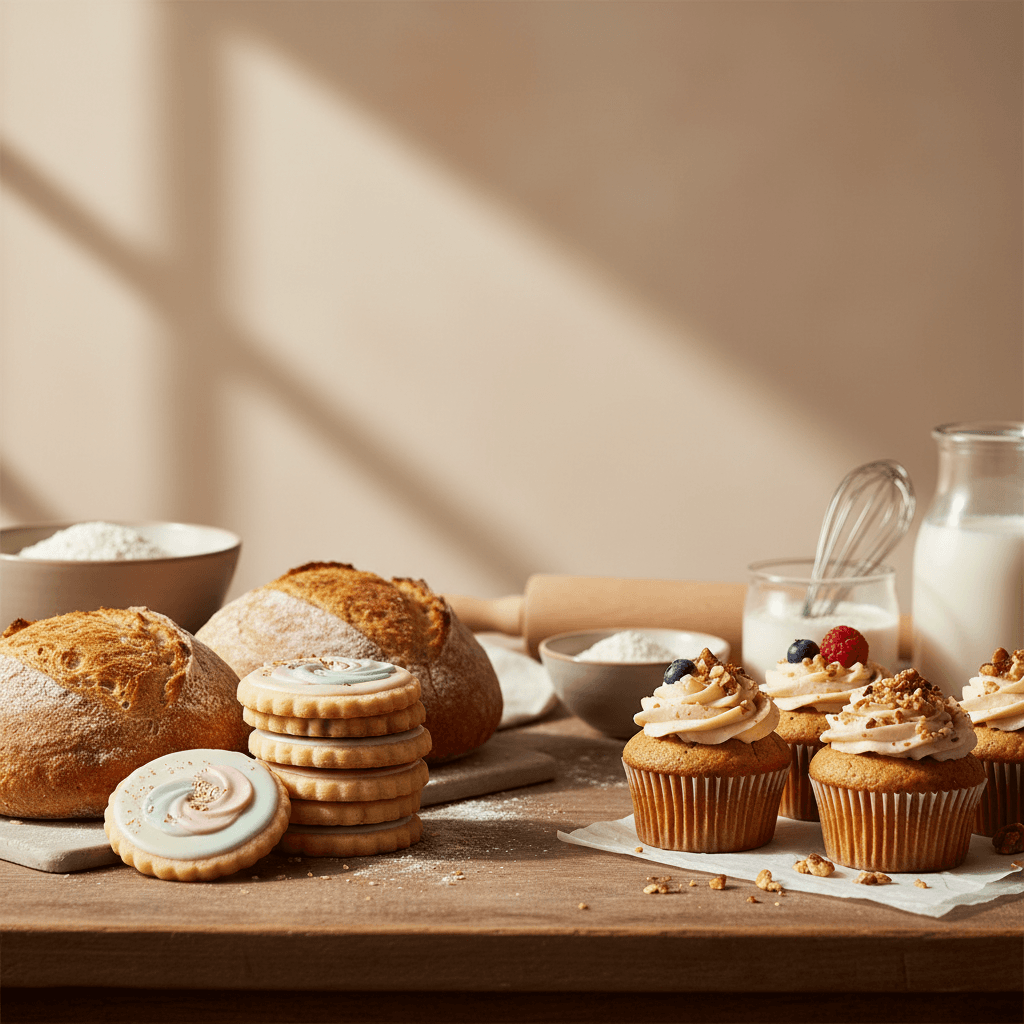
If you're thinking about selling gluten-free baked goods, you're probably wondering which items will actually make you money — not just keep you busy. We've broken down the most profitable gluten-free items to sell based on real ingredient costs, realistic pricing, and what home bakers are actually reporting in take-home income.
Key takeaways
- Gluten-free baked goods command a 30-60% pricing premium over conventional items, and customers expect to pay it.
- The most profitable items combine low ingredient cost with high perceived value — decorated cookies, specialty bread, and cupcakes lead the pack.
- Realistic side hustle income is $500-$2,000/month; full-time replacement income is $3,000-$6,000/month, but it takes 3-6 months of consistent effort to get there.
- Customer loyalty in the gluten-free market is exceptionally high — once someone trusts your products, they rarely switch.
- Profit margins on gluten-free goods range from 55-75%, compared to 40-55% for conventional baked goods, because customers already expect premium pricing.
- The biggest profit killer isn't ingredients — it's underpricing your labor and not batching production efficiently.
Why gluten-free baked goods have better margins than conventional
Gluten-free baked goods typically carry profit margins of 55-75%, which is significantly higher than conventional baking. The reason is straightforward: your customers already expect to pay more. A loaf of gluten-free bread at the grocery store costs $6-$9, and most of it is mediocre at best. When you offer something that actually tastes good and is made fresh, charging $8-$14 per loaf feels like a bargain to your customer.
Yes, almond flour and specialty starches cost more than all-purpose flour. But your pricing reflects that — and then some. The real advantage is that gluten-free customers are underserved. Many of them have celiac disease or serious intolerances and have been burned by bad products for years. When they find a baker they trust, they become fiercely loyal repeat customers. We're talking weekly or biweekly orders, not one-off purchases.
If you're just starting to explore gluten-free baking, our gluten-free baking guide covers the fundamentals you'll need to get consistent results before you start selling.
The most profitable gluten-free items ranked by margin
Not all baked goods are created equal when it comes to profit. Here's a breakdown of the most profitable gluten-free items based on real ingredient costs, typical selling prices, and the time investment required.
| Item | Ingredient cost per unit | Typical selling price | Profit margin | Time to produce (batch) |
|---|---|---|---|---|
| Decorated sugar cookies (dozen) | $3-$5 | $30-$60 | 70-90% | 2-3 hours |
| Cupcakes (dozen) | $4-$6 | $30-$48 | 70-85% | 1.5-2 hours |
| Specialty bread loaf | $2.50-$4 | $8-$14 | 55-70% | 3-4 hours (multiple loaves) |
| Brownies/bars (dozen) | $3-$5 | $24-$36 | 65-80% | 1-1.5 hours |
| Muffins (dozen) | $3-$5 | $24-$36 | 65-75% | 1-1.5 hours |
| Layer cake (8-inch) | $8-$14 | $45-$85 | 60-75% | 3-5 hours |
| Pie | $6-$10 | $28-$45 | 55-70% | 2-3 hours |
| Cinnamon rolls (half dozen) | $3-$5 | $18-$30 | 65-75% | 3-4 hours (with rise time) |
A few things jump out from this table. Decorated cookies have the highest margin by far, but they also require artistic skill and are time-intensive per unit. Cupcakes and brownies hit a sweet spot of high margin, relatively fast production, and broad appeal. Bread is interesting because the per-unit margin is lower, but it drives repeat weekly orders like nothing else.
Decorated cookies: the highest margin gluten-free item
Decorated gluten-free sugar cookies are the single highest-margin item you can sell. A dozen decorated cookies costs $3-$5 in ingredients (including brown rice flour, butter, sugar, and royal icing supplies) and sells for $30-$60 depending on design complexity and your market.
The catch? They're labor-intensive. Cutting, baking, flooding with icing, and detailing a dozen cookies can take 2-3 hours. You need to factor your time into the price — and many new bakers don't. If you're selling a dozen decorated cookies for $24, you're essentially paying yourself $7-$8/hour after ingredients. At $48-$60 per dozen, the math works much better.
Decorated cookies also have strong seasonal demand. Holiday sets, baby showers, birthdays, and weddings keep orders flowing year-round. And gluten-free decorated cookies are extremely hard to find commercially, which means less competition for you.
Want to make sure you're set up with the right tools and ingredients before you start selling? The Confident Gluten-Free Baker Toolkit walks you through exactly what you need in your kitchen to get consistent, professional results — which matters a lot when customers are paying premium prices.
Gluten-free bread: the repeat order engine
Bread has a lower per-unit margin than cookies or cupcakes, but it's the most powerful item for building consistent income. Here's why: people eat bread every week. A customer who orders a loaf of your sandwich bread every Friday is worth $32-$56 per month without you doing any marketing at all.
The key is getting the recipe right. Gluten-free bread is notoriously tricky — gummy centers, dry crumbly texture, and quick staling are all common problems. But if you nail it, you'll have customers who order from you for years. We've seen home bakers build $1,500-$2,500/month in revenue from bread alone, with 10-15 regular weekly customers.
Focus on sandwich bread first (highest demand), then expand into specialty loaves like cinnamon raisin, herb focaccia, or sourdough-style. Each new variety gives existing customers a reason to add to their order.
Cupcakes and brownies: the best items for getting started
If you're just starting out and want to build income quickly, cupcakes and brownies are your best bet. They're forgiving to make, easy to batch, and have broad appeal. A batch of 24 gluten-free cupcakes costs $8-$12 in ingredients and sells for $60-$96. That's real money for a couple hours of work.
Brownies are even simpler. They require minimal decoration, they're almost impossible to mess up once you have a solid recipe, and they travel well. A dozen gluten-free brownies packaged nicely can sell for $24-$36, and you can produce several dozen in an afternoon.
The strategy here is volume. While cookies and cakes bring in more per order, cupcakes and brownies let you serve more customers per week with less stress. That's how you build your customer base and reputation before moving into higher-ticket items.
If you're building out your baking setup on a budget, our guide to affordable baking essentials for gluten-free bakers can help you avoid overspending on equipment you don't need yet.
Realistic income expectations: side hustle vs. full-time
Let's be honest about the numbers, because too many "start a baking business" articles make it sound like you'll be earning $5,000/month by week three. That's not how it works.
Side hustle income ($500-$2,000/month)
Most home bakers reach $500-$2,000/month within 2-4 months of consistent selling. At this level, you're typically baking 2-3 days per week and filling 5-15 orders. This is achievable while working a full-time job, but it requires discipline with your time and clear boundaries about order capacity.
A typical side hustle week might look like: 4 dozen cupcakes ($120-$192), 2 dozen decorated cookies ($60-$120), and 6 loaves of bread ($48-$84). That's $228-$396 per week, or roughly $900-$1,600/month — with ingredients costing you about 25-35% of revenue.
Full-time replacement income ($3,000-$6,000/month)
Getting to $3,000-$6,000/month is absolutely possible, but it usually takes 4-8 months of building your customer base. At this level, you're baking 4-5 days per week, managing 20-40+ orders, and likely offering a wider product range including custom cakes and seasonal items.
The bakers who reach this level fastest share a few traits: they price correctly from day one (no undercharging to "get customers"), they focus on repeat orders over one-time sales, and they batch their production ruthlessly. Baking 6 loaves of bread at once instead of 2 is barely more work but triples your revenue from that time slot.
What holds most people back
The number one reason home bakers stall at $500-$800/month is underpricing. If you charge $18 for a dozen cupcakes because you're "just starting out," you're training customers to expect that price forever. Charge what the product is worth from the beginning. Gluten-free customers understand premium pricing — they're already paying $6-$8 for a mediocre grocery store cake mix.
The second biggest obstacle is inconsistency. Selling sporadically whenever you feel like it doesn't build a customer base. Regular availability — even if it's just "I bake every Wednesday and Saturday" — gives people a reason to plan their orders around you.
How to maximize your profit margins
Getting the highest margins isn't just about what you sell — it's about how you run the business side.
Buy ingredients in bulk
Your ingredient costs drop 20-40% when you buy flour, sugar, and starches in bulk rather than retail bags. A 25-pound bag of tapioca starch costs a fraction per pound compared to the 16-ounce bag at the grocery store. Once you're selling consistently, bulk purchasing is the single easiest way to increase your margins.
Batch production is everything
Making one cake at a time is a hobby. Making four cakes in the same oven session is a business. Your oven is already hot, your mixer is already dirty, and your kitchen is already a mess. Batching means you spread your setup and cleanup time across more units, which dramatically increases your effective hourly rate.
Offer a focused menu
New bakers often make the mistake of offering 15 different items. This kills your efficiency and your ingredient purchasing power. Start with 3-5 items, perfect them, and only add new products when demand justifies it. A focused menu means less waste, faster production, and better quality.
Don't forget to price your time
Your ingredient cost is only part of the equation. If a layer cake takes you 4 hours and you sell it for $45 with $12 in ingredients, you're making $8.25/hour. That same 4 hours spent making cupcakes could generate $120+ in revenue. Always calculate your effective hourly rate for each product and focus on the items that pay you the most per hour.
Why gluten-free customers are your best customers
We touched on this earlier, but it deserves its own section because it's the single biggest advantage of specializing in gluten-free. The customer loyalty in this market is unlike anything in conventional baking.
People with celiac disease or gluten intolerance aren't choosing gluten-free as a trend. It's a medical necessity. They've spent years reading labels, getting disappointed by dry grocery store options, and feeling left out at celebrations. When they find a baker who makes things that taste genuinely good and are reliably safe, they don't just become repeat customers — they become evangelists. They tell every person in their celiac support group, every parent at their kid's school, every coworker who needs to order for an office party.
This word-of-mouth effect is incredibly powerful. Many successful gluten-free home bakers report that 60-80% of their new customers come from referrals, not social media or advertising. That means lower marketing costs and higher-quality leads — people who already trust you before they've even placed their first order.
If you want to make sure your products are safe and you understand cross-contamination concerns, take the time to learn proper protocols. Your customers' health depends on it, and your reputation depends on their trust.
The best product mix for building a gluten-free home bakery
Based on what we've seen work, here's the product mix we'd recommend for someone just starting out:
- One signature bread — This is your repeat order foundation. Perfect one loaf (sandwich bread is the safest bet) and offer it weekly.
- One easy batch item — Brownies, muffins, or scones. Something you can produce in volume with minimal decoration. This builds your customer base quickly.
- One premium item — Decorated cookies or cupcakes. This is your high-margin product that brings in larger per-order revenue.
As you grow, you can add seasonal specials (pumpkin bread in fall, cookie sets for holidays) and custom cakes for special occasions. But starting with three core items keeps things manageable while you figure out your production rhythm and build your customer base.
For getting your kitchen stocked with the right equipment without overspending, check out our baking starter kit guide — it covers exactly what you need and what you can skip.
Frequently asked questions
How much does it cost to start a gluten-free home bakery?
Most home bakers can get started for $200-$500 in initial equipment and ingredient costs, assuming you already have a standard oven and basic kitchen tools. Your biggest upfront expenses are specialty flours and starches, quality baking pans, and a reliable kitchen scale. You don't need commercial equipment to start — many successful home bakers use standard home ovens for months before upgrading.
Do I need a special license to sell gluten-free baked goods from home?
This depends entirely on your state's cottage food laws. Most US states allow home-based food sales with minimal licensing, but requirements vary widely — some states cap annual revenue, some require food handler certifications, and some restrict which items you can sell. Check your state's specific cottage food regulations before you start taking orders.
What gluten-free flour blend is best for selling baked goods?
For commercial-quality results, most professional home bakers use a blend of brown rice flour, tapioca starch, and potato starch as their base, often with xanthan gum for structure. Mixing your own blend in bulk is significantly cheaper than buying pre-made blends, and it gives you more control over texture and flavor.
How do I price gluten-free baked goods so customers actually buy?
Price based on your ingredient cost (aim for ingredients to be 25-35% of your selling price), your time, and your local market. Don't anchor to conventional bakery prices — anchor to what gluten-free products cost at the grocery store and specialty bakeries. Most gluten-free customers expect to pay 30-60% more than conventional prices and are happy to do so for quality homemade products.
Can I make a full-time income selling gluten-free baked goods from home?
Yes, but it requires treating it like a real business from day one. Full-time replacement income of $3,000-$6,000/month is achievable within 4-8 months for bakers who price correctly, maintain consistent availability, and focus on building repeat customers. It's not passive income and it's not easy — you're running a production schedule, managing orders, and handling customer relationships. But the demand is real and the margins support it.
Ready to turn this into a real plan?
Knowing which items are profitable is step one. The harder part is building a system that turns first-time buyers into consistent repeat customers — and scaling your production without burning out. That's where most home bakers get stuck.
Want to see the exact path from first order to stable income? This free masterclass is taught by a home baker who built a full-time income in 3 months — and shows you how to get consistent repeat customers without relying on social media.

Written by
Co-founder, BakingSubs
Co-founder of BakingSubs, where he turns the science of ingredient substitutions into tested, reliable guidance for home bakers.
Related Posts
Gluten-Free Flour Weight Chart: Grams per Cup for 9 Major Brands (and Why the Spread Is Over 20%)
Best Low Carb Tortillas (2026): 6 Brands Compared by Net Carbs
Best Sugar-Free Cake Mix and Brownie Mix (2026): 14 Options Ranked by Net Carbs, Sweetener, and Price
Bake with Confidence
See all
Confident Gluten-Free Baker Toolkit
The science-based system that replaces gluten's seven invisible jobs so your baking turns out soft, fluffy, and foolproof — every time.

Gluten-Free Recipe Vault
Instant access to our complete library of proven gluten-free recipes — no waiting, no guesswork, just results that work tonight.

Fix Your Gluten-Free Bread
Learn the 3-step formula to make bread rise and stay soft, discover why your loaves collapse, and get a tested sandwich bread recipe that actually works.