

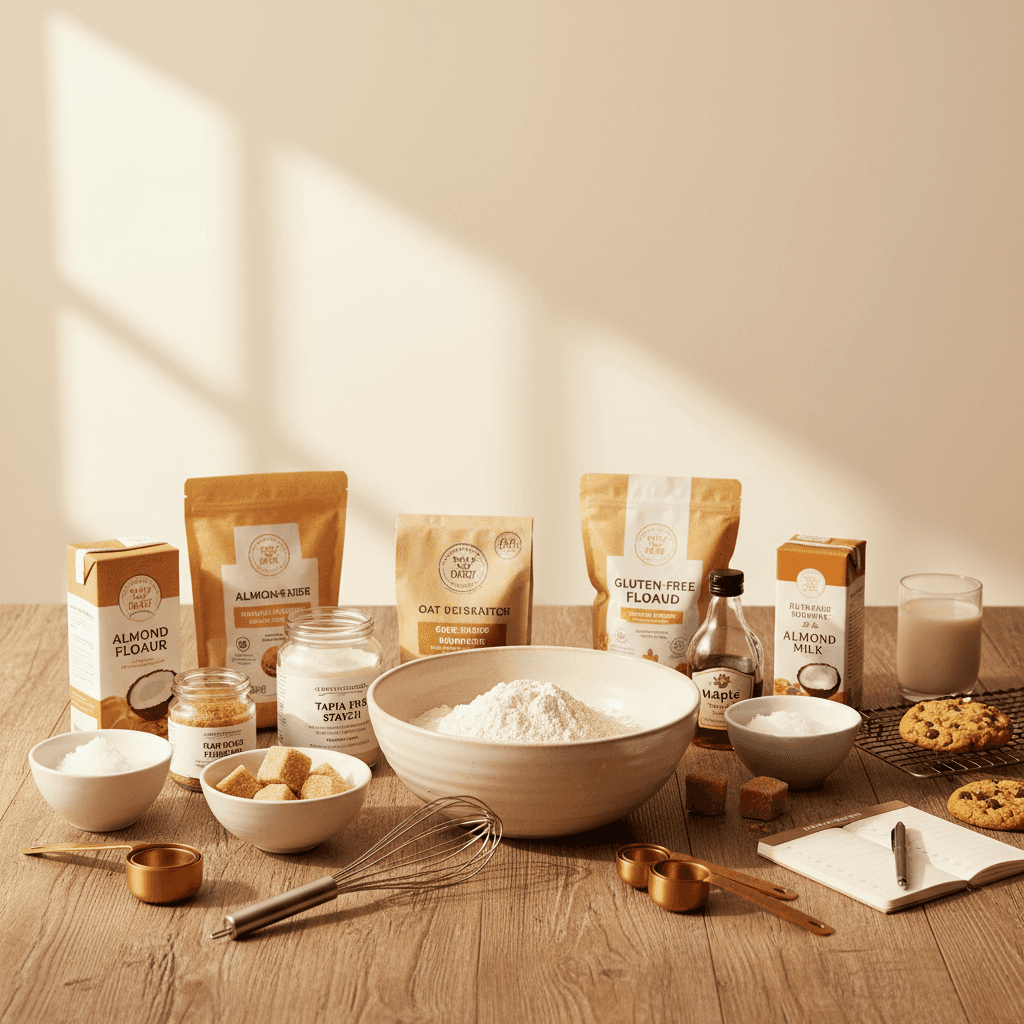
Starting gluten-free baking from scratch can feel overwhelming when you stare at a wall of unfamiliar flours, gums, and starches. This is a concise, no-fluff checklist for day one — every ingredient and tool you actually need, organized by category so you can stock your pantry in a single shopping trip.
Key takeaways
- A single good all-purpose gluten-free flour blend handles 80% of beginner recipes — you don't need five specialty flours right away.
- Xanthan gum or psyllium husk is non-negotiable; without a binder, gluten-free baked goods crumble apart.
- A digital kitchen scale is the single most impactful tool upgrade for gluten-free baking accuracy.
- You can build a fully functional gluten-free baking pantry for roughly $60–$80 at most grocery stores.
- Buying certified gluten-free products matters — regular oat flour or baking powder can contain trace gluten from shared facilities.
The complete gluten-free baking starter kit checklist
We've broken everything into seven categories. For each one, we list exactly what to buy, a specific product recommendation, and an approximate price so you can budget the whole haul before you shop.
Category | Essential item | Recommended product | Approx. price |
|---|---|---|---|
Flour | All-purpose GF blend | Bob's Red Mill 1-to-1 Baking Flour | $6–$8 |
Flour | Starch (optional but useful) | Bob's Red Mill Tapioca Flour | $4–$6 |
Sweetener | Any store brand | $3–$4 | |
Sweetener | Any store brand | $3–$4 | |
Fat | Unsalted butter or dairy-free alternative | Kerrygold or Miyoko's (if dairy-free) | $5–$7 |
Fat | Neutral oil | $5–$8 | |
Leavener | Baking powder (GF-certified) | Clabber Girl Gluten Free | $3–$4 |
Leavener | Arm & Hammer (naturally GF) | $1–$2 | |
Binder | Bob's Red Mill Xanthan Gum | $9–$12 | |
Dairy | Oat milk (Planet Oat) or whole milk | $3–$5 | |
Extras | McCormick Pure Vanilla | $5–$8 | |
Extras | Eggs | Any large eggs | $3–$5 |
Equipment | Digital kitchen scale | OXO Good Grips 11lb Food Scale | $25–$30 |
Equipment | Measuring cups and spoons | Stainless steel set | $8–$12 |
Equipment | Mixing bowls | Pyrex 3-piece glass set | $12–$15 |
Equipment | Silicone spatula | GIR Ultimate Spatula | $12–$15 |
Estimated total: $60–$85 for everything on this list. That gets you through cookies, quick breads, muffins, pancakes, and simple cakes.
Flour: start with one blend, not five
The single most important purchase is a reliable all-purpose gluten-free flour blend. A 1-to-1 style blend lets you follow most standard recipes with minimal adjustments, which is exactly what you want when you're just getting started.
We recommend the Bob's Red Mill 1-to-1 Baking Flour ($6–$8 for a 22 oz bag). It includes xanthan gum in the blend, which means one less thing to measure. You can find it at Walmart, Target, Kroger, and most grocery stores. For a deeper comparison of what's out there, check out our complete guide to Bob's Red Mill gluten-free products.
If you want to branch out later, a bag of brown rice flour or almond flour opens up new recipe possibilities. But for week one, a single all-purpose blend is all you need.
If you're curious how different blends compare head to head, we break that down in our Bob's Red Mill vs King Arthur gluten-free flour comparison.
Sweeteners: keep it simple
Granulated white sugar and brown sugar cover the vast majority of beginner recipes. Both are naturally gluten-free, so any store brand works perfectly here. No need to overthink this category early on.
Down the road, you might explore agave nectar, honey, or maple syrup for specialty recipes. If you're interested in reducing sugar, our best gluten-free low sugar baking products guide covers options that actually work. But for your starter kit, the classic duo of white and brown sugar is all you need — budget about $6–$8 total.
Want to understand what sugar actually does beyond sweetness? Our sugar functions guide explains why it matters for moisture, browning, and texture.
Fats: butter, oil, or both
Most baking recipes call for either butter or oil, so having both on hand gives you full flexibility. For butter, any unsalted variety works. If you're also dairy-free, the Miyoko's European Style Cultured Vegan Butter ($5–$7) is our top pick — it's made to cream, melt, and brown like real butter. We compared a bunch of options in our best gluten-free dairy-free butter for baking roundup.
For oil, grab a bottle of canola oil or avocado oil. Both are neutral-flavored and work in everything from muffins to brownies. A single bottle runs $5–$8 and lasts a long time.
If you want to dive deeper into stocking a gluten-free kitchen day to day, the Confident Gluten-Free Baker Toolkit walks you through a full pantry setup, brand picks, and troubleshooting shortcuts.
Leaveners: baking powder and baking soda
Baking powder and baking soda are the engine behind rise in quick breads, muffins, cookies, and cakes. You need both — they're not interchangeable.
The one thing to watch: some baking powders contain wheat starch as an anti-caking agent. Grab a certified gluten-free version like Clabber Girl Gluten Free Baking Powder ($3–$4). Baking soda is naturally gluten-free, so any brand is fine.
If your bakes aren't rising the way you expect, our poor rise troubleshooting guide walks through the most common causes and fixes.
Binders: the ingredient that replaces gluten's job
This is the category that trips up most beginners. In wheat baking, gluten provides structure and elasticity. In gluten-free baking, you need a substitute binder — otherwise everything crumbles. The two most common options are xanthan gum and psyllium husk.
For a starter kit, we recommend xanthan gum. A small bag of Bob's Red Mill Xanthan Gum ($9–$12) lasts months because you only use 1/4 to 1 teaspoon per recipe. It works in cookies, cakes, muffins, and quick breads.
If you're curious about the differences, our xanthan gum vs guar gum comparison breaks down when each one works best.
Important note: If your flour blend already contains xanthan gum (like Bob's Red Mill 1-to-1), you may not need to add extra. Check the ingredient label before doubling up, or you'll end up with a gummy texture. Our gummy centers troubleshooting guide explains why this happens.
Dairy and dairy alternatives
Most baking recipes need some form of liquid dairy — usually milk, buttermilk, or sour cream. If you tolerate dairy, regular whole milk works perfectly. If you're dairy-free, oat milk is our go-to because it has a neutral flavor and enough fat to perform well in baked goods.
For your starter kit, just pick one:
- Dairy: whole milk ($3–$4 per half gallon)
- Dairy-free: oat milk or almond milk ($3–$5 per carton)
You can learn more about how different milks behave in baking on our choosing milk alternatives guide.
Essential equipment for gluten-free beginners
You don't need a stand mixer or a proofing box to get started. Here are the four tools that make the biggest difference on day one:
Digital kitchen scale
This is the single best investment for gluten-free baking accuracy. Gluten-free flours vary wildly in density — a cup of almond flour weighs completely differently than a cup of rice flour blend. Measuring by weight eliminates guesswork. We recommend the OXO Good Grips 11lb Food Scale ($25–$30).
Measuring cups and spoons
Even with a scale, you'll need measuring spoons for small amounts of binders, leaveners, and extracts. A basic stainless steel set ($8–$12) is all you need. Avoid plastic — it warps over time and loses accuracy.
Mixing bowls
A set of three nesting glass or stainless steel bowls covers everything from whisking dry ingredients to mixing batters. The Pyrex 3-piece glass mixing bowl set ($12–$15) is a solid starter option.
Silicone spatula
Gluten-free batters tend to be stickier and thicker than wheat-based ones. A good silicone spatula makes scraping bowls and folding batter much easier. Budget about $12–$15 for a quality one.
What you can skip for now
It's tempting to buy everything at once, but these items can wait until you've baked a few recipes and know what direction you want to go:
- Specialty flours like cassava flour, buckwheat flour, or amaranth flour — great for later, unnecessary for beginners
- Stand mixer — a whisk and spatula handle most beginner recipes
- Grain mill — milling your own flour is a level-up move, not a starting point
- Proofing box — only needed once you get into yeast breads
- Multiple binder types — start with xanthan gum, explore others once you're comfortable
Where to buy everything on this list
Every item on this starter kit is available at major grocery stores and online. Here are your best options depending on where you shop:
- Walmart: carries Bob's Red Mill, Clabber Girl, and all the basics at competitive prices. See our Walmart gluten-free shopping guide for a full aisle-by-aisle breakdown.
- Target: good selection of Bob's Red Mill and store-brand options. Our Target gluten-free guide covers what's available.
- Amazon: best for buying xanthan gum and specialty items in bulk. Check our Amazon gluten-free baking guide for curated picks.
Frequently asked questions
What is the best gluten-free flour for beginners?
A 1-to-1 all-purpose gluten-free flour blend is the best starting point. Bob's Red Mill 1-to-1 Baking Flour and King Arthur Measure for Measure are both widely available and work as direct replacements for regular all-purpose flour in most recipes. Start with one blend before branching into specialty flours.
Do I need xanthan gum if my flour blend already contains it?
No — if your flour blend lists xanthan gum in the ingredients, you typically don't need to add more. Adding extra can make baked goods gummy or overly chewy. Always check the label, and if a recipe calls for xanthan gum separately, skip it when using a blend that already includes it.
How much does a gluten-free baking starter kit cost?
You can build a fully functional gluten-free baking pantry for roughly $60–$85. The biggest single expenses are a digital kitchen scale ($25–$30) and xanthan gum ($9–$12). Everything else — flour, sugar, leaveners, fat, and basic tools — runs $3–$15 per item at most grocery stores.
Can I use regular baking powder for gluten-free baking?
Some regular baking powders contain wheat starch as a filler, which is not safe for people with celiac disease or gluten sensitivity. Look for brands labeled certified gluten-free, like Clabber Girl Gluten Free or Hain Pure Foods. Baking soda is naturally gluten-free regardless of brand.
What should I bake first as a gluten-free beginner?
Start with something forgiving — muffins, pancakes, or cookies are all great first projects because they don't require precise structure the way bread does. If you want to use a mix to build confidence first, our best gluten-free cookie mix and best gluten-free muffin mix roundups have solid options to try.

Written by
Co-founder, BakingSubs
Co-founder of BakingSubs, where he turns the science of ingredient substitutions into tested, reliable guidance for home bakers.
Related Posts
Bake with Confidence
See all
Confident Gluten-Free Baker Toolkit
The science-based system that replaces gluten's seven invisible jobs so your baking turns out soft, fluffy, and foolproof — every time.

Gluten-Free Recipe Vault
Instant access to our complete library of proven gluten-free recipes — no waiting, no guesswork, just results that work tonight.

Fix Your Gluten-Free Bread
Learn the 3-step formula to make bread rise and stay soft, discover why your loaves collapse, and get a tested sandwich bread recipe that actually works.