

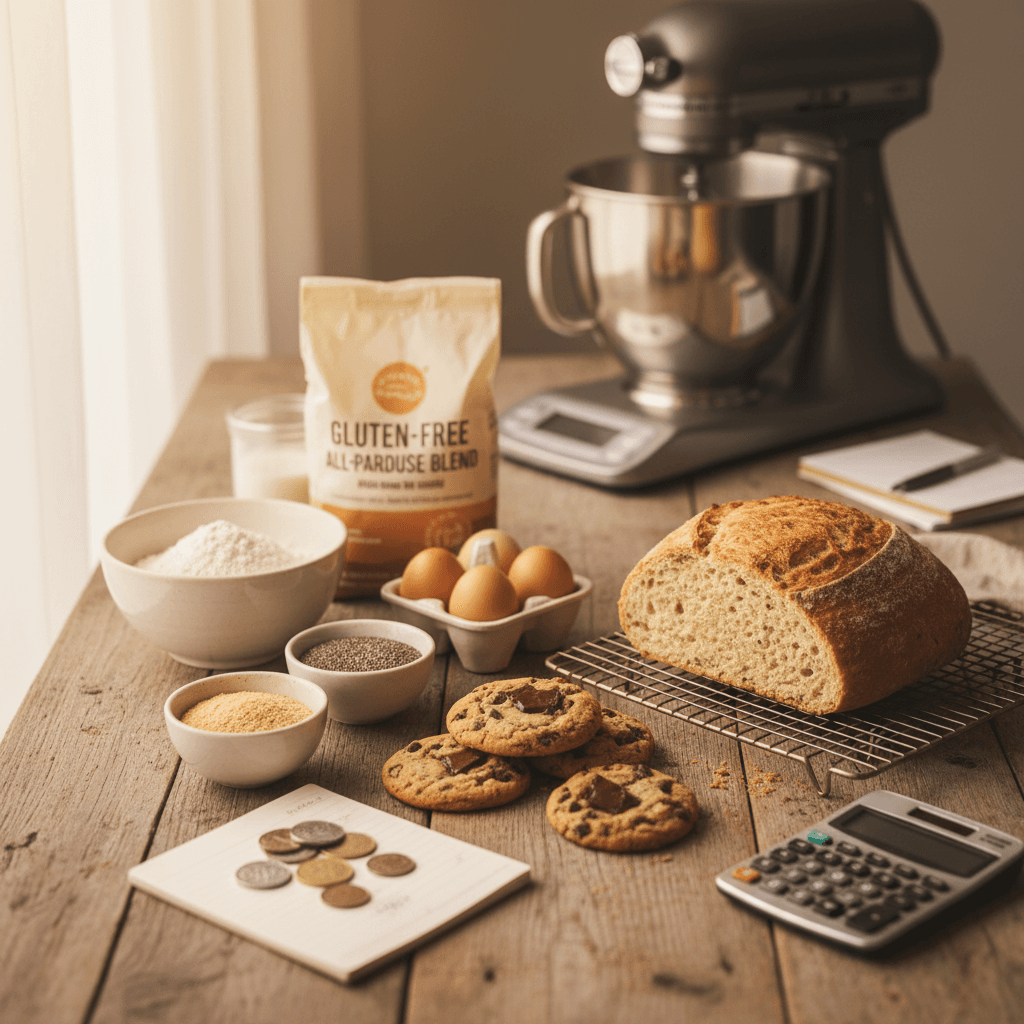
Pricing is the single biggest thing most home bakers get wrong, and it's the reason so many talented bakers burn out within a year. This guide walks you through exactly how to calculate your costs, set profitable prices, and stop undercharging for your work.
Key takeaways
- Your ingredient cost should represent no more than 25-35% of your final selling price — if it's higher, you're undercharging.
- Most home bakers forget to account for overhead costs like packaging, labels, electricity, and cottage food license fees ($0-$500+ depending on your state).
- Labor is a real cost even when you're the only employee — price your time at $20-$35/hour minimum.
- A batch of 12 decorated sugar cookies that costs $18 in ingredients should sell for $48-$72, not $24.
- Pricing too low attracts price-sensitive customers who are the hardest to retain and most likely to complain.
- Revisit your pricing every 3-6 months as ingredient costs fluctuate — flour and butter prices have risen 15-30% in the past two years alone.
Why most home bakers underprice their products
The most common pricing mistake is calculating ingredient cost and then adding a small markup. This feels logical, but it ignores the majority of what it actually costs to run a home bakery. Your time, your skill, your packaging, your kitchen utilities, your food safety compliance — all of that has a dollar value.
Many home bakers also fall into the trap of comparing their prices to grocery store baked goods. A mass-produced cake from a chain store has economies of scale you will never match, and you shouldn't try. Your customers are buying handmade, fresh, often customized products — that commands a premium.
Step 1: Calculate your true ingredient cost per item
Start by listing every single ingredient in a recipe, then figure out the cost per unit used. This means breaking down that 5-pound bag of flour into the cups you actually use. Here's an example for a batch of 24 vanilla cupcakes:
| Ingredient | Amount used | Cost per unit | Cost for recipe |
|---|---|---|---|
| All-purpose flour (or GF blend) | 3 cups | $0.35/cup (conventional) or $0.85/cup (GF) | $1.05 - $2.55 |
| Granulated sugar | 1.5 cups | $0.25/cup | $0.38 |
| Butter | 1 cup (2 sticks) | $2.50/cup | $2.50 |
| Eggs | 3 large | $0.45/egg | $1.35 |
| Vanilla extract | 2 tsp | $0.60/tsp | $1.20 |
| Buttermilk | 1 cup | $0.75/cup | $0.75 |
| Baking powder | 2 tsp | $0.05/tsp | $0.10 |
| Salt | 0.5 tsp | $0.01/tsp | $0.01 |
| Frosting ingredients | — | — | $3.50 |
| Total ingredient cost | $10.84 - $12.34 |
That works out to roughly $0.45-$0.51 per cupcake in ingredients alone. If you're baking gluten-free, your flour costs will be higher — often 2-3x the price of conventional flour. This is exactly why gluten-free home bakers need to be especially careful about pricing. For a breakdown of flour costs, our guide on cheap vs expensive baking flour covers the real price differences.
Step 2: Add your overhead costs
Overhead is everything you spend to run your bakery that isn't a direct ingredient. Most home bakers completely skip this step, which is why they end up losing money. Here are the overhead categories you need to track:
| Overhead category | Typical monthly cost | Notes |
|---|---|---|
| Packaging (boxes, bags, labels, ribbon) | $50 - $200 | $0.50-$3.00 per order depending on presentation |
| Cottage food license/permit | $0 - $40/month (amortized) | Annual fees range from $0 to $500 by state |
| Kitchen utilities (gas, electric, water) | $30 - $80 | Estimate the portion used for baking |
| Equipment wear and replacement | $20 - $50 | Mixers, pans, tools — they don't last forever |
| Marketing (business cards, website, social) | $0 - $100 | Even a free Instagram account costs your time |
| Insurance (if applicable) | $20 - $50 | Some states require it; always a smart investment |
| Food safety training/certification | $5 - $15 (amortized) | Often $50-$150 one-time cost |
To apply overhead to each product, estimate your total monthly overhead and divide it by the number of items you sell per month. If your overhead is $200/month and you sell 100 items, that's $2.00 per item in overhead.
If you're just getting started and need to keep equipment costs down, our affordable baking tools for beginners guide covers everything you need without overspending on gear you won't use.
Want a step-by-step system for building a home bakery that actually makes money? Check out our free Home Bakery Pro masterclass — it covers the 3 biggest mistakes new home bakers make and how to get consistent, repeat orders.
Step 3: Price your labor (yes, your time counts)
Your labor is the biggest hidden cost in home baking, and it's the one most people refuse to charge for. But here's the reality: if you don't pay yourself, you don't have a business — you have an expensive hobby.
Track how long each product takes from start to finish, including:
- Recipe prep and measuring
- Active baking and decorating time
- Cooling and packaging
- Cleanup
- Customer communication and order management
- Shopping for ingredients
A batch of 24 cupcakes might take 3 hours total when you account for everything. At $25/hour, that's $75 in labor, or $3.13 per cupcake. Now let's put it all together.
Step 4: Use the pricing formula
Here's the formula we recommend for home bakery pricing:
(Ingredient Cost + Labor + Overhead) x Profit Margin Multiplier = Selling Price
Your profit margin multiplier should be at least 1.2-1.5 (meaning 20-50% profit on top of your costs). This profit is what funds business growth, covers unexpected expenses, and makes the whole thing sustainable.
Let's run the numbers on those 24 cupcakes:
| Cost component | Per cupcake | Per batch (24) |
|---|---|---|
| Ingredients | $0.51 | $12.34 |
| Labor (3 hrs at $25/hr) | $3.13 | $75.00 |
| Overhead | $2.00 | $48.00 |
| Subtotal (cost) | $5.64 | $135.34 |
| Profit margin (1.3x) | $7.33 | $175.94 |
That means each cupcake should sell for around $7.00-$7.50, or about $42-$45 per half dozen. Does that sound high? It's actually in line with what successful home bakeries charge in most markets.
Step 5: Research your local market
Your formula gives you a floor — the minimum you should charge to be profitable. But the market determines your ceiling. Here's how to research effectively:
- Check other home bakers in your area. Look at Instagram, Facebook Marketplace, and local community groups. Note their prices, but don't automatically match them — many are undercharging.
- Look at local bakery shop prices. Brick-and-mortar bakeries have higher overhead than you, so their prices give you a useful upper reference point.
- Consider your niche. If you specialize in allergen-friendly baking (gluten-free, dairy-free, vegan), you can and should charge a premium. Customers with dietary restrictions expect to pay more and are often willing to because their options are limited.
- Factor in your area's cost of living. Cupcakes in San Francisco command different prices than cupcakes in rural Arkansas.
If you're offering specialty items like allergy-friendly baked goods, your ingredient costs are genuinely higher and your expertise is more specialized. Price accordingly.
Real pricing examples for common home bakery products
These are realistic price ranges for home bakeries in mid-cost-of-living areas in 2024-2025. Adjust up for high-cost areas and specialty/allergen-friendly products.
| Product | Too low | Profitable range | Premium range |
|---|---|---|---|
| Cupcakes (per dozen) | $18-$24 | $36-$60 | $60-$84 |
| Decorated sugar cookies (per dozen) | $24-$30 | $48-$72 | $72-$96 |
| 9-inch layer cake (2-layer, basic) | $25-$35 | $55-$85 | $85-$150 |
| Banana bread loaf | $5-$8 | $12-$18 | $18-$25 |
| Pie (9-inch, fruit) | $10-$15 | $25-$40 | $40-$55 |
| Cinnamon rolls (per half dozen) | $8-$12 | $18-$30 | $30-$42 |
| Brownies (per dozen) | $12-$18 | $24-$36 | $36-$48 |
If your current prices fall in the "too low" column, it's time to raise them. You can do this gradually — increase by 15-20% and see how your customers respond. Most home bakers are surprised to find that price increases result in almost zero lost orders.
How to handle pricing for gluten-free and specialty baked goods
If you're running a gluten-free home bakery, your costs are inherently higher. Gluten-free flour blends cost 2-4x more than conventional flour, and specialty ingredients like almond flour or cassava flour push that even further. You also need to factor in cross-contamination prevention, which may mean dedicated equipment and more careful sourcing.
A good rule of thumb: add 25-40% on top of your conventional pricing for gluten-free versions of the same product. Your customers understand this. People who need gluten-free baked goods are used to paying more, and they're thrilled to find a home baker who actually makes things that taste great.
The same principle applies to vegan, dairy-free, keto, or other specialty products. Higher ingredient costs and specialized knowledge equal higher prices. Period.
When and how to raise your prices
You should revisit your pricing at least every 3-6 months. Here are clear signals it's time to raise prices:
- Your ingredient costs have gone up (check butter, eggs, flour, and premium ingredients especially)
- You're fully booked and turning away orders
- You dread filling orders because the pay doesn't feel worth the work
- You haven't raised prices in over a year
- You're spending more time on each order than you originally estimated
When you do raise prices, be straightforward. A simple message like "Due to rising ingredient costs, our prices will be updating on [date]" is all you need. Don't apologize. Don't over-explain. Customers who value your work will stay.
Common pricing mistakes to avoid
Pricing based on what you'd personally pay
Your willingness to pay is irrelevant to your pricing strategy. You are not your target customer. Your customers are people who value handmade, fresh, customized baked goods enough to seek out a home baker instead of going to a grocery store.
Offering discounts to get started
Launching with low "introductory" prices trains your customers to expect those prices forever. It's much harder to raise prices 50% than to start at the right price and offer occasional promotions.
Forgetting about cottage food law sales caps
Most states have annual revenue caps for cottage food operations, typically ranging from $25,000 to $75,000 (some states have no cap at all). If you're pricing too low, you'll hit your revenue cap while still making very little actual profit. Higher prices mean more profit per sale within your legal limit. Check your specific state's cottage food laws for exact numbers.
Not accounting for failed batches
Sometimes things don't turn out. A collapsed cake or burnt cookies still cost you ingredients and time. Build a 5-10% waste factor into your pricing to cover the inevitable mishaps.
Frequently asked questions
How much should I charge for a dozen cookies from a home bakery?
For basic drop cookies like chocolate chip, $24-$36 per dozen is a reasonable starting point. Decorated sugar cookies require significantly more labor and should be priced at $48-$72 per dozen or higher depending on complexity. Always calculate your specific ingredient, labor, and overhead costs rather than copying someone else's prices.
Is it legal to sell baked goods from home?
Most U.S. states allow home-based food sales under cottage food laws, though the specific rules vary widely. Some states require permits or food handler certifications, many set annual revenue caps, and most restrict which products you can sell. Check your state's department of agriculture or health department website for current regulations before you start selling.
How do I price custom cakes for a home bakery?
Custom cakes should be priced per serving plus a design fee. Start with a base price of $4-$7 per serving for a simply decorated cake, then add charges for fondant work ($50-$150+), sculpted elements, multiple tiers, and complex designs. A 3-tier wedding-style cake for 50 guests might range from $250-$500+ depending on design complexity. Always require a 50% deposit.
Should I charge more for gluten-free baked goods?
Yes. Gluten-free ingredients cost significantly more than their conventional counterparts, and the specialized knowledge required to make them taste great has real value. A 25-40% markup over conventional pricing is standard and expected by customers who need allergen-friendly options. Our gluten-free baking guide covers the unique challenges involved.
How do I calculate food cost percentage for a home bakery?
Divide your total ingredient cost by your selling price and multiply by 100. For example, if a cake costs $15 in ingredients and you sell it for $60, your food cost percentage is 25%. Aim for a food cost percentage between 25-35%. If your food cost is above 35%, you're either underpricing or need to find ways to reduce ingredient costs without sacrificing quality — our guide to budget-friendly baking substitutes can help with that.
Take the next step with your home bakery
Getting your pricing right is essential, but it's only one piece of building a home bakery that actually sustains you. The other half is getting consistent orders from customers who come back again and again.
Join the free Home Bakery Pro masterclass — it covers the 3 biggest mistakes new home bakers make and how to actually get repeat customers without relying on social media. It's the natural next step after dialing in your pricing.

Written by
Co-founder, BakingSubs
Co-founder of BakingSubs, where he turns the science of ingredient substitutions into tested, reliable guidance for home bakers.
Related Posts
Gluten-Free Flour Weight Chart: Grams per Cup for 9 Major Brands (and Why the Spread Is Over 20%)
Best Low Carb Tortillas (2026): 6 Brands Compared by Net Carbs
Best Sugar-Free Cake Mix and Brownie Mix (2026): 14 Options Ranked by Net Carbs, Sweetener, and Price
Bake with Confidence
See all
Confident Gluten-Free Baker Toolkit
The science-based system that replaces gluten's seven invisible jobs so your baking turns out soft, fluffy, and foolproof — every time.

Gluten-Free Recipe Vault
Instant access to our complete library of proven gluten-free recipes — no waiting, no guesswork, just results that work tonight.

Fix Your Gluten-Free Bread
Learn the 3-step formula to make bread rise and stay soft, discover why your loaves collapse, and get a tested sandwich bread recipe that actually works.