

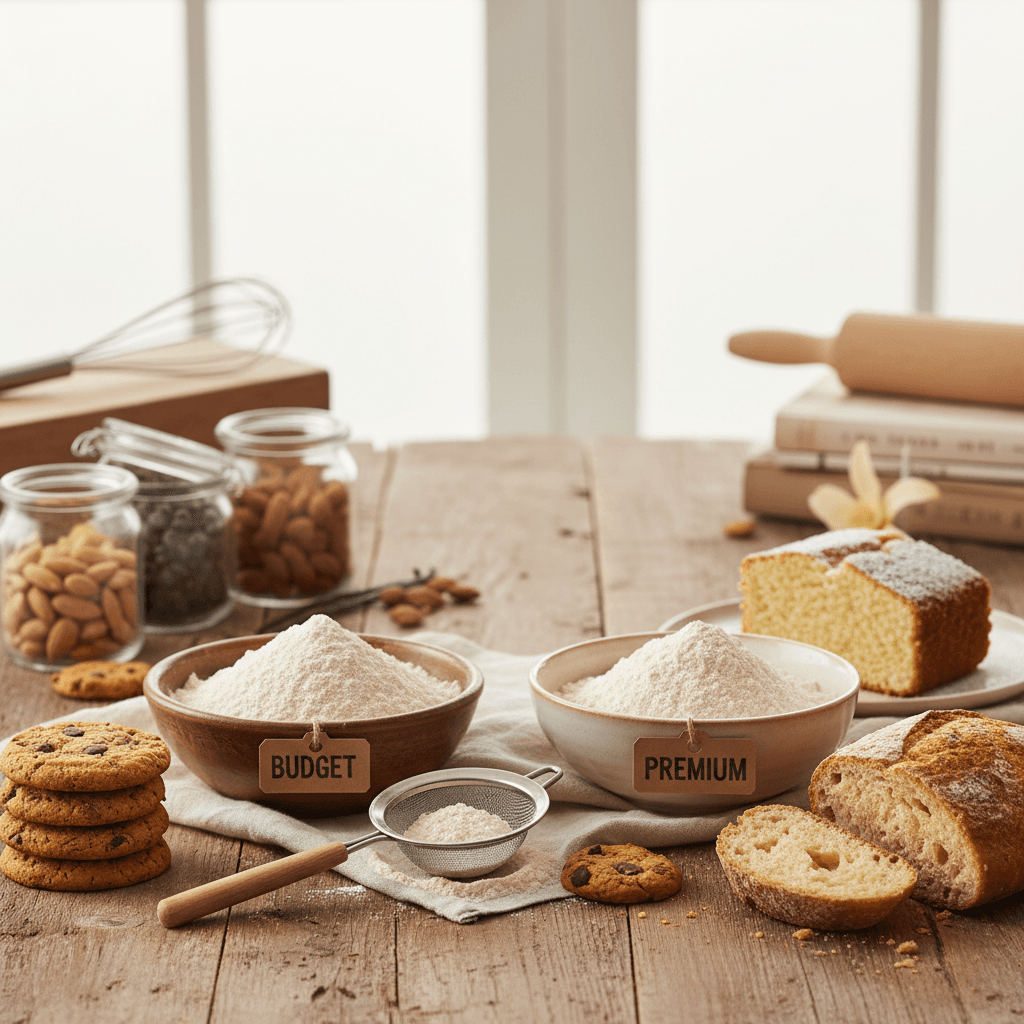
Not all flour is created equal, but a higher price tag doesn't automatically mean better baking results. We've compared budget and premium flours across cookies, bread, cakes, and more to help you figure out exactly when it's worth spending more and when the store brand works just fine.
Key takeaways
- For basic cookies and quick breads, budget all-purpose flour performs nearly identically to premium brands, because sugar, butter, and mix-ins mask subtle flour differences.
- Bread flour is where upgrading matters most — higher protein content in premium brands like King Arthur produces noticeably better structure and chew.
- Gluten-free flour blends show the biggest quality gap between cheap and expensive options, especially in texture and aftertaste.
- Specialty flours (almond, coconut, cassava) vary wildly by brand — freshness and grind consistency matter more than price alone.
- Buying premium flour in bulk often brings the per-pound cost close to budget brands, making it the smartest move for frequent bakers.
What actually makes flour "premium"?
Premium flour typically means higher protein content, more consistent milling, and better quality control. Brands like King Arthur and Bob's Red Mill test every batch for protein levels and grind consistency, which directly affects how your baked goods rise, hold together, and feel in your mouth. Budget brands like Great Value or store-brand flours are milled to looser specifications, meaning protein content can vary from bag to bag.
That said, "premium" doesn't always mean "best for your recipe." A high-protein bread flour would actually make your tender cake tough. Understanding what each flour does is more important than just buying the most expensive option on the shelf.
All-purpose flour: Great Value vs King Arthur
This is the matchup most bakers care about, and the answer might surprise you.
| Factor | Great Value All-Purpose | King Arthur All-Purpose |
|---|---|---|
| Price (approx. per lb) | $0.30 - $0.40 | $0.60 - $0.80 |
| Protein content | ~10-10.5% | 11.7% (consistent) |
| Milling consistency | Variable | Very consistent |
| Best for | Cookies, muffins, pancakes | Everything, especially bread-like recipes |
| Taste difference | Minimal in sweet bakes | Slightly cleaner flavor in plain breads |
In chocolate chip cookies and banana bread, the difference is hard to detect. The sugar, butter, and mix-ins mask any subtle flour differences. Where King Arthur pulls ahead is in recipes where flour is the star — simple bread loaves, pizza dough, and pie crusts. The higher, more consistent protein gives better structure and a more reliable result.
Bottom line: For everyday sweet baking, Great Value is perfectly fine. For bread, pizza dough, and pastry where structure matters, King Arthur's consistency is worth the extra cost.
Bread flour: store brand vs King Arthur unbleached bread flour
Bread flour is where the premium upgrade makes the biggest difference in conventional baking. King Arthur Bread Flour has a protein content of 12.7%, which is tightly controlled. Store-brand bread flours often claim similar protein levels but can swing between 11.5% and 13%, which means your loaves won't behave the same way from batch to batch.
That consistency shows up most in a basic sandwich loaf or pizza dough, where steady, higher protein means more predictable rise, structure, and chew. A store-brand bread flour can still make a decent loaf — it's just less predictable from bag to bag.
If you're serious about bread baking, this is the one category where we'd say always upgrade. If you're looking for the best gluten-free flour for bread, the same principle applies — quality and consistency matter enormously.
Bottom line: Upgrade your bread flour. The consistency alone saves you from failed loaves, and the per-loaf cost difference is only pennies.
If you're building out your gluten-free pantry and want to stop guessing about which flours and tools actually work, our Confident Gluten-Free Baker Toolkit walks you through everything from flour selection to troubleshooting common texture issues.
Gluten-free flour blends: budget vs premium
This is where the price gap matters most. Cheap gluten-free flour blends — the kind you find in the store's generic aisle — tend to be heavy on rice flour and tapioca starch with minimal thought given to balance. The result is often gritty texture, strange aftertaste, and baked goods that go stale within hours.
Premium blends like Bob's Red Mill 1-to-1, King Arthur Measure for Measure, and Cup4Cup use carefully calibrated ratios of starches, flours, and sometimes milk powder or xanthan gum to mimic the behavior of wheat flour. We've done a deep dive on the Bob's Red Mill vs King Arthur gluten-free flour comparison if you want the full breakdown.
| Factor | Budget GF blend (store brand) | Premium GF blend (Bob's Red Mill / King Arthur) |
|---|---|---|
| Price (approx. per lb) | $1.50 - $2.50 | $3.00 - $5.00 |
| Ingredient variety | 2-3 flours/starches | 4-6 flours/starches, often with xanthan gum |
| Texture in cakes | Gritty, crumbly | Tender, close to wheat |
| Taste | Noticeable rice/bean flavor | Neutral to mild |
| Versatility | Limited | Works across most recipes |
Budget gluten-free blends are prone to cakes that turn out dry and crumbly, cookies that spread too thin, and bread that is dense and gummy in the center. Premium blends aren't perfect — gluten-free baking always has its quirks — but they are far more reliable. If you're baking gluten-free, this is the single most impactful place to spend more money.
Bottom line: Always upgrade your gluten-free flour blend. The difference in taste, texture, and reliability is enormous. For specific use cases, check out our guides to the best gluten-free flour for cakes and best gluten-free flour for pizza dough.
Specialty flours: almond, coconut, and cassava
Specialty flours are a different game entirely. With almond flour, the main variable is grind fineness and whether it's blanched. A cheap almond flour with coarse, uneven particles will give you dense, oily baked goods. A finely ground blanched almond flour — like the Blue Diamond Finely Sifted Almond Flour — produces lighter, more delicate results, especially in macarons and cakes.
Coconut flour is less brand-dependent since most brands mill it similarly, but freshness matters. Old coconut flour absorbs even more liquid than fresh, throwing off your recipe. For a detailed comparison, we have a full post on almond flour vs coconut flour for baking.
Cassava flour is one where brand really matters. Cheap cassava flour can be stringy or have an off-putting fermented smell. The Otto's Naturals Cassava Flour is the gold standard — it behaves most like wheat flour and has a clean, neutral taste. It costs more, but the performance gap is significant.
Bottom line: For almond flour, buy blanched and finely ground. For coconut flour, freshness beats brand. For cassava flour, Otto's is worth every penny.
When cheap flour actually wins
Let's be honest — there are plenty of situations where budget flour is the smarter choice:
- Heavily flavored baked goods: Chocolate cake, pumpkin bread, spice cookies — the flour flavor is completely masked. Save your money.
- Thickening sauces and gravies: You're using a tablespoon or two. Any all-purpose flour works.
- Dusting surfaces: When you're just keeping dough from sticking, use whatever's cheapest.
- Fried coatings: Breading and batters don't benefit from premium flour at all.
- Learning and experimenting: If you're testing a new recipe for the first time, use budget flour. Save the good stuff for when you've nailed the technique.
When it's always worth upgrading
Certain baking projects reward premium flour every single time:
- Artisan bread and sourdough: Protein consistency is everything. Use King Arthur Bread Flour or equivalent.
- Pie crust and puff pastry: These rely on precise flour behavior. Inconsistent protein means inconsistent flakiness.
- Any gluten-free baking: As we covered above, cheap GF blends produce noticeably worse results.
- Delicate cakes and macarons: Finely milled, low-protein flour makes a real difference in tenderness.
- Recipes with few ingredients: The fewer things in the recipe, the more each ingredient's quality shows.
The smart strategy: buy premium in bulk
Here's the move we recommend to most bakers: buy premium flour in bulk. A 25-pound bag of King Arthur All-Purpose Flour from a warehouse store or online brings the per-pound price down to around $0.50 — barely more than budget flour at the grocery store. You get the consistency and quality of a premium brand at near-budget prices.
If you shop at warehouse stores, our guides to the best gluten-free products at Sam's Club and best gluten-free baking products on Amazon can help you find the best deals on quality flour.
Store flour in an airtight container in a cool, dark place. Whole grain and nut flours should go in the freezer if you won't use them within a month.
Frequently asked questions
Does expensive flour really make a difference in cookies?
For most cookies — especially those loaded with chocolate, nuts, or spices — the difference between cheap and expensive flour is negligible. You'd be hard-pressed to tell them apart in a blind taste test. Where premium flour helps is in simple shortbread or butter cookies where flour flavor and texture are front and center.
Is King Arthur flour worth the extra cost over store brand?
For bread baking and pastry, yes. King Arthur's tightly controlled protein content (11.7% for all-purpose, 12.7% for bread flour) means more predictable results. For everyday muffins, pancakes, and quick breads, store brand works fine. The biggest advantage is consistency — you know exactly what you're getting every time.
What's the best budget gluten-free flour blend?
Bob's Red Mill 1-to-1 Baking Flour offers the best balance of quality and value in the gluten-free space. It's not the cheapest option, but it's significantly less expensive than Cup4Cup while still delivering good results across a wide range of recipes. True budget-bin GF blends tend to produce gritty, crumbly baked goods that aren't worth the savings. For more options, see our guide to the best gluten-free flour blends.
Should I buy organic flour for baking?
Organic flour doesn't inherently bake better than conventional flour. The organic label refers to farming practices, not milling quality or protein content. If organic matters to you for health or environmental reasons, go for it — but don't expect it to improve your baking results. Focus on protein content and milling consistency instead.
How should I store flour to keep it fresh longer?
All flour should be stored in an airtight container in a cool, dark place. White all-purpose and bread flour last 6-12 months at room temperature. Whole grain flours, nut flours like almond flour, and gluten-free blends have more oils and should be refrigerated or frozen, where they'll last up to a year. Always let refrigerated flour come to room temperature before baking.

Written by
Co-founder, BakingSubs
Co-founder of BakingSubs, where he turns the science of ingredient substitutions into tested, reliable guidance for home bakers.
Related Posts
Bake with Confidence
See all
Confident Gluten-Free Baker Toolkit
The science-based system that replaces gluten's seven invisible jobs so your baking turns out soft, fluffy, and foolproof — every time.

Gluten-Free Recipe Vault
Instant access to our complete library of proven gluten-free recipes — no waiting, no guesswork, just results that work tonight.

Fix Your Gluten-Free Bread
Learn the 3-step formula to make bread rise and stay soft, discover why your loaves collapse, and get a tested sandwich bread recipe that actually works.