

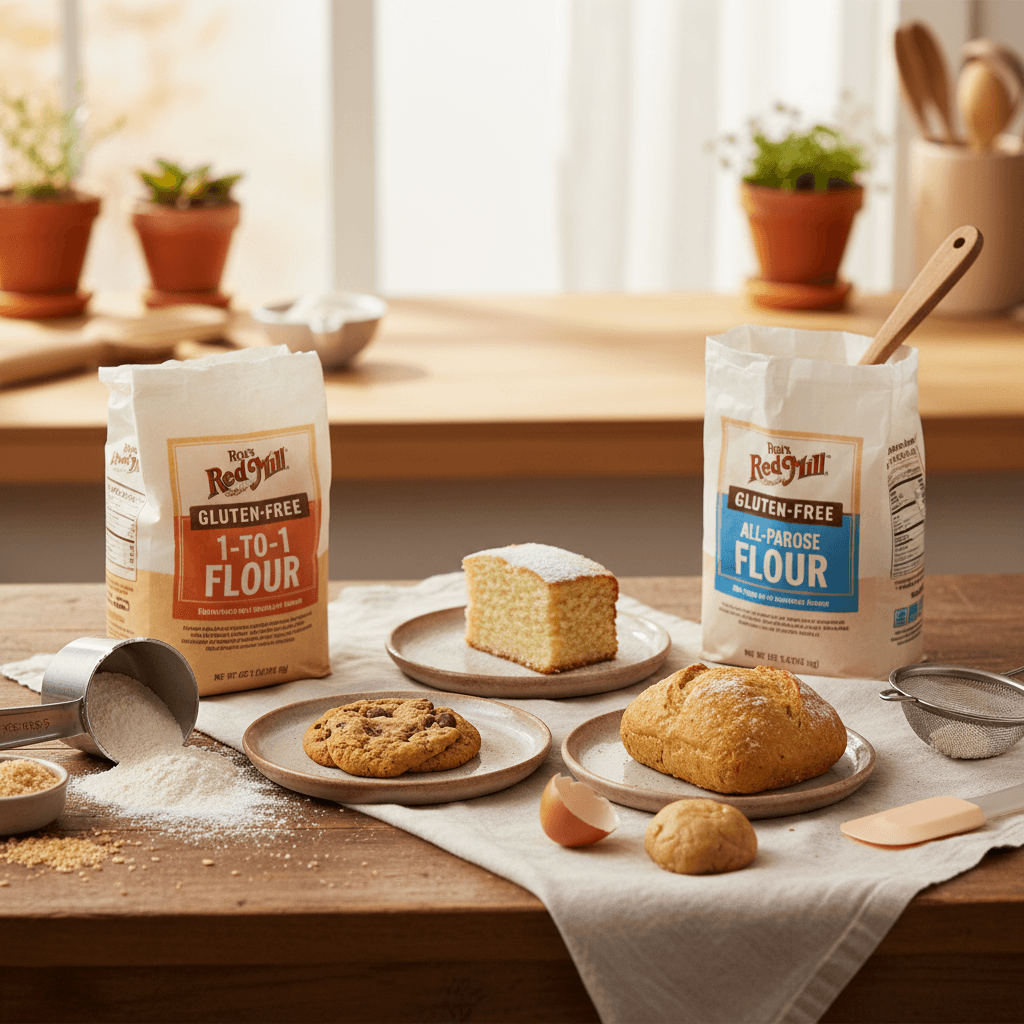
Choosing between Bob's Red Mill and King Arthur gluten-free flour blends is one of the most common decisions gluten-free bakers face. The truth is they behave very differently depending on what you're baking. Here's a detailed breakdown so you can pick the right one for your next project.
Key takeaways
- Bob's Red Mill 1-to-1 Baking Flour and King Arthur Measure for Measure are the two most widely available gluten-free all-purpose blends, and both include xanthan gum.
- King Arthur Measure for Measure produces lighter, more tender results in cakes, cookies, and muffins thanks to its finer grind and higher starch ratio.
- Bob's Red Mill 1-to-1 works well in sturdier bakes like quick breads, pancakes, and some cookie recipes where a slightly denser crumb is acceptable.
- Neither blend is ideal for yeast breads without additional modifications — dedicated bread flour blends or custom blends tend to outperform both.
- Protein content, starch composition, and grind fineness are the three factors that matter most when comparing these two flours.
- Weighing your flour with a kitchen scale eliminates the biggest variable when switching between brands.
What's actually in each flour blend
The ingredient lists tell you a lot about how each flour will perform. Both blends are designed as 1:1 replacements for all-purpose wheat flour, but they get there differently.

Bob's Red Mill 1-to-1 Baking Flour contains rice flour, tapioca starch, potato starch, sorghum flour, and xanthan gum. The inclusion of sorghum flour gives it a slightly higher protein content and a more whole-grain flavor. Some bakers notice a faintly gritty texture depending on the recipe.
King Arthur Measure for Measure Flour contains white rice flour, brown rice flour, tapioca starch, potato starch, and xanthan gum. It skips the sorghum and relies more heavily on rice flour and starches, which gives it a finer, more neutral profile. King Arthur also grinds their rice flour exceptionally fine, which makes a real difference in texture.
| Feature | Bob's Red Mill 1-to-1 | King Arthur Measure for Measure |
|---|---|---|
| Base flours | Rice flour, sorghum flour | White rice flour, brown rice flour |
| Starches | Tapioca starch, potato starch | Tapioca starch, potato starch |
| Xanthan gum included | Yes | Yes |
| Protein per 1/4 cup | 3g | 2g |
| Grind fineness | Medium | Very fine |
| Flavor profile | Slightly earthy (sorghum) | Neutral, mild |
| Certified gluten-free | Yes | Yes |
| Average price (4 lb bag) | $8-10 | $9-12 |
If you're curious about the individual starches in these blends, we have deep dives on both arrowroot powder (a common alternative starch) and the best tapioca flour and starch brands for baking.
How they perform in cakes and cupcakes
King Arthur Measure for Measure is the clear winner for cakes. Its finer grind produces a lighter, more tender crumb that closely mimics wheat-based cake flour results. The higher starch-to-protein ratio keeps cakes soft without that dense, slightly gummy quality that plagues many gluten-free bakes.
Bob's Red Mill works adequately in cakes, but the sorghum flour adds a subtle earthiness and slightly denser texture. In chocolate cakes where cocoa powder masks flavor differences, it's perfectly fine. In vanilla or white cakes where delicacy matters, King Arthur pulls ahead noticeably.
If you're working on a gluten-free birthday cake or any celebration bake, King Arthur is the better first choice. For everyday gluten-free cake recipes that taste like regular cake, the finer grind makes a meaningful difference.
If you're getting consistently dry or crumbly results with either flour, the issue might not be the blend itself. Check out our guide on fixing dry, crumbly gluten-free bakes for troubleshooting tips.
If you want to take the guesswork out of gluten-free baking and understand how flour blends, binders, and technique all work together, our Confident Gluten-Free Baker Toolkit walks you through everything step by step.
How they perform in cookies
Both flours produce decent cookies, but they create different textures. King Arthur yields cookies that spread more and have a thinner, crispier edge with a softer center — closer to what you'd expect from a classic wheat cookie. Bob's Red Mill produces slightly thicker, puffier cookies that hold their shape better but can taste a touch more "gluten-free."
For gluten-free chocolate chip cookies, we slightly prefer King Arthur because the spread and chew are more authentic. For sugar cookies or cutout cookies where you need the dough to hold a shape, Bob's Red Mill's extra protein actually works in your favor.
One thing to watch with both: gluten-free cookie doughs benefit enormously from chilling for at least 30 minutes before baking. This firms up the fats and gives the starches time to hydrate, which reduces over-spreading regardless of which blend you use.
How they perform in bread
Here's where we need to be honest — neither blend is our first choice for yeast-risen bread. Both are marketed as all-purpose replacements, and bread is a specialty application that demands more structure than either blend provides on its own.
That said, if you're making quick breads like gluten-free banana bread, both work well. Bob's Red Mill has a slight edge here because the sorghum flour adds structure and a pleasant nuttiness that complements banana bread, zucchini bread, and similar recipes.
For yeast breads like gluten-free sandwich bread, you'll get better results with a dedicated bread flour blend or by building your own blend with psyllium husk for structure. If you go the custom route, check out our comparison of the best psyllium husk brands for gluten-free bread.
How they perform in pancakes, muffins, and other quick bakes
For pancakes, both flours perform well and the differences narrow considerably. King Arthur produces slightly fluffier pancakes with a more delicate texture. Bob's Red Mill makes heartier pancakes that hold up well to toppings and syrup without falling apart.
For muffins, King Arthur again edges ahead with a lighter crumb, but Bob's Red Mill makes perfectly good muffins — especially when the recipe includes fruit, nuts, or chocolate chips that mask any subtle texture differences. If you're into gluten-free muffin meal prep, either flour will freeze and reheat well.
For pie crusts, King Arthur's finer grind makes it easier to achieve a flaky, tender crust. Bob's Red Mill can feel slightly sandy in pie dough if the fat isn't properly cut in.
Why grind fineness matters more than you think
The single biggest difference between these two flours isn't the ingredient list — it's the grind. King Arthur invests heavily in milling their rice flour to an extremely fine particle size, and this matters enormously for texture.
Coarser rice flour particles don't hydrate fully during mixing and baking, which creates that telltale gritty, sandy texture many people associate with gluten-free baked goods. Finer particles absorb liquid more completely and create a smoother crumb. If you've ever experienced gritty texture in gluten-free baking, flour grind is often the culprit.
This is also why weighing your flour matters so much. A cup of finely ground flour weighs more than a cup of coarsely ground flour because the particles pack more tightly. Using a good kitchen scale eliminates this variable entirely and gives you consistent results regardless of which brand you use.
Which flour to choose based on what you're baking
Rather than declaring one flour the universal winner, here's our honest recommendation by bake type:

King Arthur Measure for Measure Gluten-Free Flour: All-Purpose 1:1 Substitute for Wheat Flour, Non-GMO, Kosher Certified, 3 lbs Bag for Baking Cookies, Cakes, Muffins
Check price on Amazon →| Bake type | Our pick | Why |
|---|---|---|
| Vanilla/white cake | King Arthur | Finer crumb, more neutral flavor |
| Chocolate cake | Either works | Cocoa masks flavor differences |
| Chocolate chip cookies | King Arthur | Better spread and chew |
| Cutout/sugar cookies | Bob's Red Mill | Holds shape better |
| Banana/quick bread | Bob's Red Mill | Sorghum adds pleasant nuttiness |
| Yeast bread | Neither (use a bread blend) | Both lack structure for risen bread |
| Pancakes | King Arthur (slight edge) | Fluffier, more delicate |
| Muffins | King Arthur (slight edge) | Lighter crumb |
| Pie crust | King Arthur | Finer grind = less sandy texture |
| Brownies | Either works | Fudgy recipes mask differences |
For a broader look at how these two stack up against other options on the market, our complete gluten-free flour blend comparison covers seven top brands side by side.
Tips for getting the best results with either flour
Regardless of which blend you choose, these practices will improve your results:
- Weigh your flour. Both brands list weight equivalents on their packaging. Use them. Cup measurements can vary by 20-30% depending on how you scoop.
- Let batters rest. Gluten-free batters benefit from a 10-15 minute rest before baking. This gives the starches time to hydrate and the xanthan gum time to activate.
- Don't overmix, but don't undermix either. Without gluten development to worry about, you actually need to mix gluten-free batters a bit more thoroughly than wheat batters to ensure even hydration.
- Check your oven temperature. Gluten-free bakes are more sensitive to temperature swings. An accurate oven thermometer is a small investment that prevents a lot of frustration.
- Store flour properly. Both blends should be stored in airtight containers in a cool, dry place. Rice flour can go rancid faster than wheat flour, especially in warm kitchens.
Frequently asked questions
Can you substitute Bob's Red Mill 1-to-1 for King Arthur Measure for Measure in a recipe?
Yes, you can swap them at a 1:1 ratio by weight. Both blends are designed as all-purpose flour replacements and contain xanthan gum. You may notice slight texture and flavor differences — King Arthur tends to produce lighter results while Bob's Red Mill yields slightly denser, heartier bakes. Weighing your flour rather than using cup measurements will give you the most consistent swap.
Is King Arthur gluten-free flour really worth the extra cost?
For delicate bakes like cakes, pie crusts, and thin cookies, the finer grind of King Arthur flour makes a noticeable difference in texture and is worth the small price premium. For sturdy bakes like brownies, quick breads, and heavily flavored cookies, the difference is minimal and Bob's Red Mill performs just as well. If you only want to keep one blend on hand, King Arthur is the more versatile choice.
Which gluten-free flour blend is best for bread?
Neither Bob's Red Mill 1-to-1 nor King Arthur Measure for Measure is ideal for yeast-risen bread. Both are all-purpose blends that lack the structure yeast breads need. For sandwich bread and other risen loaves, look for a dedicated gluten-free bread flour blend or build a custom blend using brown rice flour, starches, and psyllium husk for structure. Our guide to the easiest gluten-free bread recipes covers this in detail.
Do Bob's Red Mill and King Arthur gluten-free flours contain xanthan gum?
Yes, both Bob's Red Mill 1-to-1 Baking Flour and King Arthur Measure for Measure Flour include xanthan gum in the blend. This means you should not add extra xanthan gum to recipes when using these flours unless the recipe specifically calls for it. Adding too much xanthan gum can make baked goods gummy or rubbery. For more on how xanthan gum works, see our guide to the best xanthan gum brands for gluten-free baking.
Why does my gluten-free flour taste gritty?
Grittiness in gluten-free baking usually comes from coarsely ground rice flour that hasn't fully hydrated. King Arthur's finer grind reduces this problem significantly. If you're using Bob's Red Mill and noticing grittiness, try letting your batter rest for 15-20 minutes before baking, or sift the flour before measuring. Our gritty texture troubleshooting guide covers additional fixes.

Written by
Co-founder, BakingSubs
Co-founder of BakingSubs, where he turns the science of ingredient substitutions into tested, reliable guidance for home bakers.
Related Posts
Bake with Confidence
See all
Confident Gluten-Free Baker Toolkit
The science-based system that replaces gluten's seven invisible jobs so your baking turns out soft, fluffy, and foolproof — every time.

Gluten-Free Recipe Vault
Instant access to our complete library of proven gluten-free recipes — no waiting, no guesswork, just results that work tonight.

Fix Your Gluten-Free Bread
Learn the 3-step formula to make bread rise and stay soft, discover why your loaves collapse, and get a tested sandwich bread recipe that actually works.