

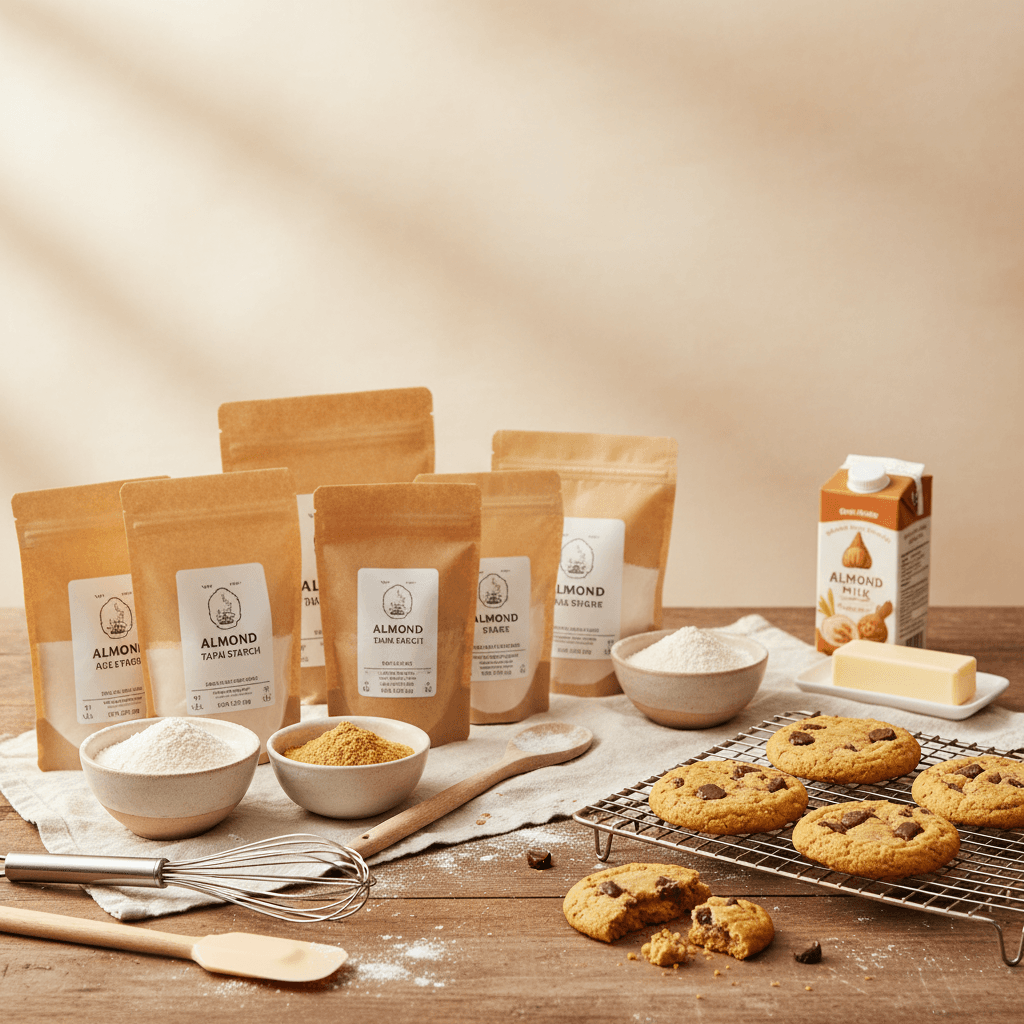
Managing gluten-free and dairy-free baking at the same time is exhausting. You finally find a flour blend that works, only to discover it contains milk powder buried on line twelve of the ingredient list. We put together this guide so you can stop second-guessing labels and start baking with confidence.
Key takeaways
- Most single-ingredient gluten-free flours (rice flour, tapioca starch, almond flour) are naturally dairy-free, but pre-mixed blends sometimes contain milk derivatives like whey, casein, or buttermilk powder.
- Bob's Red Mill 1-to-1 Baking Flour and King Arthur Measure for Measure are both gluten-free and dairy-free, making them the most accessible all-purpose options.
- Cup4Cup, one of the most popular gluten-free blends, contains milk powder and is not dairy-free.
- Blends built on a rice flour and starch base tend to perform most like all-purpose flour in cookies, cakes, and quick breads.
- Always check for hidden dairy ingredients like sodium caseinate, lactalbumin, and "natural flavors" derived from dairy sources.
- A kitchen scale and a reliable binder like xanthan gum or psyllium husk will dramatically improve your results with any blend.
Quick-reference table: gluten-free dairy-free flour blends compared
| Brand / Blend | Price range (per lb) | Gluten-free | Dairy-free | Best for |
|---|---|---|---|---|
| Bob's Red Mill 1-to-1 Baking Flour | $3–$4 | Yes (certified) | Yes | All-purpose baking, beginners |
| King Arthur Measure for Measure | $4–$5 | Yes (certified) | Yes | Direct wheat flour substitution |
| Namaste Perfect Flour Blend | $4–$5 | Yes (certified) | Yes | Allergen-friendly households |
| Anthony's Cassava Flour | $5–$7 | Yes | Yes | Grain-free and paleo baking |
| Simple Mills Artisan Bread Mix | $6–$8 per box | Yes | Yes | Quick bread baking |
| Pamela's Artisan Flour Blend | $4–$5 | Yes (certified) | Yes | Cookies, muffins, quick breads |
| gfJules All-Purpose Flour | $8–$10 | Yes (certified) | Yes | Pastry, pie crust, delicate bakes |
Why finding a blend that covers both restrictions is so hard
The gluten-free market has exploded, but "gluten-free" and "dairy-free" are treated as separate problems by most brands. Many popular gluten-free blends add milk powder, whey protein, or buttermilk powder to improve browning, tenderness, or flavor. If you're scanning labels quickly, these ingredients are easy to miss.
The good news is that the base ingredients in most flour blends — rice flour, tapioca starch, potato starch, and xanthan gum — are naturally dairy-free. The dairy sneaks in through add-ins, not the flours themselves. Once you know what to look for, finding safe blends gets much easier.
If you're building a pantry from scratch for both restrictions, our gluten-free baking pantry checklist is a great starting point. And if you want a structured approach to mastering substitutions across the board, the Confident Gluten-Free Baker Toolkit walks you through the science behind every swap so you stop guessing.
7 best gluten-free dairy-free flour blends reviewed
1. Bob's Red Mill 1-to-1 Baking Flour
This is the blend we recommend most often for beginners managing both restrictions. It's one of the two most widely available gluten-free blends, and it's completely dairy-free. The formula uses rice flour, tapioca starch, potato starch, and xanthan gum — no milk derivatives anywhere.
It performs well in cookies, muffins, quick breads, and pancakes. For yeast breads, you'll get decent results but may want a blend with more protein. The 1-to-1 ratio means you can swap it directly for all-purpose flour in most recipes without adjusting quantities.
The Bob's Red Mill 1-to-1 Baking Flour is affordable, consistent, and available at most grocery stores.
2. King Arthur Measure for Measure flour
King Arthur's Measure for Measure is the other go-to all-purpose blend, and it's also fully dairy-free. It uses a slightly different starch ratio than Bob's, which some bakers find produces a less gritty texture in delicate bakes like cakes. If you've been dealing with gritty texture issues, this blend is worth trying.
The King Arthur Measure for Measure Flour is certified gluten-free and contains no dairy, soy, or nut ingredients. It's a bit pricier than Bob's but the finer grind justifies the cost for cakes and pastries.
3. Namaste Perfect Flour Blend
Namaste is specifically designed for allergen-friendly baking. It's free from gluten, dairy, soy, corn, nuts, and potatoes — making it one of the safest options if you're managing multiple food sensitivities beyond just gluten and dairy. The blend uses tapioca starch, brown rice flour, arrowroot, and sorghum flour.
The Namaste Perfect Flour Blend works well in quick breads, muffins, and pancakes. It can produce slightly denser results in cakes compared to rice-and-potato-starch blends, but the trade-off is worth it if you need to avoid a long list of allergens.
4. Anthony's Cassava Flour
If you're looking for a single-ingredient option that's both grain-free and dairy-free, cassava flour is one of the most versatile choices. Anthony's is our favorite brand for consistency and fine grind. It behaves more like wheat flour than most gluten-free options because of its starch content and mild flavor.
Cassava flour works especially well in tortillas, flatbreads, and pie crusts. For cakes and cookies, you'll usually want to combine it with other flours or starches. Check out our cassava flour vs. gluten-free flour blend comparison to decide which approach suits your baking style.
The Anthony's Premium Cassava Flour is reliably dairy-free and has no additives.
5. Simple Mills Artisan Bread Mix
Simple Mills takes a different approach — this is a complete mix rather than a standalone flour, but it deserves a spot here because it's one of the few bread-focused products that's both gluten-free and dairy-free. It uses almond flour, arrowroot, and flax as its base, producing a denser, nuttier loaf that works well for sandwiches.
The Simple Mills Artisan Bread Mix is also free from soy and corn. Keep in mind it does contain tree nuts (almonds), so it won't work for nut-free households.
6. Pamela's Artisan Flour Blend
Pamela's has been in the gluten-free space for decades, and their Artisan Flour Blend is dairy-free. It uses a combination of brown and white rice flours, tapioca starch, potato starch, sorghum flour, and arrowroot. The sorghum adds a subtle whole-grain flavor that works particularly well in cookies and muffins.
We like the Pamela's Artisan Flour Blend for recipes where you want a slightly heartier texture. It's a solid choice for chocolate chip cookies and banana bread.
7. gfJules All-Purpose Flour
gfJules is a premium blend that consistently gets praised for producing results closest to wheat flour. It's certified gluten-free and completely dairy-free. The blend includes rice flour, tapioca starch, potato starch, cornstarch, and xanthan gum, with a particularly fine grind that reduces grittiness.
The gfJules All-Purpose Flour is our pick for delicate bakes like cakes and pastries where texture matters most. It's the most expensive option on this list, but if you're baking for a special occasion and need results that impress, it delivers.
Watch out for: hidden dairy in gluten-free products
This is the section that can save you from a frustrating (or even dangerous) mistake. Just because a product is labeled "gluten-free" does not mean it's dairy-free. Here are the most common hidden dairy ingredients in gluten-free flour blends and baking mixes:
- Whey and whey protein concentrate — Added to improve texture and browning. This is the most common dairy ingredient hiding in gluten-free mixes.
- Casein and sodium caseinate — Milk proteins used as binders or emulsifiers. They show up in some flour blends and many baking mixes.
- Milk powder and nonfat dry milk — Cup4Cup, one of the most popular gluten-free blends, contains milk powder. This catches a lot of dairy-free bakers off guard.
- Buttermilk powder — Common in gluten-free pancake and biscuit mixes. Always check even if the front label doesn't mention dairy.
- Lactose — Sometimes used as a filler or flow agent in powdered products.
- "Natural flavors" — These can legally be derived from dairy sources without specifying it. If a product doesn't carry a "dairy-free" or "vegan" certification, contact the manufacturer.
- Butter or ghee — Some premium baking mixes include butter-derived ingredients for flavor. Ghee is sometimes marketed as "lactose-free" but it's still a dairy product.
Our rule of thumb: if a product doesn't explicitly say "dairy-free" or "vegan" on the label, read the full ingredient list and check the allergen statement. The "Contains: Milk" line in the allergen section is your fastest check, but it's not required for every dairy derivative, so reading the full list is safest.
For more on how milk functions in baking and what happens when you remove it, our Learn section breaks down the science so you can make smarter swaps.
Tips for getting the best results with dairy-free gluten-free blends
Removing two major ingredients — gluten and dairy — means you're asking your remaining ingredients to do a lot of heavy lifting. Here are the adjustments that make the biggest difference:
- Use a kitchen scale. Gluten-free flours vary wildly in density. A cup of Bob's Red Mill weighs differently than a cup of King Arthur. Weighing eliminates the guesswork. The OXO Good Grips 11lb Food Scale is a reliable pick.
- Replace dairy fat with purpose. If a recipe calls for butter, use a dairy-free butter stick (not a spread) or coconut oil for structure. For milk, oat milk and cashew milk are our top picks because they add creaminess without thinning your batter.
- Don't skip the binder. Xanthan gum or guar gum is essential for structure in most gluten-free recipes. If your blend already includes xanthan gum, don't add more — too much creates a gummy, slimy texture.
- Let batters rest. Gluten-free flours absorb liquid more slowly than wheat flour. Letting your batter or dough rest for 15–30 minutes before baking gives the starches time to hydrate, which improves texture and reduces grittiness.
- Increase your leavening slightly. Without gluten's elasticity and dairy's tenderizing proteins, your baked goods may need a small boost. Try adding an extra 1/4 teaspoon of baking powder per cup of flour. If you're dealing with poor rise, our troubleshooting guide can help.
How to choose the right blend for your recipe
Not every blend works equally well in every recipe. Here's a quick guide to matching blends with baking projects:
| Baking project | Best blend choice | Why |
|---|---|---|
| Cookies and bars | Bob's Red Mill 1-to-1 or Pamela's Artisan | Good spread, reliable texture |
| Cakes and cupcakes | King Arthur Measure for Measure or gfJules | Fine grind, tender crumb |
| Bread and rolls | Bob's Red Mill 1-to-1 + psyllium husk | Needs extra structure for rise |
| Pie crust | gfJules or Anthony's Cassava Flour | Flaky, pliable dough |
| Pancakes and waffles | Namaste or Bob's Red Mill 1-to-1 | Light, fluffy results |
| Allergen-free (multiple) | Namaste Perfect Flour Blend | Free from top 8 allergens |
For bread specifically, adding psyllium husk to any of these blends dramatically improves structure and moisture retention. It's the single best addition you can make for gluten-free dairy-free bread baking.
Frequently asked questions
Is Cup4Cup gluten-free flour dairy-free?
No. Cup4Cup contains milk powder, which makes it unsuitable for dairy-free baking. This is a common mistake — the blend is excellent for gluten-free baking, but if you also need to avoid dairy, choose Bob's Red Mill 1-to-1, King Arthur Measure for Measure, or one of the other blends in this guide instead.
Can I make my own gluten-free dairy-free flour blend at home?
Yes. A reliable homemade blend uses 2 parts brown rice flour, 2/3 part potato starch, and 1/3 part tapioca starch. Add 1 teaspoon of xanthan gum per cup of blend for structure. All of these ingredients are naturally dairy-free. If you want to mill your own rice flour for the freshest results, a dedicated grain mill is worth the investment.
What can I use instead of butter in gluten-free baking?
Dairy-free butter sticks (like Miyoko's or Earth Balance) work as direct 1:1 replacements in most recipes. Coconut oil is another strong option, especially for pie crusts and cookies. For more detail on how dairy fat functions in baking and how to replace it effectively, check out our guide to choosing milk alternatives.
Do gluten-free dairy-free flour blends taste different from regular flour?
Most rice-based blends have a very neutral flavor that's hard to distinguish from wheat flour in finished baked goods, especially in recipes with strong flavors like chocolate, cinnamon, or vanilla. Blends with sorghum or buckwheat have a slightly nuttier taste. If you're noticing a strange aftertaste, it's usually a sign of a stale flour rather than the blend itself.
Are oat flour blends safe for gluten-free dairy-free baking?
Oat flour is naturally dairy-free, but oats are frequently cross-contaminated with wheat during processing. Only use oat flour that's certified gluten-free. Our oat flour vs. rice flour comparison covers when oat flour makes sense and what to watch for.

Written by
Co-founder, BakingSubs
Co-founder of BakingSubs, where he turns the science of ingredient substitutions into tested, reliable guidance for home bakers.
Related Posts
Bake with Confidence
See all
Confident Gluten-Free Baker Toolkit
The science-based system that replaces gluten's seven invisible jobs so your baking turns out soft, fluffy, and foolproof — every time.

Gluten-Free Recipe Vault
Instant access to our complete library of proven gluten-free recipes — no waiting, no guesswork, just results that work tonight.

Fix Your Gluten-Free Bread
Learn the 3-step formula to make bread rise and stay soft, discover why your loaves collapse, and get a tested sandwich bread recipe that actually works.