

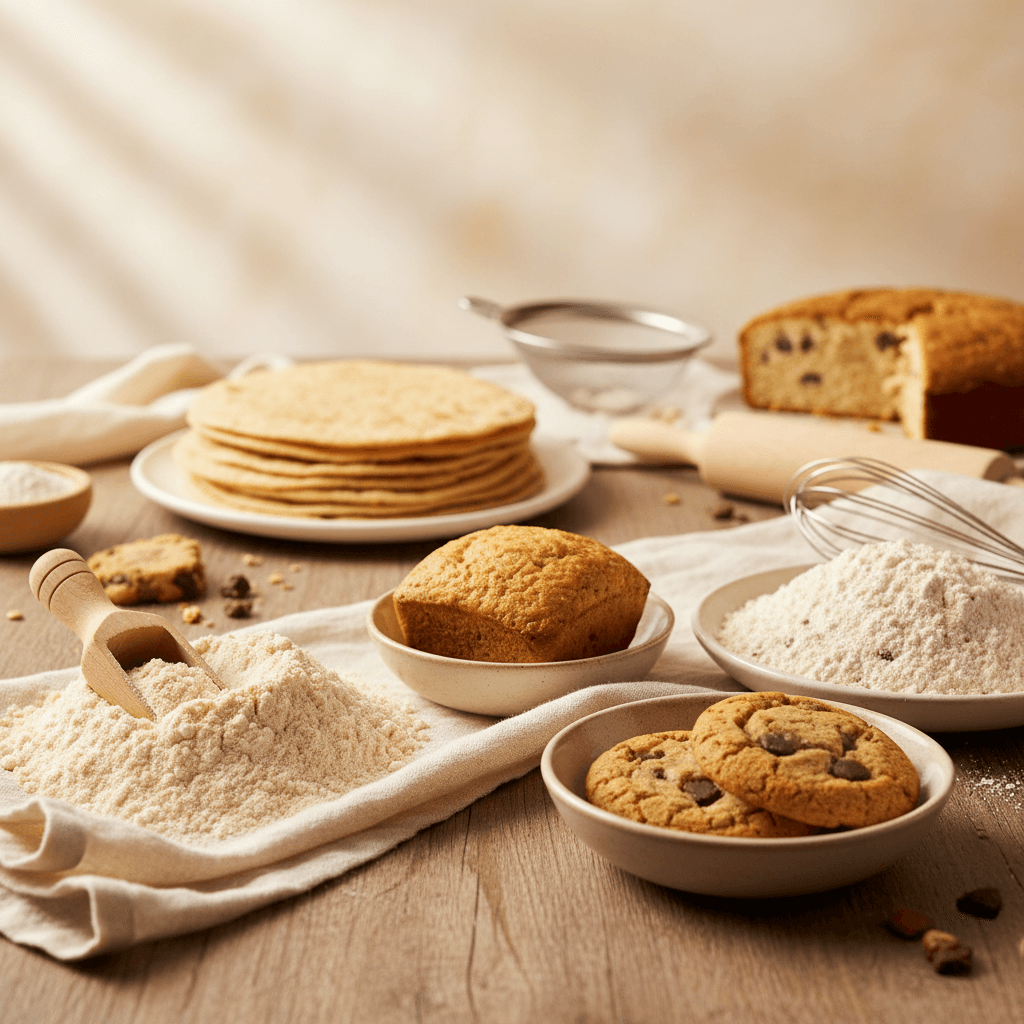
Choosing between cassava flour and a gluten-free flour blend can make or break your bake. They behave completely differently in recipes, and picking the wrong one leads to dense, gummy, or crumbly results. Here's exactly how they compare and when to reach for each.
Key takeaways
- Cassava flour is a single-ingredient flour made from the whole cassava root, while gluten-free flour blends combine multiple flours and starches to mimic wheat flour behavior.
- Cassava flour absorbs significantly more liquid than most blends, so you cannot swap them 1:1 without adjusting your recipe.
- Gluten-free flour blends are more forgiving for beginners because they're engineered to work across many recipe types.
- Cassava flour produces a slightly chewy, stretchy texture that works beautifully in flatbreads, tortillas, and some quick breads.
- For cakes, cookies, and most pastries, a well-formulated gluten-free flour blend will give you more consistent, predictable results.
- Brand matters enormously for both options — different cassava flours and different blends perform very differently.
What is cassava flour and how does it work in baking?
Cassava flour is made from the whole peeled cassava root, which is dried and ground into a fine powder. Unlike tapioca starch (which is extracted from the root), cassava flour contains the fiber from the whole root, giving it more structure and a mild, slightly earthy flavor.
What makes cassava flour unique is its starch content. It's extremely high in starch — roughly 80-85% — which means it absorbs a lot of moisture. In practice, this creates a dough or batter that can feel deceptively dry. If you measure cassava flour by volume (cups) instead of weight, you'll almost certainly end up with too much flour and a dense, dry result. We always recommend weighing your ingredients with a reliable kitchen scale.
The high starch content also gives cassava flour a natural elasticity that other gluten-free flours lack. This is why it's so popular for tortillas and wraps — it can bend without cracking. However, that same starchiness means cassava flour can turn gummy if you use too much liquid or overbake. If you've ever pulled a cassava flour loaf out of the oven and found a gummy center, you know exactly what we're talking about.
Best cassava flour brands for baking
Not all cassava flour is created equal. The grind, moisture content, and processing method vary widely between brands, and this directly affects your results.
| Brand | Texture | Best for | Notes |
|---|---|---|---|
| Otto's Naturals | Very fine, smooth | Cakes, muffins, tortillas | The gold standard; most recipes calling for cassava flour are developed with this brand |
| Anthony's | Slightly coarser | Bread, pizza dough | More affordable; works well but may need slightly less flour than Otto's |
| Bob's Red Mill | Medium-fine | General baking | Widely available in stores; absorbs a bit differently than Otto's so adjust liquid accordingly |
If you're new to cassava flour, we'd suggest starting with Otto's Naturals. Most cassava flour recipes online were developed with it, so you'll get the most predictable results while you learn how this flour behaves.
What are gluten-free flour blends and why do bakers use them?
A gluten-free flour blend is a pre-mixed combination of multiple flours and starches designed to approximate the behavior of all-purpose wheat flour. Most blends include a base flour (like brown rice flour or white rice flour), one or two starches (like tapioca starch or potato starch), and sometimes a small amount of xanthan gum or guar gum for binding.
The whole point of a blend is balance. No single gluten-free flour can replicate what wheat flour does on its own. Rice flour provides structure but can be gritty. Tapioca starch adds chew and browning but too much makes things gummy. Potato starch contributes moisture and tenderness but can make bakes heavy. A good blend balances all of these properties so you don't have to think about flour chemistry every time you bake.
This is also why blends are the go-to recommendation for beginners. If you're just getting started with gluten-free baking, check out our Confident Gluten-Free Baker Toolkit — it walks you through flour selection, common mistakes, and how to actually get consistent results from your first bake onward.
Best gluten-free flour blend brands compared
We did a deep dive on this in our full gluten-free flour blend comparison, but here's a quick summary of the top picks and what each does best.
| Brand | Contains xanthan gum? | Best for | Notes |
|---|---|---|---|
| Bob's Red Mill 1-to-1 | Yes | General baking, cookies, cakes | Widely available; true 1:1 swap for wheat flour in most recipes |
| King Arthur Measure for Measure | Yes | Bread, muffins, pancakes | Slightly higher protein; excellent structure for yeasted bakes |
| Cup4Cup | Yes | Pastries, cakes, delicate bakes | Premium price but very fine texture; closest to wheat flour feel |
| Namaste Perfect Flour Blend | No | Allergy-friendly baking (also nut-free) | No xanthan gum, so you may need to add your own binder |
If a blend doesn't include xanthan gum, you'll typically need to add about 1/2 teaspoon per cup of flour for cookies and cakes, or up to 1 teaspoon per cup for bread. Our xanthan gum brand comparison can help you pick the right one.
Cassava flour vs gluten-free flour blend: side-by-side comparison
Here's where the differences really stand out. These two options behave so differently that treating them as interchangeable is the single biggest mistake we see bakers make.
| Property | Cassava flour | Gluten-free flour blend |
|---|---|---|
| Ingredients | Single ingredient (cassava root) | Multiple flours and starches combined |
| Liquid absorption | Very high — absorbs 20-30% more liquid than blends | Moderate — designed to mimic wheat flour absorption |
| Texture | Chewy, slightly elastic, can turn gummy | Varies by brand; generally lighter and more cake-like |
| Flavor | Mild, slightly earthy, neutral | Varies; some have a rice flour taste |
| Allergen-friendly | Grain-free, nut-free, AIP-compliant | Usually contains rice; may contain sorghum or other grains |
| 1:1 wheat substitute? | Sometimes, but usually needs recipe adjustments | Yes, most blends are designed for this |
| Best applications | Tortillas, flatbreads, empanadas, some quick breads | Cakes, cookies, muffins, bread, pastries |
| Price (per pound) | Higher ($5-8/lb) | Moderate ($3-5/lb) |
When to use cassava flour instead of a blend
Cassava flour is the better choice when you need a grain-free option, when you're following an AIP (Autoimmune Protocol) diet, or when you're making recipes that benefit from its natural elasticity.
Specific bakes where cassava flour shines:
- Tortillas and wraps — The elasticity of cassava flour makes pliable, foldable tortillas that don't crack. This is its single best use case.
- Empanadas and hand pies — The dough holds together well and can be shaped without crumbling.
- Flatbreads and naan — Similar to tortillas, the chewy texture works in your favor here.
- Simple quick breads — Banana bread and similar loaves can work beautifully with cassava flour. Check out our gluten-free banana bread tips for approaches that work with alternative flours.
The key with cassava flour is to use recipes specifically developed for it. Taking a regular gluten-free recipe and swapping in cassava flour almost never works well because of the massive difference in liquid absorption.
When to use a gluten-free flour blend instead
A gluten-free flour blend is the better choice for most standard baking — especially if you're converting a wheat-based recipe or following a recipe that simply calls for "gluten-free flour."
Specific bakes where blends outperform cassava flour:
- Cakes and cupcakes — Blends produce a lighter, more tender crumb. Cassava flour cakes tend to be denser and chewier. If you're making a birthday cake, reach for a blend.
- Cookies — Most gluten-free cookie recipes are built around blends. The combination of starches and flours gives you the right spread, chew, and crispness.
- Muffins and scones — Blends give you a more familiar, wheat-like texture. Our gluten-free muffin recipes all use blends for exactly this reason.
- Yeasted bread — Bread needs the structural complexity that a multi-flour blend provides. Cassava flour alone doesn't have enough protein diversity to support a good rise.
- Pie crust — A blend with the right starch ratio produces a flaky, tender crust. Cassava flour pie crust tends to be too chewy.
Can you swap cassava flour for a gluten-free blend (and vice versa)?
Not directly, no. This is the most important thing to understand about the cassava flour vs gluten-free flour blend debate. Because cassava flour absorbs so much more liquid, a straight 1:1 swap will give you very different results.
If you're swapping cassava flour INTO a recipe that calls for a gluten-free blend, you'll typically need to:
- Reduce the flour by about 15-25%
- Increase the liquid slightly
- Add a binder like arrowroot powder or tapioca starch (about 2 tablespoons per cup of cassava flour) to prevent crumbling
- Expect a chewier, denser result regardless of adjustments
If you're swapping a gluten-free blend INTO a recipe that calls for cassava flour, you'll typically need to:
- Increase the flour slightly (about 10-15%)
- Reduce the liquid a bit
- Make sure your blend includes xanthan gum, or add some
Honestly? We recommend just finding a recipe written for whichever flour you want to use. The results will be dramatically better than trying to convert.
What about flavor differences?
Cassava flour has a very mild, slightly earthy flavor that most people describe as neutral. It's less noticeable than coconut flour's sweetness or the nuttiness of almond flour. In most baked goods, you won't taste the cassava itself.
Gluten-free flour blends vary more in flavor depending on their composition. Rice-heavy blends can have a slightly grainy, "rice-y" taste that some bakers notice — especially in delicate applications like white cake or sugar cookies. If you've ever experienced a strange aftertaste in your gluten-free baking, the blend's flour ratio might be the culprit. Blends that include sorghum flour tend to have a warmer, more wheat-like flavor. Blends with a higher starch ratio tend to taste more neutral.
Cost and availability comparison
Cassava flour is generally more expensive than most gluten-free flour blends. A pound of quality cassava flour (like Otto's Naturals) typically runs $5-8, while a pound of a good blend (like Bob's Red Mill 1-to-1) is usually $3-5. If you're baking frequently, this adds up.
Availability is another factor. Gluten-free flour blends are stocked in virtually every grocery store now. Cassava flour is becoming more common but you may still need to order it online depending on where you live.
Frequently asked questions
Is cassava flour healthier than a gluten-free flour blend?
Cassava flour is a single-ingredient, grain-free flour, which some people prefer for dietary reasons like AIP or paleo protocols. However, it's not inherently "healthier" — it's very high in carbohydrates and low in protein, similar to most starches. A gluten-free blend that includes sorghum or brown rice flour may actually offer slightly more fiber and micronutrients. Choose based on your dietary needs, not a general "health" label.
Can I use cassava flour in gluten-free bread recipes?
You can, but it works best in flatbreads, tortillas, and simple quick breads rather than yeasted sandwich loaves. Cassava flour doesn't have the protein structure needed for a tall, airy rise on its own. For sandwich bread, a gluten-free flour blend with added psyllium husk or xanthan gum will give you much better results.
Why does my cassava flour baking turn out gummy?
Cassava flour's extremely high starch content makes it prone to gumminess when it absorbs too much moisture or isn't baked long enough. The fix is usually to reduce your liquid slightly, bake at a slightly lower temperature for longer, and let your baked goods cool completely before cutting. Cutting into hot cassava flour bread is a guaranteed way to get a gummy texture. Check out our guide on fixing gummy centers for more detailed solutions.
What is the best gluten-free flour blend for beginners?
For most beginners, we recommend Bob's Red Mill 1-to-1 Baking Flour or King Arthur Measure for Measure. Both include xanthan gum and are designed to substitute directly for all-purpose wheat flour. This means you can take almost any conventional recipe and use the blend as a direct swap, which is the easiest way to start. See our full blend comparison for more detail on each brand.
Is cassava flour the same as tapioca flour?
No, they're different products from the same plant. Cassava flour is made from the whole peeled root, so it contains fiber and has a flour-like consistency. Tapioca flour (or tapioca starch) is extracted from the root and is a pure starch — it's much more refined and behaves very differently in recipes. You cannot substitute one for the other.

Written by
Co-founder, BakingSubs
Co-founder of BakingSubs, where he turns the science of ingredient substitutions into tested, reliable guidance for home bakers.
Related Posts

Bake with Confidence
See all
Confident Gluten-Free Baker Toolkit
The science-based system that replaces gluten's seven invisible jobs so your baking turns out soft, fluffy, and foolproof — every time.

Gluten-Free Recipe Vault
Instant access to our complete library of proven gluten-free recipes — no waiting, no guesswork, just results that work tonight.

Fix Your Gluten-Free Bread
Learn the 3-step formula to make bread rise and stay soft, discover why your loaves collapse, and get a tested sandwich bread recipe that actually works.