

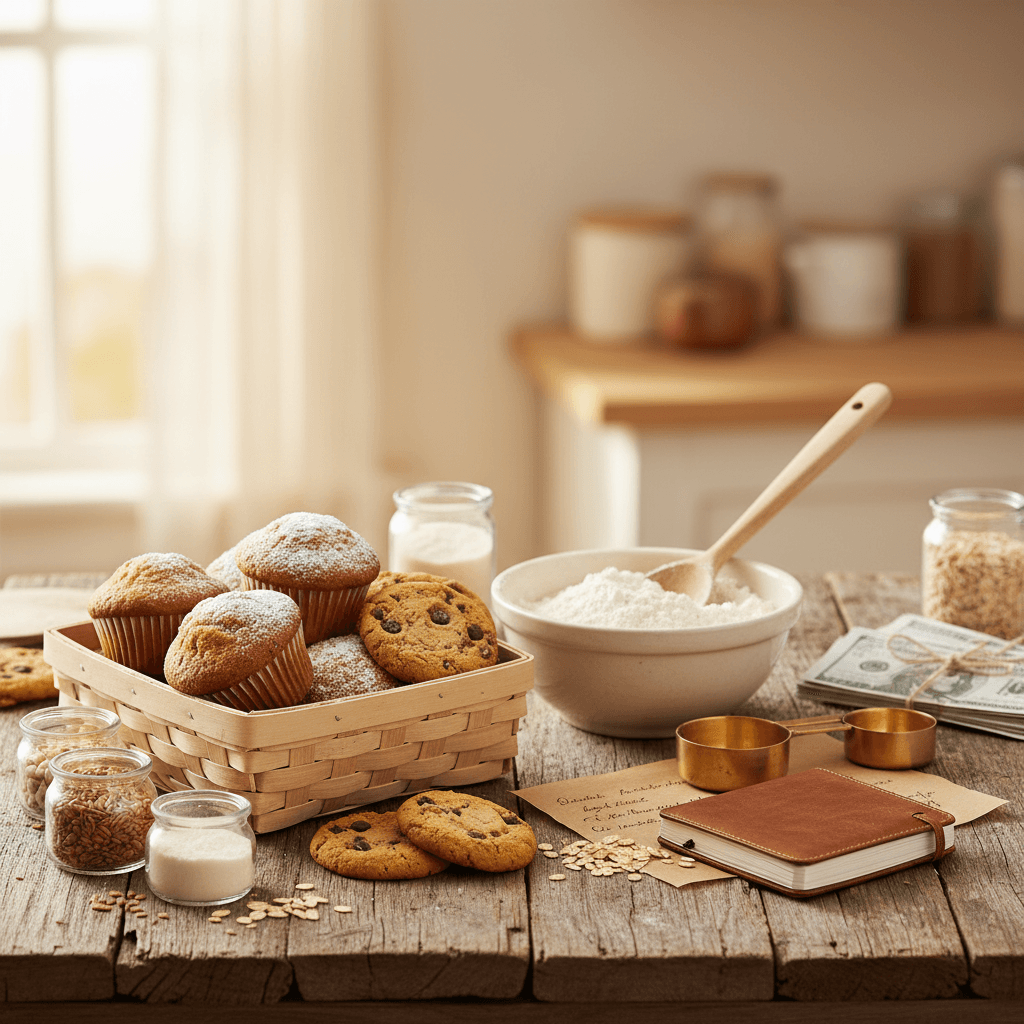
If you want to sell baked goods from home, the rules depend almost entirely on where you live. Every state has its own cottage food laws, license requirements, and sales caps — and getting it wrong can mean fines or a forced shutdown.
This guide breaks down the most common license structures across all 50 states, what they typically cost, and exactly how to figure out your specific requirements so you can start selling legally.
Key takeaways
- All 50 states now have some form of cottage food law, but requirements vary dramatically — from no permit needed to full commercial kitchen inspections.
- Most states cap annual cottage food sales between $25,000 and $75,000, though some have no cap at all.
- License and permit fees typically range from $0 to $500 depending on your state and local jurisdiction.
- Labeling requirements are nearly universal — expect to list ingredients, allergens, your name, address, and a "made in a home kitchen" disclaimer.
- Some states restrict what you can sell (no cream-filled items, no items requiring refrigeration), while others allow almost anything.
- Local city and county regulations can add requirements on top of state law, so always check both levels.
How cottage food laws work in the United States
Cottage food laws are state-level regulations that allow home bakers to sell certain food products made in a residential kitchen without a commercial food establishment license. Every state now has some version of these laws, though the specifics vary wildly.
The core idea is the same everywhere: low-risk baked goods made at home can be sold directly to consumers with fewer regulatory hurdles than a full commercial bakery. But "fewer hurdles" doesn't mean "no hurdles." Most states still require some combination of permits, food safety training, labeling, and sales limits.
Here's the general framework most states follow:
- Permitted products: Typically shelf-stable baked goods like cookies, breads, cakes (without cream filling), brownies, and muffins. Items requiring refrigeration are often excluded.
- Sales channels: Most states allow direct-to-consumer sales (farmers markets, your front door, online ordering with local pickup). Some now allow shipping and online sales, but many still restrict it.
- Annual sales caps: These range from as low as $5,000 in a few states to unlimited in others. The most common range is $25,000 to $75,000.
- Labeling: Nearly every state requires ingredient lists, allergen declarations, your name and address, and a statement like "Made in a home kitchen not inspected by [state department]."
If you're building a home baking pantry on a budget, the good news is that startup costs for a cottage food operation are among the lowest of any business — often under $500 total for permits and initial supplies.
Common license and permit types you may need
The specific permits required depend on your state, but most home bakers encounter some combination of these:
Cottage food permit or registration
This is the most common requirement. Some states call it a "cottage food operation permit," others call it a "home processor registration." In about a dozen states, you don't need any permit at all — you just need to follow the law. In others, you fill out a simple form and pay a fee ranging from $0 to $75.
Business license
Many cities and counties require a general business license regardless of cottage food status. These typically cost $25 to $100 annually. Check with your city clerk's office — this is the requirement people miss most often.
Food handler's card or food safety certification
About half of all states require the person making the food to have a food handler's certificate. This usually involves an online course that takes 2-4 hours and costs $10 to $25. Some states accept the ServSafe Food Handler certification; others have their own approved courses.
Sales tax permit
If your state charges sales tax on food items (many exempt unprepared food), you may need a sales tax permit from your state's department of revenue. This is usually free to obtain.
Zoning approval
Some municipalities require you to confirm that your residential zoning allows a home-based food business. This rarely costs anything but can require a written application. If you're in an HOA, check those rules too — they can be stricter than city codes.
Want to make sure you're building your home bakery on a solid foundation? The free Home Bakery Pro masterclass walks you through the business side of home baking, including the 3 biggest mistakes new home bakers make when getting started.
State-by-state cottage food law overview
Rather than listing all 50 states individually (laws change frequently and the details would be outdated within months), here's a practical breakdown of the major categories states fall into. Use this to understand where your state likely sits, then verify the current details with your state's department of agriculture or health department.
| Category | What it means | Typical sales cap | Example states |
|---|---|---|---|
| No permit required | Follow the law, label properly, stay under the cap — no registration needed | $25,000 - $75,000 | Utah, Wyoming, Montana, Alaska |
| Simple registration | Fill out a form (often online), may pay a small fee, no inspection | $25,000 - $75,000 | Colorado, Michigan, Oregon, Texas |
| Permit with food safety training | Apply for a permit and complete a food handler's course | $25,000 - $75,000 | California, Florida, Georgia, Ohio |
| Permit with kitchen inspection | Home kitchen must pass an inspection before you can sell | $25,000 - $50,000 | Wisconsin, Iowa, parts of New Jersey |
| Restrictive / limited | Narrow product lists, low sales caps, or additional hurdles | $5,000 - $25,000 | Varies — check current law |
States with the most permissive laws
States like Wyoming, Utah, North Dakota, and Montana have some of the most baker-friendly cottage food laws in the country. Wyoming's Food Freedom Act, for example, allows direct-to-consumer sales of homemade food products with minimal regulation and no sales cap on many items. Utah has a similar approach.
States with moderate requirements
The majority of states fall here. Texas, California, Florida, Colorado, Michigan, and many others require some form of registration or permit, a food handler's certificate, proper labeling, and cap annual sales somewhere between $25,000 and $75,000. California recently raised its cottage food sales cap to $75,000 for "Class B" operations (which allow indirect sales like online orders).
States with stricter requirements
A handful of states still require kitchen inspections or have relatively low sales caps. New Jersey, for instance, has county-level variation that can make compliance complicated. Wisconsin historically required a commercial kitchen license for most baked goods, though recent legislative changes have loosened some restrictions.
How to find your exact state requirements
Here's the step-by-step process we recommend:
- Search "[your state] cottage food law" or "[your state] home bakery requirements." Look for results from your state's department of agriculture, department of health, or a .gov website. These are the authoritative sources.
- Read the actual statute or regulation. Most states publish the full text online. It's usually only 1-3 pages and written in relatively plain language.
- Call your state's department of agriculture. If anything is unclear, call them directly. They're generally helpful and can tell you exactly what forms to file.
- Check city and county requirements. Contact your local city clerk or county health department. Ask specifically: "Do I need a business license or any local permits to sell baked goods from my home?"
- Check zoning. Call your city's planning or zoning department and ask if home-based food businesses are permitted in your zone.
This entire process usually takes 2-3 hours spread over a few days (waiting for callbacks). Don't skip the local checks — we've seen bakers who were fully compliant at the state level but missed a $50 city business license and got cited at a farmers market.
Typical startup costs for a licensed home bakery
One of the biggest advantages of a cottage food business is the low barrier to entry. Here's what most home bakers spend to get legally set up:
| Expense | Typical cost | Notes |
|---|---|---|
| Cottage food permit/registration | $0 - $75 | Free in many states |
| Food handler's certificate | $10 - $25 | Required in about half of states |
| City/county business license | $25 - $100 | Check your local jurisdiction |
| Labels and packaging | $30 - $100 | Printed labels, bags, boxes for first batch |
| Basic equipment upgrades | $0 - $300 | Most home bakers already have what they need |
| Liability insurance (optional but recommended) | $200 - $400/year | Not required in most states but protects you |
Total startup costs typically range from $50 to $500, making this one of the most accessible small businesses you can start. If you already have decent baking tools and a well-stocked pantry, you're looking at the lower end of that range.
NEXT Insurance
Product liability for a home food business, quoted online in about 15 minutes with monthly billing. The certificate it generates is what a farmers market asks to see.
Get a quote →Affiliate link. We may earn a commission at no cost to you.Labeling requirements you need to know
Labeling is the one area where almost every state agrees: you need proper labels. Getting this wrong is the fastest way to get shut down at a farmers market or receive a warning from your health department.
Most states require all of the following on every product you sell:
- Product name (e.g., "Chocolate Chip Cookies")
- Ingredient list in descending order by weight
- Allergen declaration — must call out the major allergens (wheat, milk, eggs, tree nuts, peanuts, soy, fish, shellfish, sesame)
- Net weight or quantity
- Your name and home address (some states allow a P.O. box)
- "Made in a home kitchen" disclaimer — the exact wording varies by state
- Date produced (required in some states)
If you're doing gluten-free baking, pay special attention to allergen labeling. You can't label something "gluten-free" unless you can ensure it meets the FDA's standard of less than 20 parts per million. If you're baking in a kitchen that also handles wheat flour, you'll need to be transparent about that — and many cottage food customers specifically seek out bakers who maintain dedicated gluten-free kitchens.
Products you can and cannot sell under cottage food laws
Most cottage food laws focus on shelf-stable, low-risk items. Here's the general breakdown:
Almost always allowed
- Cookies, brownies, and bars
- Quick breads, muffins, and scones
- Yeast breads and rolls
- Cakes and cupcakes (without custard, cream, or cream cheese fillings/frostings in many states)
- Pies (fruit pies are usually fine; cream pies often are not)
- Candy, fudge, and brittle
- Dry baking mixes
- Granola and trail mix
Often restricted or prohibited
- Items requiring refrigeration (cream cheese frosting, custard-filled pastries)
- Cheesecake
- Foods containing meat
- Canned goods and preserves (allowed in some states with specific training)
- Raw or unpasteurized dairy products
The good news for home bakers is that the most popular and profitable items — cookies, decorated cakes with buttercream, breads, and brownies — are allowed in virtually every state. If you're exploring allergy-friendly baking, there's a growing market of customers willing to pay premium prices for specialty baked goods they can't find elsewhere.
Tips for staying compliant as your business grows
Getting your initial license is just the beginning. Here are the things that trip up home bakers after they start selling:
- Track your sales carefully. Most states require annual reporting, and exceeding your sales cap can result in fines or loss of your cottage food status. Use a simple spreadsheet or bookkeeping app from day one.
- Renew on time. Permits and business licenses typically need annual renewal. Set calendar reminders 30 days before expiration.
- Keep your food handler's card current. These usually expire every 3-5 years depending on the state.
- Stay updated on law changes. Cottage food laws are evolving rapidly — many states have expanded their programs in the last 2-3 years. Join your state's cottage food Facebook group or follow your department of agriculture's updates.
- Consider liability insurance. Even if it's not required, a $200-$400/year liability policy protects you if a customer has an allergic reaction or claims they got sick. Companies like Flip and NEXT offer affordable policies specifically for cottage food operators.
- Know when to level up. If you're consistently hitting your sales cap, it may be time to look into a commercial kitchen rental or a full food establishment license. Many successful home bakers make this transition within 1-2 years.
Having the right professional baking equipment becomes more important as your volume increases. Investing in a quality stand mixer and reliable oven thermometer early on saves you time and consistency headaches down the road.
Frequently asked questions
Do I need a license to sell baked goods from home?
In most states, yes — you need at least a cottage food permit or registration, though about a dozen states require no permit at all. Nearly every state requires proper labeling and limits what you can sell and how much you can earn. Check your state's department of agriculture website for the specific requirements that apply to you.
How much does a home bakery license cost?
The cottage food permit itself typically costs $0 to $75. When you add in a food handler's certificate ($10-$25), a local business license ($25-$100), and basic labeling supplies, most home bakers spend between $50 and $200 total to get legally set up. Some states have no fees at all.
Can I sell baked goods online from a home kitchen?
It depends on your state. Some states now allow online sales with local delivery or pickup, and a growing number permit shipping within the state. However, many states still restrict cottage food sales to in-person, direct-to-consumer transactions like farmers markets and bake sales. California, Texas, and several others have expanded to allow online ordering in recent years.
What baked goods can I sell under cottage food laws?
Most states allow shelf-stable baked goods like cookies, breads, cakes with buttercream frosting, brownies, muffins, and pies. Items that require refrigeration — such as cream-filled pastries, cheesecake, and anything with cream cheese frosting — are restricted or prohibited in many states. Check your state's specific allowed product list, as it varies significantly.
Do I need a commercial kitchen to sell baked goods?
Under cottage food laws, no — that's the whole point. You can use your home kitchen. However, a few states (like Wisconsin) have historically required kitchen inspections, and your home kitchen must meet basic sanitation standards. If you exceed your state's cottage food sales cap, you may need to transition to a properly equipped commercial kitchen.
Ready to turn your baking into a real business?
Getting your license is the first step, but building a home bakery that actually generates consistent income takes more than paperwork. The bakers who succeed are the ones who have a system for getting repeat orders — not just a permit on the wall.
Watch the free Home Bakery Pro masterclass
Want a proven system for getting consistent orders? This free masterclass covers the 3 biggest mistakes new home bakers make and how to actually get repeat customers — without relying on social media. It's the natural next step after you've got your licensing sorted out.

Written by
Co-founder, BakingSubs
Co-founder of BakingSubs, where he turns the science of ingredient substitutions into tested, reliable guidance for home bakers.
Related Posts
Gluten-Free Flour Weight Chart: Grams per Cup for 9 Major Brands (and Why the Spread Is Over 20%)
Best Low Carb Tortillas (2026): 6 Brands Compared by Net Carbs
Best Sugar-Free Cake Mix and Brownie Mix (2026): 14 Options Ranked by Net Carbs, Sweetener, and Price
Bake with Confidence
See all
Confident Gluten-Free Baker Toolkit
The science-based system that replaces gluten's seven invisible jobs so your baking turns out soft, fluffy, and foolproof — every time.

Gluten-Free Recipe Vault
Instant access to our complete library of proven gluten-free recipes — no waiting, no guesswork, just results that work tonight.

Fix Your Gluten-Free Bread
Learn the 3-step formula to make bread rise and stay soft, discover why your loaves collapse, and get a tested sandwich bread recipe that actually works.